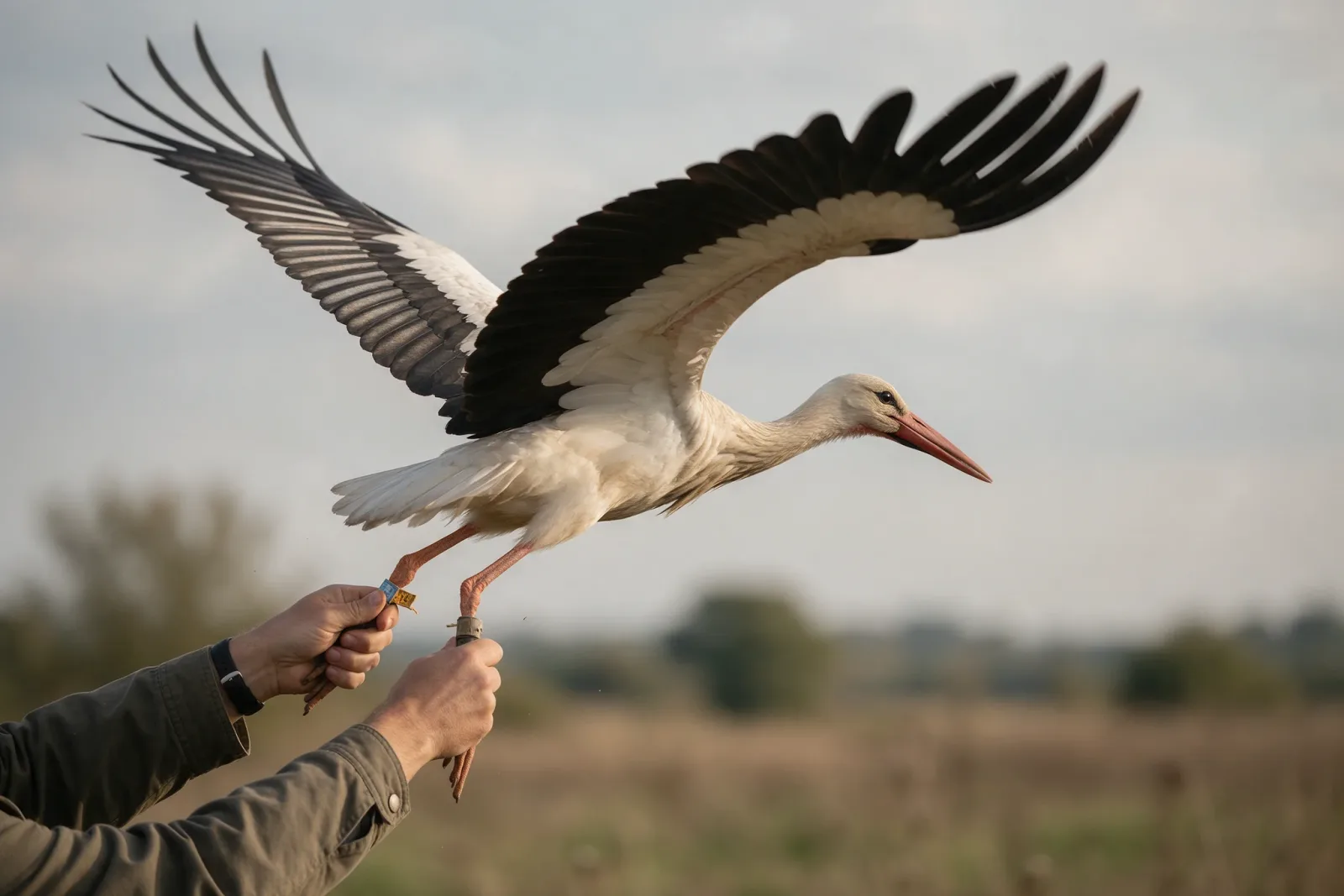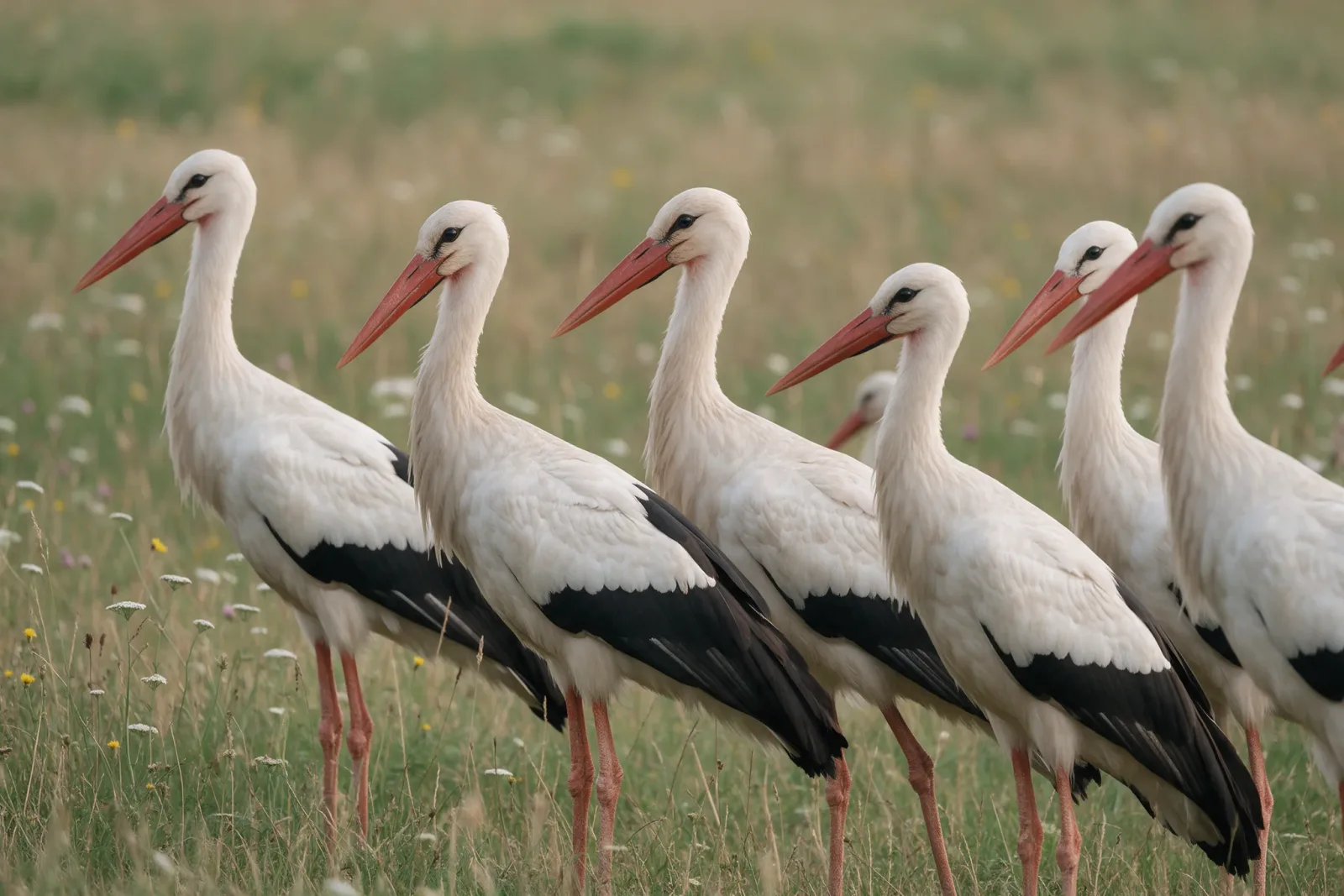
Come and meet the storks. On the map they look like a scatter of moving dots, but each dot is a bird with a name, a nest, a set of habits, and a route all its own. The LifeTrack White Stork SW Germany study follows white storks across their whole year, from a nest on a village rooftop to a wintering ground far to the south and back again. A few of those birds have become familiar to the people who watch them, and they are worth knowing by name.
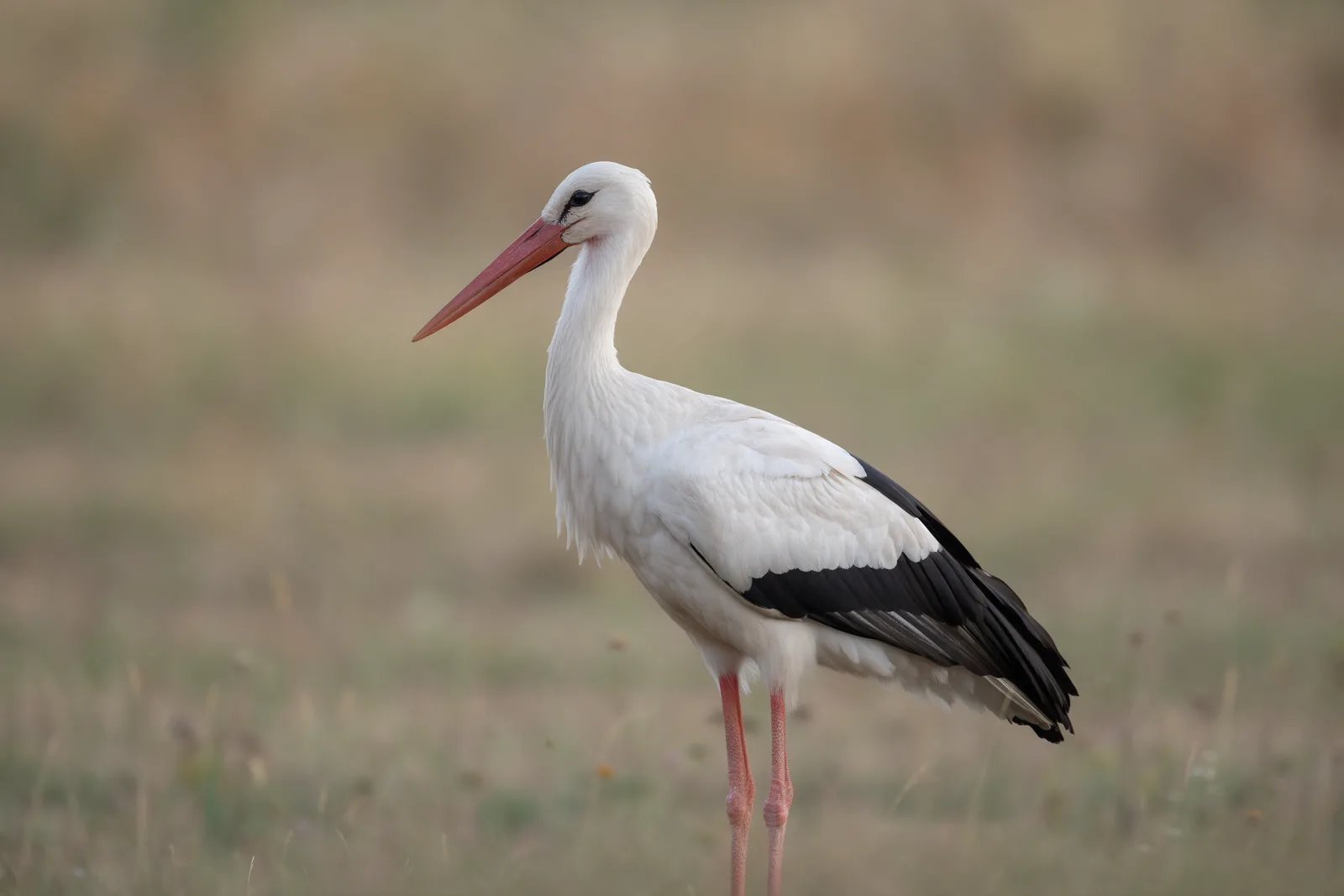
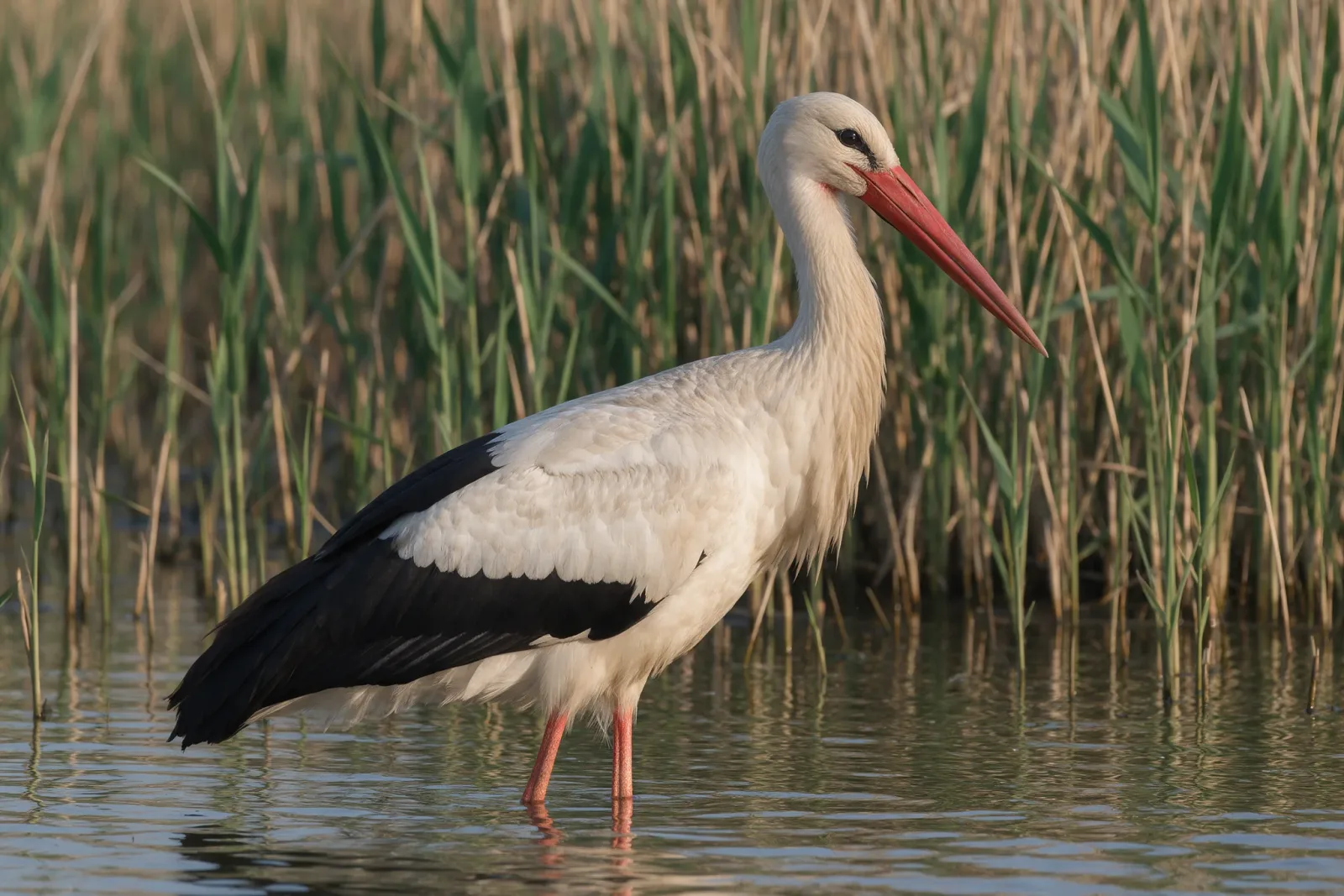
A stork is not an idea in this story. It is a particular animal, brown in its first feathers, white and black once grown, with long red legs and a red bill and a way of standing very still in shallow water. To name one is to begin paying attention to the differences between birds, the same way a child learns to tell one dog from another in the park.
Amadeus
Amadeus was ringed as a nestling and followed his first migration along the western route, through France and Spain and over the narrow sea to Africa. His signals come in steady batches, and he tends to linger where the grass is wet and the sun is good. Following Amadeus feels like reading a patient letter, one line at a time.
Andreja
Andreja is the bird whose year reads like a small biography. Her points trace the full loop, the long southward glide, the quiet months of winter, and the spring return to a nest she knows. She transmits often, so her track is a smooth, almost curving line rather than a string of gaps.
Balou
Balou is the young one, the stork whose first leaving of the nest felt like a first day of school. His early points stayed close to home, circling, then widening, as he tested the thermals and learned what his wings were for.
Hansi
Hansi came back to the same village roof the first spring after he was tagged, and every spring since. He is the bird that taught the people watching him that a stork remembers.
Ella
Ella is the quiet presence, the stork whose check-ins are few and far between but who always shows up again, somewhere sensible, going about her own steady life.
Linus-A and Linus-B
Two storks in the study share a name, and the researchers keep them apart with a letter. Their journeys could not be less alike, which is the whole point of watching.
Every one of these birds is going about a life that would continue with or without us. That is exactly why they are worth watching.
Explore the gift