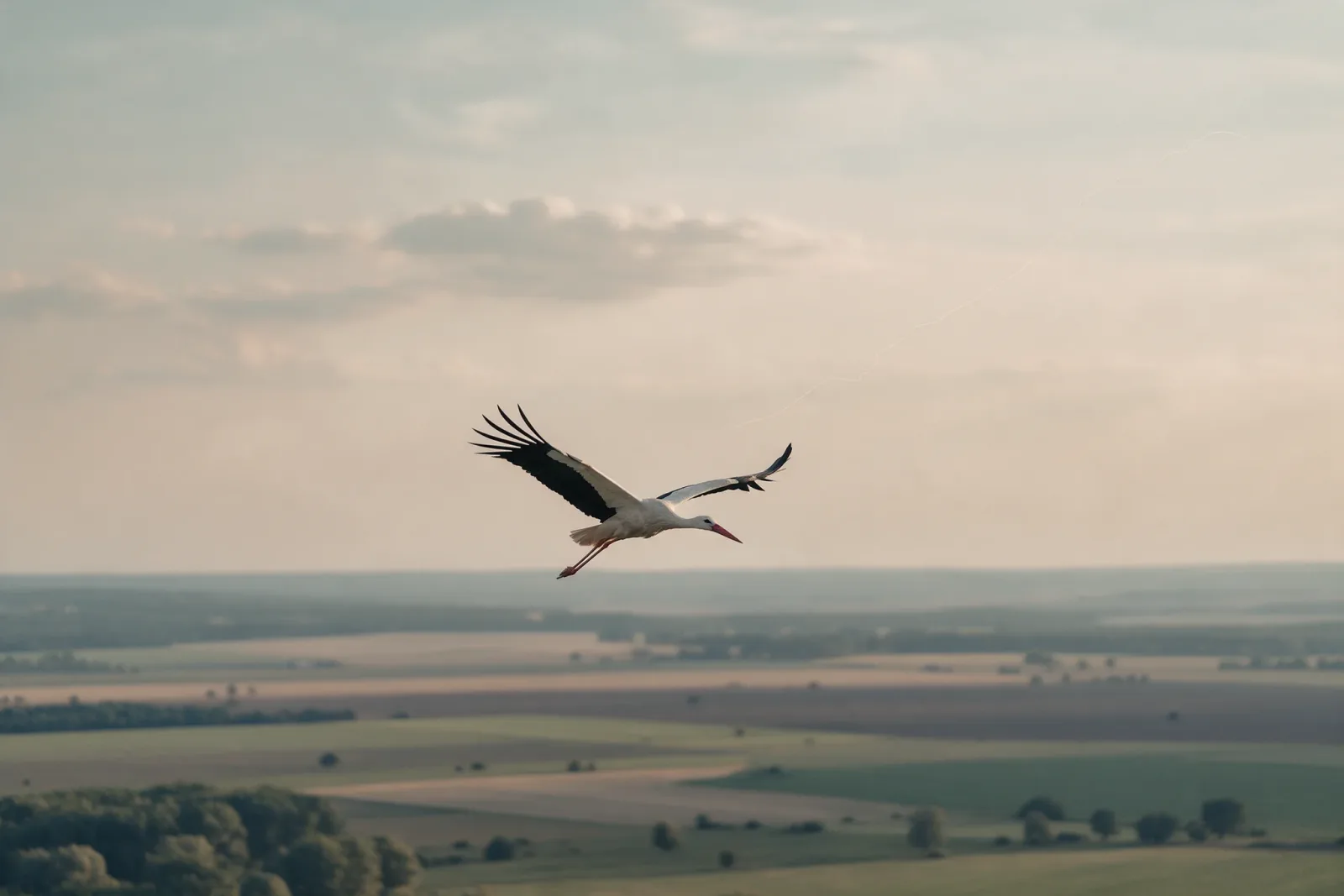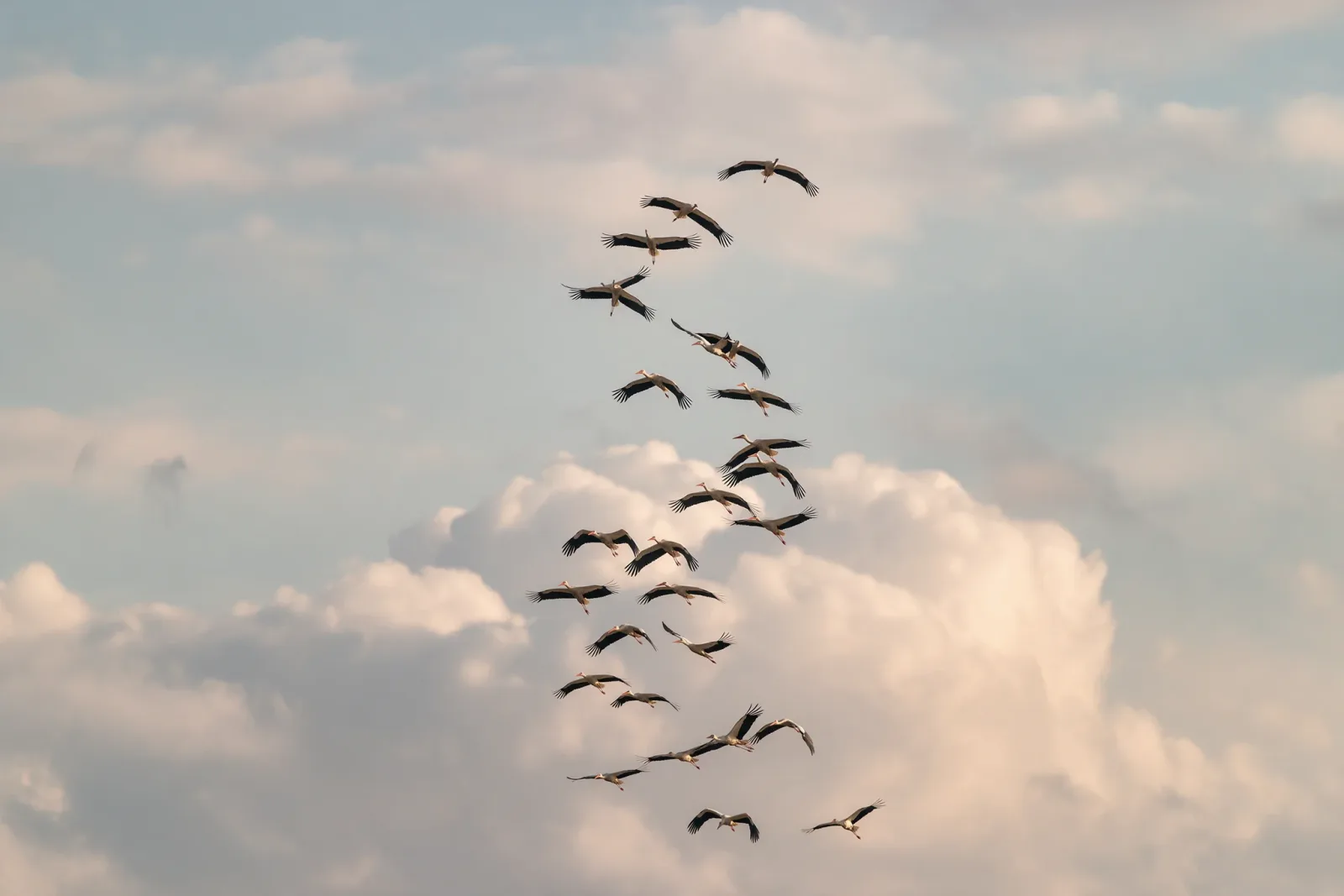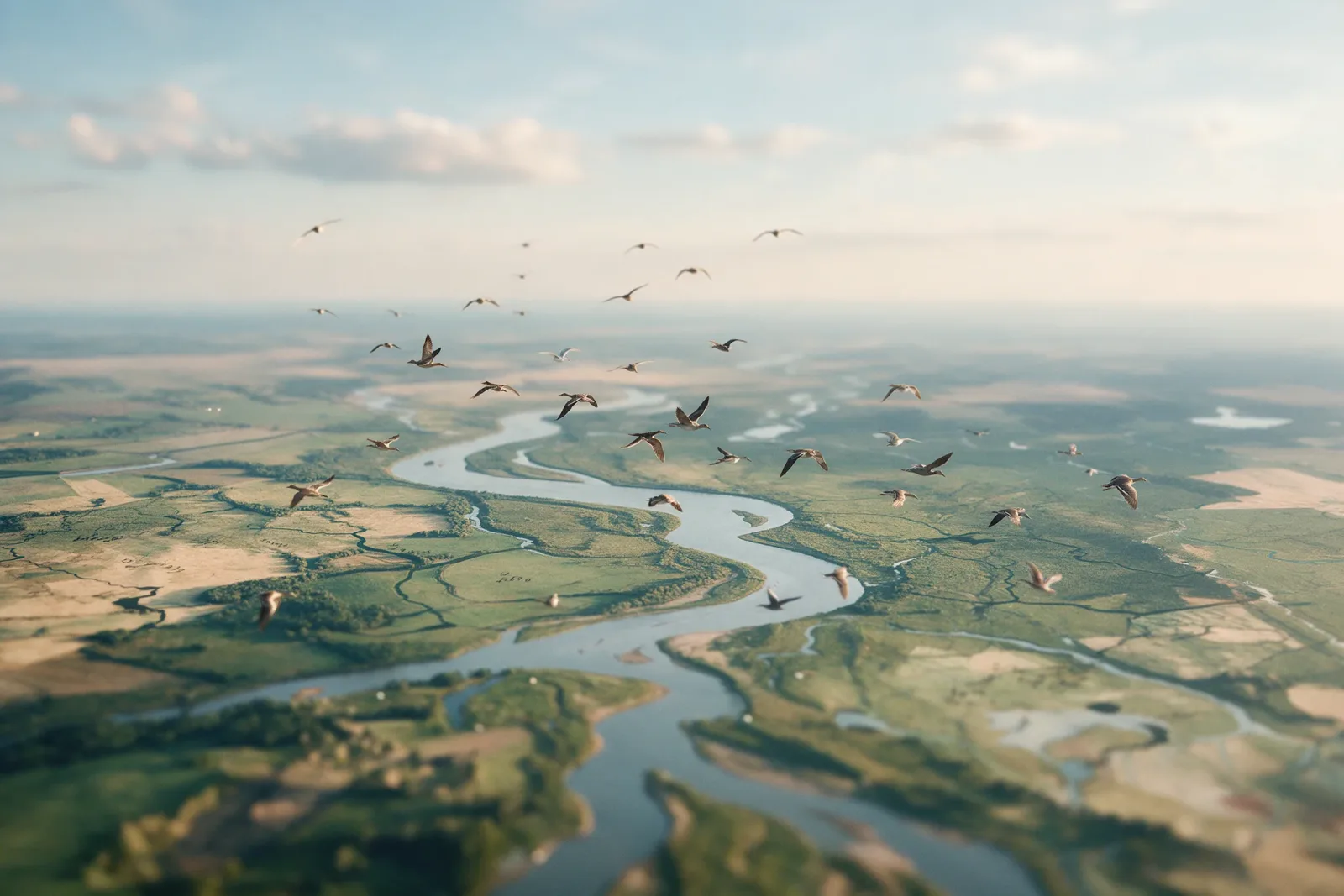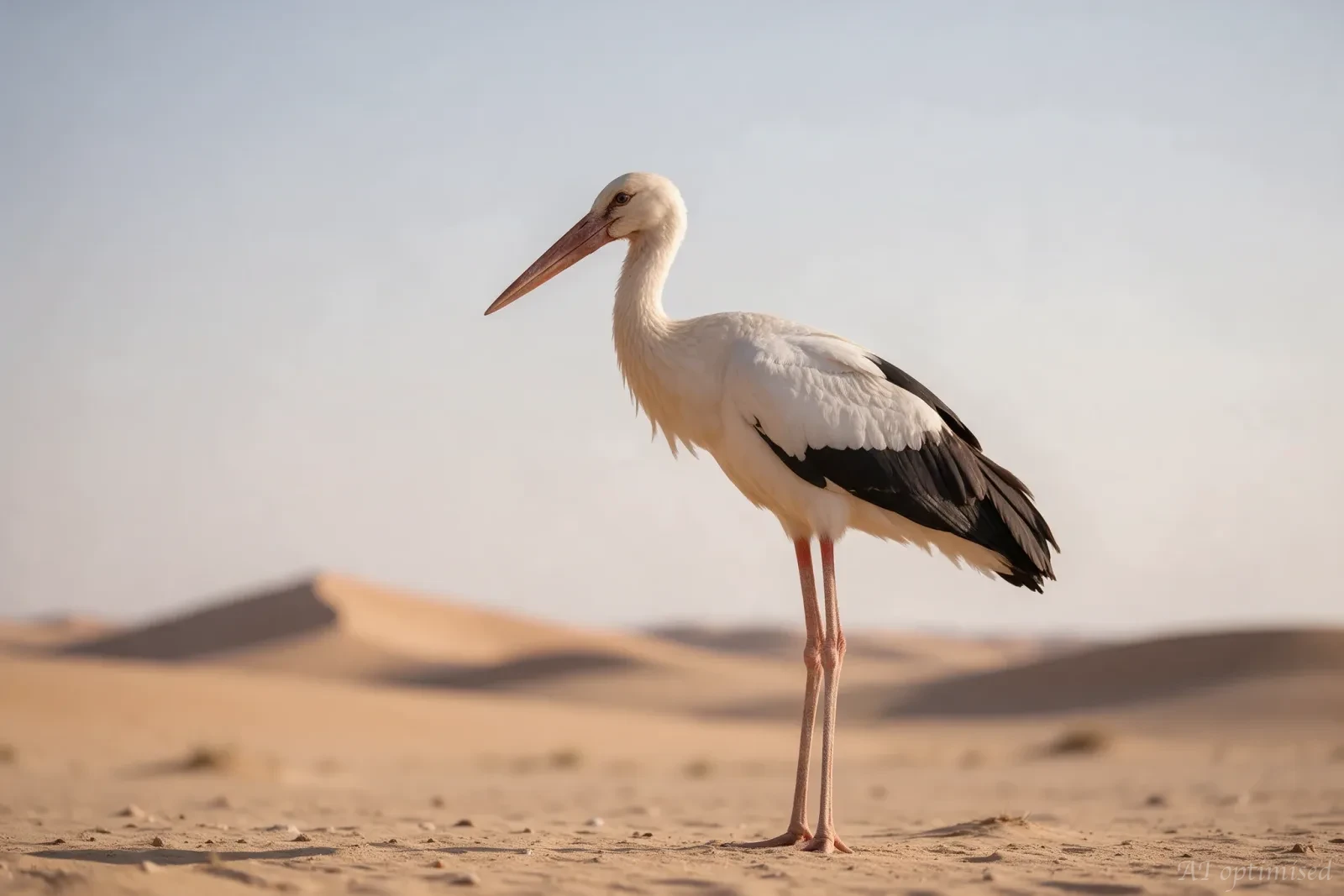
Crossing the Sahara is the hardest single stretch of the white stork's journey south. Between the green fields of Europe and the winter grasslands of Africa lies an ocean of sand and rock, a desert so wide and so dry that it has no thermals to spare in its hottest heart and no water for a tired bird. Every stork that winters in the south must find its way across this desert, and the crossing is a test of the bird's strength, its timing, and its luck.
The obstacle in the middle
The Sahara is more than empty. It is hostile in a particular way. The sun that warms the desert also makes the middle of the day too hot, and the rising air that storks rely on can be unreliable over such bare ground. There is little shade and less water. A stork crossing the desert is a long way from the wet meadows it knows, and the margin for error is thin. This is why the timing of the crossing matters so much.
Choosing the right moment
Storks do not blunder into the desert. They wait for conditions. The birds tend to cross when the weather is kinder, travelling at the edges of the day or when the winds favour them, and they often make the crossing in stages, resting where a rare patch of green or a riverbed offers a little relief. The desert is not crossed in a single heroic flight. It is crossed in careful, hard-won stages, each one bringing the bird closer to the other side.
Rest where rest can be found
In the middle of the Sahara, rest is a rare and precious thing. A stork may pause at an oasis, at a seep of water, at the thin green line of a river that cuts through the rock. These places are few, and they matter enormously. A single good rest can carry a bird through the worst of the crossing. The stork drinks, stands in the shade of whatever it can find, and then goes on, out into the heat again.
The heat and the risk
The desert is dangerous in ways the sea is not. Over the sea the danger is the water below. Over the desert the danger is the heat, the thirst, and the sheer distance between one drink and the next. A stork crossing the Sahara flies for long stretches over ground where there is nothing to eat and nothing to drink, and a bird that runs out of strength there has nowhere to fall but the sand.
This is why the timing of the crossing matters so much. The birds choose their moment, waiting for cooler days and helpful winds, and they often cross in stages, resting at whatever green they can find. An oasis, a riverbed, a thin line of trees, these are the waypoints of the desert crossing, and they can mean the difference between arriving and not.
Young storks face the desert on their first migration with no experience to draw on. They cross it because the route demands it, and some do not finish. But the desert is not a wall. It is a hard stretch of a long road, and the birds that cross it once, learn its measure, and cross it more easily the next time.
The desert asks for patience as well as strength. The birds move with the day, flying in the cooler hours and resting through the worst of the heat, and they do not hurry. A crossing that looks, on the map, like a straight line is in fact a series of careful, timed movements, each one measured against the sun.
At the far side of the desert, the first green is a kind of mercy. The land begins to soften, the birds find water, and the worst of the journey is behind them. Crossing the Sahara is the price of the south, paid once each autumn, and paid again, in the other direction, on the way home.
The other side
When the desert finally ends, the land changes. The green returns, slowly at first, then in wider and wider bands, until the stork is standing in the grass of the Sahel with food underfoot and water nearby. Crossing the Sahara is behind it, the worst of the journey done. The bird that comes down out of the desert is thinner and tired, but it is through, and the whole warm south lies ahead, waiting for it to arrive.
Explore the gift