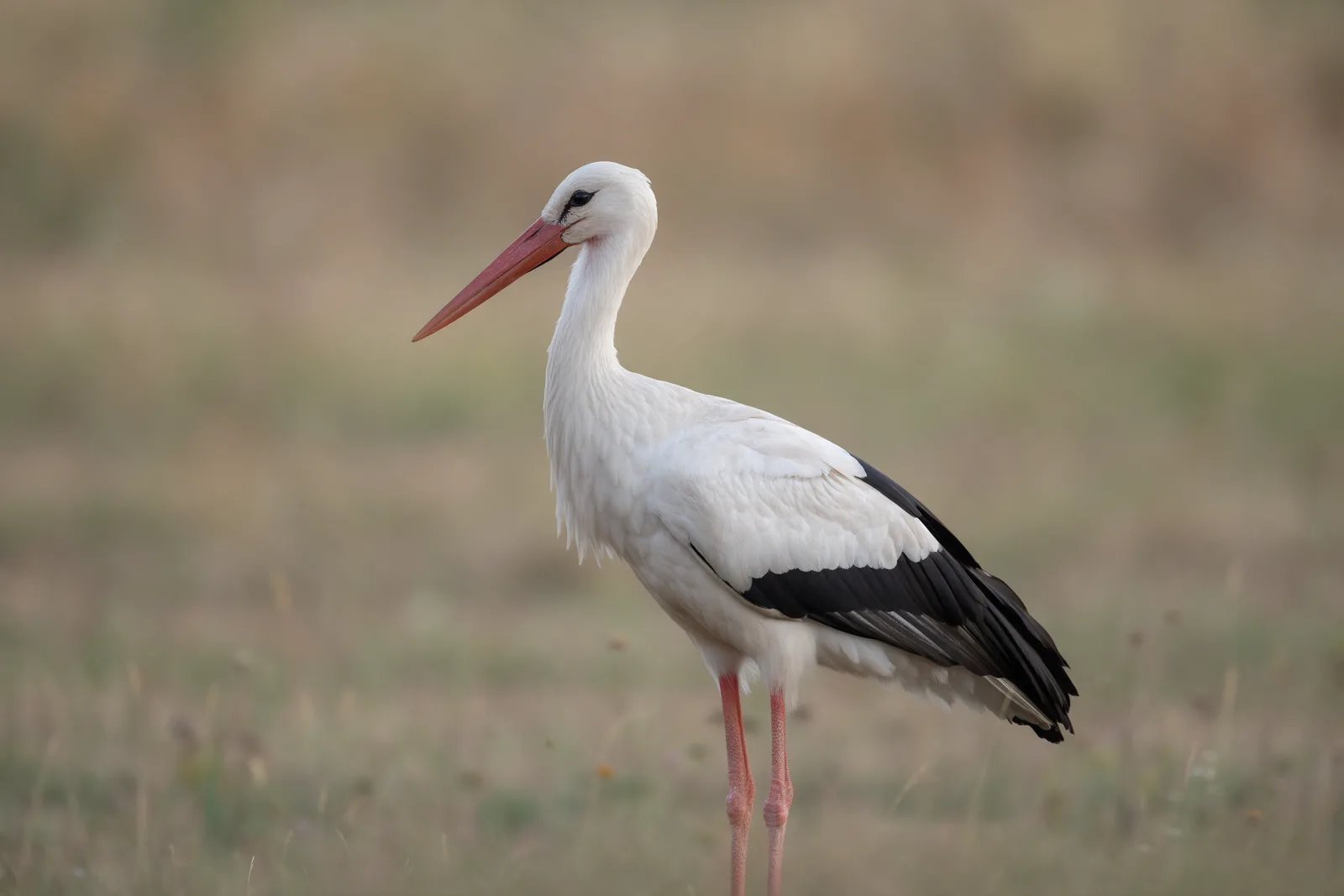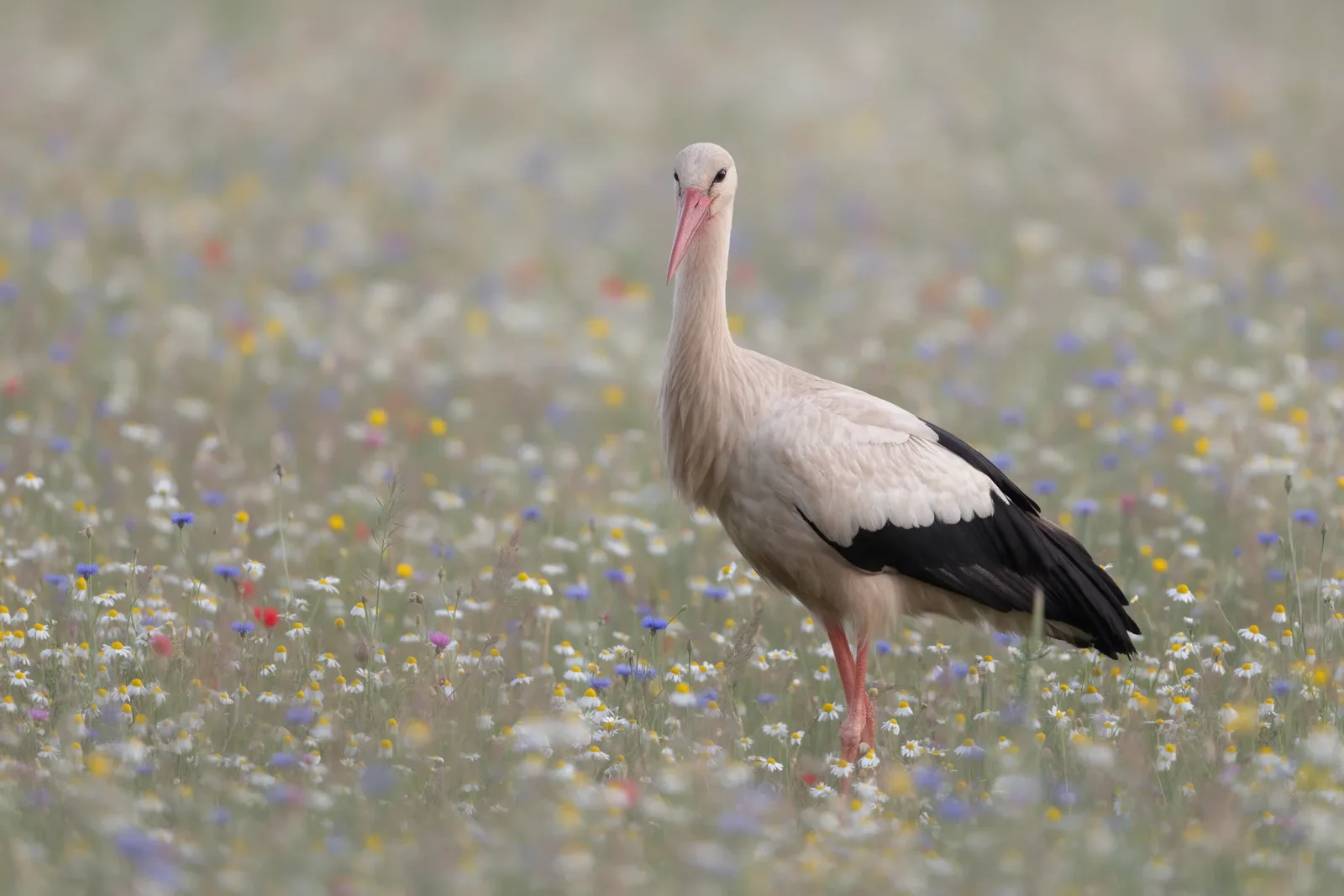
Following Ella is like reading a biography that arrives one sentence at a time, with long pauses between the pages. Ella is a white stork in the LifeTrack White Stork SW Germany study, and her whole known life can be drawn from her check-ins, the points her transmitter sends when the sun reaches it. There is no diary, no photograph, no witness. There are only the dots, and they are enough.
The first points
Ella's story begins as a cluster of points near the nest where she was ringed, a young bird staying close to home. The points are close together, unhurried, the record of a bird still learning its own neighbourhood. Even then, a reader of maps could see a certain steadiness in her, a preference for wet ground and still water.
The long southward line
Then the line lengthens. The points begin to move, and following Ella becomes following a migration. Her autumn takes her south along a route that is hers alone, a little west of some, a little east of others. The map does not explain the choices. It only records them, faithfully, the way a good biography should.
The winter cluster
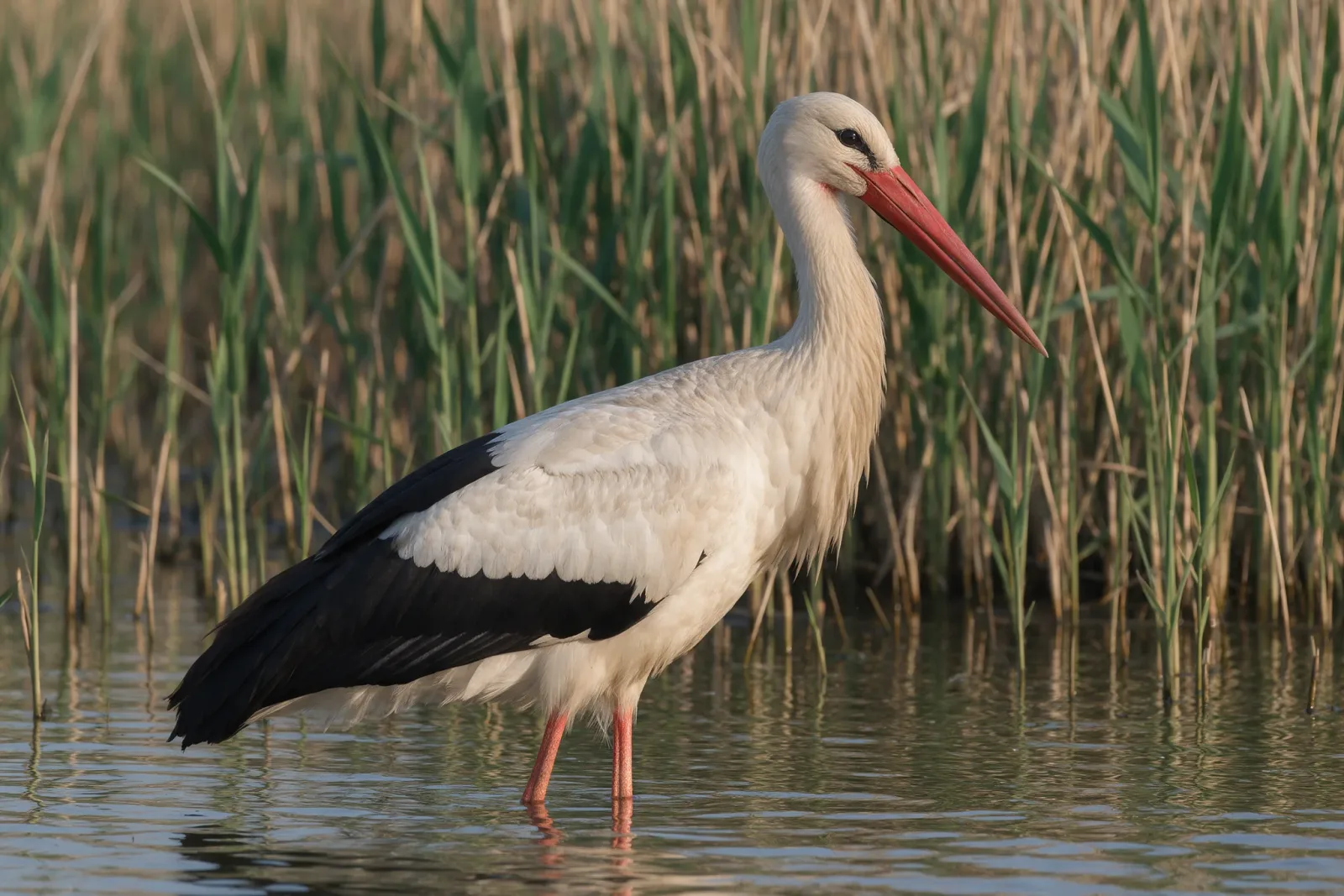
In winter the line stops moving. Ella's points settle into a warm, quiet place and stay there for months, a long paragraph of rest in the middle of her story. It is strange to look at that cluster and know that, somewhere in it, a bird is simply living, feeding, standing in the shallows, asking nothing of the world.
The return
And then, in the spring, the line turns north, faster now, more certain, and following Ella becomes a race that the reader always loses, because the bird is always further along than the map suggests. The final points land on the old nest, and the biography closes its first chapter.
There will be more chapters, more check-ins, more quiet facts about a bird whose whole story fits on a single map. Following Ella is not dramatic. It is, in the truest sense, a life.
Explore the gift