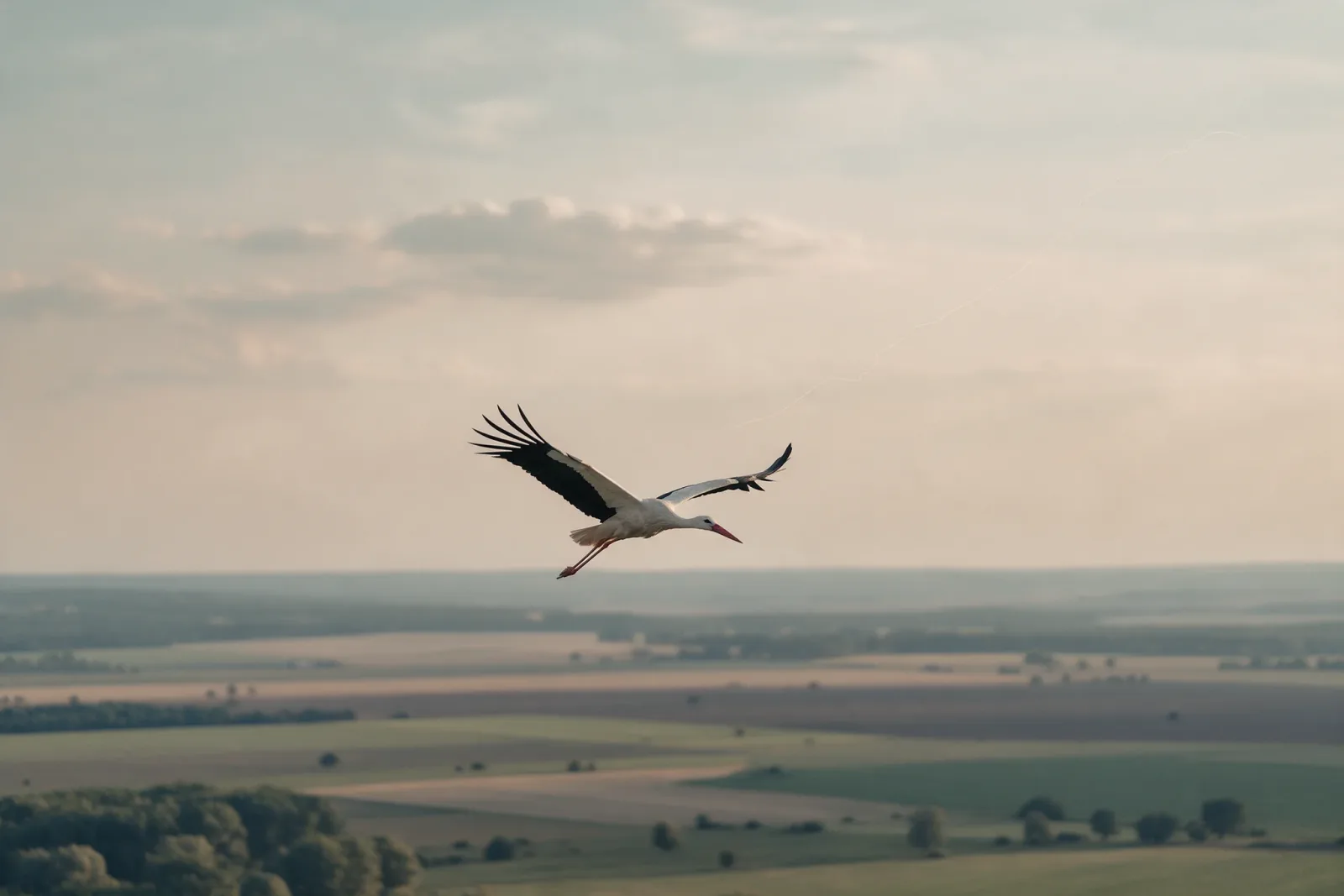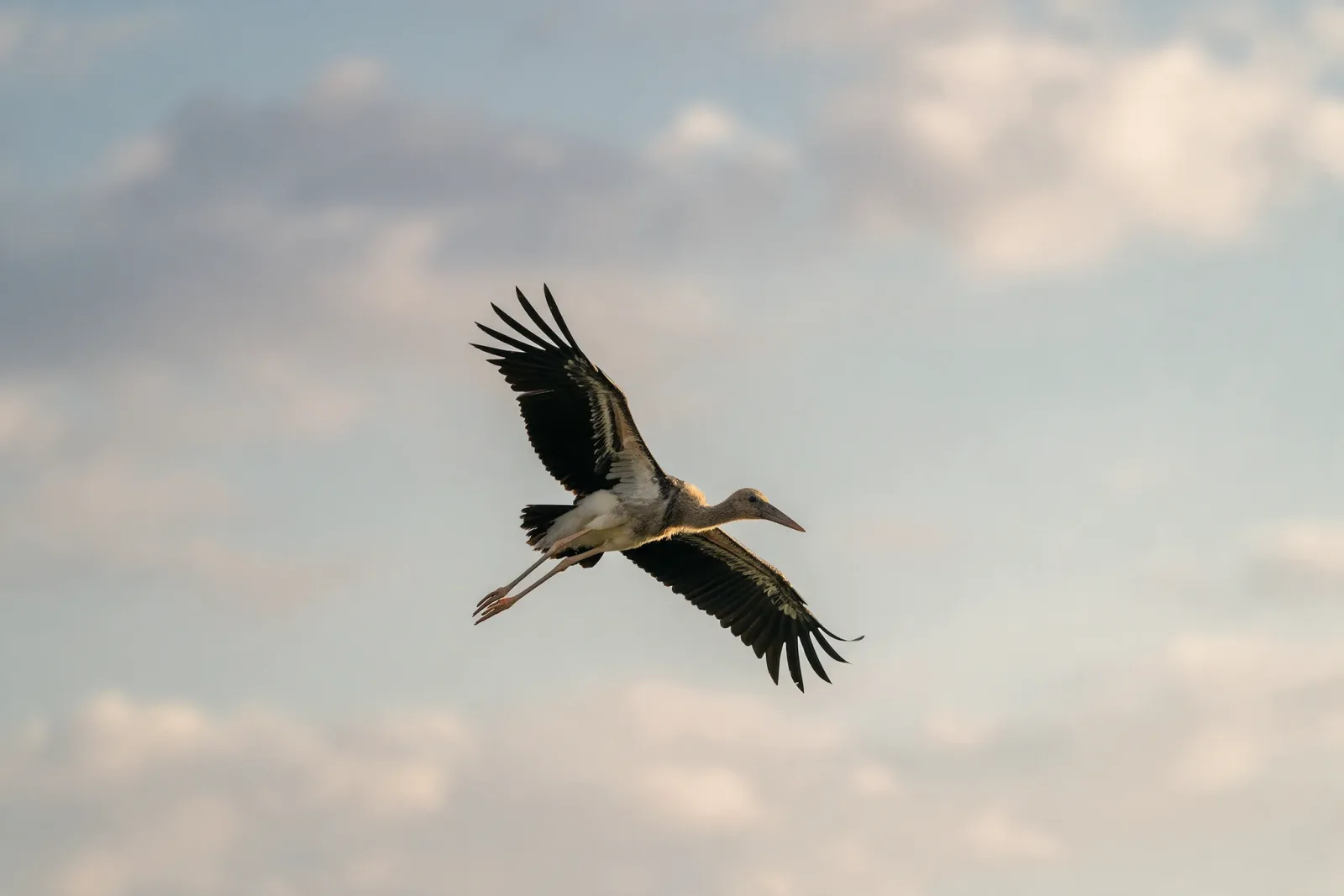
The first migration is the great unknown of a young stork's life, and it is made without a teacher. A stork hatched in the spring has never seen the route south, has never crossed the sea or the desert, has no parent flying beside it to point the way. And yet, in its first autumn, it leaves the nest and sets off toward Africa, carrying nothing but an instinct that no one explained to it. The first migration is the moment a bird proves that the map was inside it all along.
The urge to go
The young stork does not decide to migrate the way a person decides to take a trip. The urge rises in it as the days shorten and the air cools, the same pull its parents feel, the same pull every stork has felt since the species began. The bird grows restless, testing its wings, and one day it simply leaves, launching from the place it was born and turning south. No one waves it off. No one shows it the way. It goes because it must.
The inherited map
How does a bird that has never made the journey find its way? The answer is inheritance. The direction, the timing, the general shape of the route are written into the bird's nature, passed down through generations the way the shape of its wings is passed down. The young stork knows, without being told, to head south, to follow the warm air, to avoid the open sea. It is not taught. It is born knowing, and the knowing carries it across a continent.
The dangers of the first trip
The first migration is the most dangerous journey a stork will ever make. The young bird is unskilled and untested, and it faces seas and deserts and weather it has never seen. Some young storks do not survive their first autumn. Others wander, or turn the wrong way for a while, or take a route that costs them dearly. The first migration is a trial, and it separates the strong from the lost. But for the bird that makes it, the lesson is worth everything.
Alone but not unguided
The young stork leaves on its first migration without a teacher, but it is not truly alone. It carries the whole history of its kind, the accumulated knowledge of every stork that ever flew the route, written into its instincts. That inheritance is its guide. It tells the bird which way is south, when to leave, and how to find the warm air that will carry it, and it does so without a single spoken word.
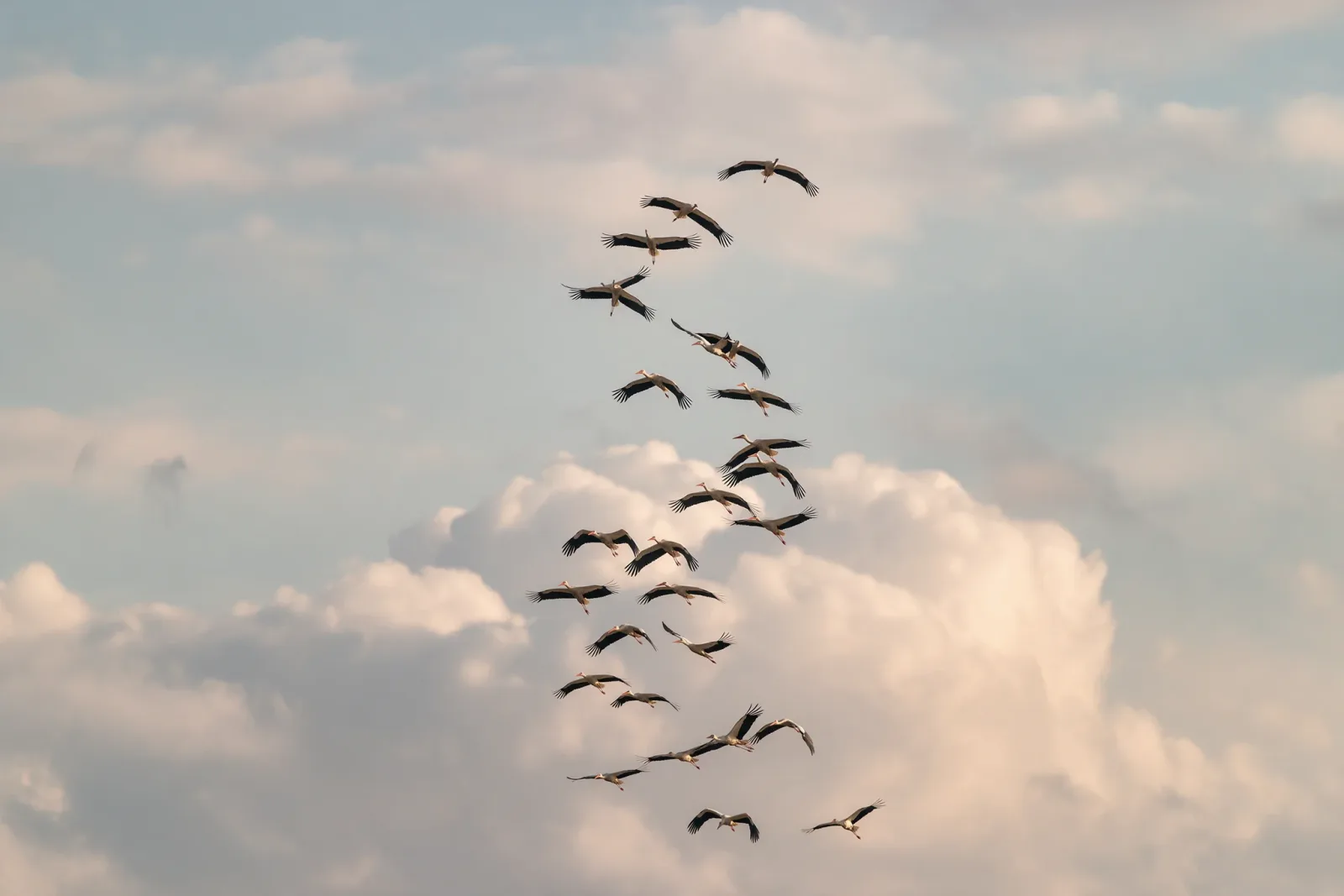
Sometimes the young bird does not travel entirely by itself. Young storks often set out in loose flocks of other first-time travellers, and the company helps. But the direction is not given by the flock. It is already inside each bird, the same arrow in all of them, pointing the same way. The flock follows the instinct. The instinct does not follow the flock.
The first migration is also a process of learning. The young bird makes mistakes, wanders, hesitates, and by the time it reaches the south it knows the route in a way it did not when it left. What began as instinct becomes experience, and the bird that was following an inherited map has, by the end, drawn one of its own.
The first migration is the making of the bird. It arrives in the south not as the nestling that left, but as a traveller, tested by sea and desert and wind. From that autumn on, it is a different creature, one that knows what it is capable of, and the long road north, when the spring comes, will be a road it has already travelled once.
The arrival that proves it
When a young stork finally comes down into the warm south, having crossed everything between the nest and the winter fields, it has done something no one showed it how to do. It has proved that the journey is real, that the map is true, that the instinct it was born with can carry it all the way. The first migration is behind it now. The bird will make the journey again, and it will know the way, because it has already flown it once, alone, and arrived.
Explore the gift