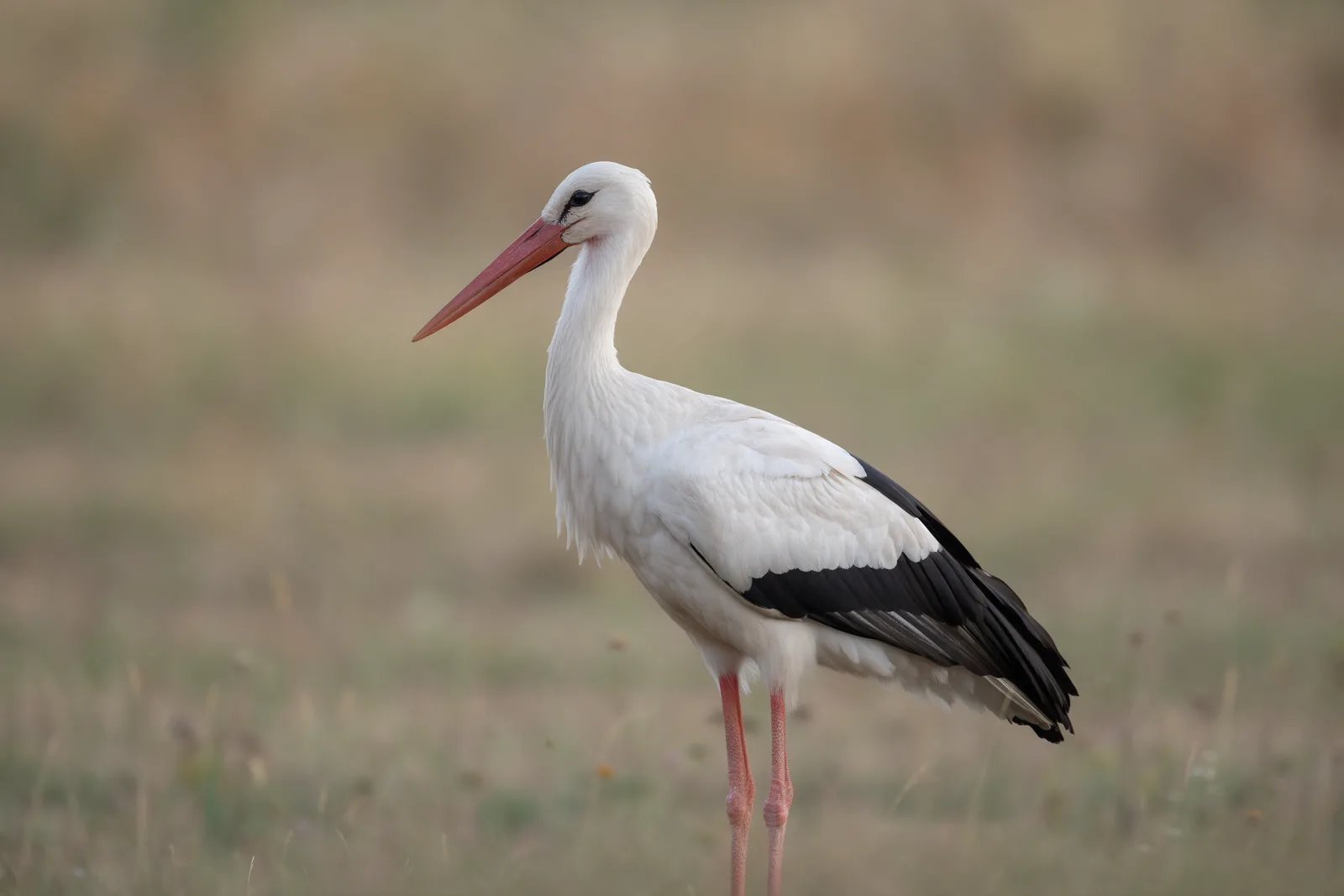
The quiet one is the stork whose transmitter speaks only now and then, and it is perhaps the most patient lesson the LifeTrack White Stork SW Germany study has to offer. Most of the study's birds check in often, their points marching across the map in a steady line. The quiet one does not. Its signals come rarely, with long gaps between them, and the map shows long stretches of nothing at all.
The long silences
A gap in the data can mean anything. The bird may be somewhere the sun does not reach its tag for days, or somewhere the signal cannot get through, or simply too high and too far away. The quiet one's silences are not a message. They are just silence, and the people who follow it have learned not to read too much into them.
What patience looks like
Following the quiet one is an exercise in waiting. There is no daily check that ends in news, no comfortable rhythm of arrival. Instead there is a kind of trust, the trust that the bird is still out there even when the map says nothing. That trust is harder than it sounds, because it asks us to be still and accept not knowing.
The reward of a single point
And then a point appears, and it is worth more than a hundred ordinary ones. A single dot after a long silence is a small victory, proof that the bird endured whatever the silence hid. The people who follow the quiet one talk about these moments the way sailors talk about a light on shore. One point, and the whole blank stretch is suddenly worth it.
What it teaches a child
There is a lesson here for a child, though it need never be spoken aloud. Not everything good announces itself constantly. Some things come rarely, and are the better for it. The quiet one teaches patience without a single word of instruction, simply by being itself.
The quiet one may never be the favourite, the bird everyone checks first. But it is the bird that teaches us how to wait, and waiting is a gift of its own.
Explore the gift