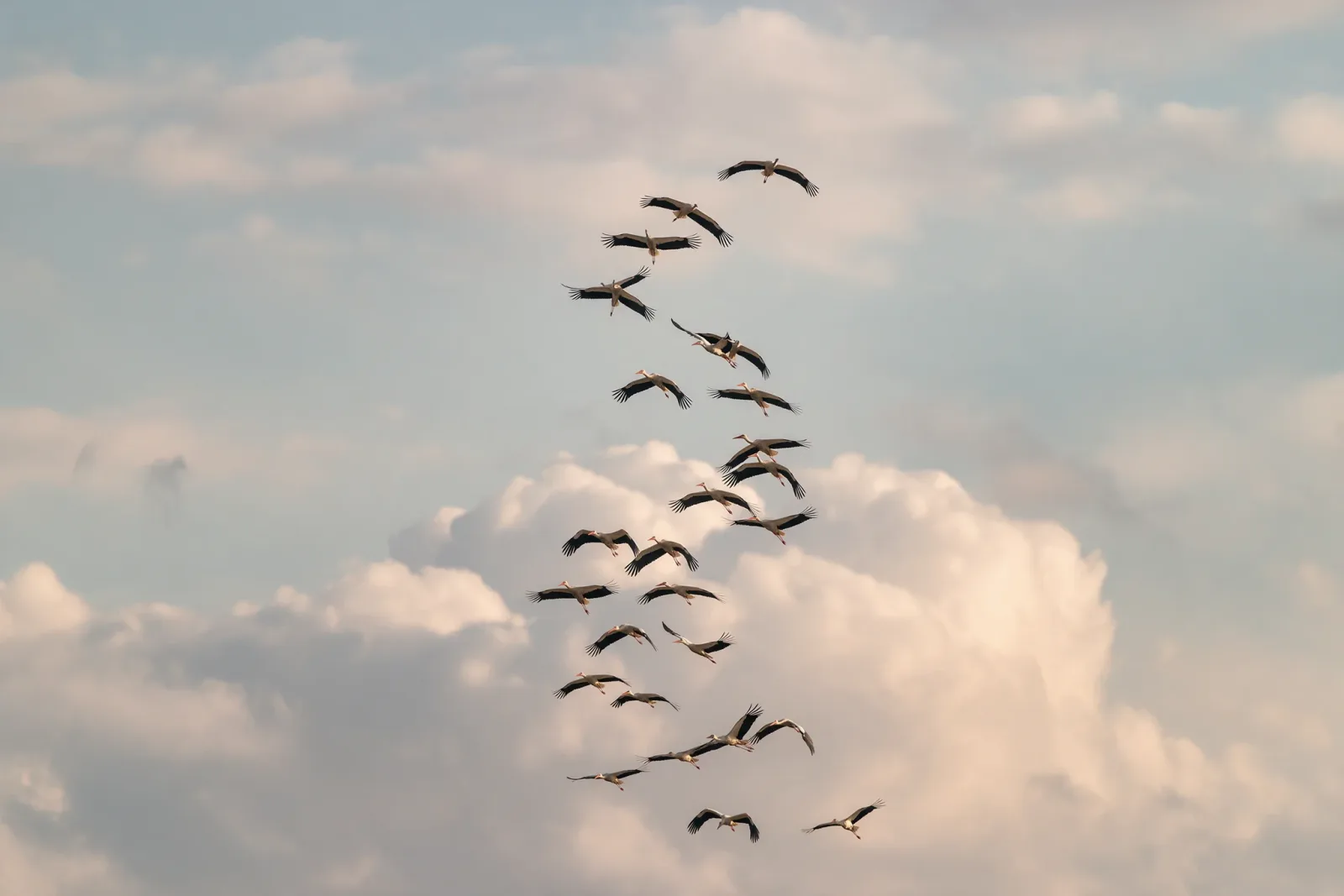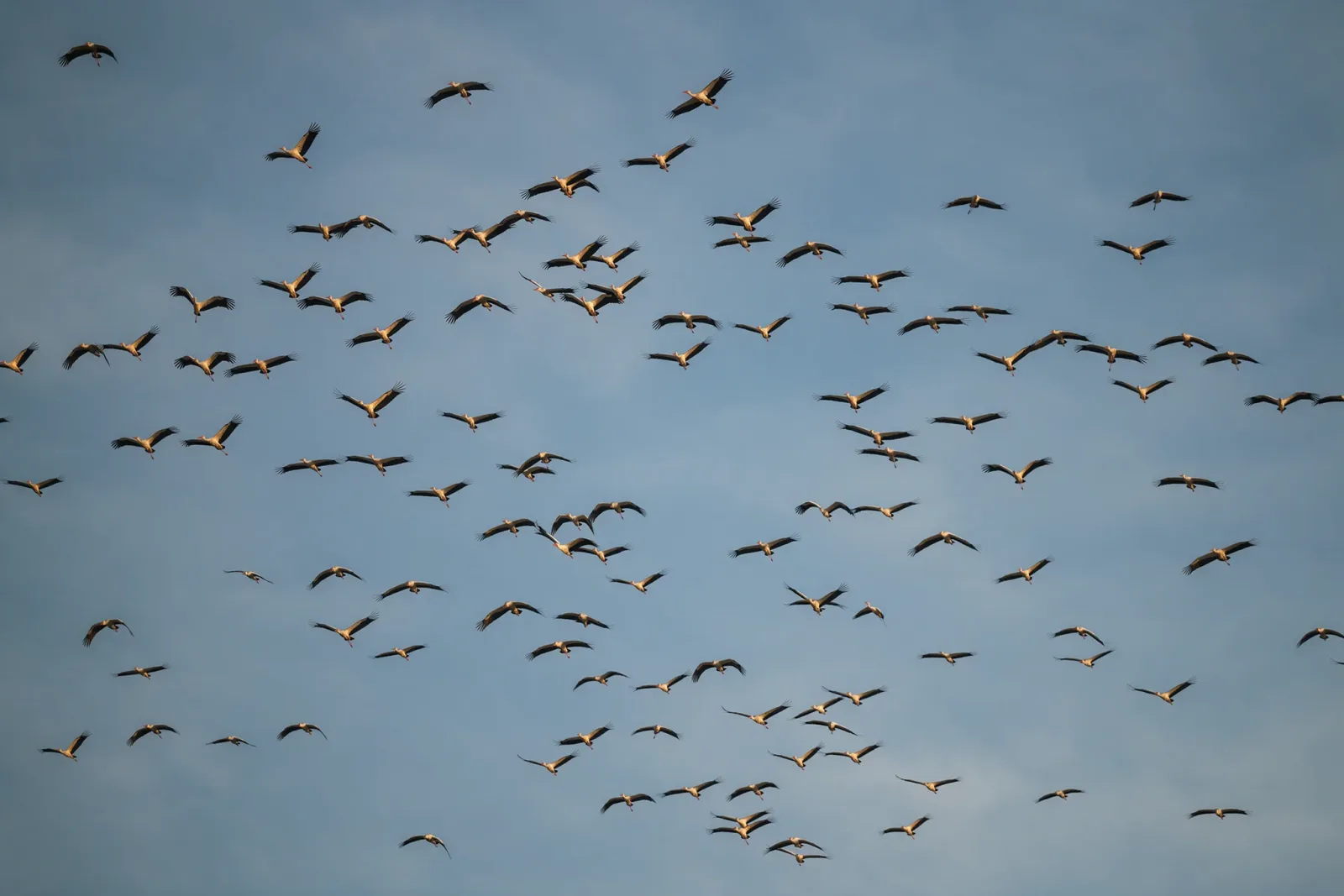
Why do they fly in flocks? The simple answer is that the sky is safer and easier when it is shared. A stork migrates in company because there is strength in numbers, and because a whole flock can read the air better than a single bird ever could. Watch a migrating flock and you see it working. When one bird finds a thermal, the others see it rise and join it, and the whole group climbs together on the same lift, saving each bird the effort of searching alone.
The wisdom of many eyes
A flock has many eyes, and many eyes find things faster. One stork spots a good thermal, or a coming change in the weather, or a stretch of land worth resting in, and the whole group benefits. A lone bird must find its own way through every mile. A bird in a flock can follow the ones who have already found the way. In the long, uncertain business of migration, shared knowledge is a kind of currency, and the flock spends it freely.
The safety of numbers
There is safety in a flock. A group of many birds is harder for a predator to surprise than a single one, and a bird flying alone has no warning when trouble comes. In a flock, the birds watch for each other, and the sudden movement of one becomes a warning to all. For a young stork on its first migration, the company of older birds is more than comfort. It is protection, and a lesson, and a guide all at once.
The shared climb
The energy savings of flocking are real. When one stork finds a rising thermal, it begins to climb, and the others see it and come to the same column of warm air. They climb together, dozens of birds on one current, each one gaining height with almost no effort. A lone stork must find its own thermals, and a thermal missed is energy lost. The flock turns the search for lift into a shared task, and the whole journey costs each bird less than it would alone.
The shared thermal
The practical heart of flocking is the shared thermal. When one stork finds a column of rising air, it begins to climb, and the others see it and come to the same lift. Soon the whole group is turning upward together, each bird gaining height on the same free current. A single bird must find its own thermals all day, and a thermal missed is energy lost. In a flock, the search is shared, and the finding is shared too.
The benefit is not small. Migration is a matter of energy, and every lift a bird can borrow from another is strength saved for the long miles ahead. Flocks climb higher and travel farther than lone birds, on average, because they find the air faster and use it better. The sky is easier to read when many eyes are reading it at once.
There is a rhythm to it, a kind of shared attention. The birds watch one another constantly, and the whole flock moves like a single loose body, rising and gliding and turning as one. No one bird leads for long. The leadership passes among them as each finds the lift and shares it with the rest.
For a young stork, the flock is also a school. Flying among older birds, it learns where the thermals rise and where the route bends, not by being taught but by following. The first migration is made easier by the company, and many young birds owe their first winter in the south to the flock they travelled with.
The company of the road
There is also the simpler truth. Migration is long, and the road is better with company. The storks do not chat as we do, but they travel together, turning and climbing and gliding in one another's company, and the presence of the flock seems to steady them. Why do they fly in flocks? Because a journey this long was never meant to be made alone, and because the birds, in their own wordless way, understand that many wings carry each other farther than one ever could.
Explore the gift