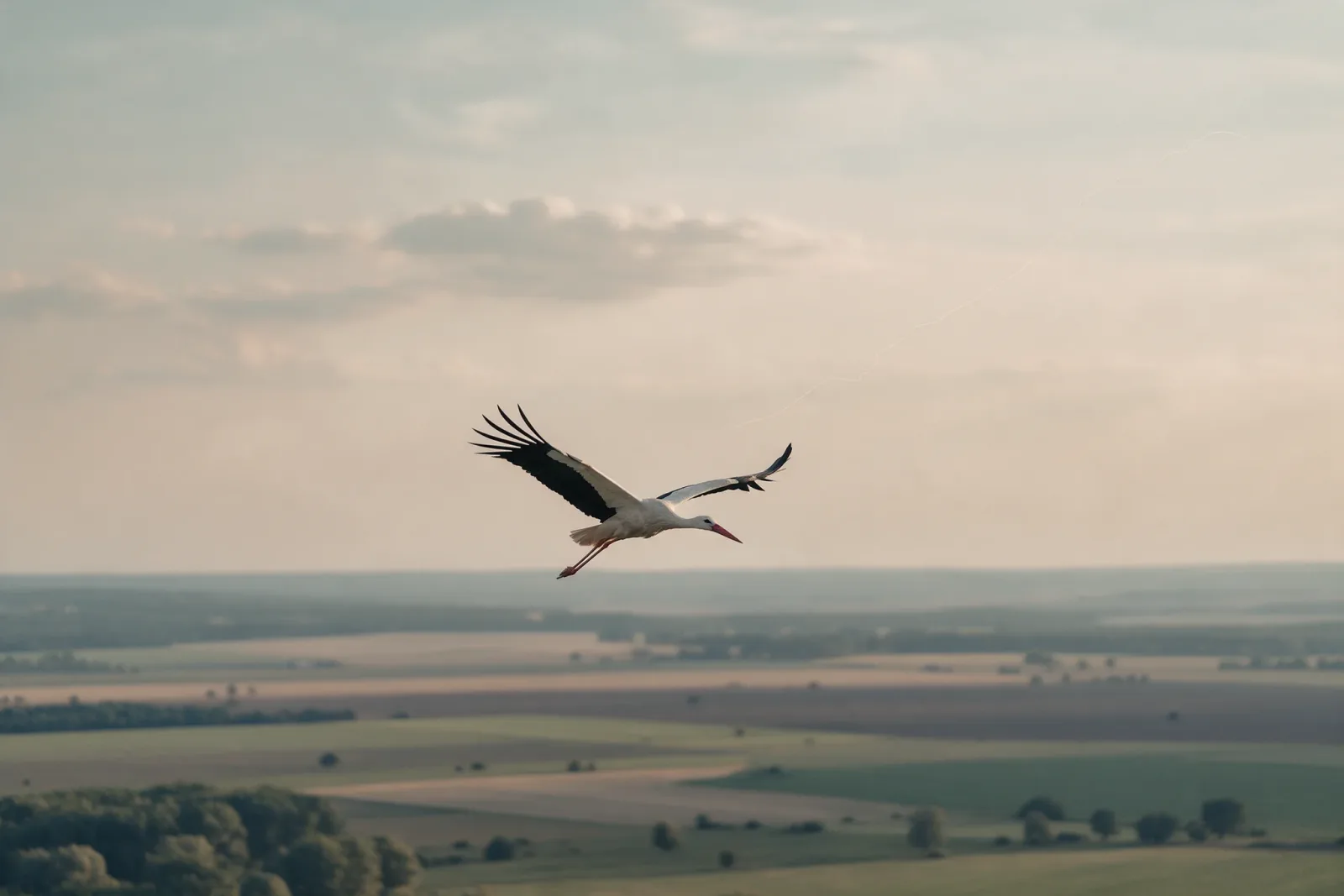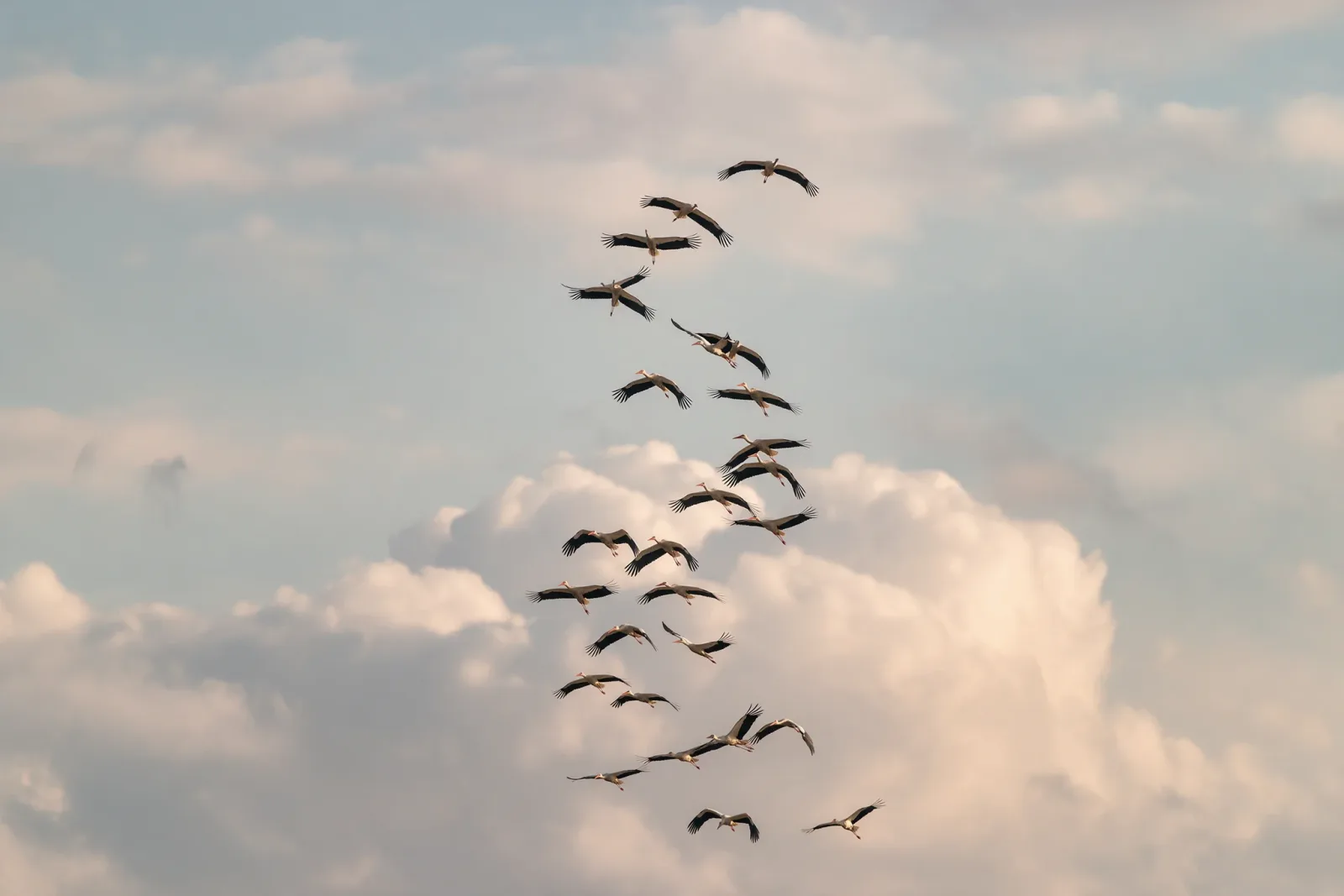
Wintering in Africa is the reward at the far end of the long journey south. A white stork hatched on a European rooftop spends its summers raising young in a cool, northern light, and then, when the days shorten, it flies away to spend the winter in a place where the light is warm and the ground is soft with life. For a season, the bird is not a northern visitor. It is a resident of the south, living quietly among creatures it would never meet at home.
A different world
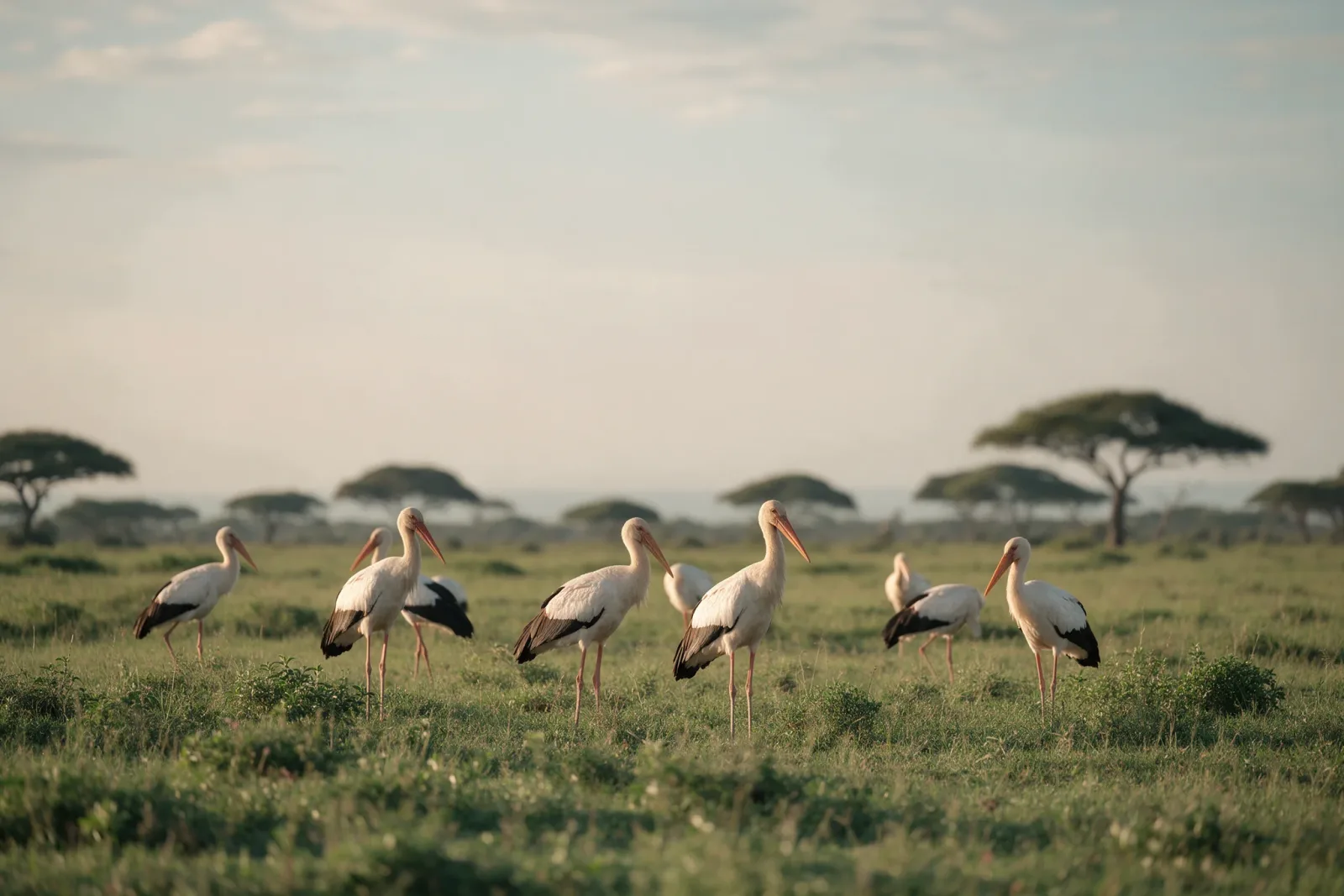
The white stork's winter lands are mostly in sub-Saharan Africa, in the grassy savannas and wet meadows and farmlands of the continent's warmer half. The bird that stood on a chimney in spring now stands among acacia trees and tall grass, sharing the water with cranes and antelope and the endless insects of the wet season. It is the same bird, but the world around it has changed entirely, and the stork takes to it with the ease of something that has always belonged.
The quiet work of feeding
Winter is not a rest for the stork so much as a slow season of feeding. The bird moves across the land, finding insects and small creatures in the grass, drinking where the water stands, resting in the heat of the afternoon. There is no nest to build, no chicks to feed, no territory to defend. There is only the simple work of staying alive and growing strong. The bird that leaves Africa in the spring is heavier, fuller, and ready for the long flight north.
Not every stork goes the same distance
Some storks winter in the north of Africa, in the greener parts of the Mediterranean coast. Others travel much farther, deep into the southern continent. The distance depends on the bird, the route, and the weather of the year. But the pattern is the same everywhere. The stork leaves the cold behind, finds a warm place, and waits out the northern winter there, far south of the nest where it was born.
A resident of the south
Once the journey is over, the stork stops being a traveller and becomes, for a while, a resident. It joins the daily life of the southern land, feeding and resting and moving with the rains, as much a part of the place as the acacias and the termite mounds. A bird that stood on a European chimney in spring now stands among animals it has never shared a field with, and it goes about its winter with the ease of something that has always belonged there.
The winter is not a long holiday. It is a working season, a time of eating and building strength, and the stork spends it quietly. It follows the insects and the wet grass, moving when the food moves, resting through the heat of the day. There is no nest to defend, no chick to feed, and the bird's life narrows to the simple business of staying fed and strong.
For a young stork on its first winter, this season is its first taste of the south, and it will carry the memory of it north again. The places it learns to feed, the fields it learns to trust, will be there for it next winter and the winter after. Wintering in Africa is how a stork becomes a bird of two worlds, at home in both and loyal to the long road between them.
The southern winter is also where the bird rests from the road. The long flight south is behind it, the long flight north still ahead, and in between lies this season of calm, of warmth, of food found in tall grass. It is the reward the journey was made for, and the reason the bird will make it again.
The waiting season
Wintering in Africa is a season of patience. The bird does not hurry. It follows the food, drifts with the rains, and lets the weeks pass. Then, somewhere in the turning of the year, a change comes over it. The days lengthen, the air warms at home, and the old pull toward the north returns. The stork that flew south alone and free will now gather its strength and begin the long journey back, leaving the warm south behind for the nest it remembers.
Explore the gift