A keepsake, not clutter, is the standard every baby gift should have to meet. New nurseries fill up fast. There are clothes and toys and gadgets and blankets, and within a year most of it is surplus, boxed up or given away or quietly buried under the next layer of things. The gifts that survive are the ones that earned their place. They are few, they are chosen, and they stay. The question for anyone giving a gift is simple: will this earn a permanent place in the nursery?
The problem of too much
Babies need very little and receive a great deal. That gap, between what a newborn requires and what a newborn is given, is where clutter grows. None of it is bad. It is all given with love. But a shelf crowded with objects is not a warm room. It is a room that has stopped breathing.
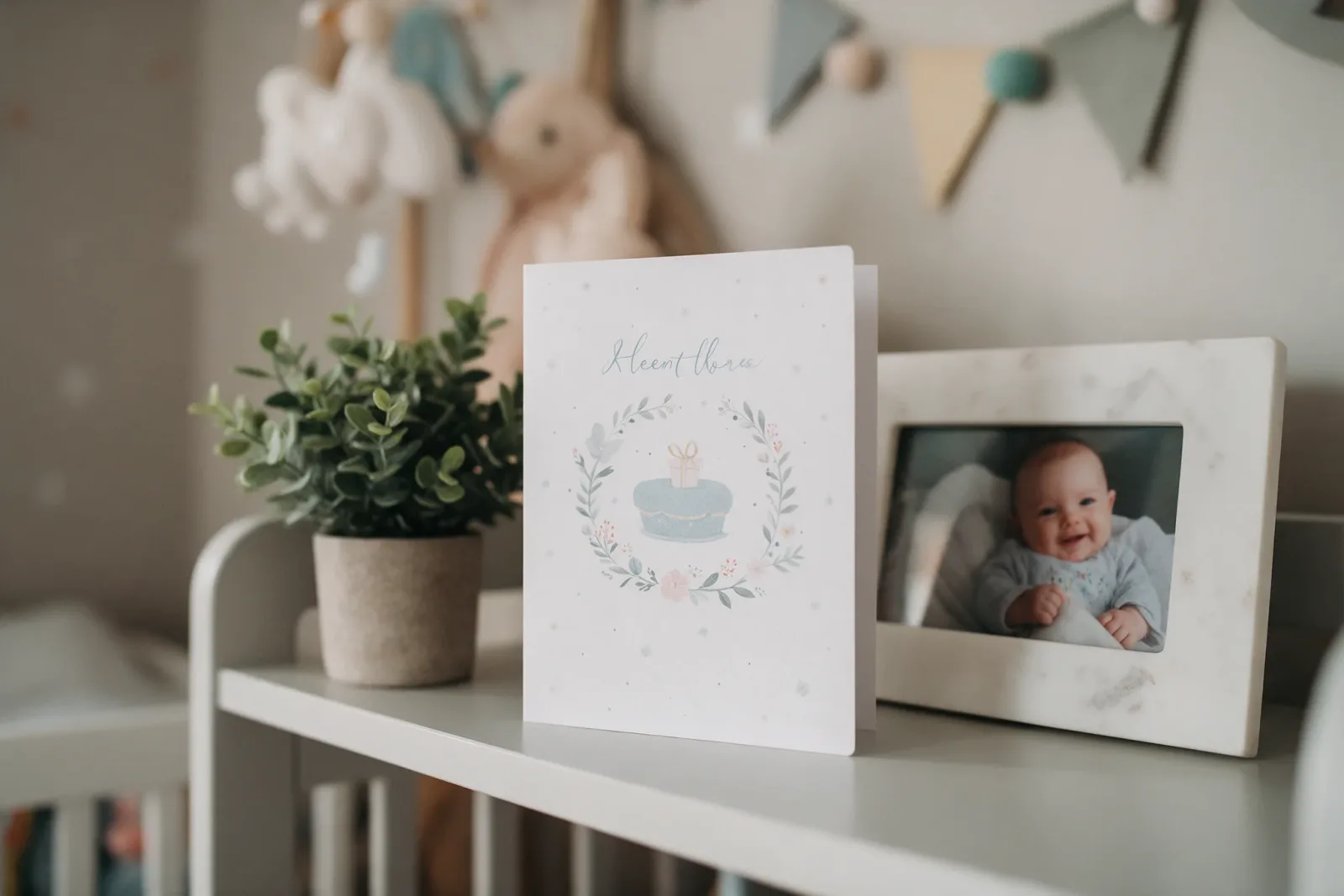
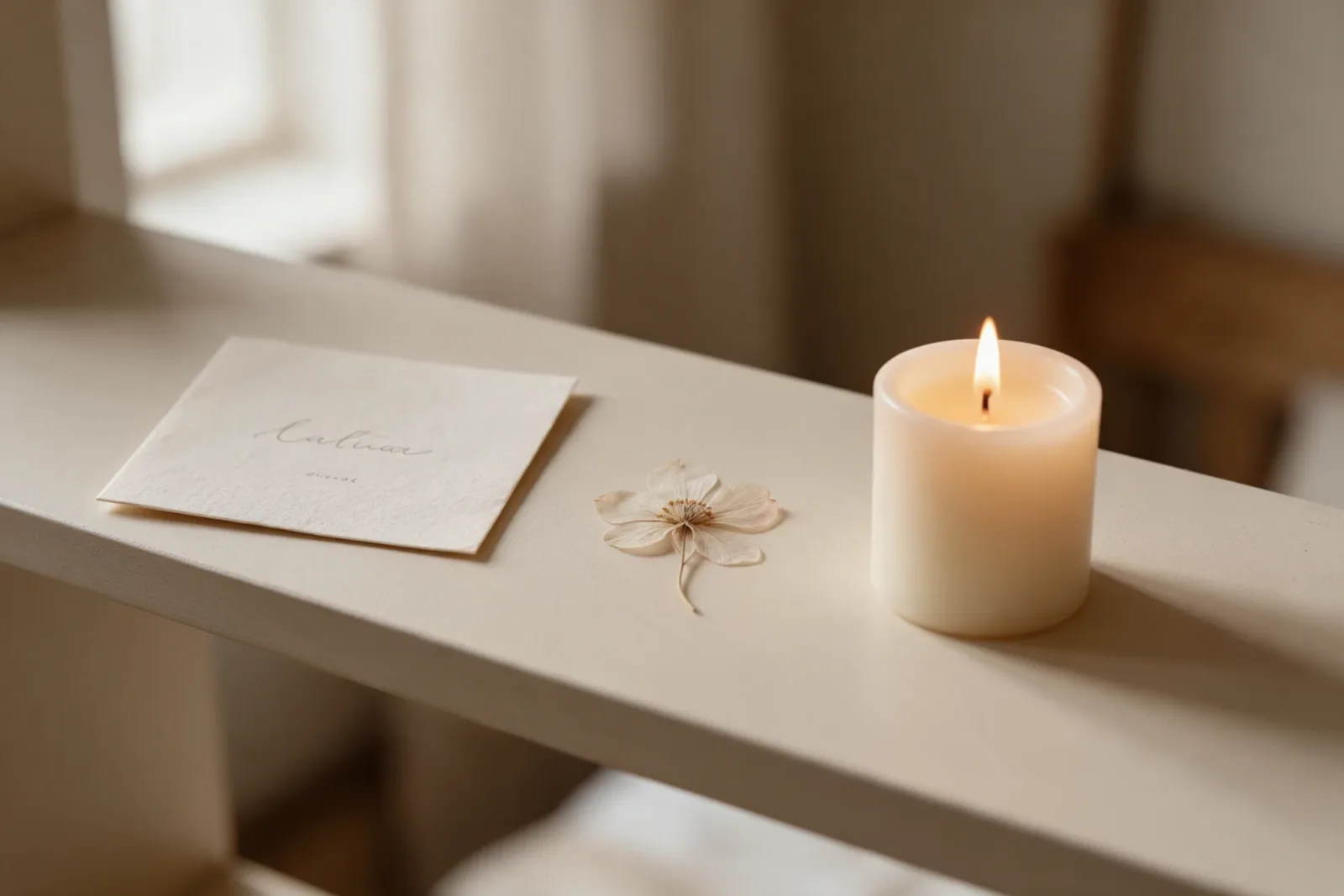
A calm nursery holds a few things that matter: a tidy shelf, one card, a pressed flower, a candle. The restraint is the point. When there are only a few objects, each one gets to mean something.
What makes something worth keeping
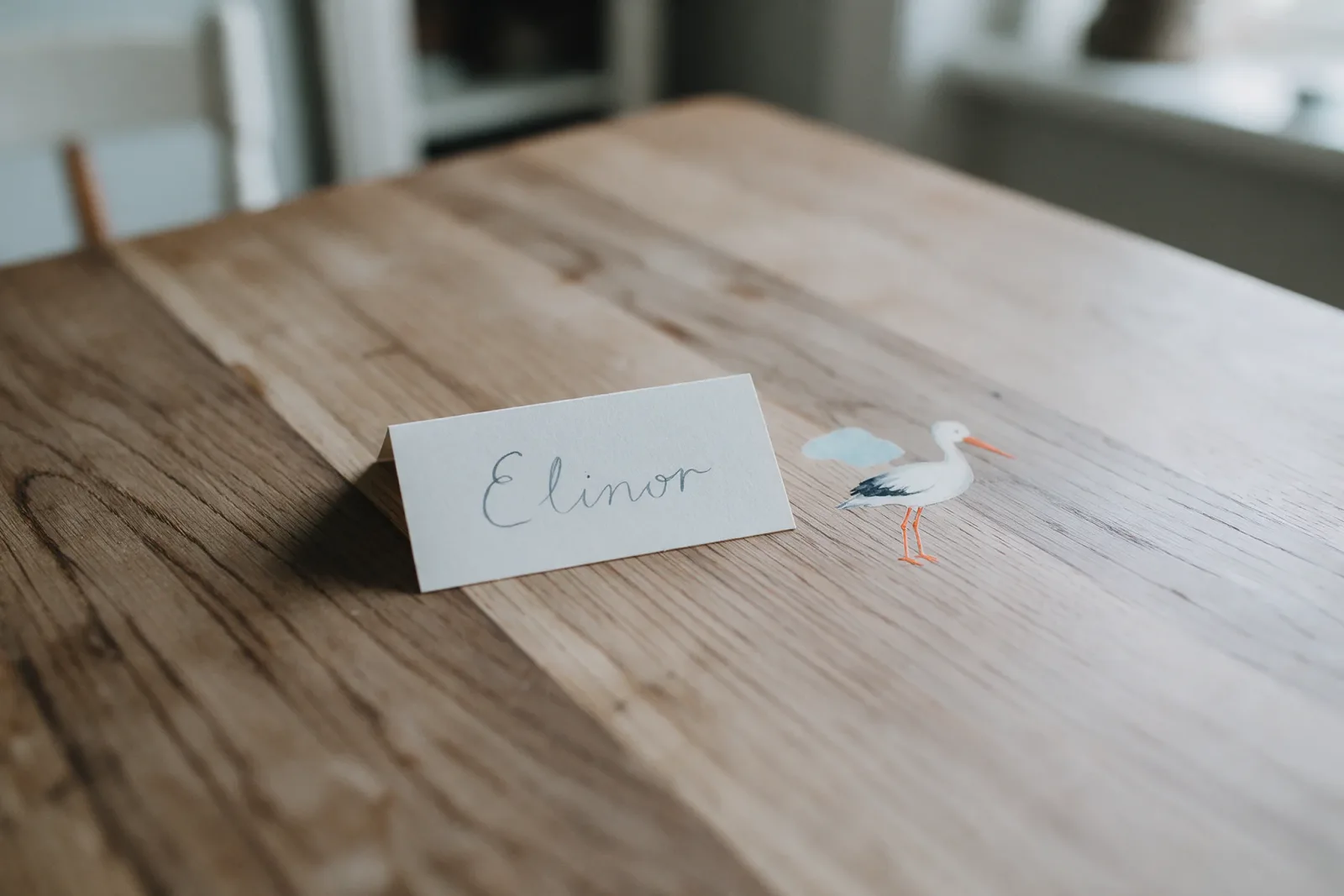
An object earns a permanent place when it keeps its meaning over time. A keepsake is not kept because it is pretty, though it may be. It is kept because it points to something the family does not want to forget. A card that carries the name of a real white stork points to the day the baby arrived, and to the bird that has been flying ever since.
It is a small anchor. It holds a memory in place, and it holds a story open, and those are two of the only reasons any object deserves to stay.
The one thing over the many
There is real wisdom in giving a single thoughtful thing rather than a bag of them. One card, carefully chosen, will outlast a dozen toys because it was never competing with them. It sits on the shelf as its own category, a keepsake rather than a possession. That distinction matters. Possessions get used up. Keepsakes get kept.
When the nursery is eventually tidied and sorted, the keepsake is the thing that stays on the shelf while the outgrown clothes go into a box for the next baby.
A place that stays empty for it
The true test of a keepsake is whether the family would notice its absence. Clutter is never missed. A keepsake is. A gift that carries a bird's name creates its own place in the room, and that place stays filled year after year, through repaintings and rearrangements and the slow growth of the child who lives there.
That is what it means to choose a keepsake and not clutter. You are not adding one more object to the pile. You are giving the family one small, permanent thing, the kind of thing a room is quietly built around.
The shelf that holds what matters
A nursery shelf is a small museum of a family's beginnings. It holds the things that survived the sorting, the objects that earned their place. A keepsake that carries a stork's name belongs there, beside the pressed flower and the candle, because it holds the day and the bird and the name all at once. It is not one more thing. It is the thing the rest of the shelf gathers around.
Clutter grows when nothing is chosen. A room full of chosen things stays calm. The discipline of the keepsake is the discipline of the parent too: keep little, keep it well, and let each object mean something. A single card, chosen with love, does the work of a dozen forgettable gifts, and it takes up almost no room at all.
A nursery that holds one good keepsake is richer than one crammed full. The eye needs somewhere to rest, and the heart needs something to return to. A card that carries a stork's name gives both, a small still point in the middle of the newness. It is the object the room is built around, the one that stays when everything else is sorted and passed along. That is the difference between a keepsake and clutter, felt daily.
Explore the gift