Naming a wild thing is one of the oldest pleasures we have, and one of the strangest. The animal does not know its name. It does not answer to it. And yet the name changes something in us. When we name a wild creature, we take a small step toward it, and it takes a small step toward us. That is the quiet joy at the heart of a newborn gift that borrows a stork's name.
What a name does to a wild animal
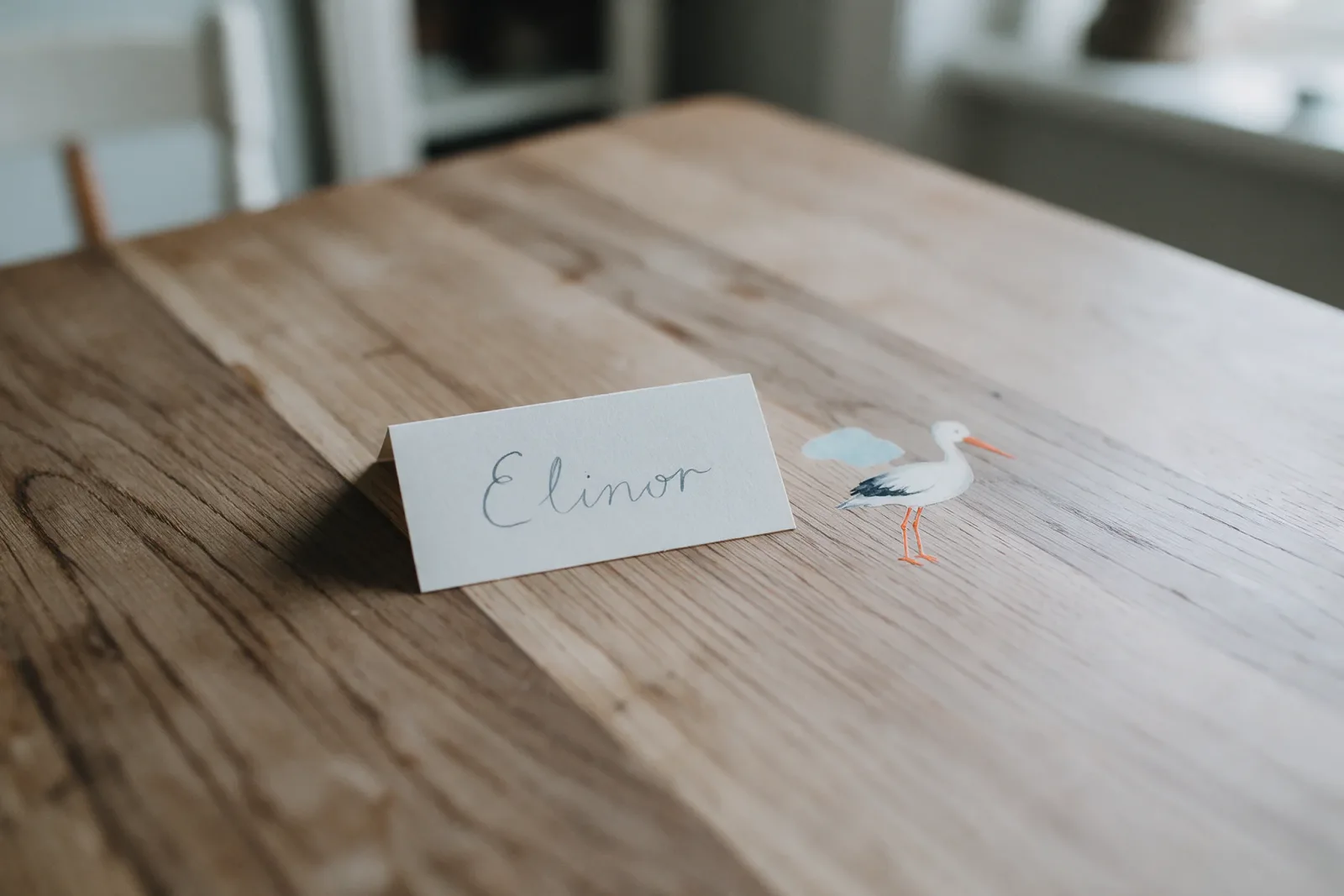
A name is a claim, but a gentle one. It does not tame the bird. A white stork called Amadeus or Andreja is exactly as wild as it was before the name arrived. The name does not change the bird at all. It changes the person. Once you know an animal's name, you can no longer walk past it as a stranger. The name has made it yours, in the lightest possible sense.
That is the whole magic. The bird stays free, and you stay fond, and the name is the thread between the two.
The joy of borrowing, not owning
There is something honest about borrowing a stork's name rather than claiming the stork. You are not buying the bird. You are not keeping it. You are simply asking to be allowed to follow it, to say its name in your house, to let it belong to your family in the way a story belongs to a family.
The distinction matters. A wild thing that is owned stops being wild. A wild thing that is named and borrowed keeps its freedom, and the family keeps a kind of wonder it could not otherwise afford.
Where the names come from
The storks in the LifeTrack White Stork SW Germany study carry real names, given by the people who follow them. There is Amadeus and Andreja, Angela and Balou, Hansi and Ella, and the two Linus storks, Linus-A and Linus-B, whose nearly identical names mark two very different birds. These are not pets. They are wild animals whose journeys happen to be recorded, and their names are a way of keeping the data human.
To borrow one of these names for a newborn gift is to join a small community of people who look at the sky and say a name out loud.
A name shared across two lives
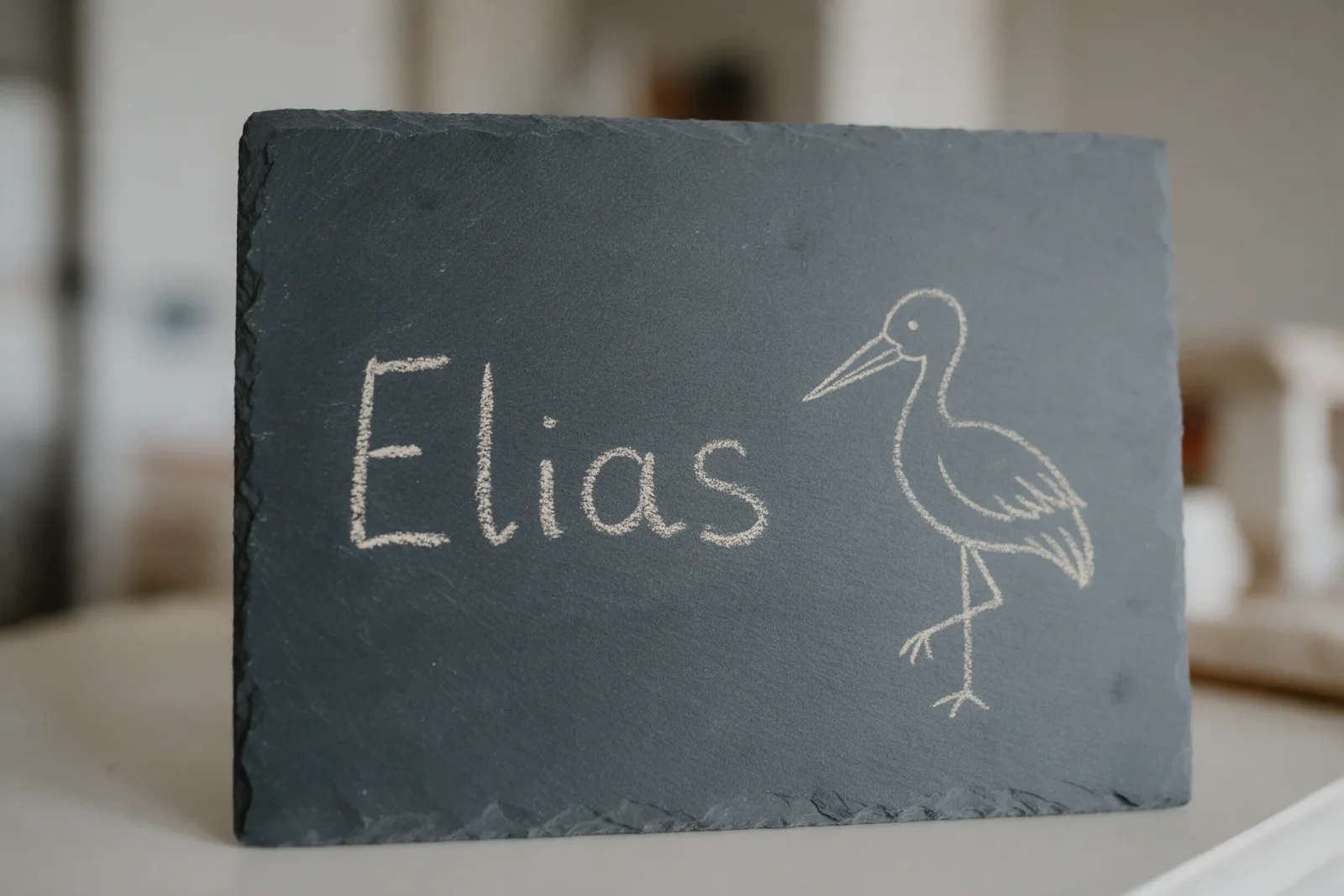
The loveliest part of the gesture is the sharing. The child and the bird now carry the same name, and neither knows it. The family knows, and that is enough. In the nursery, a name written in chalk on a slate, with a small stork sketched beside it, marks the connection. Out in the world, the bird flies on, unaware and unharmed.
That is naming a wild thing in its truest form: no claim made, no freedom taken, only a quiet, lasting joy passed between a family and a bird that will never know it was loved by name.
The freedom we leave intact
The loveliest part of naming a wild thing is that the wild thing stays wild. The bird is not tamed by its name. It does not come when called. It owes the family nothing, and that is exactly as it should be. The name is a gift from us to the bird, offered without a leash, and the bird accepts it simply by living.
That freedom is worth teaching a child. To love something wild is not to own it. It is to admire it from a small distance, to be glad it exists, to let it go south each autumn without complaint. A child who learns that lesson from a stork has learned something true about every living thing, and about love itself, which never works well when it holds too tight.
That is the quiet joy of the whole gesture, and it is enough. The bird flies, the child grows, and the name passes between them like a small exchange of trust. No ownership is claimed, no wildness is taken, and yet something real has been given. Naming a wild thing is a way of loving the world without trying to hold it, and it is a lesson a child can carry for the whole of their life.
Explore the gift