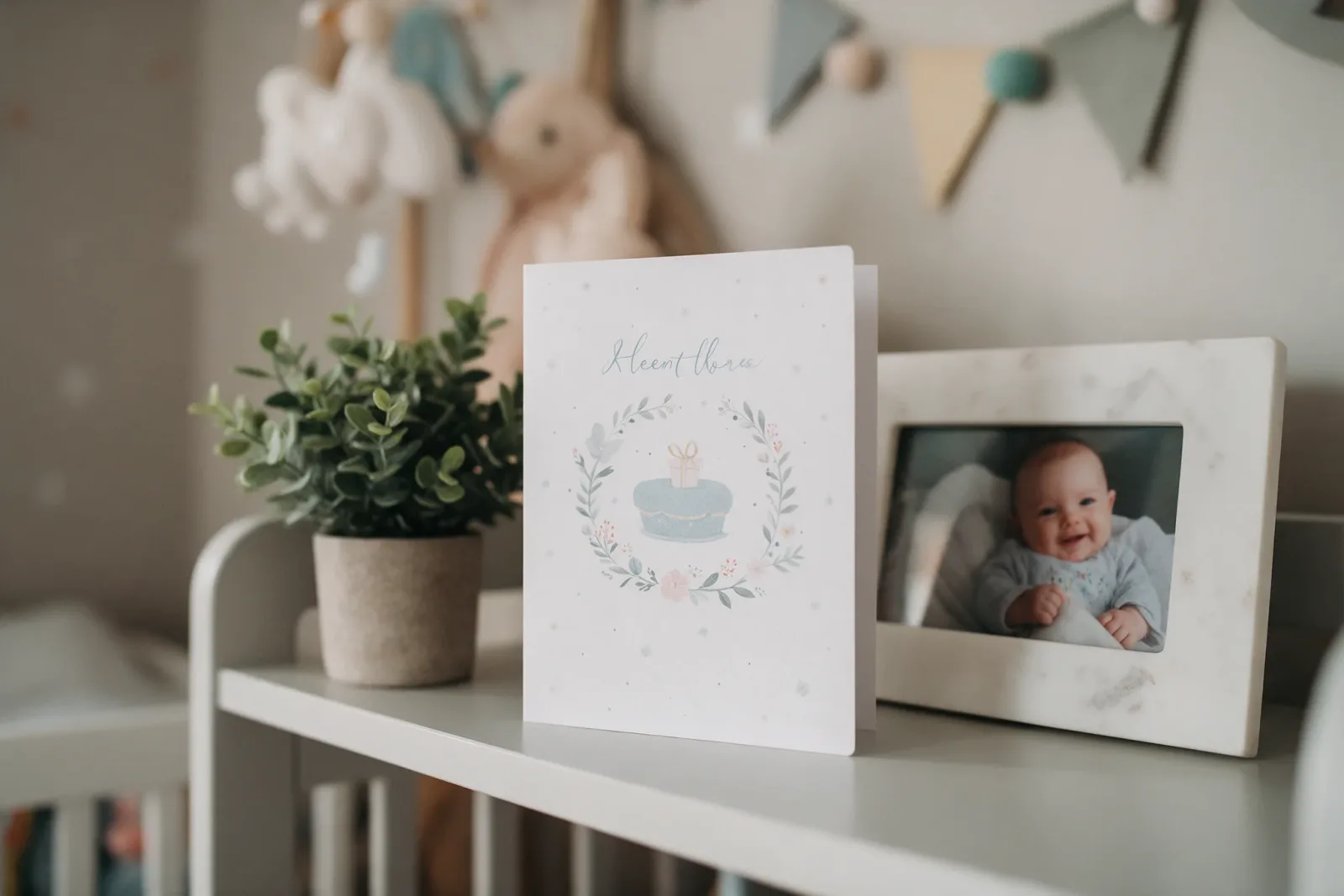
The card that became a tradition started out as a small, ordinary object, and no one expected it to stay. It arrived at the birth, sat on a shelf, and might have stayed there quietly forever. Instead, it began to move through the family's year, reappearing at the table each birthday, until one day it was no longer a card at all. It was a ritual, a marker, a thing the family would not imagine a celebration without.
How a keepsake becomes a ritual
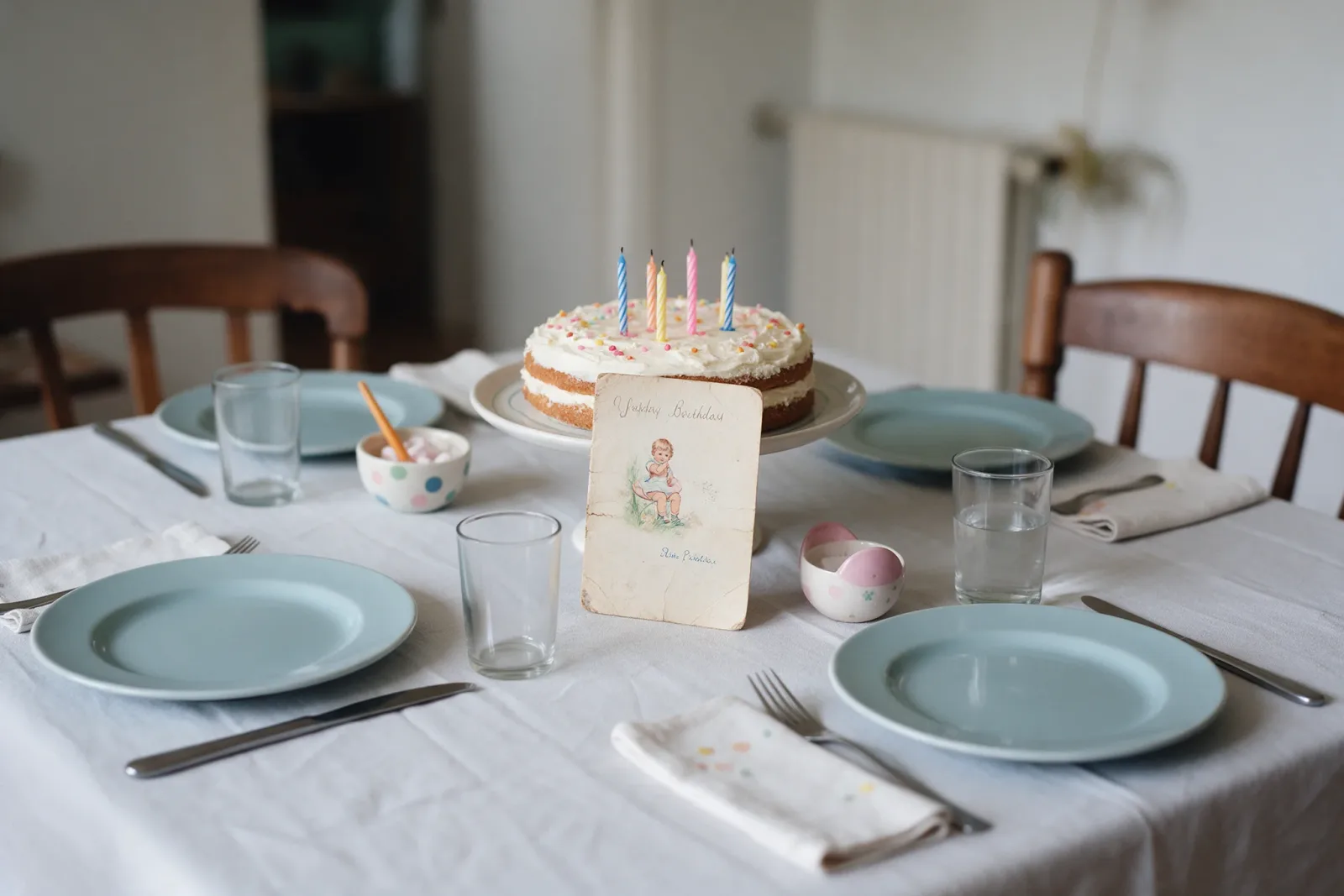
Rituals are built from repetition, and repetition is built from small decisions. Someone, one year, propped the card against the birthday cake stand because it was near at hand. The next year, someone remembered and did it again. By the third year, it would have felt wrong not to. That is how a keepsake becomes a tradition. Not through planning, but through the gentle accident of being kept and remembered.
The card never asked to be at the centre of anything. It simply stayed still long enough to become necessary.
What the card carries to the table
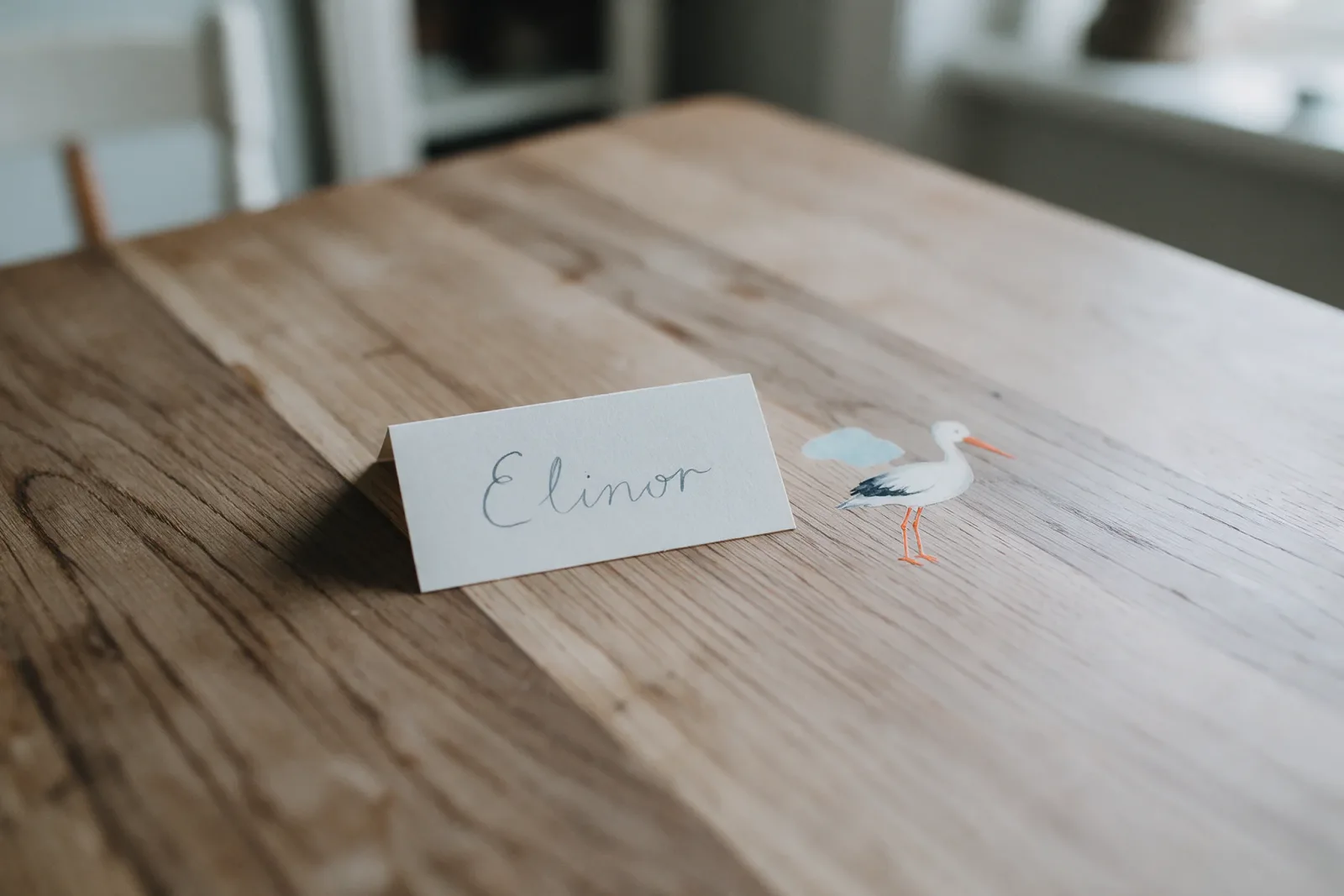
A birthday table is already full of meaning: candles, cake, the child a year taller. The card adds a single quiet note. It carries the birth back into the room, and it carries the bird forward. On the same table where a child is turning four, there sits the object that greeted them at zero, and beside it the name of a stork that is still flying, still returning, still making its own long way through the world.
That is a lot of meaning for a piece of card, but a keepsake is built to hold it.
Why children love the return
Children are ritualists by nature. They love the thing that happens the same way every time, the song, the candle, the card in its place. The return of the card gives them something to count on, and it gives them something to ask about. Each year the same questions come, and each year the answers have moved on. Where is the bird now? What is it doing? How far has it flown?
The questions are the tradition as much as the card is. They mark the child's growth in the only way that really shows: by what the child is now able to ask.
The gift that keeps its promise
Most birthday gifts are opened and forgotten by evening. The card that became a tradition is the opposite. It is not given on a birthday at all, and yet it returns to every one. It has become the family's own quiet clock, counting the years alongside the candles, and keeping its original promise to last.
That is the secret of the small keepsake. It does not need to be impressive. It only needs to be present, year after year, in the same warm place, at the same bright table, while the child it was given to keeps growing.
The table that remembers
A family table has its own memory. It remembers birthdays and summers and the years the candles grew in number. When the card takes its place there each year, the table remembers a little more. The object becomes a kind of witness, present at every celebration, silent and steady, while the family changes around it.
Children notice these things. They notice that the card was there before them, in a sense, and will be there after them. That continuity is a quiet comfort in a world of change. A tradition does not need to be grand to hold a family together. It only needs to be kept, year after year, in the same warm place, by people who would miss it if it were gone.
A tradition does not need to be invented, only kept. It begins with a small object in a small place, and it grows by the simple act of being remembered. The card that became a tradition did nothing dramatic. It simply stayed, and was brought out, and was missed if it was not there. That is how the quietest rituals are born, and they are often the ones that bind a family closest. And so the small card goes on doing what it has always done, quietly holding the years together at one bright table.
Explore the gift