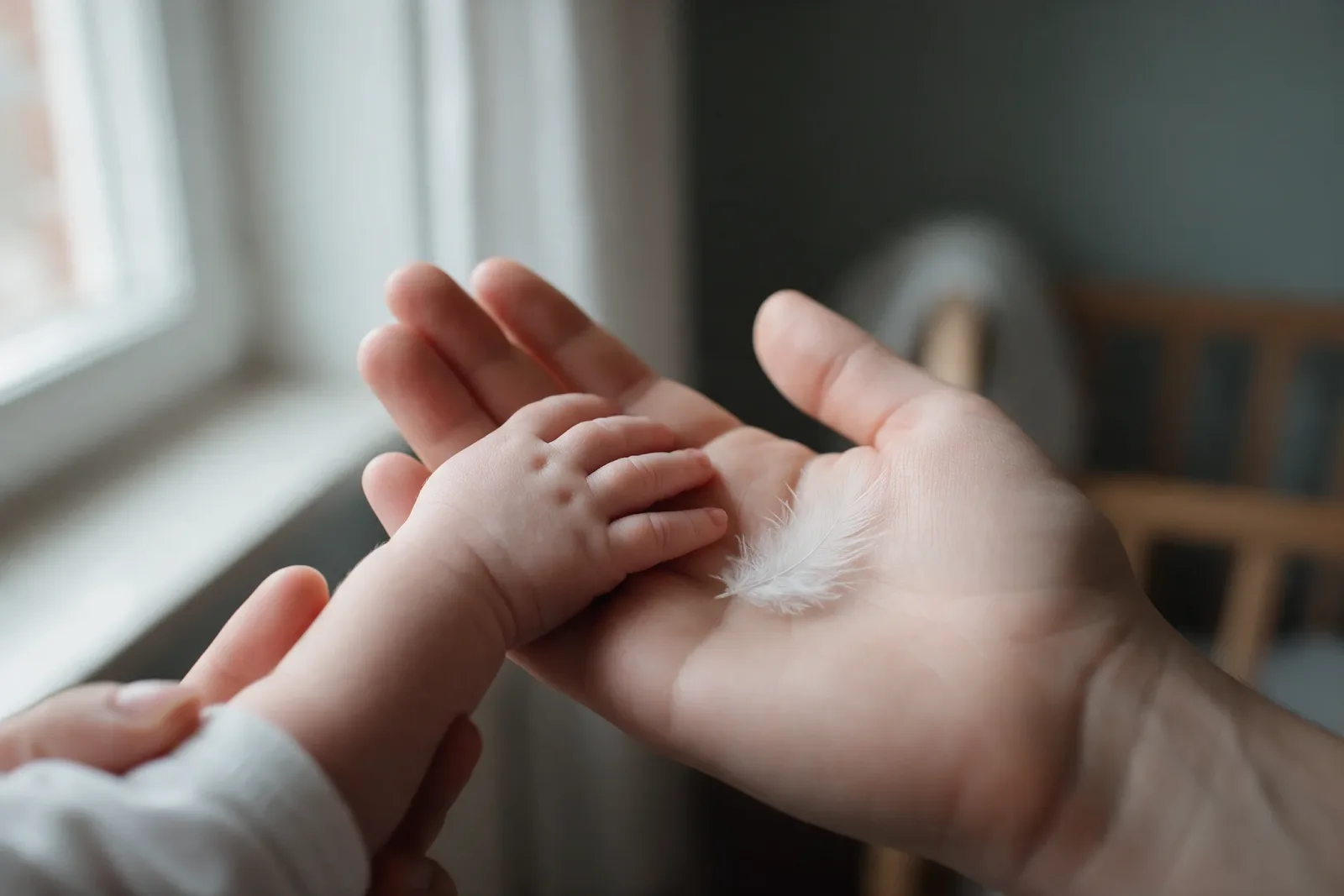
Welcoming the smallest person does not have to be loud. A new baby brings enough noise with them. The house fills with new sounds, new routines, new things. A gentle welcome is often the more honest one, a quiet gesture that matches the scale of a person who weighs only a few kilos and sleeps most of the day. There are ways to mark such an arrival without adding clutter, and they tend to be the ones a family remembers longest.
Why quiet gestures last
A newborn cannot yet be impressed. A grand display is lost on a baby who would rather be warm and fed and held. The welcome that matters is for the parents, and for the years ahead, not for the moment itself. A calm gift, chosen with care, lands differently than a pile of bright objects. It says: I noticed this person has arrived, and I made room for them.
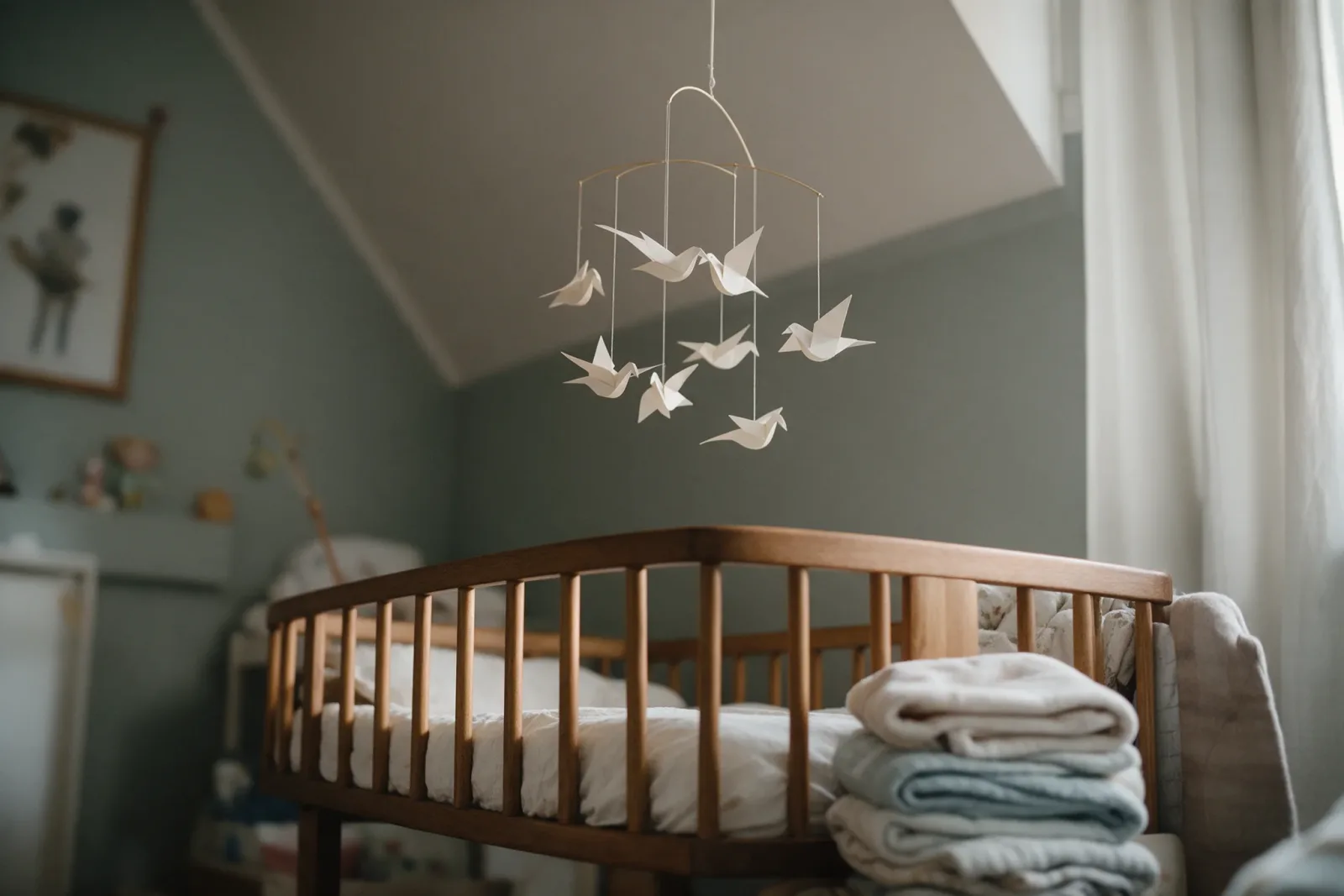
Quiet gestures also age well. A wooden cot, a paper mobile of birds, folded blankets, these things stay soft and useful. They do not demand anything from anyone.
The gift of something to follow
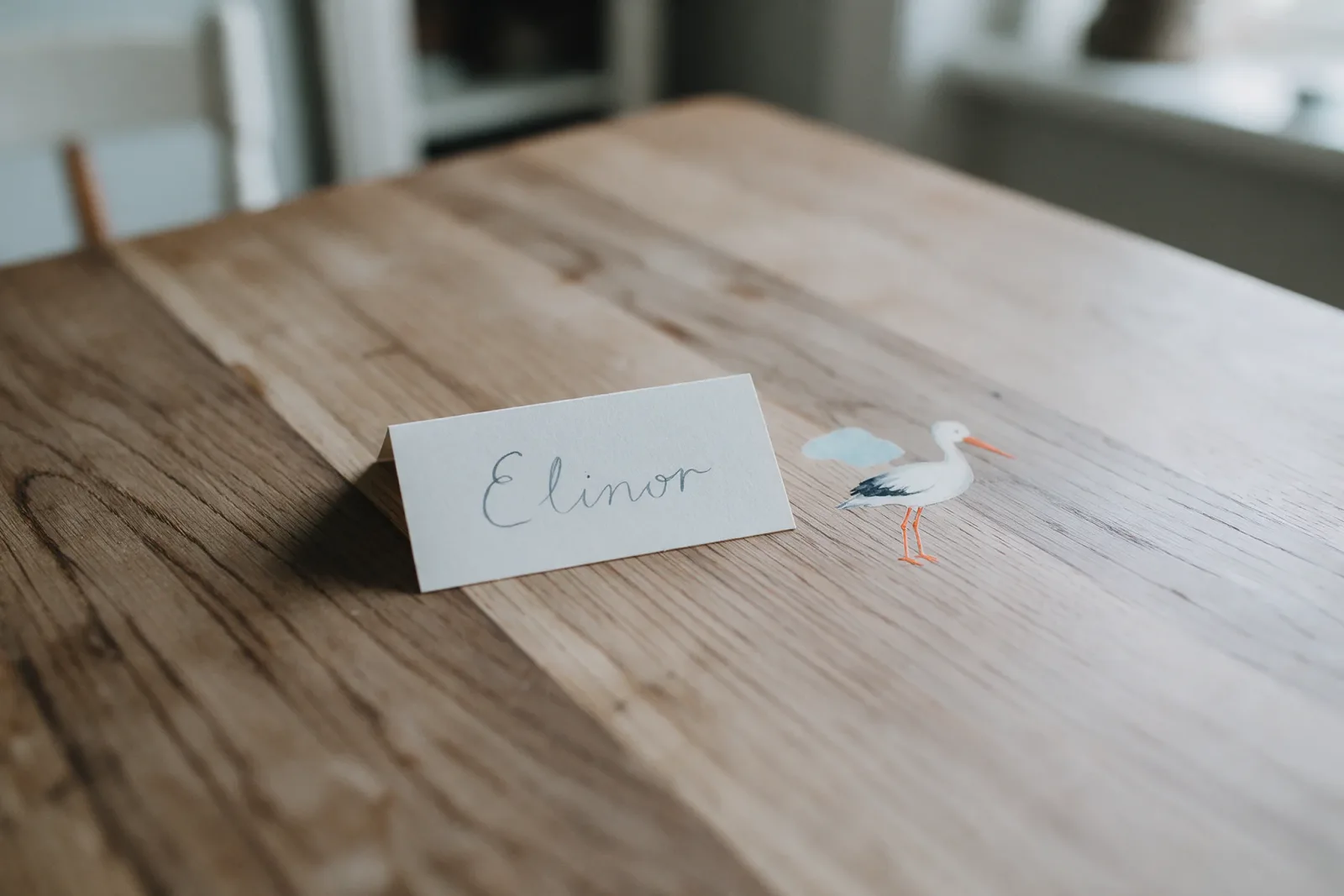
One of the gentlest welcomes is the gift of something to watch. A white stork is a patient companion for a new family. It does not need anything from the household. It simply carries on with its own life, migrating south in autumn, returning to its nest in spring, and anyone who chooses can follow along. For a family in the hazy early weeks, that steady, distant rhythm is oddly calming.
There is a bird out there, the story goes, making its slow way across the world while this baby sleeps. The idea is soft, and it asks nothing in return.
Marking the arrival without the mountain
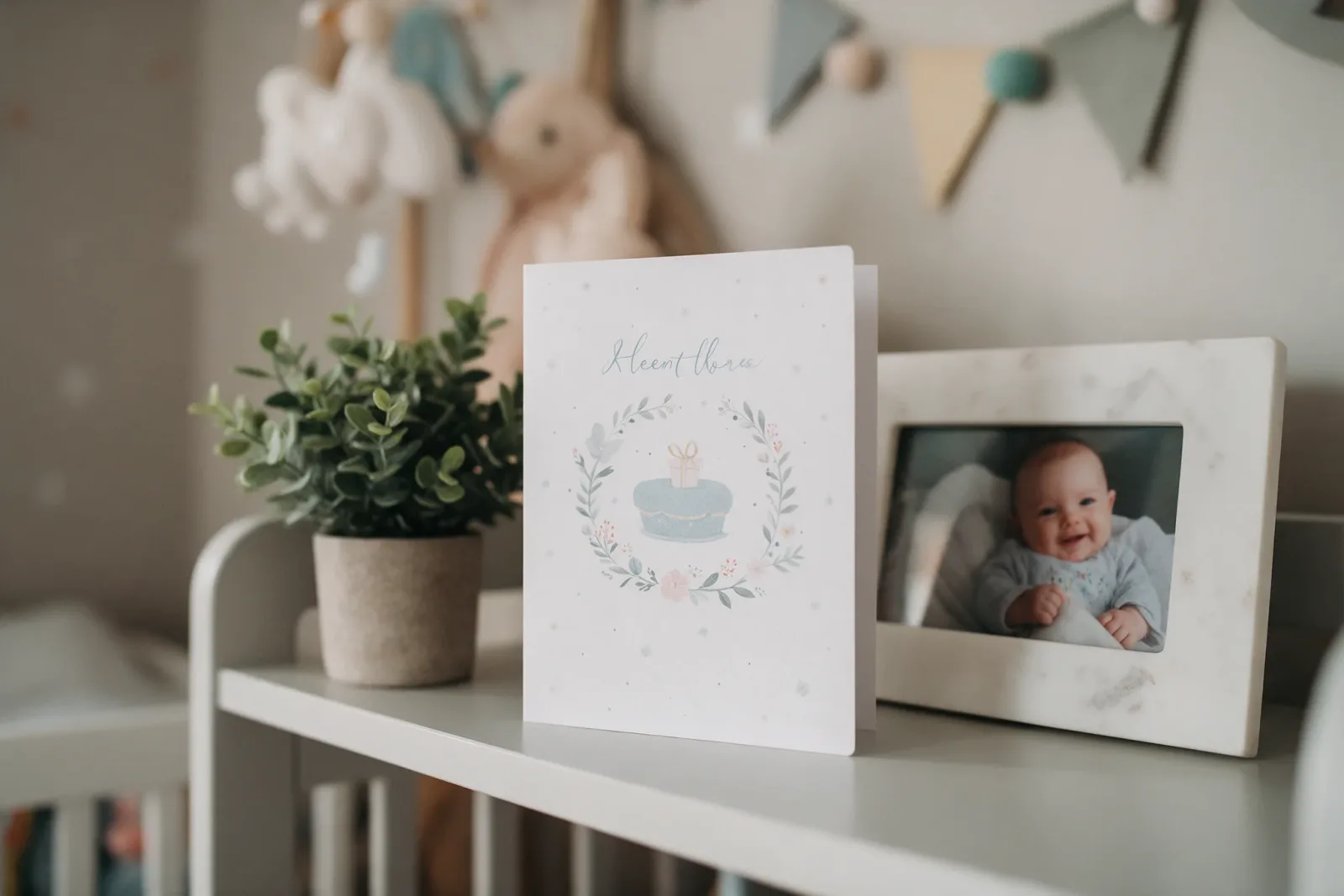
New babies attract stuff the way fresh snow attracts footprints. Blankets, clothes, toys, gadgets, all of it arrives in a rush and much of it is never used. A welcome that avoids the mountain chooses one meaningful thing over many forgettable ones. A single card that carries a name, or a story, or a bird, takes up almost no space and holds more than a bag full of onesies.
The family gets to keep its calm, and the baby gets one thing that will still mean something when the clutter has been sorted and passed on.
Welcoming with time, not things
The smallest person does not need presents. They need presence. A welcome that is truly gentle often involves a little time, a visit that does not overstay, a casserole, a folded note, a quiet hour of holding the baby while the parents rest. Material gifts are lovely, but they are never the point.
If you want to give something that lasts, give something that grows with the child, a name to learn, a bird to follow, a reason to look out the window together. That is a welcome in the truest sense: an invitation into a longer story, offered softly, to the newest and smallest person at the table.
The welcome that asks to be returned to
A gentle welcome is one a family can come back to, and a gift tied to a stork invites exactly that. There is no deadline on it. The bird returns each spring, and each return is a chance to remember the day the baby arrived. In that way the welcome repeats itself, softly, year after year, without anyone having to plan a thing.
It is a welcome made of patience, the same patience the new parents are learning in the long nights. The bird waits for the right wind. The family waits for the first smile. Both are slow, and both are worth the wait. A calm gift honours that slowness, and asks for nothing more than to be part of it.
This is the welcome a family keeps, not the one it must tidy away. It takes up no shelf, no drawer, no storage box. It simply lives in the room, in the name, in the slow turning of the seasons, and it asks nothing in return. For the smallest person, and for the people holding them, that is a welcome in the truest sense: a soft, steady presence that will still be there, quiet and glad, long after the first frantic weeks have passed.
Explore the gift