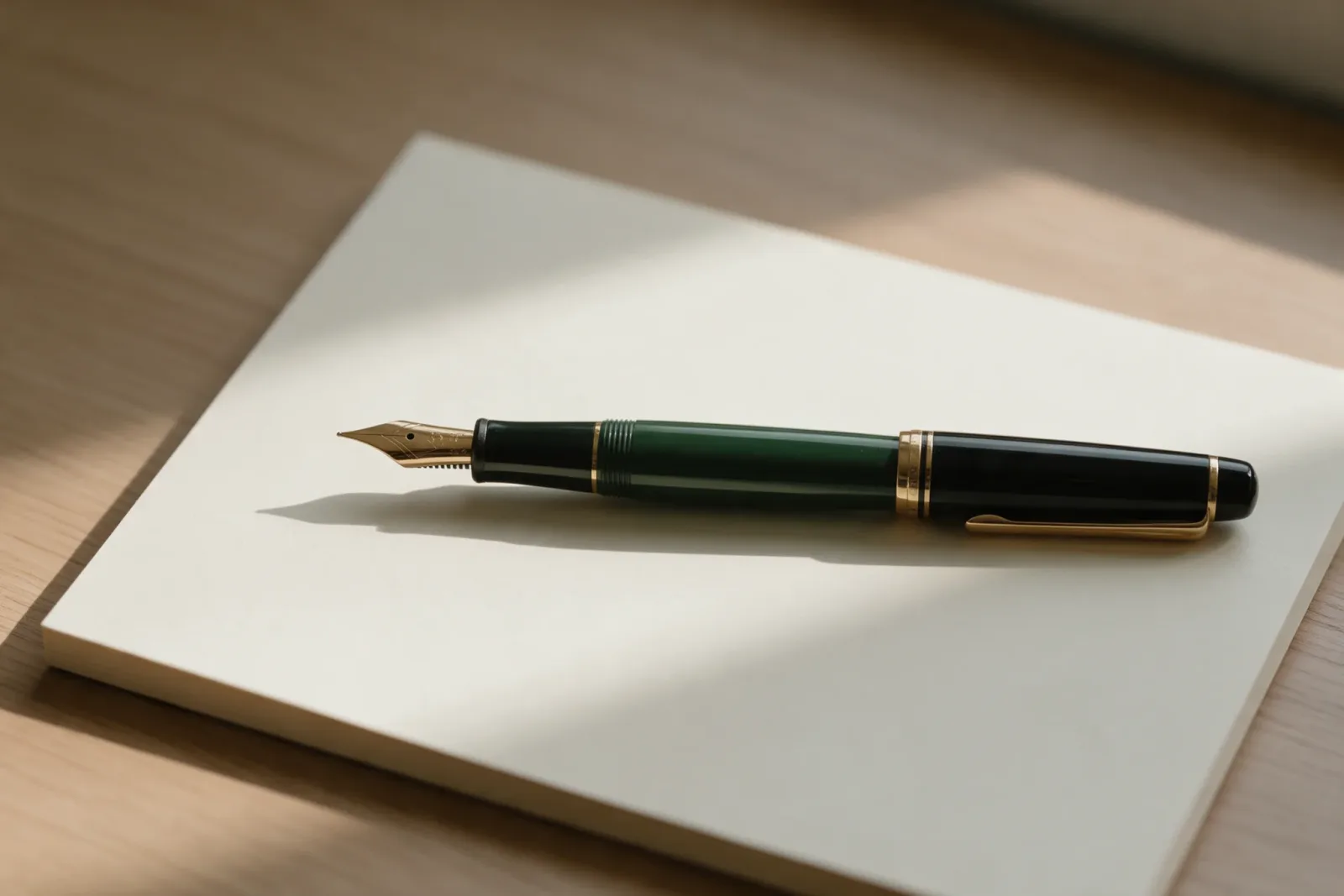
Words only you could write are the difference between a present and a memory. The object matters, of course, but the object is only the frame. What makes a gift last is the message inside it, the handful of lines written by someone who was there, who knows the family, who put their own voice onto the page. A fountain pen on a blank card in the afternoon light is an invitation to write something that no one else could have written.
Why the message matters more than the object
Anyone can buy the same gift. No one else can write your words. That is the whole argument in a sentence. When a baby grows up and one day reads the card that came with their first gift, they are not reading about the gift. They are reading about the moment they arrived, as seen through your eyes. That is worth more than anything the card was wrapped around.
A blank card is a small stage, and the words are the performance. The gift is only the ticket that got you through the door.
Writing to a future reader
Here is the strange and lovely thing about a message for a newborn: the person who will read it does not exist yet, not in the form that can read. You are writing to a baby and to the child they will become, and to the parents who will read it tonight. That is three audiences in one, and the best messages hold all three at once.
Write something true and simple. Say what the day felt like. Say what you hope for them. Do not try to be deep. Depth happens by itself when you are honest.
What to actually put on the card
You do not need many words. A few sentences are enough if they are yours. Welcome. We are so glad you are here. There is a bird out there carrying your name, and one day you can follow it. Notice how little of that is about the object. The best messages leave the gift behind and speak to the person instead.
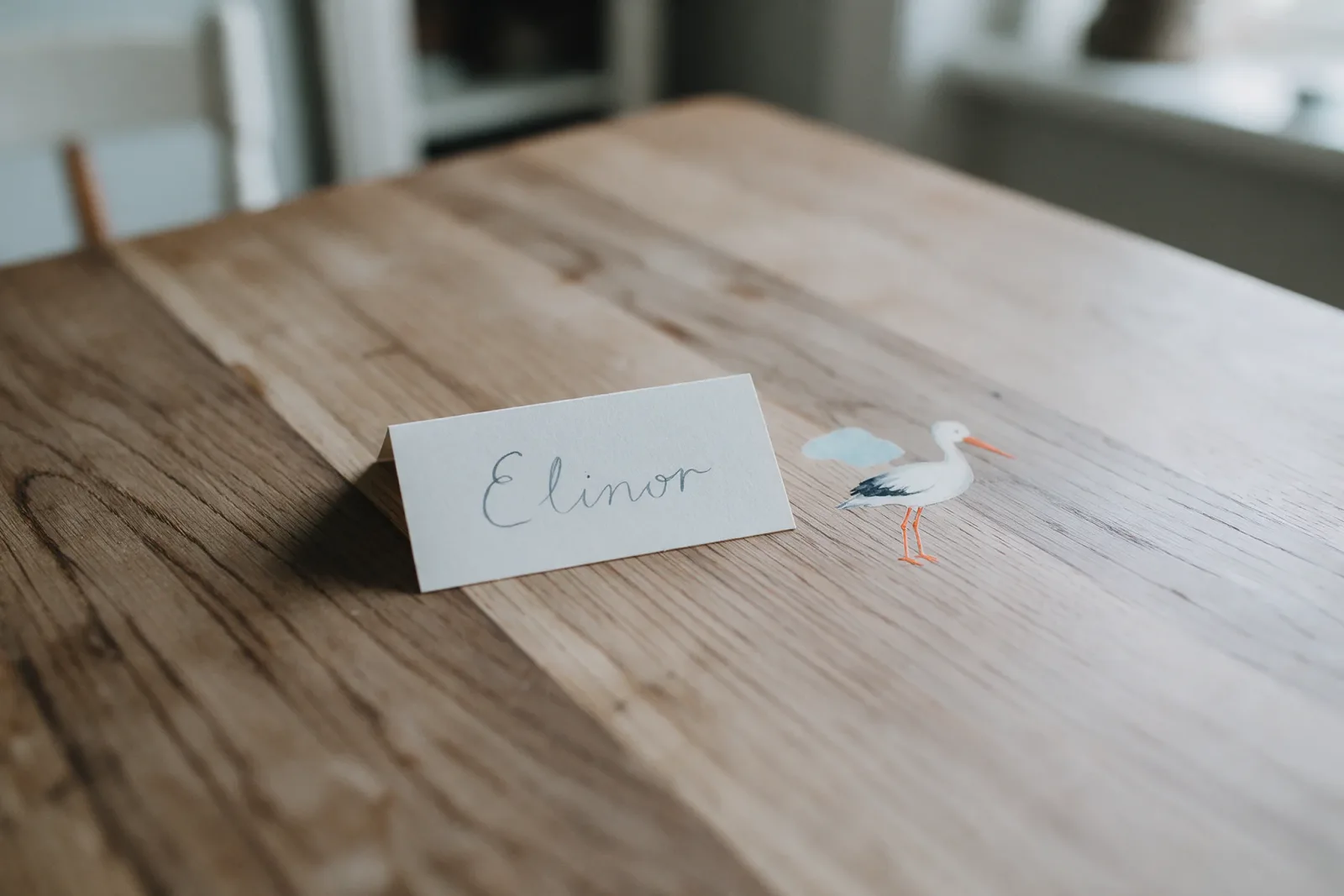
If the gift carries a stork's name, say a word or two about the bird, where it flies, what it will be doing in spring. Give the child something to grow toward.
The message that keeps being read
A card with your handwriting becomes an heirloom in a way a printed card never can. It is read at the first birthday, again when the child learns to read, again when they are old enough to understand what it meant. Each reading is a small reunion with the moment you wrote it.
That is how a message turns a gift into a memory. The gift may be kept on a shelf. The words get kept in the family, read aloud, handed down, and remembered long after the object itself has done its quiet work.
The voice that cannot be copied
Your handwriting is the one thing on the card no one else can reproduce. The loops and slant of it, the way you cross a t or sign your name, these become part of the gift. Long after you are gone, the child will hold the card and see your hand in it. That is a strange and moving thing to give a person who is only a few weeks old, and it costs nothing but honesty.
So write slowly, and write as yourself. Do not borrow a phrase from a card shop. The message that turns a gift into a memory is the one that sounds like you, in the plain and particular way only you sound. The child will not remember the day, but they will know, from the words and the hand that wrote them, that they were loved from the very first.
Your words do not need to be many, and they do not need to be clever. They only need to be yours, written in your hand, meant for this one child. That is the message that turns a gift into a memory, and it is the part of the gift that never wears out. The card may sit unread for years while the child is small, but one day it will be read, and the voice in it will still sound like you.
Explore the gift