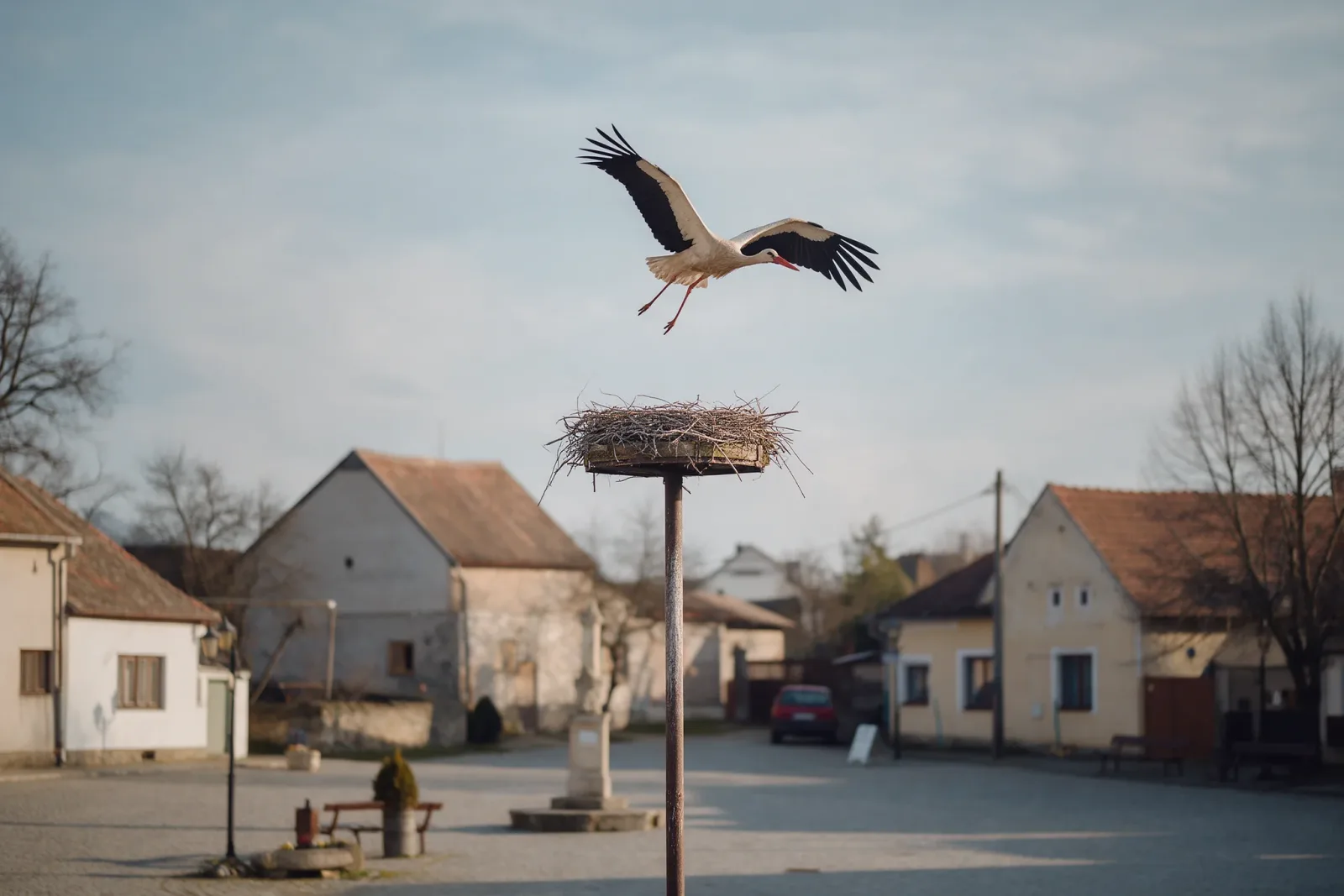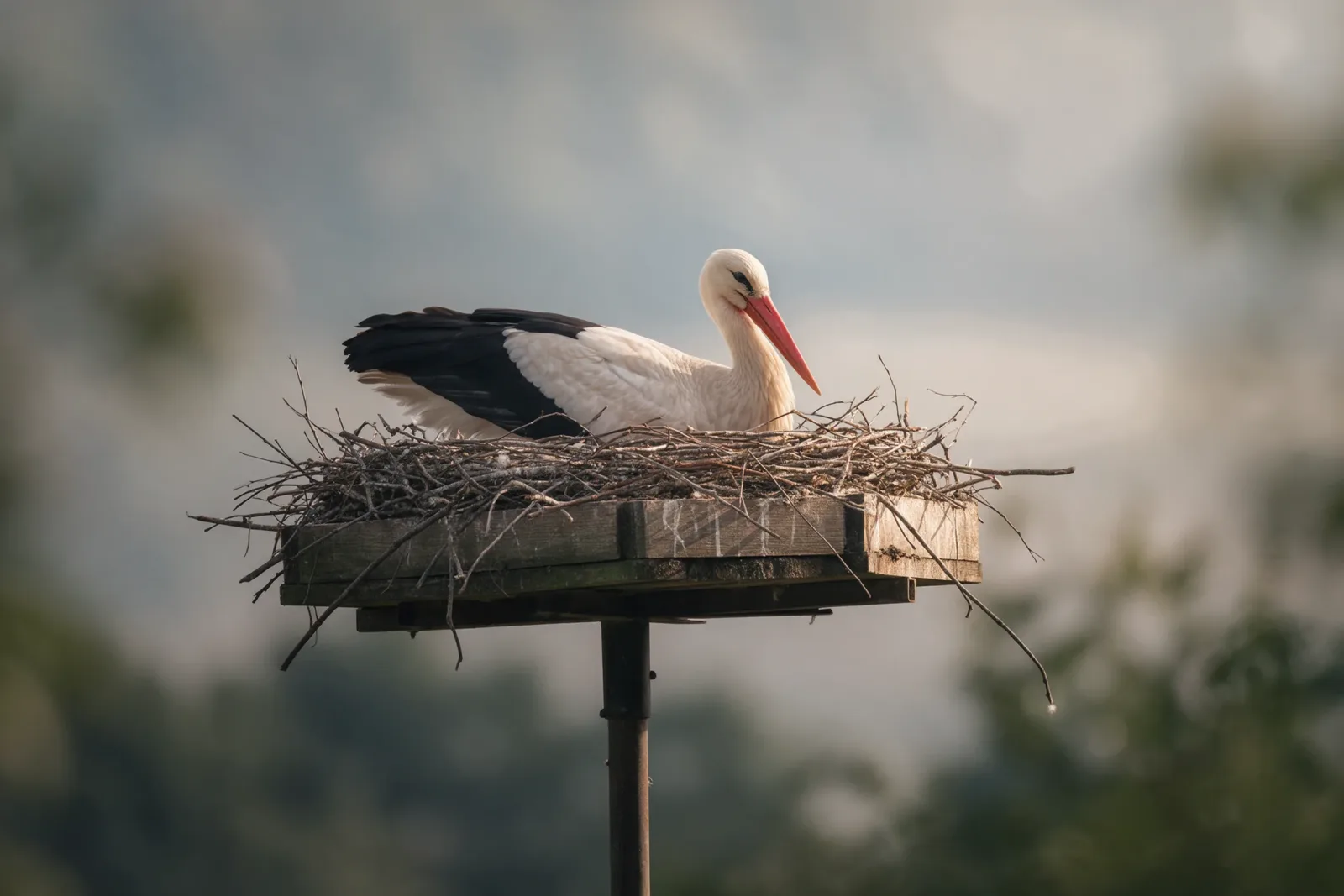
A nest is a home, and for a white stork the difference between having one and not is often the difference between breeding and disappearing. Storks are famously loyal to their nest sites, returning to the same roof or pole spring after spring, adding to a structure that can outlive the bird that built it. Where natural sites have vanished, we have learned to offer a substitute: a simple platform on a tall pole, kept high, kept clear, kept waiting.
What a stork looks for
A stork wants three things from a nest site: height, safety, and a clear approach. It wants to see the land around it, to feel the air beneath its wings, and to be left alone. Historically the birds chose tall trees, cliff ledges, and the roofs of buildings that rose above a village.
When those natural and ancient sites disappeared, cut down, developed, or disturbed, the stork had nowhere to go. A platform is our way of giving the bird back the one thing it cannot build for itself: a foundation.
The platform is not a cage
A nest platform is a surprisingly humble object. A wide basket or tray of sticks and wire, mounted on a pole, anchored firmly, kept away from overhead cables. It does not trap the bird. It does not tame it. It simply says: here is a safe place, if you want it.
The stork remains entirely wild. It chooses to come, or not to come. It chooses its partner, builds its nest, raises its chicks, and leaves in autumn on its own schedule. The platform changes none of that. It only removes one obstacle from a life that already has enough of them.
Why height matters
The height is not for show. A stork on a low or exposed nest is vulnerable to disturbance, to predators, and to the busy world below. Raised high on a pole, the nest is out of reach, and the birds can settle, incubate, and feed their young in relative calm.
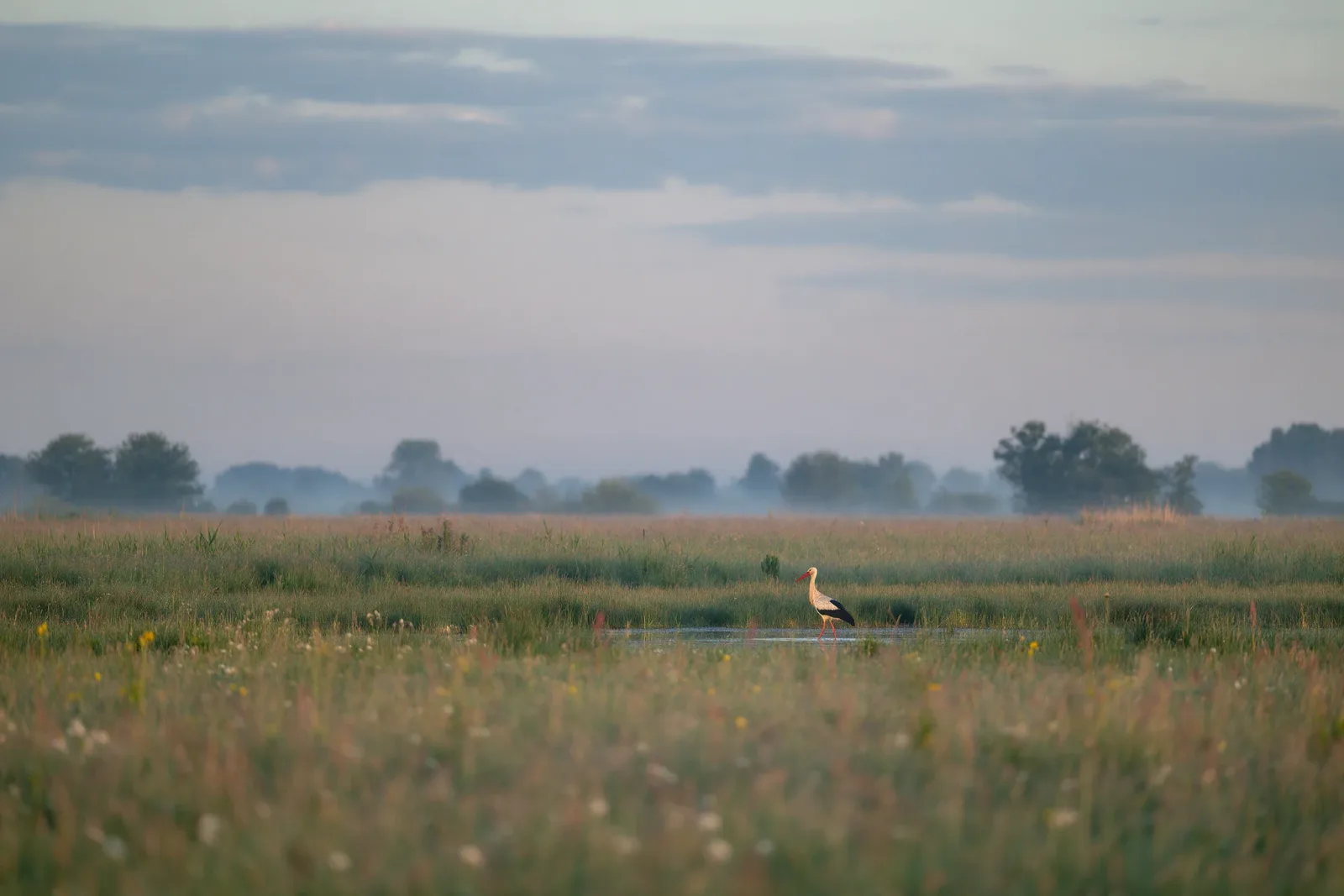
The poles also matter because they can be placed where the food is: near wet meadows, along river bends, at the edge of a marsh. A well-sited platform is not just a home; it is a home within walking distance of the larder.
A welcome we keep open
The most important part of a nest platform is not the wood or the wire. It is the upkeep. A platform must be maintained year after year, checked, repaired, kept clear of the growth that would make it unusable. The welcome has to stay open, or the stork will find somewhere else.
That patient maintenance is a kind of promise. It says that the bird's return is expected, that the home is ready, and that the people below are glad of the clattering on the roof. A nest is a home, and a home is a thing you keep.
Explore the gift