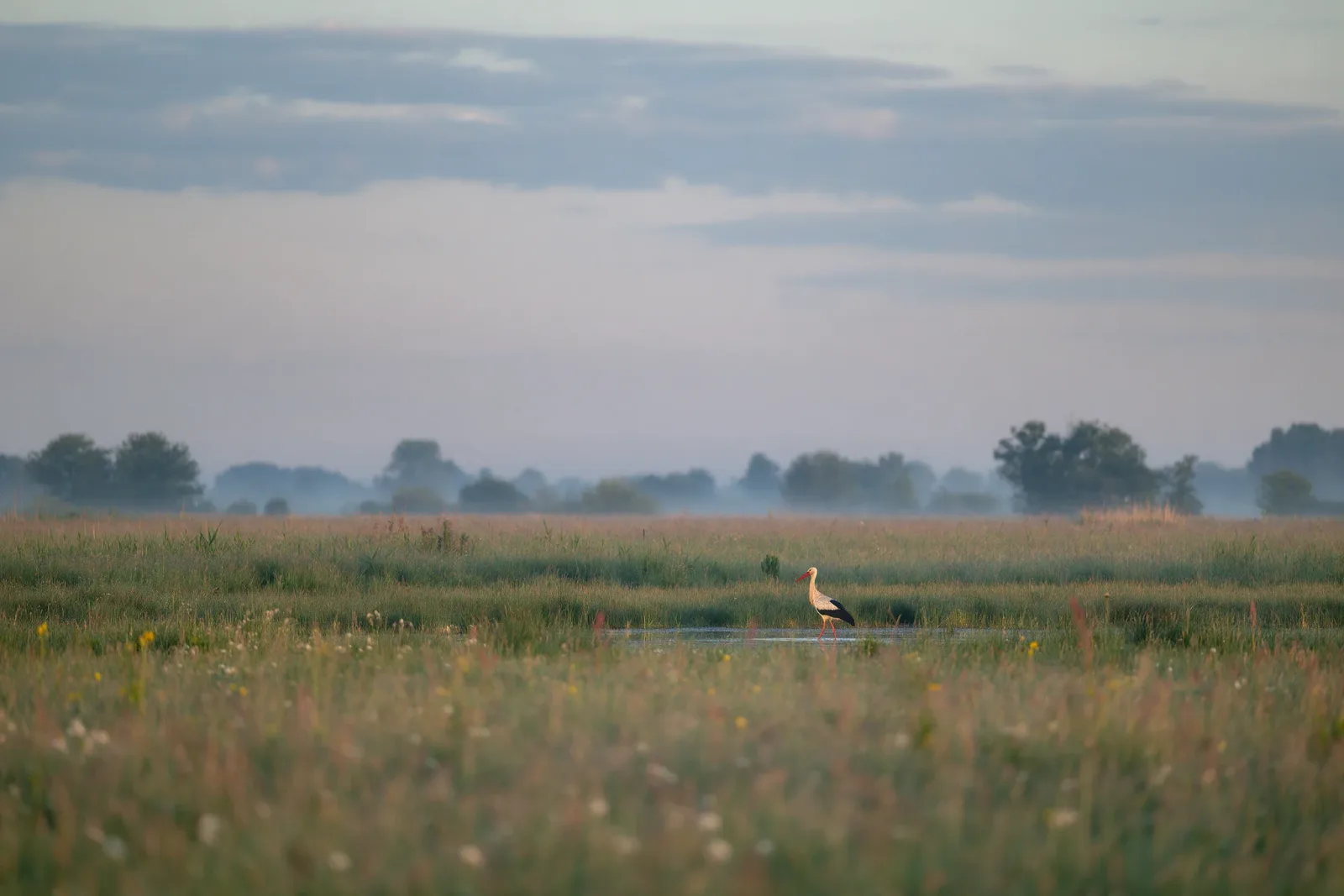
How a village brought its storks back is a story about water, and about people who decided that a wet field was worth more than a dry one. For years the marsh on the edge of the village had been gone, drained to make grazing and crops. The storks went with it, and the chimney nests stood empty for a generation. Then, slowly, the village began to undo what had been done.
Letting the water return
The first step was not dramatic. Ditches that had been cut to carry the water away were blocked, one by one. Rain, which had always wanted to stay, was allowed to stay. The old channels refilled. The ground grew soft again. In spring the hollows held water, and in the shallows the frogs returned, which is to say the food returned.
Rewetting a wetland is patient work. You do not plant the birds. You plant the conditions. The reeds come back on their own, then the insects, then the fish, then the waders. Each layer invites the next, and the whole place begins to hum again.
A platform in the square
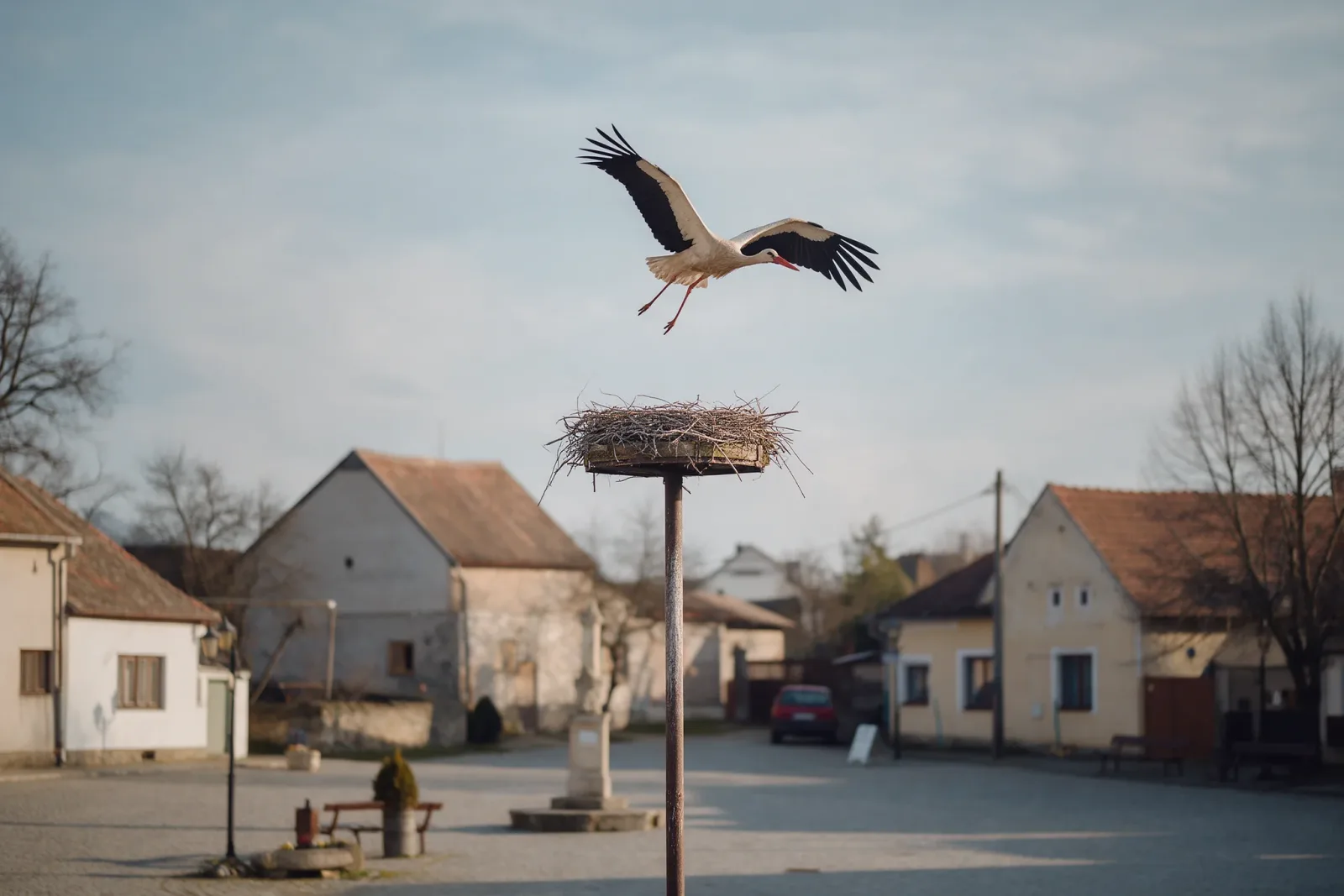
While the marsh healed, the village set up a nest platform on a tall pole in the square. The old nest sites on the rooftops had been disturbed too often, and the storks needed somewhere they would be left alone. A platform is a simple thing: a wide basket of sticks, raised high, kept clear of wires.
For a while the platform stayed empty. Storks are cautious, and they do not rush a decision. Then one March a pair arrived, circled twice, and began to build. Word went round the village before lunch. People came out to watch, and the bird that had been missing for a generation was suddenly, quietly, home.
A community remembers itself
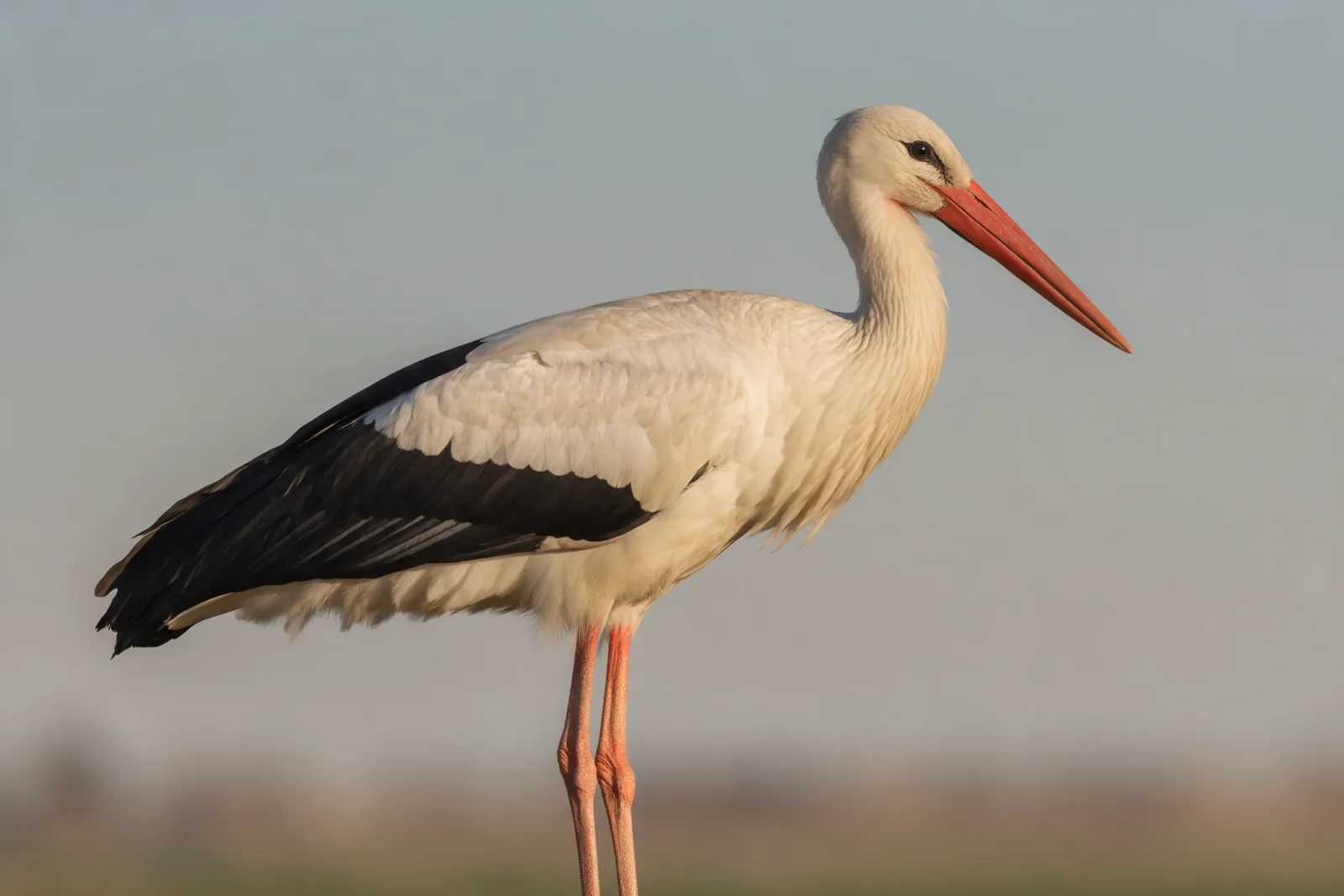
Something changed when the storks returned. The village had always known it was a stork village, but the memory had gone abstract. Now there was a real bird on a real pole, and children who had never seen a stork began to see one every day.
The return of the stork brought the return of other things too. People walked down to the marsh again. The school took the children to watch the feeding. The old stories about the bird came back into conversation, and they came back with a name attached, a nest to point at, a season to wait for.
What one village proved
The lesson travels well beyond one square. A village does not need a grand plan to bring back a bird. It needs water, patience, and a high, safe place to nest. The storks do the rest.
The marsh is full again now, and so is the sky above the rooftops. The draining took decades, and the rewetting took its own time too, but the direction reversed. That is the part worth remembering: a wrong can be turned around, slowly, ditch by ditch, if enough people want it turned.
Explore the gift