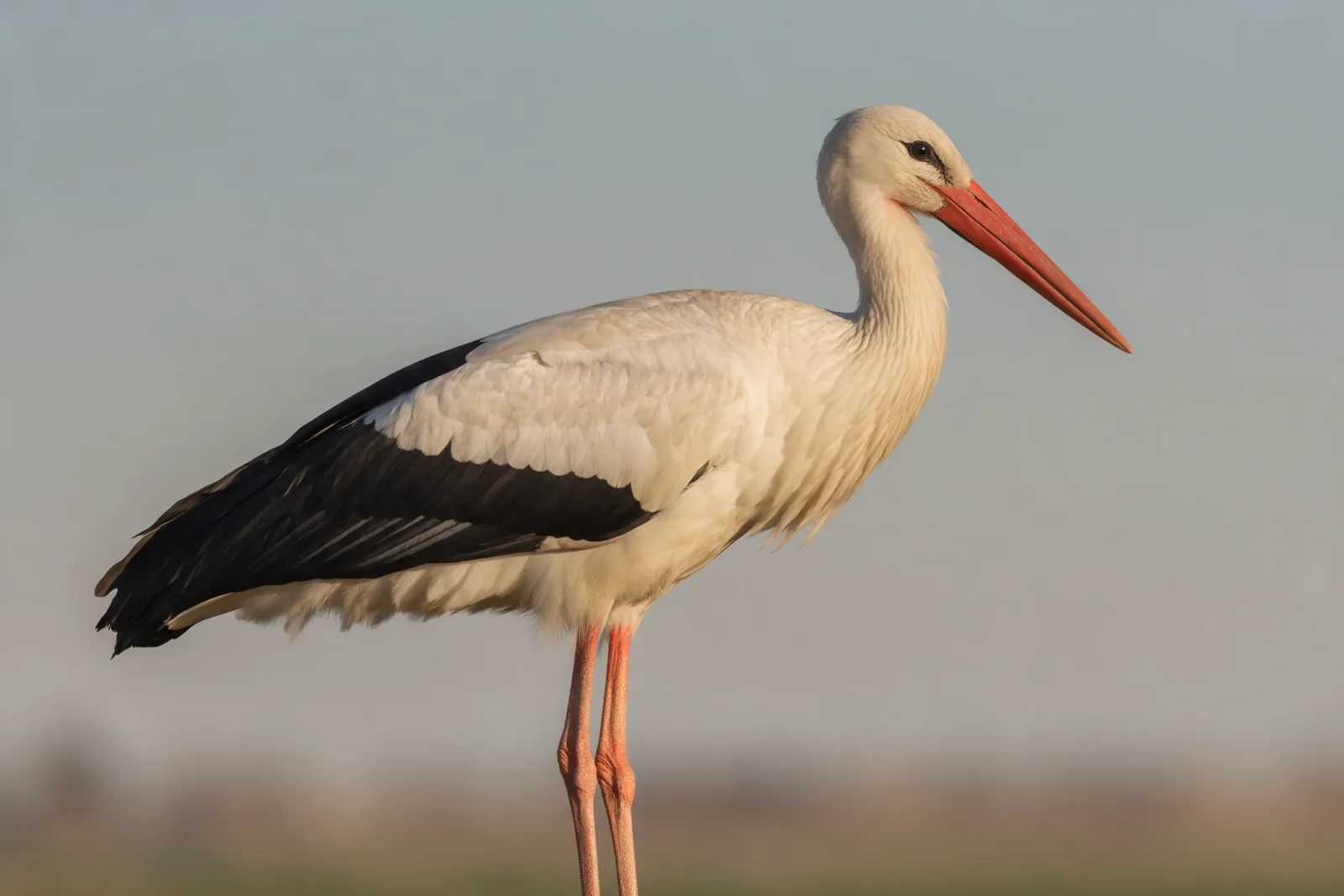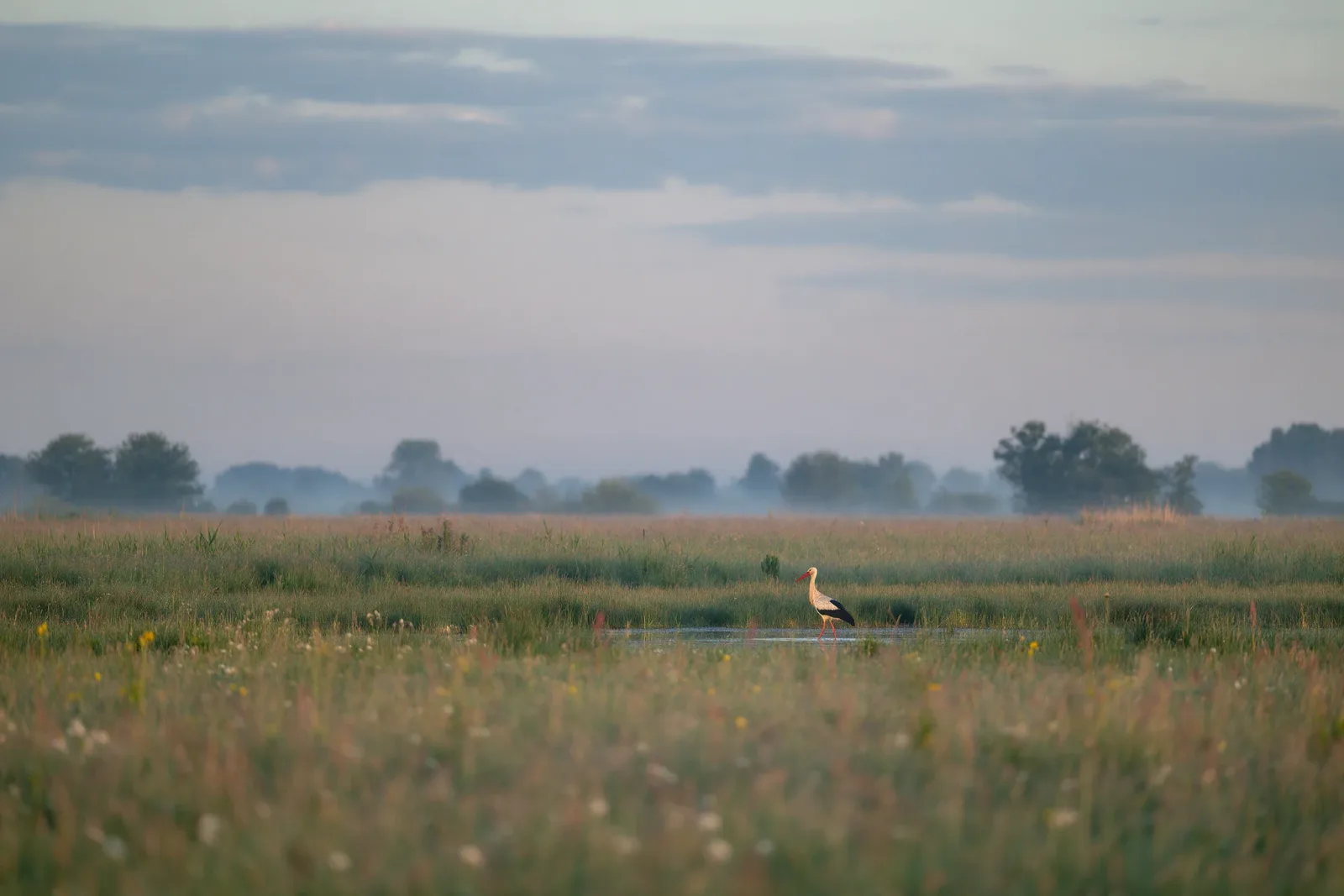
Making room for the wild is one of the quietest ways we love a child we have only just met. Long before a baby can hold a pencil or ask a question, we are already choosing the world for them: the air above the pram, the colour of the grass, the sound of a bird passing over the garden. A white stork wading in a dawn meadow is a small proof that room still exists for things we did not make and cannot fully explain.
A world measured in other lives
When you hold a newborn, your own sense of time changes. Suddenly the decades ahead matter in a way they never did before. You begin to wonder whether the frogs will still sing in the pond, whether the swallows will still come in April, whether a stork will still stand in the shallows when your child is old enough to point at it.
That wondering is the beginning of making room. Conservation is often described as a science of numbers and maps, and it is that. But it starts much earlier, in a feeling you cannot measure: the wish that a wild thing should still be there for someone else, someone small, who has not seen it yet.
The wild is not empty space
A meadow looks still, but it is full. Between the grass stems there are insects, seeds, shallow pools after rain, the small creatures a stork dips its bill into. When we call a place empty, we usually mean empty of us. The stork does not find it empty at all.
To make room for the wild is to let some places stay a little awkward, a little wet, a little unplanned. A hedge left to flower, a field allowed to flood in winter, a river bend left to wander. These are not failures of order. They are invitations, and the storks keep accepting them.
What a child learns from a bird
A child who grows up knowing there is a stork on the chimney, or a heron in the reeds, learns something no lesson can teach. They learn that the world was not made for them alone. That other lives cross the sky on their own errands. That a bird who left in autumn is coming back in spring, and that this return has happened every year since long before anyone wrote it down.
That is a form of humility, and it arrives gently. No one has to lecture. The bird simply does what it has always done, and the child watches, and something settles in.
Keeping the door open
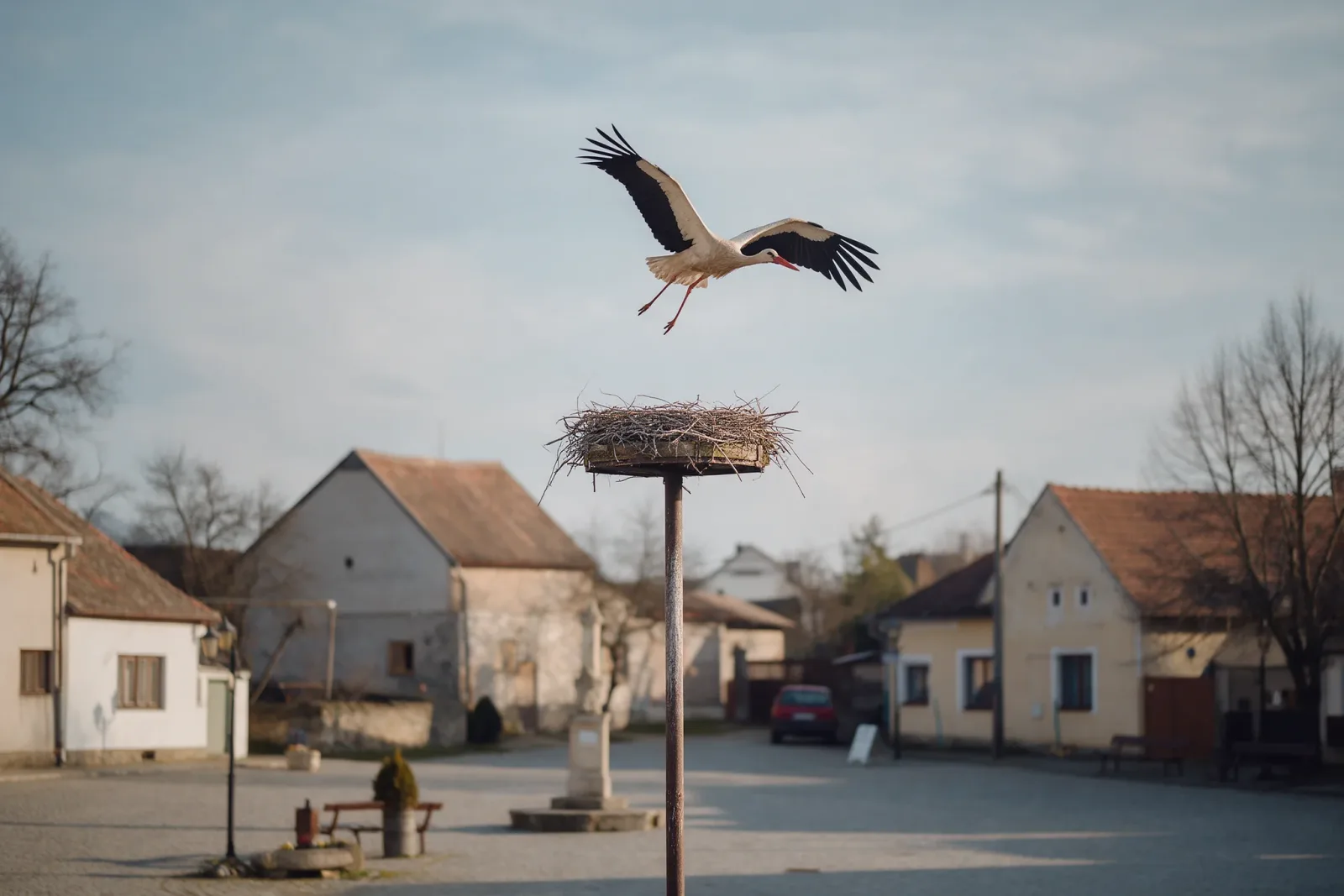
Making room for the wild is not a grand gesture, most days. It is a thousand small keepings: a pond left undrained, a nest platform kept clear, a piece of land protected so a stork can feed its young. Each one is ordinary on its own. Together they are the difference between a sky with birds and a sky without.
The world we hope to welcome our little ones into is not finished. It is being decided now, this season, by what we choose to leave alone. A stork in a wet field at dawn is not a memory of the past. It is a question about the future, and we are still writing the answer.
Explore the gift