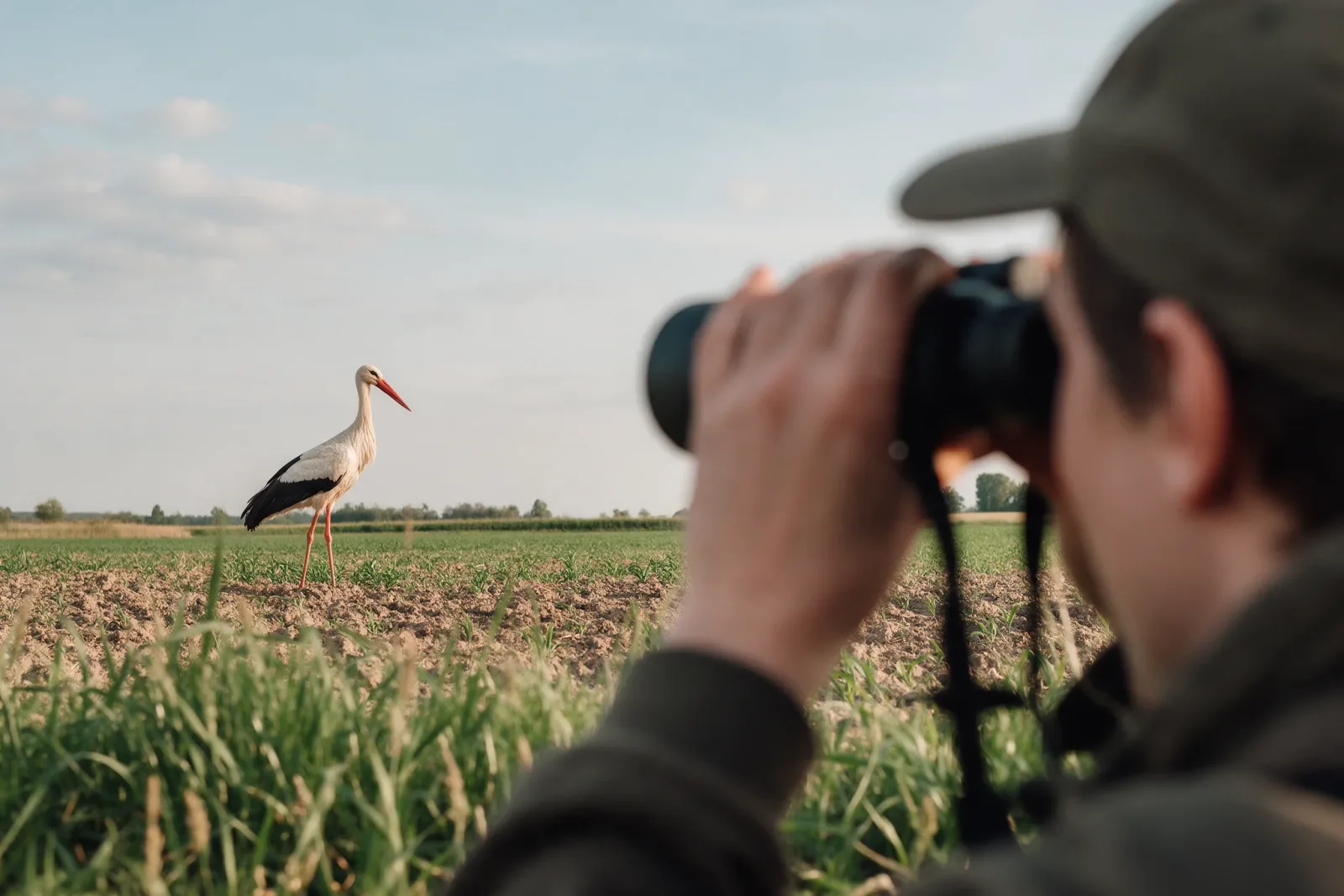
A stork's day in the field is a slow, orderly thing, and you can follow it from first light to dusk if you have the patience to stay. The bird does not rush and it does not waste. It feeds, it rests, it preens, and it flies, in a rhythm that repeats day after day. Watch one stork through a whole day and you will know more about it than most people learn in a season.
First light and the first feeding
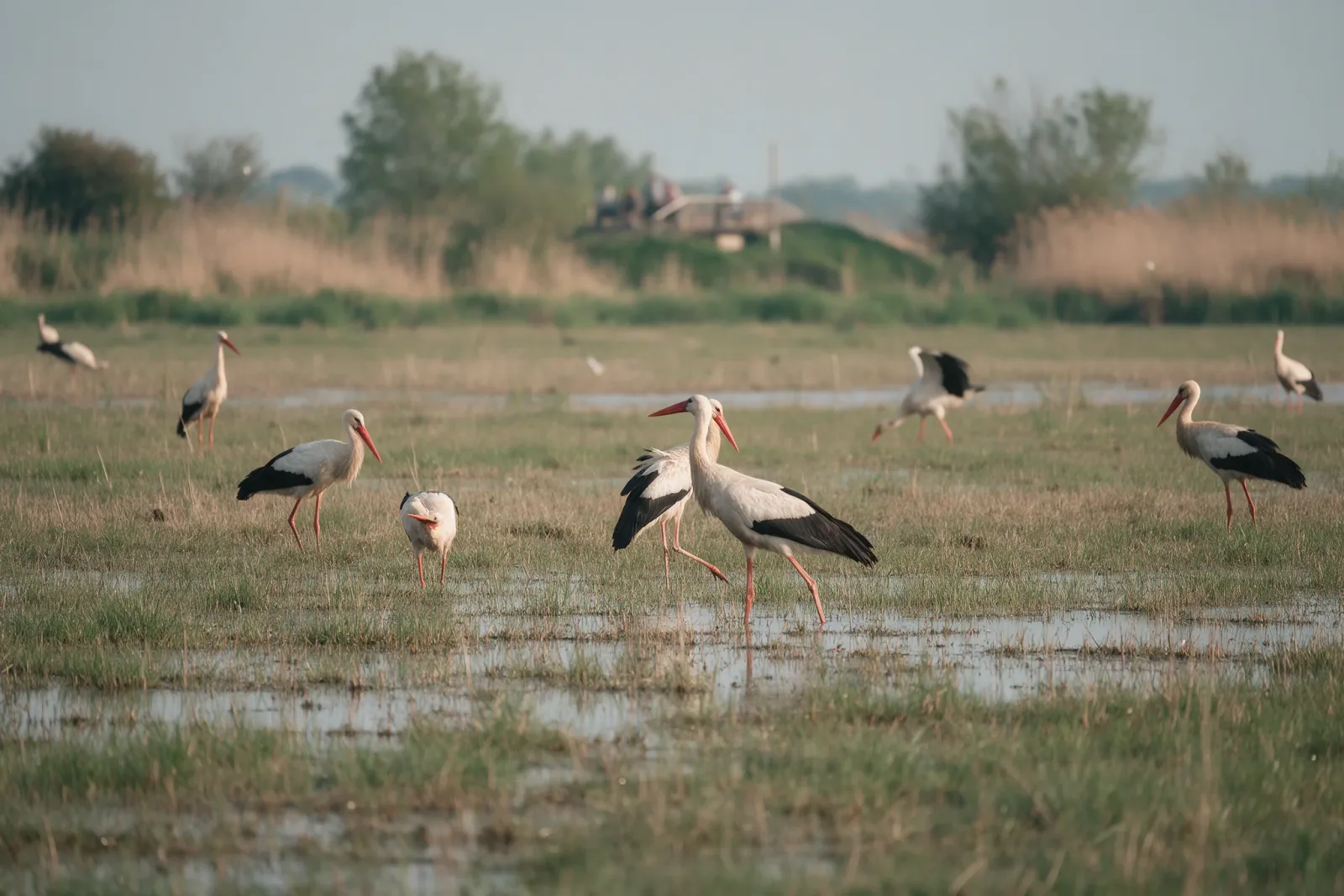
The day begins with food. As the light comes up, the stork walks into the wet grass and starts to feed, taking frogs and insects from the cold ground. The early hours are its most active, and if you arrive at the field at dawn you will see the bird at its most focused, head down, step and stab, step and stab, while the mist still hangs over the water.
Midmorning and the slow stand
By midmorning the feeding eases. The stork may drink, stand in the shallows, or simply rest on one leg at the edge of the field. This is the quiet stretch of the day, when the bird seems to do nothing at all. It is not nothing. It is the stork's version of a pause, and it can last for an hour while the sun climbs and the air begins to warm.
The afternoon and the thermal
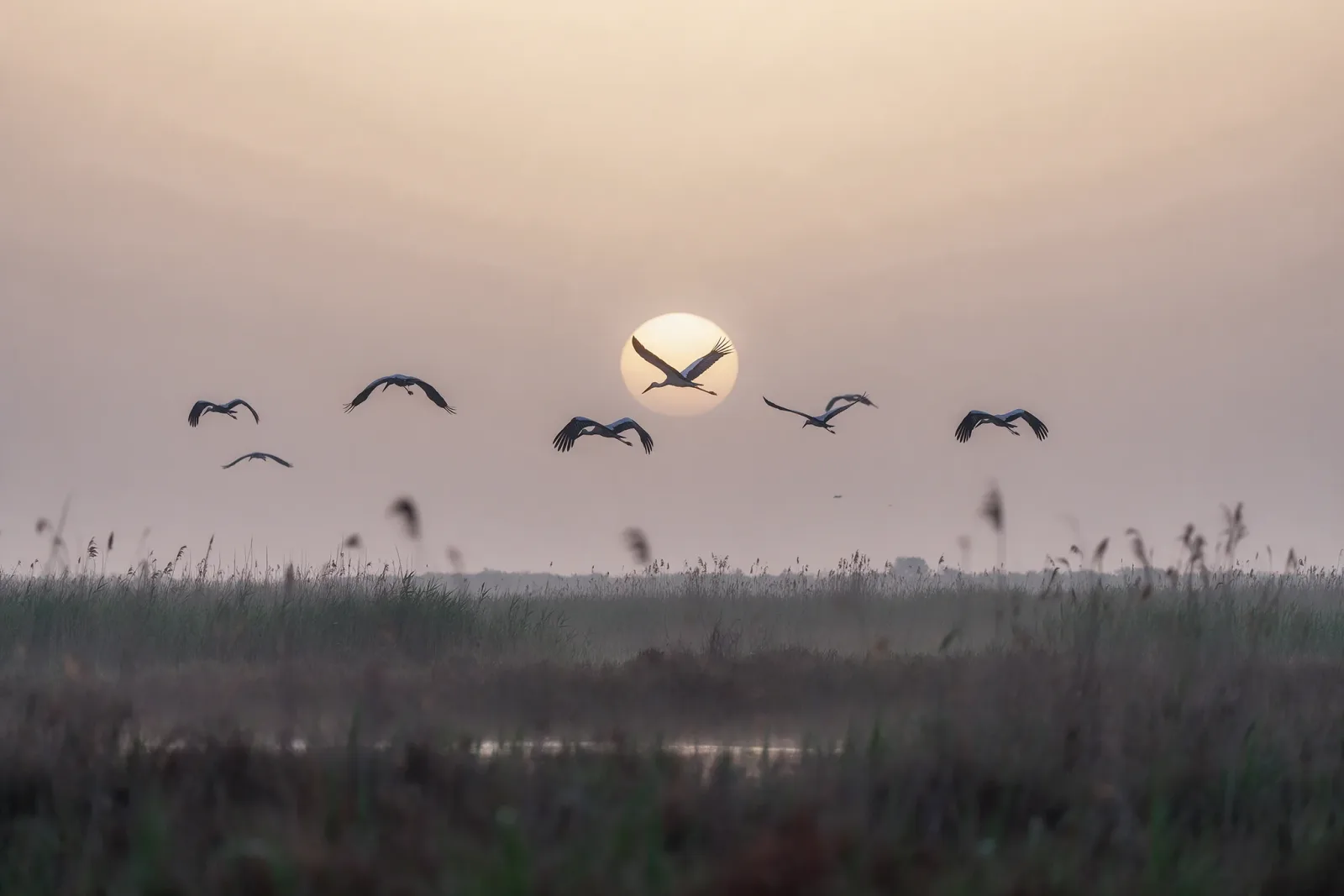
As the ground warms, the stork takes to the air. It spreads its wide wings and lets a thermal carry it upward, circling without a flap, high enough that it becomes a white cross against the blue. It may travel to another field, or simply ride the warm air for the pleasure of it. From the ground this is the day's one moment of flight, and it is worth staying for.
Preening and the care of feathers
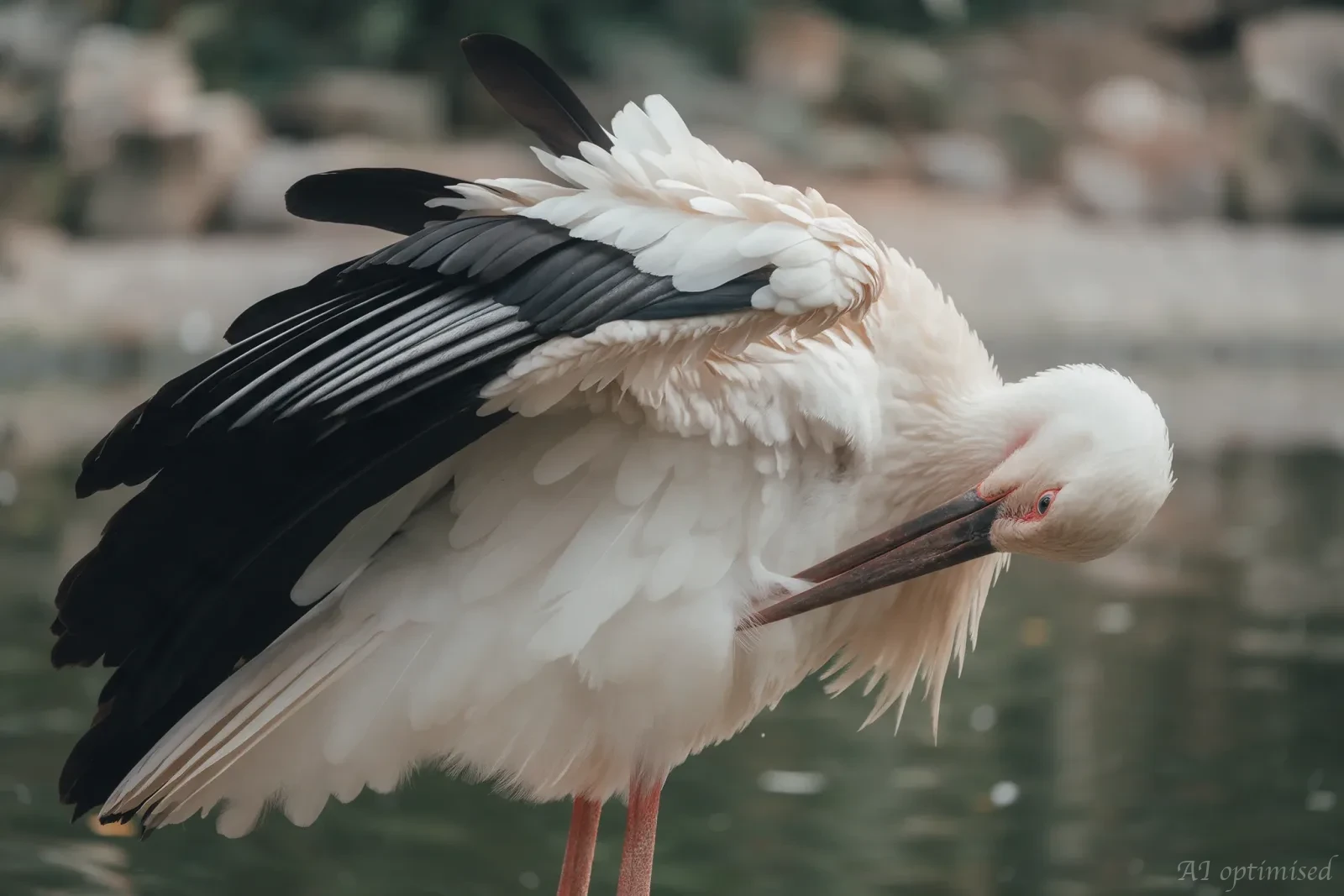
At some point the stork must tend to itself. It preens, drawing each long flight feather through its bill, oiling and straightening, the way a sailor mends a rope. Preening can go on for half an hour, and it is a good time to study the bird's plumage, the black of the wing and the fine white of the neck, because the bird is calm and unhurried.
Dusk and the return to the nest
As the light fails, the day closes the way it opened, with movement. The stork feeds once more, then lifts off and flies toward home, toward the nest on the chimney or the platform where its partner waits. Watch it land, hear the clatter of greeting, and the day in the field is complete. Tomorrow it will begin again, in the same field, in the same unhurried way.
Explore the gift