Knowing where to see white storks is mostly about knowing where they eat, and where they choose to raise a family. White storks are birds of wet meadows, shallow marshes, and the muddy margins of ponds, rivers, and flooded fields. Wherever water sits thin over grass or bare earth, the ground holds frogs, insects, and small creatures, and that is where a stork will stop.
Follow the water first
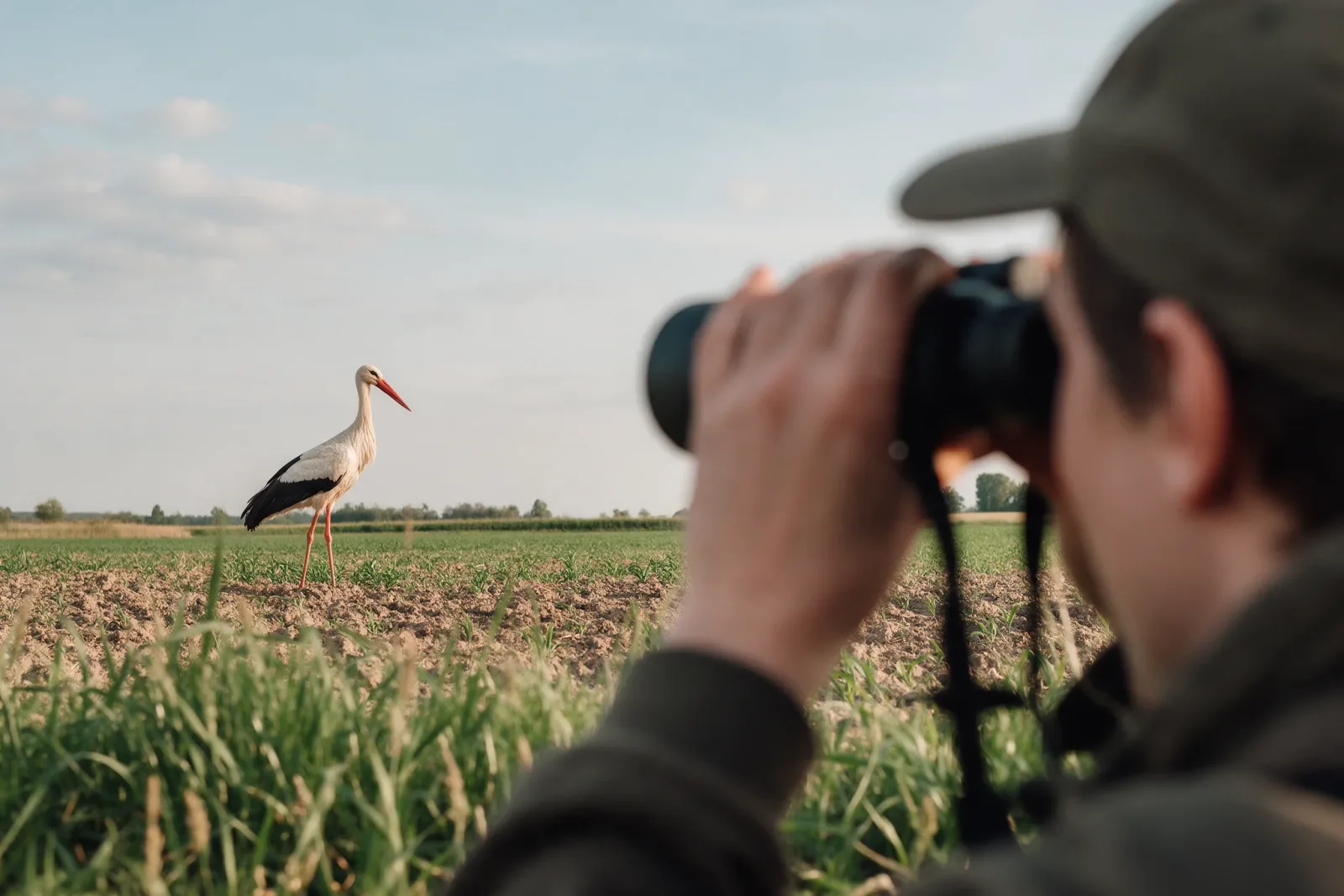
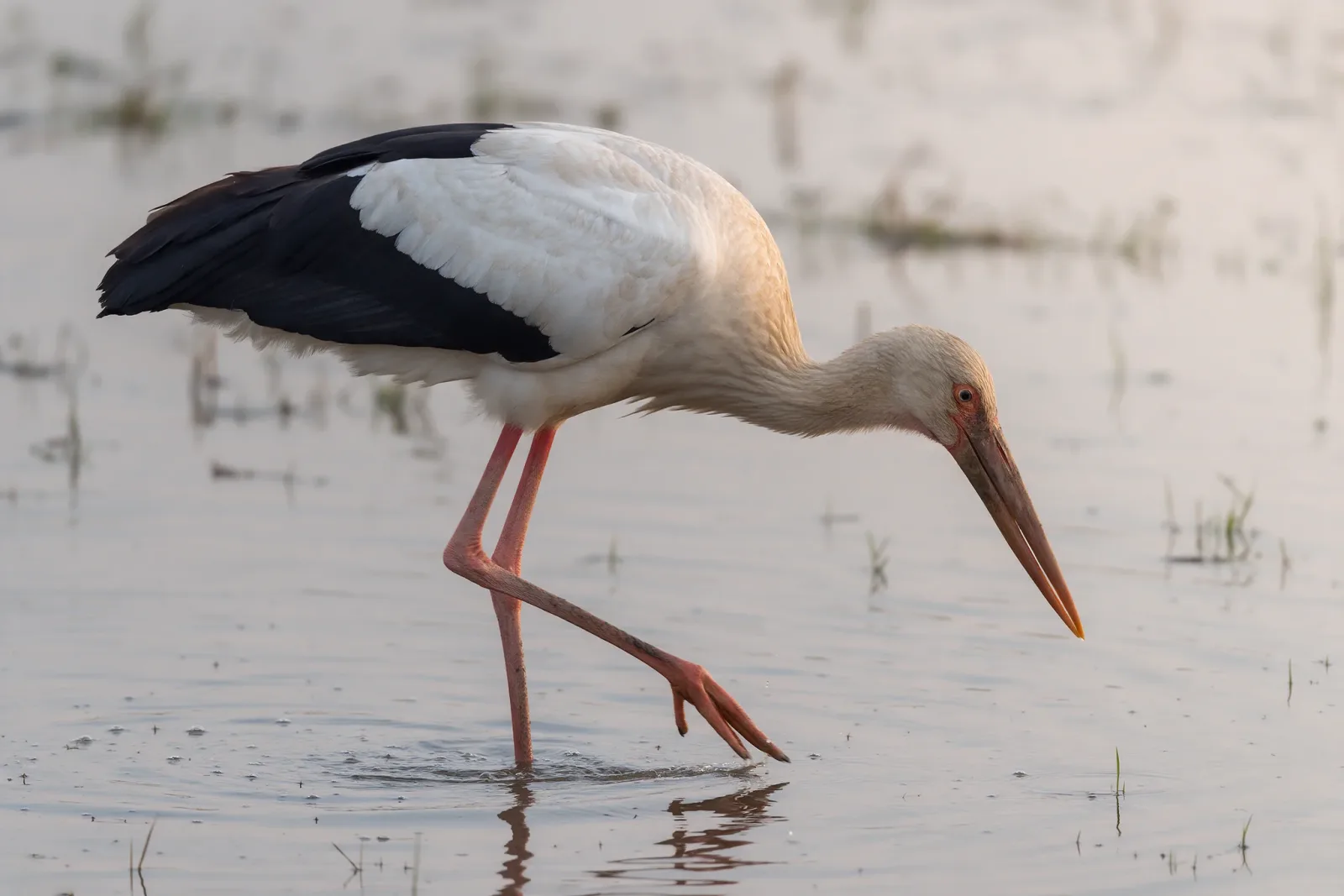
Start at the marsh, not the mountain. A stork hunts by sight and by the touch of its bill in places where it can wade without sinking and see the ground clearly. Through spring and summer you will find them in hay meadows that have just been cut, in ditches beside farm tracks, and in the shallows of reservoirs and fish ponds. A mown field is a magnet, because cutting exposes the small life that has been hiding in the grass. Walk the edge and scan slowly, one field at a time.
Look up at the rooftops
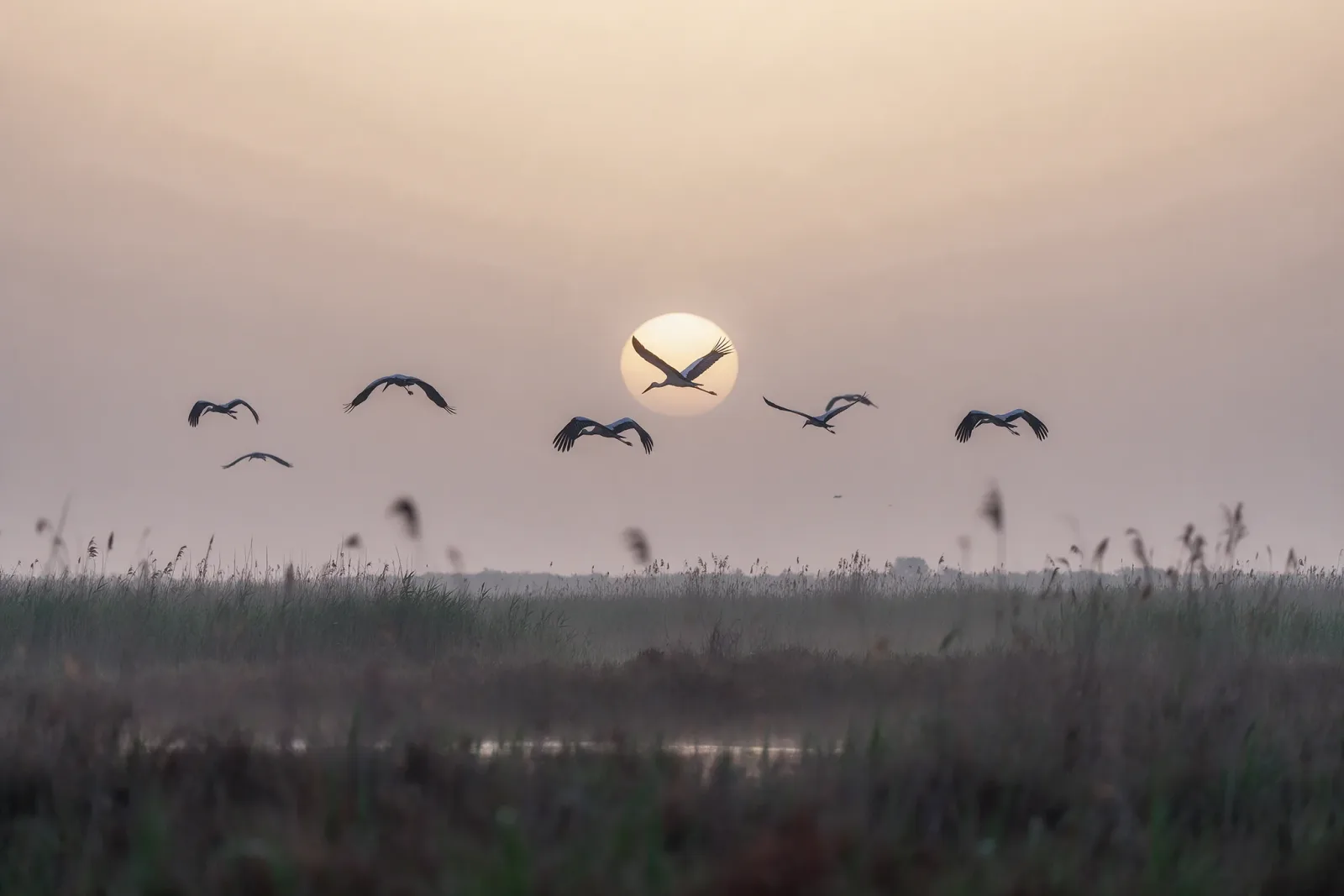
During the nesting season, the easiest place to see a white stork is not on the ground at all. Look for the large, untidy stick nest on a chimney, a church tower, a telephone pole, or a purpose built platform in a village. The storks are usually close by through the day, and one bird will often stand guard while the other is away feeding. A village with a nest is a quiet promise. Come back at dawn or dusk and you will almost certainly see one against the sky.
The feeding field
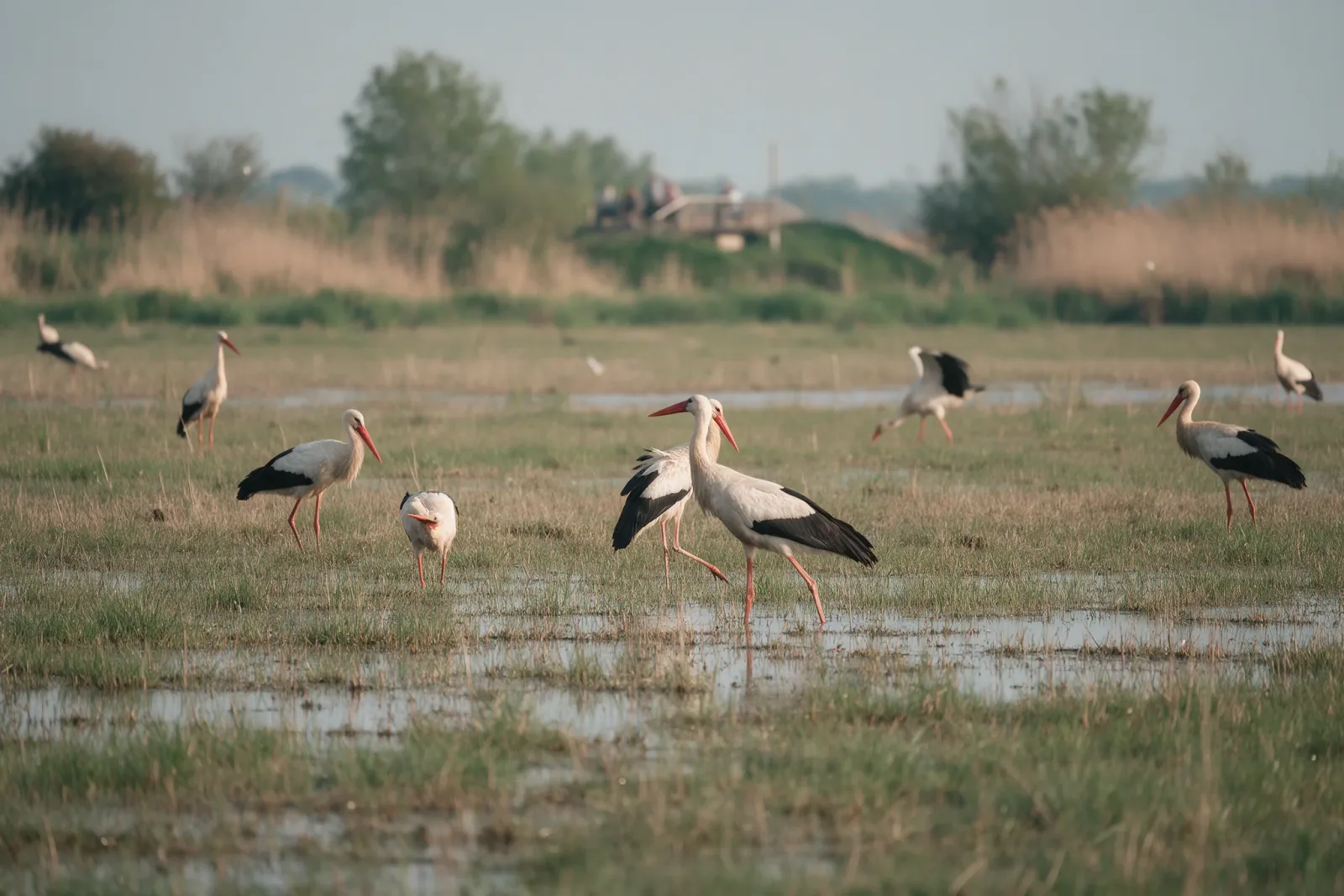
Away from the nest, watch for a stork walking with its head down. The pace is slow and deliberate: a step, a pause, a stab into the grass. They often work alone or in loose groups, spread out across a field, each bird keeping a few strides of space. If you spot one stork, lift your eyes to the whole field. Where there is one there are often several more, spaced along the same wet line, all working the same patch of damp ground.
Edges and verges
White storks also use the in-between places. The reedy edge of a lake, the strip of grass beside a canal, a flooded hollow in a pasture after heavy rain. These quieter spots reward a patient watcher, and they are where you can watch a stork for a long time without disturbing it. Move slowly, keep to the boundary, and let the birds settle. A stork that has been flushed will usually circle and come back down, because the feeding was good and the field is worth returning to.
Give the nest its distance
When you do find a nest, enjoy it from the ground below. A breeding pair is best left undisturbed, especially in the weeks when eggs and then small chicks are in the nest. The sight of a parent arriving with food, its long legs trailing as it lands, is one you can take in perfectly well from a respectful distance. Stand still and the birds will go about their day as though you were part of the meadow.
Explore the gift