How to watch a stork begins not with equipment but with a decision to slow down. A white stork spends most of its day walking, standing, and staring into grass, and if you hurry past you will see none of what it is actually doing. The bird rewards the watcher who gives it time, and the good news is that almost anyone can do this with nothing more than a patch of wet field and a little patience.
Start with your bare eyes
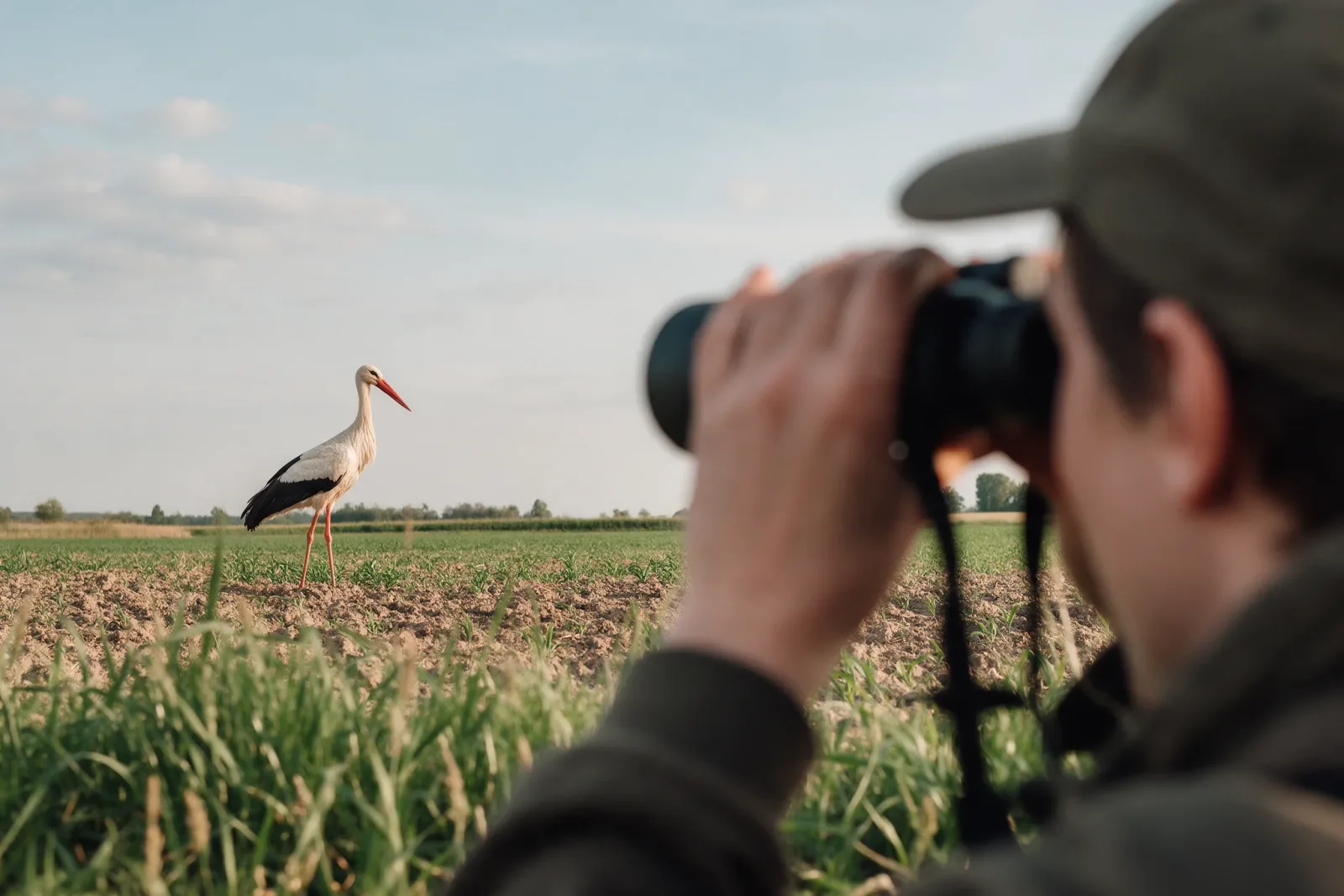
Before you reach for binoculars, watch with nothing at all. A stork is a large bird, white against green, and it is often visible from a surprising distance. Let your eyes learn its shape: the long neck held straight, the red bill, the black wing feathers that only show when the wings open. Once you can find a stork without help, binoculars become a pleasure rather than a struggle.
Watch the walk
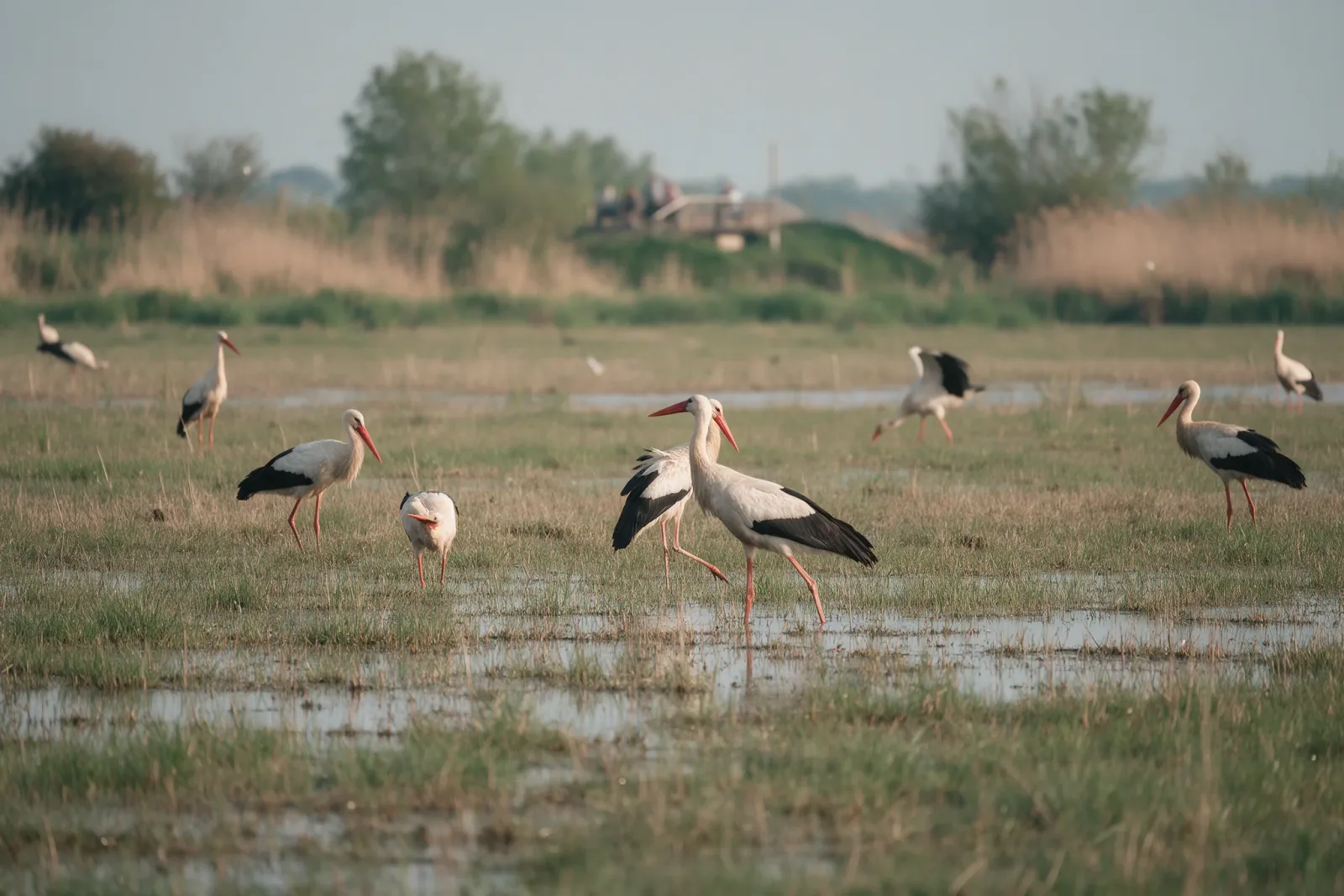
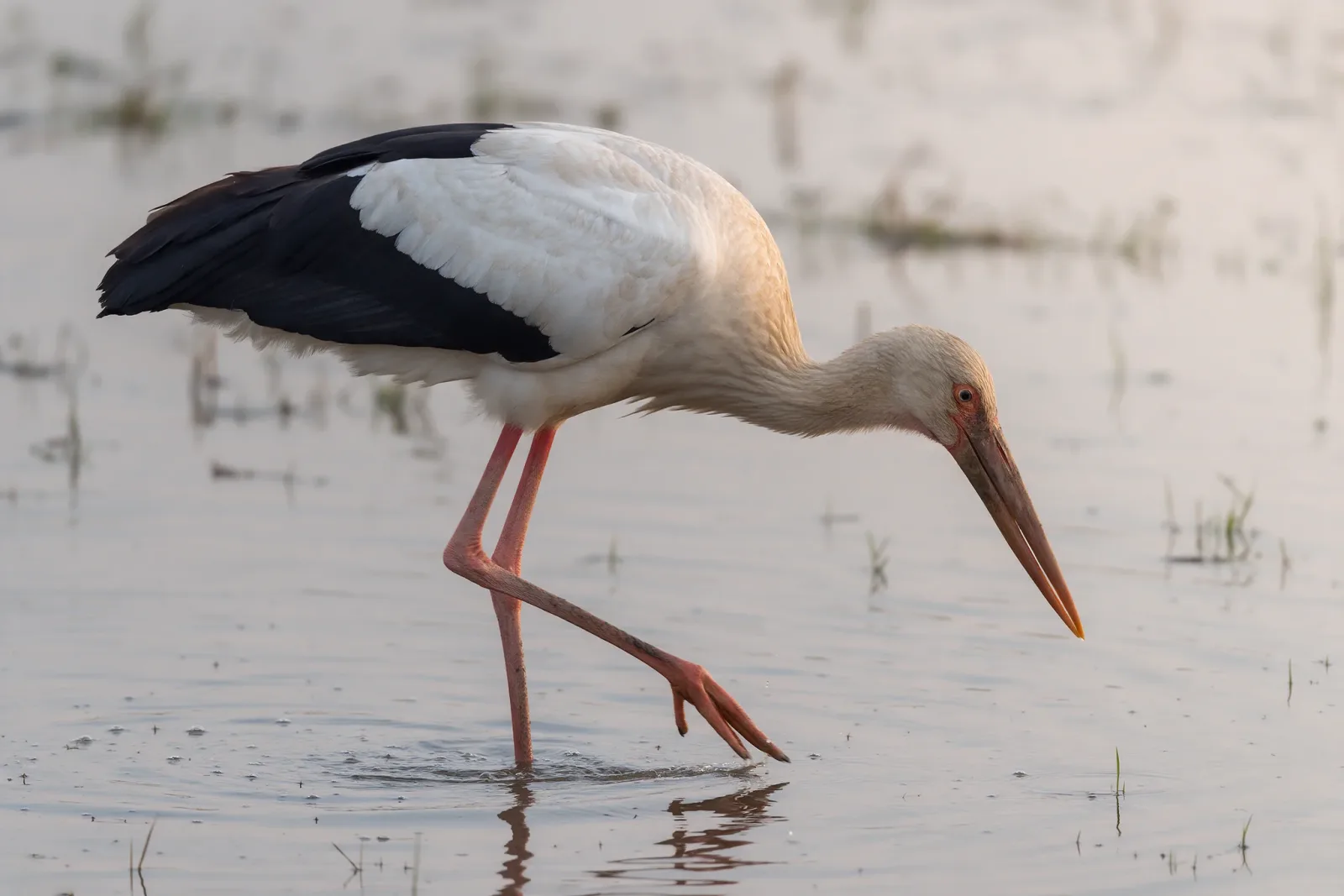
A stork's hunting walk is slow and deliberate. It lifts one leg, holds it a moment, sets it down, and tilts its head to look. Then the neck coils and the bill stabs down into the grass. This rhythm is the whole point of watching. Do not wait for drama. The small moments, the step and the pause and the sudden stab, are the stork's real day, and they are happening in front of you if you stay long enough to see them.
Keep low and keep quiet
Storks are not timid birds, but they notice movement. Approach along a hedge or a fence line, keep your silhouette low, and avoid sudden gestures. If a bird looks up and freezes, stop moving and let it settle. You are far more likely to be tolerated if you behave like a slow-moving part of the field than if you walk straight toward the bird. A long view is nearly always a better view.
Watch one bird for a long time
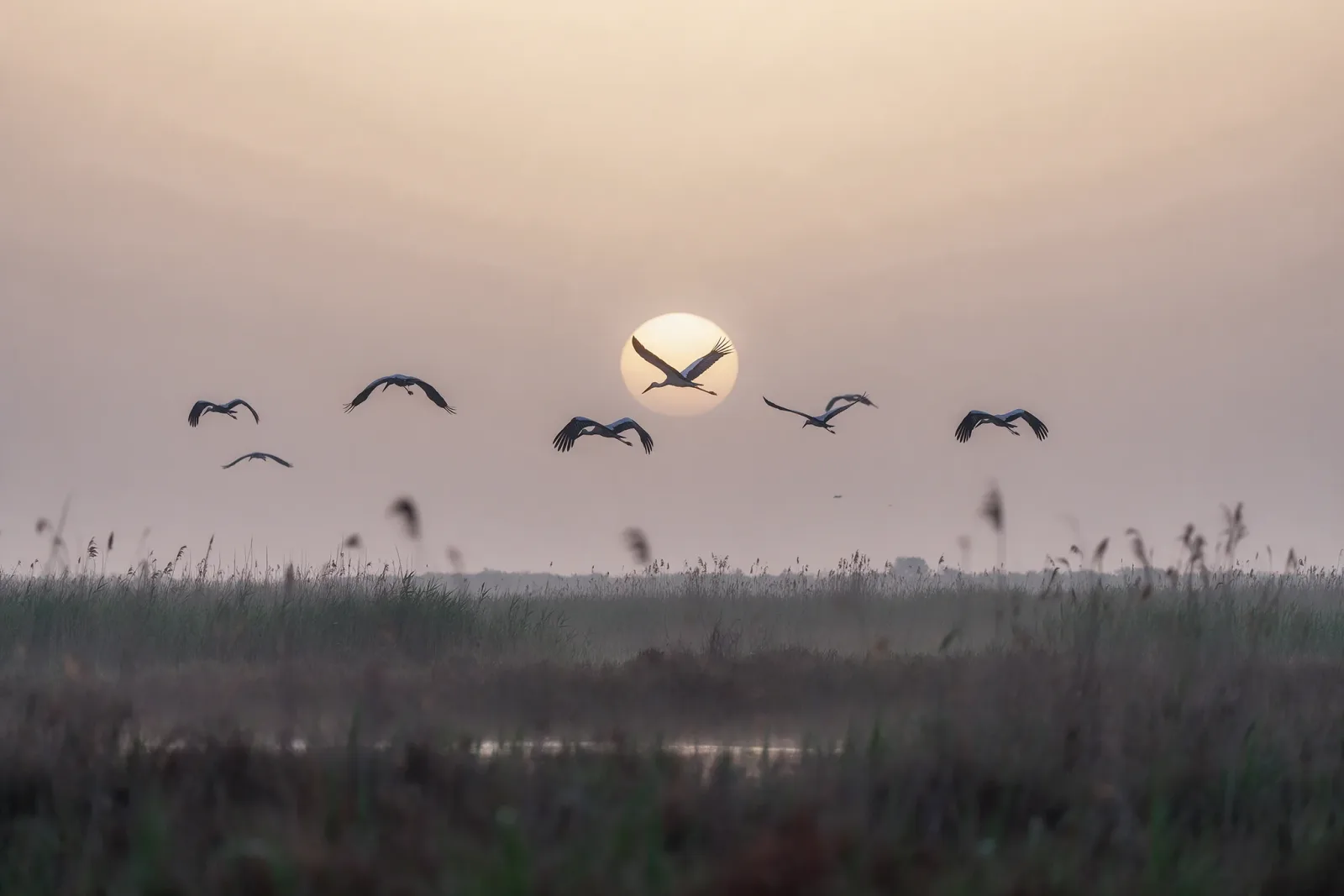
Choose a single stork and stay with it. Notice where it feeds, when it drinks, when it stands and preens, when it lifts off and circles on a thermal. Ten minutes with one bird will teach you more than an hour spent chasing several. You will begin to recognise the difference between a feeding bird and a resting bird, and you will know the moment before it flies by the way its neck shortens and its wings twitch.
Let the bird finish the lesson
There is no perfect sighting, only the next one. Some days you will walk out and see nothing at all, and that is part of watching too. The marsh keeps its own hours. Come back, sit still, and the stork will do its ordinary, wonderful work right in front of you.
Explore the gift