The best time of day to see white storks is at the edges of light, just after dawn and just before dusk. In the middle hours, when the sun is high and the air is still, storks often stand motionless or ride thermals far above the ground, where they are hard to watch. Early and late, they come down to the fields and the water, and that is when the watching is at its richest.
What the first light brings
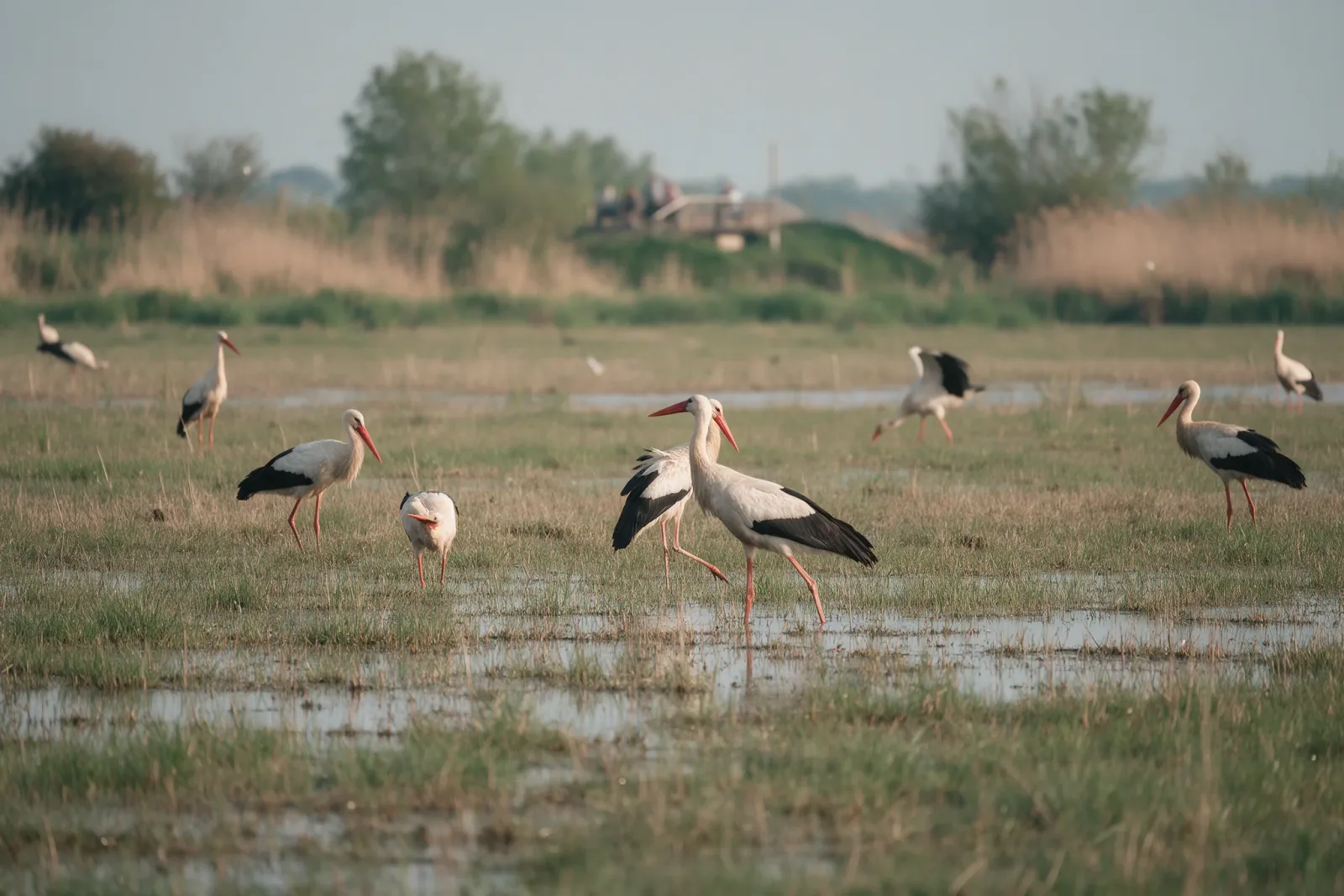
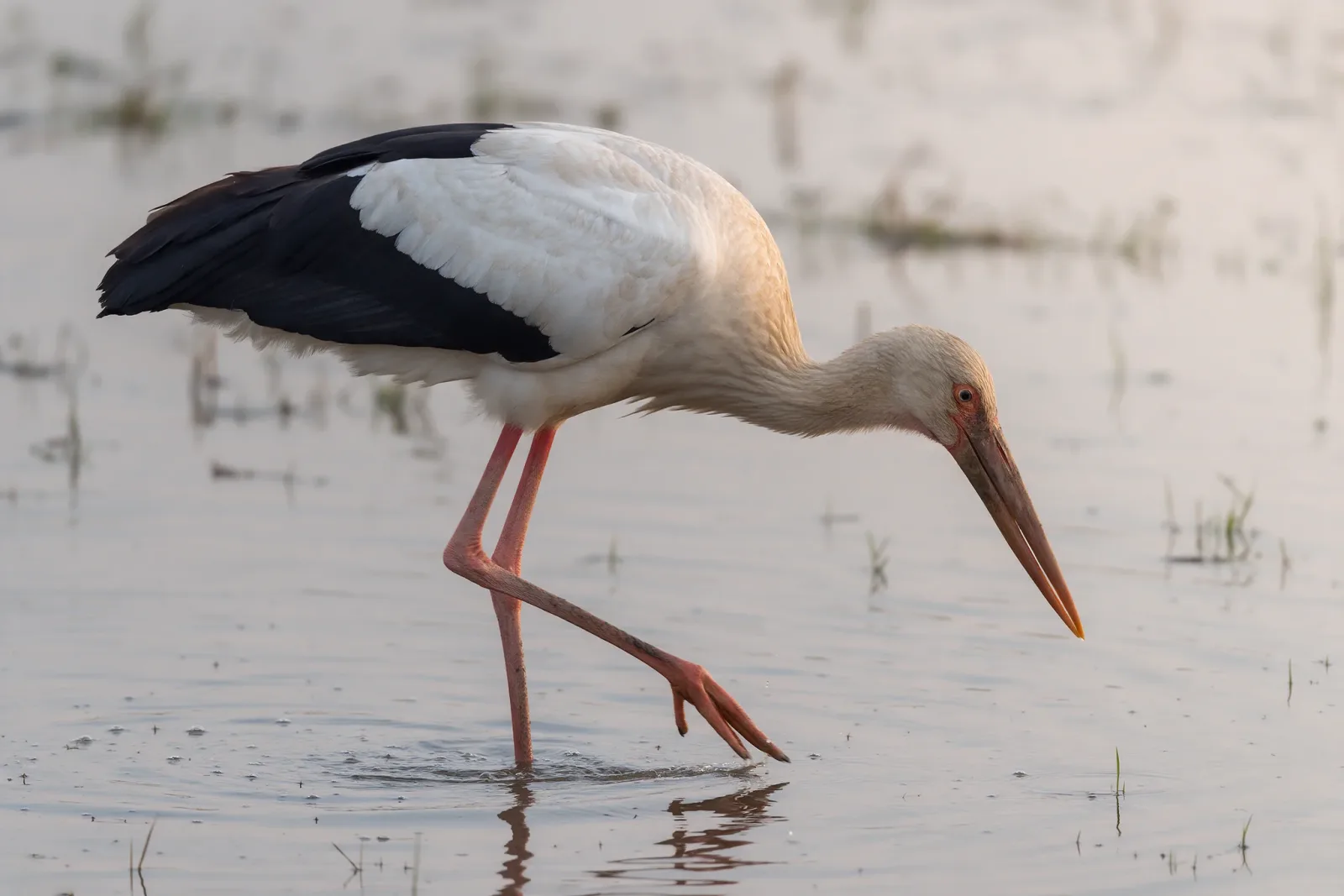
At dawn a stork begins its day with feeding. The grass is cool, the insects are still, and the birds work the damp margins with a steady, unhurried pace. The low light is soft, which makes the white of a stork stand out against the shadowed green. There is often mist over the marsh in the morning, and a stork walking through it is one of the finest sights a watcher can earn.
The slow middle of the day
By late morning the day has flattened. The thermals have not yet built, and many storks stand quietly, preen, or loaf at the edge of the water. This is not a bad time to watch, but it asks more of you. The birds are doing very little, and you must be willing to do very little alongside them. If you want movement, come back when the light leans.
What the evening holds
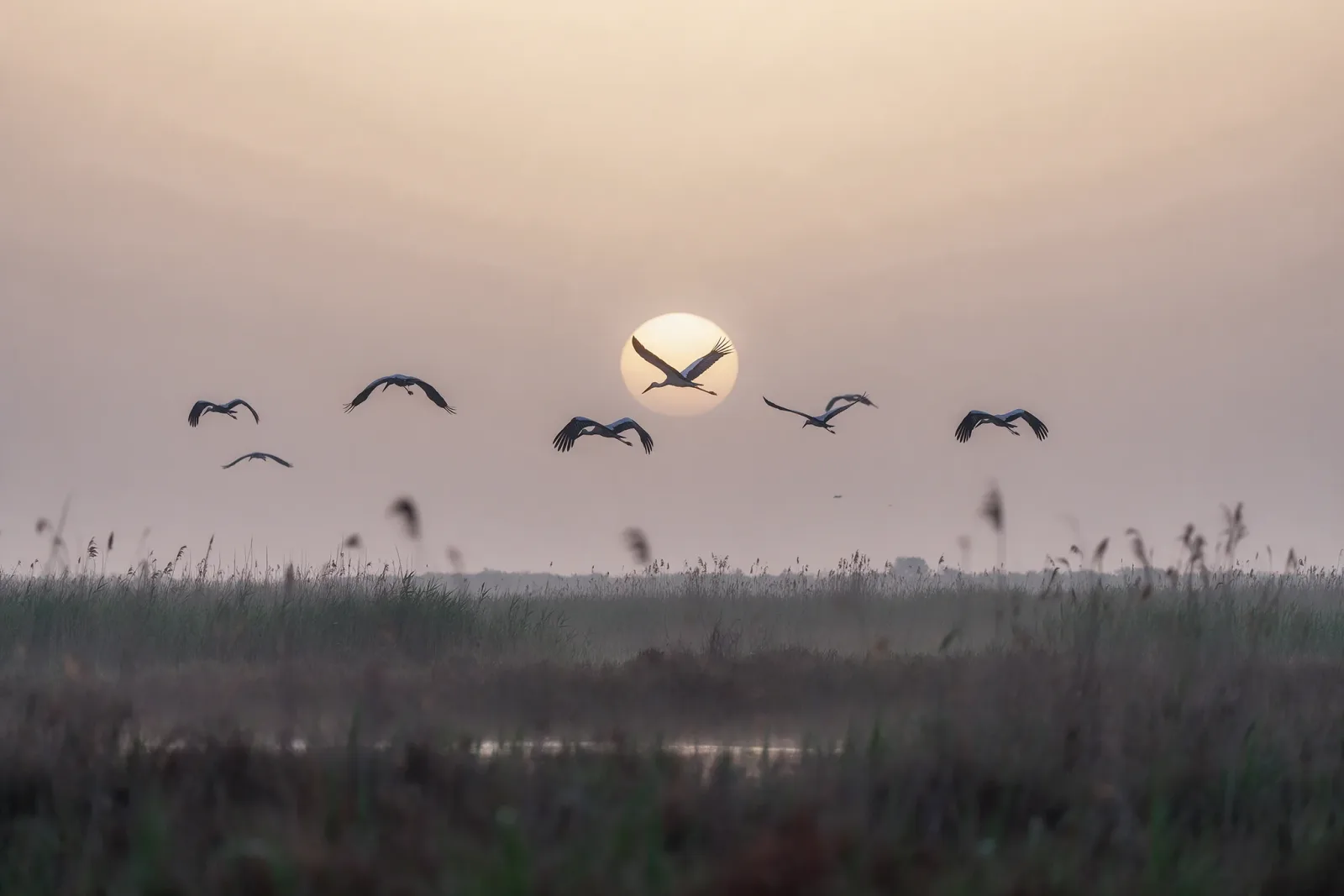
As the sun drops, the feeding picks up again. Storks move through the fields a second time, gathering food before the night. The dusk also brings the great arrival at the nest. Birds that have spent the day out in the country come home to the chimney or the platform, sometimes carrying a stick for the nest or food for a waiting partner. The silhouette of a stork landing against an orange sky is the reward the whole day has been building toward.
Watch the weather, not just the clock
The time of day matters less than the feel of the air. Storks are weather birds. They lift off on rising warm air, and they feed hardest before a change in the weather. A cloudy, breezy afternoon can be better than a clear morning, and a calm evening after rain can bring a whole field of birds to the wet grass. Learn to read the sky the way a stork does, and the best hour will find you.
Come back at the same hour
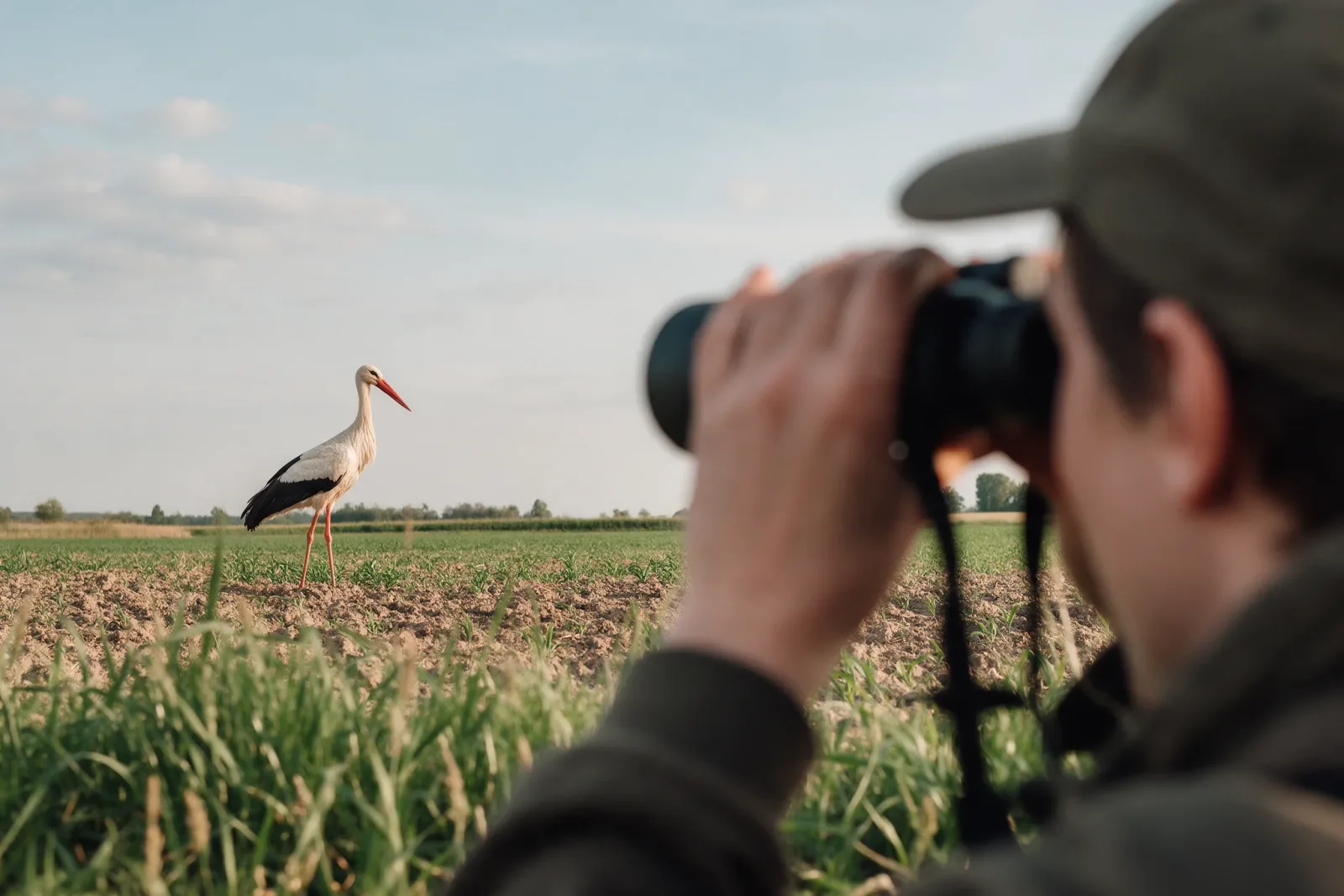
Whatever time you choose, choose it often. Storks keep a rhythm, and if you return to the same field at the same hour for a week, you will start to know what to expect before it happens. That familiarity, more than any single golden moment, is what turns a casual glance into the habit of watching.
Explore the gift