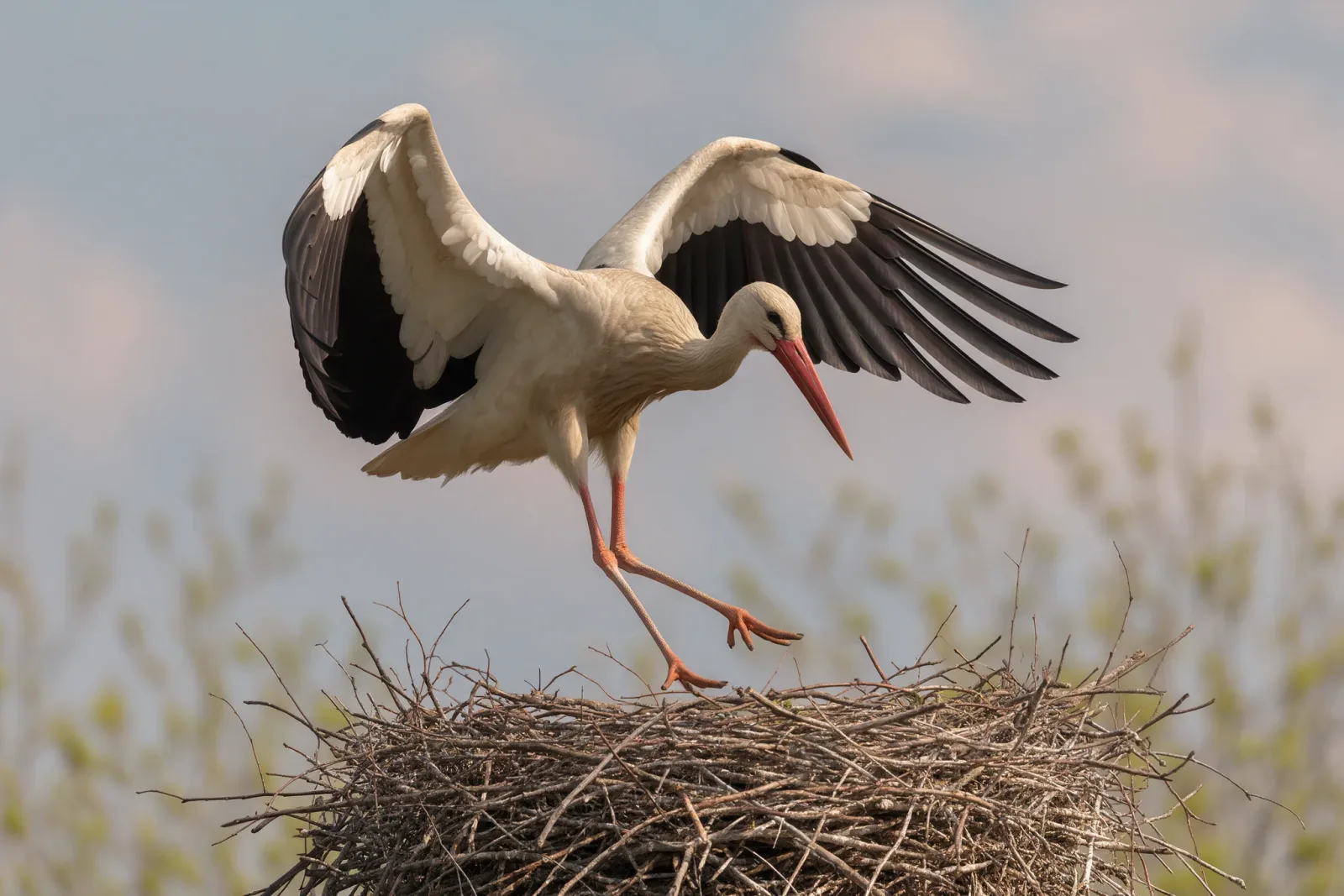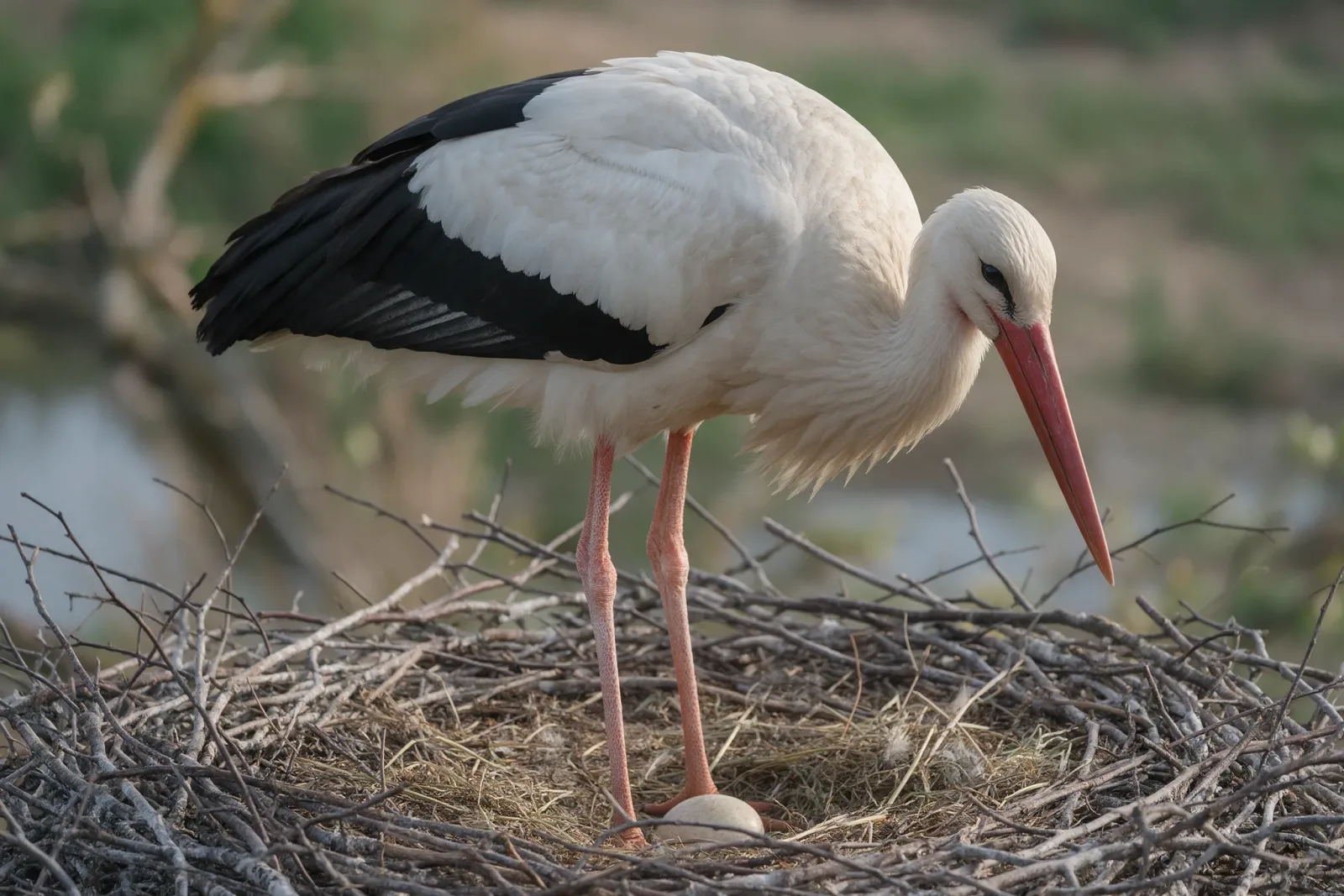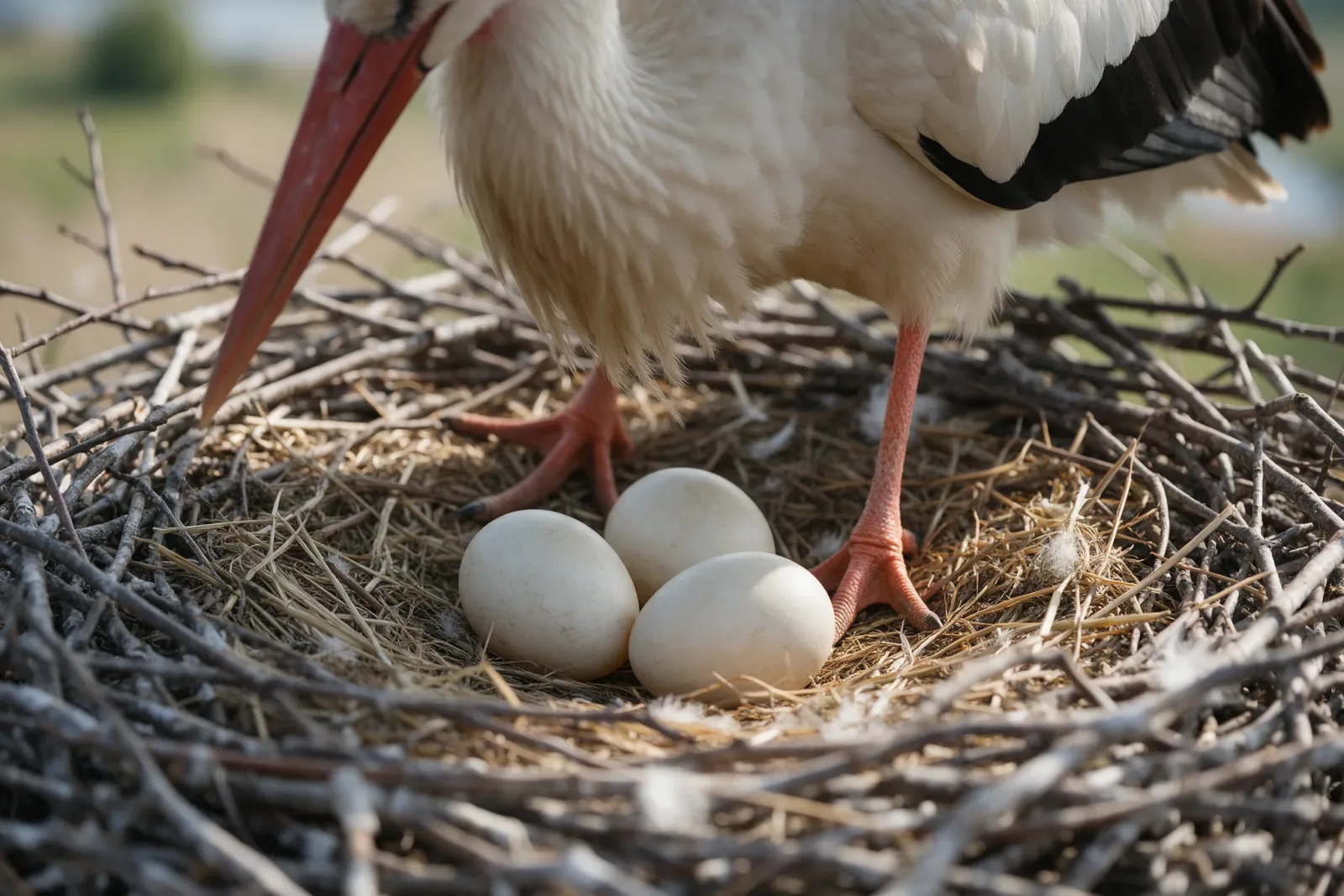
A stork's first year packs an entire life into a few short months. The bird that hatches in the spring, a blind scrap of down in a nest of sticks, must grow, fledge, and then fly thousands of kilometres south before the year is out. It is one of the most demanding first years any creature faces.
The white stork chick has no childhood to speak of. It hatches, it grows at a ferocious pace, and within two months it is in the air, a full-sized bird that has never known winter and is about to fly into one.
The rush of summer
The first months are pure growth. The chick doubles and redoubles in size, feathers pushing out through the down, legs lengthening, wings stretching to adult span. It is fed constantly, and it spends its days standing at the edge of the nest, watching the sky.
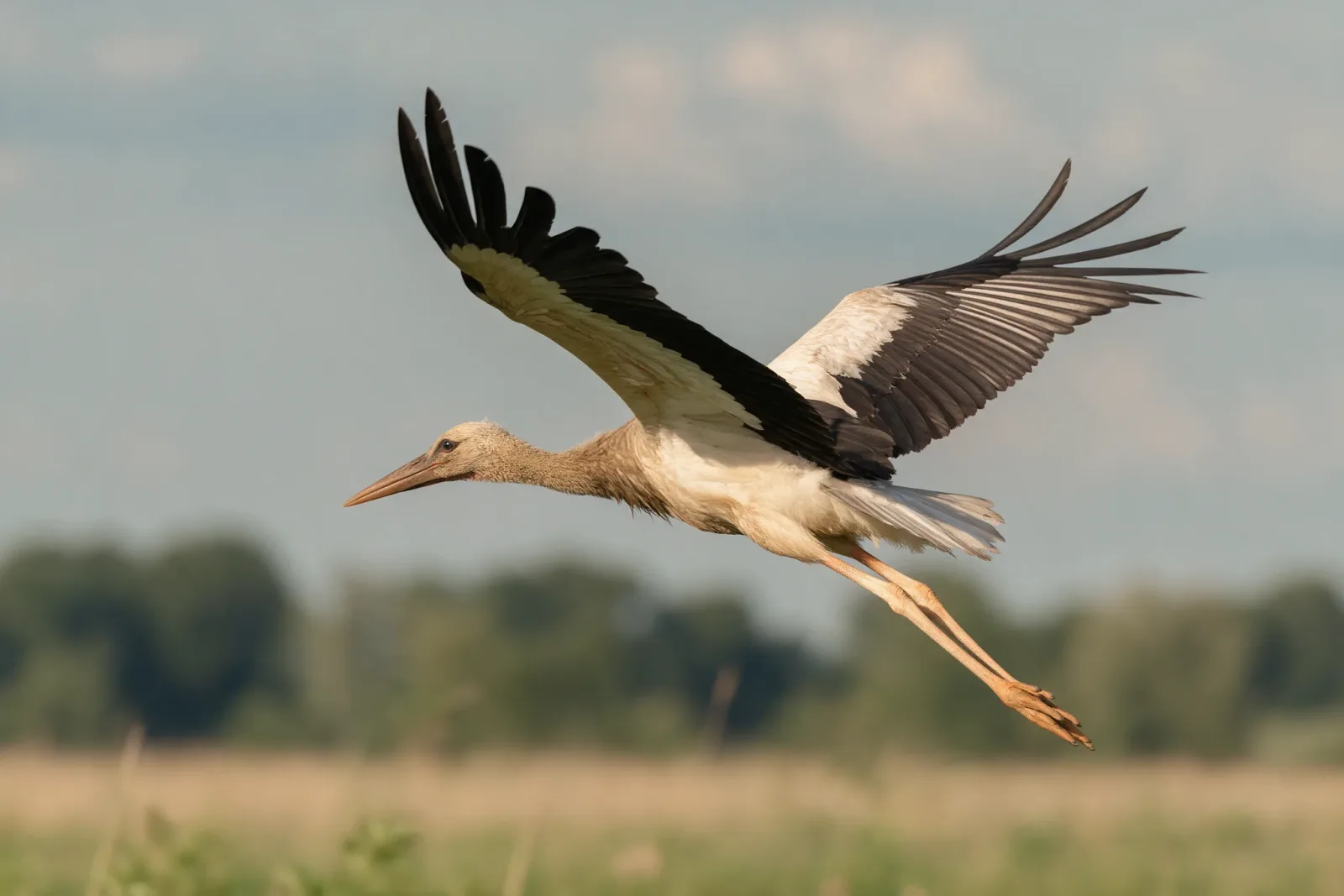
By late summer the young bird is ready. It has fledged, learned to land, and followed its parents to the feeding grounds. It is independent in everything except the route south, which it has never travelled and will travel for the first time on its own.
The first migration
The first migration is the great test of the year. A young stork leaves with other storks, in the loose flocks that gather before the journey, but it must find the way by instinct rather than by memory. No bird teaches it the route. It is born with the shape of the journey already inside it.
The young stork flies south, over land and sometimes over sea, through countries it has never seen, toward a warmth it has never felt. Some first-year birds do not survive the journey. Those that do arrive in Africa as travellers, already old in the ways of the air.
The wintering months
The first winter is spent far from the nest, in the warm lowlands of Africa, among other storks on the savanna and the floodplain. The young bird feeds and rests and grows into its full strength, and for a while the hurry of the summer is forgotten.
It is a strange life, to be a bird with a home it has never truly known, and yet the instinct is already set. The young stork will not breed that first spring. It will linger south, or wander north without nesting, still too young for the full cycle.
The circle to come
So a stork's first year ends not with a return to the nest but with a kind of apprenticeship. The bird has learned to fly, to migrate, to winter, and to survive alone. It has not yet built a nest or raised a chick of its own.
That comes later, in the second and third years, when the full circle closes and a bird that was once a scrap of down becomes a parent in its turn.
Explore the gift