A white stork does not lay its eggs on a fixed date. The question of when storks lay their eggs is answered by the weather, by the length of the winter, and by the quiet patience of a pair settled into an old nest. What matters is that the eggs arrive when there will be food enough to feed a family.
In most of Europe the clutch comes in spring, usually between late March and May. The exact week shifts with the season. An early, warm spring brings the first eggs sooner. A long, cold one pushes them later. The birds seem to know what the fields are about to offer.
The wait after the return
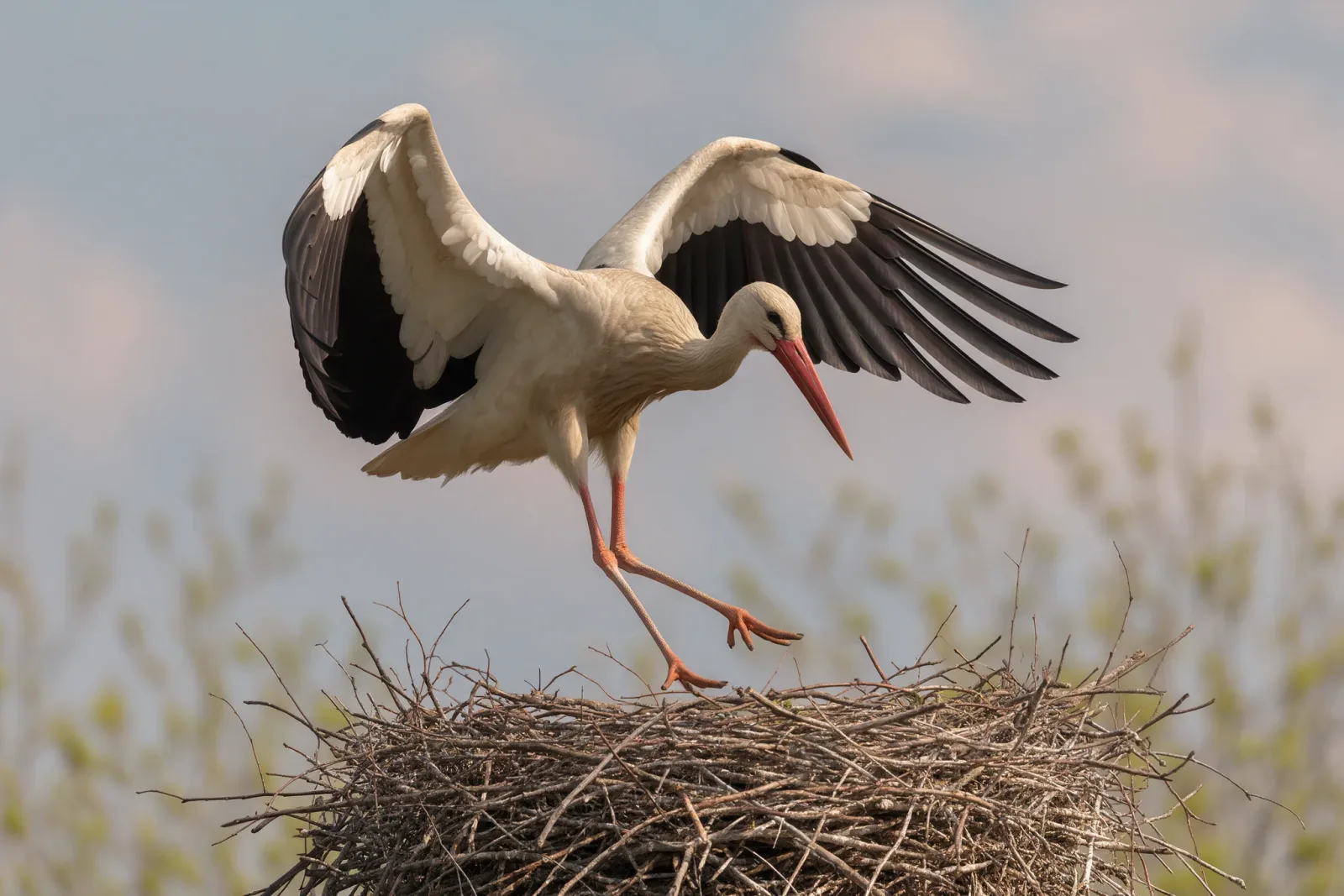
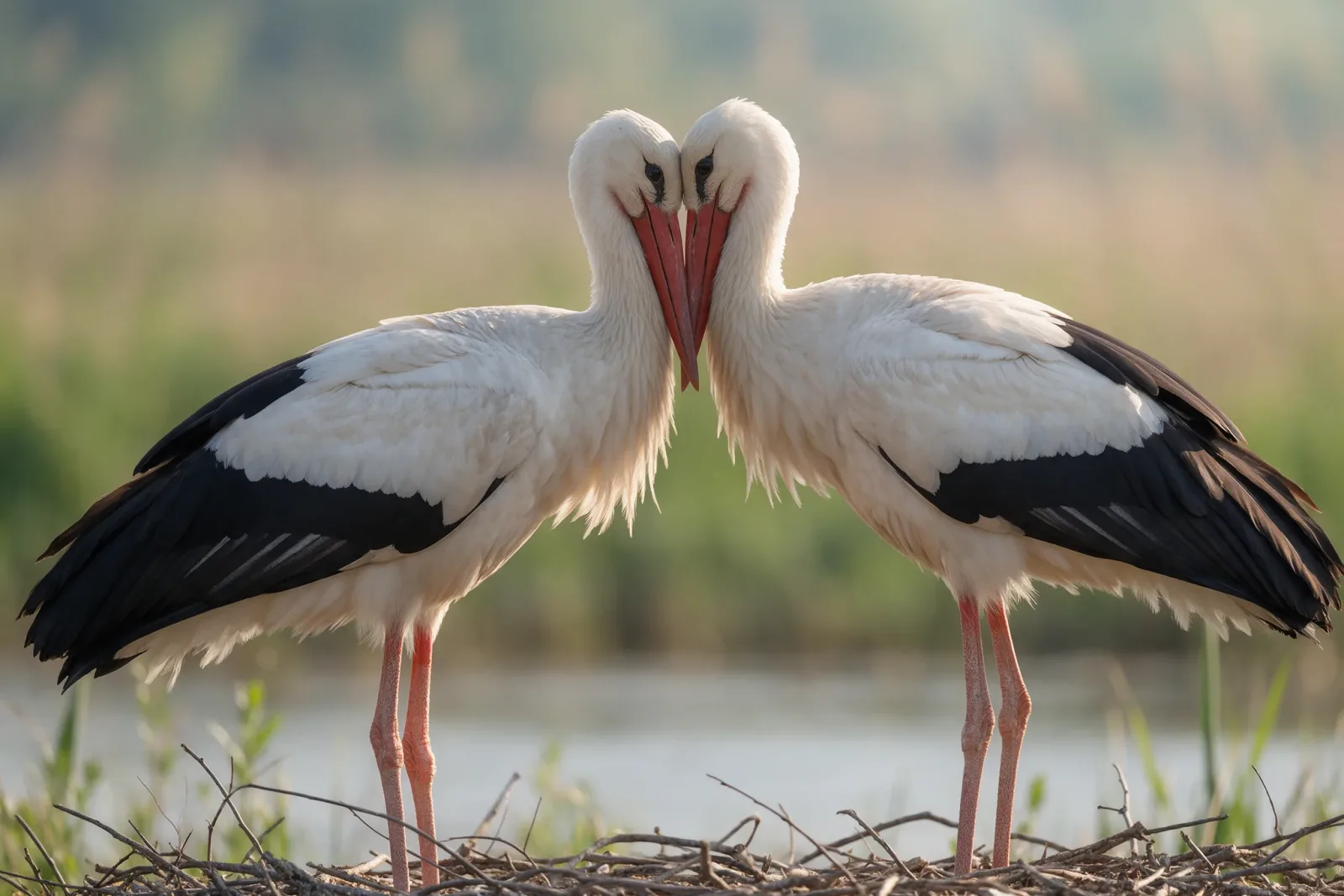
The eggs do not come the moment the storks land. There is a period of settling first. The pair arrives, greets each other, and spends days mending the nest, adding sticks and fresh turf and grass. This repair work is part of the timing too. The nest must be sound before anything is laid in it.
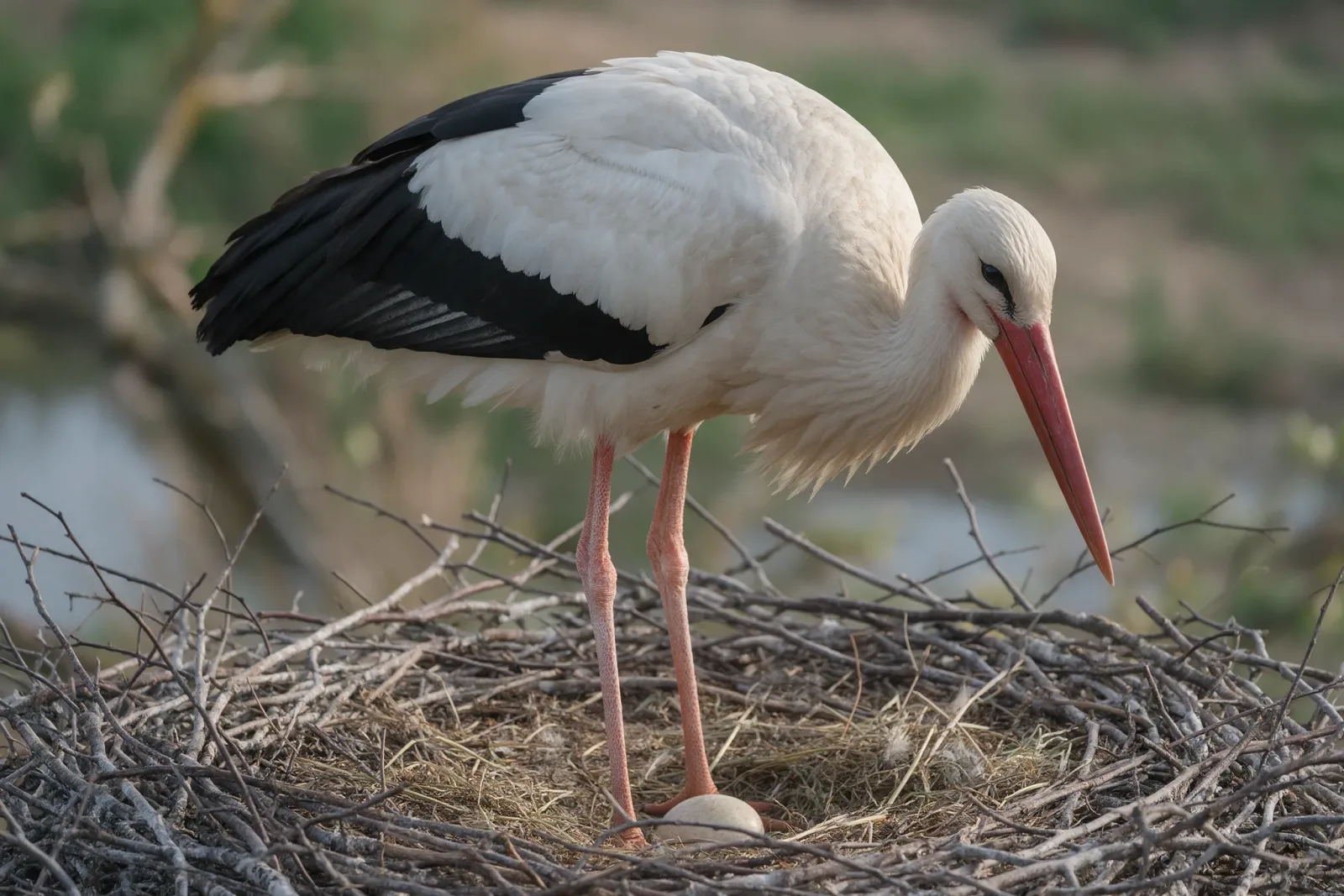
Only when the platform is firm does the female crouch low in the bowl of the nest. She lays her eggs a day or two apart, one at a time, so that the clutch grows slowly rather than all at once. This spacing shapes everything that follows, because the chicks will hatch in the same order the eggs were laid.
A clutch of three to five
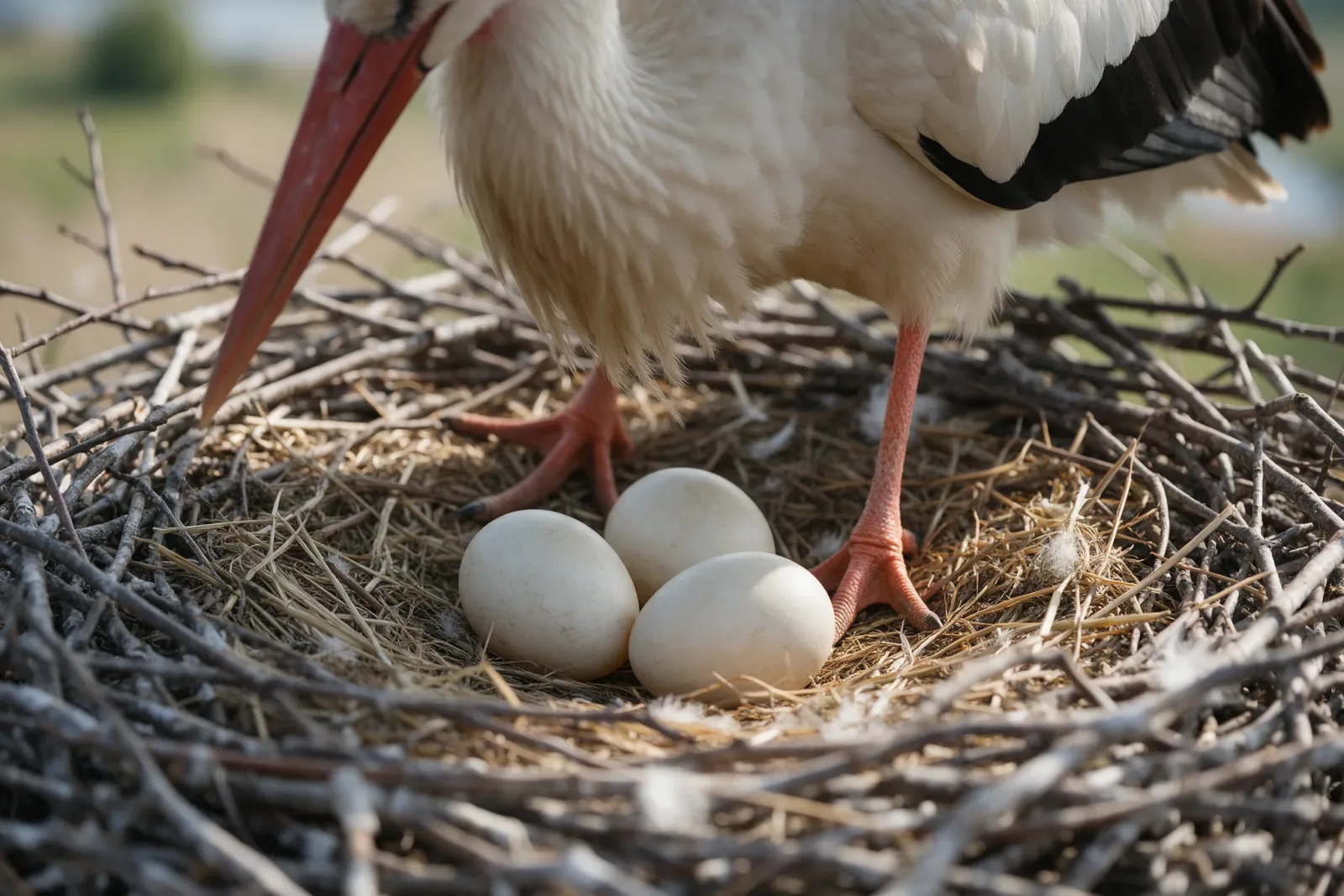
Most white stork clutches hold between three and five eggs. The eggs themselves are plain and pale, chalky white, and small enough to sit in the curve of a hand. They lie in a shallow hollow lined with whatever soft material the parents have gathered.
Incubation begins soon after the first egg is laid, and it is shared. Both parents sit, the male and the female taking turns through the day and the night. The eggs are turned gently with the bill, and kept warm against the cold spring air.
How the weather decides
The weather does more than set the date. It decides whether a clutch will thrive. A cold, wet spring makes hunting hard, and a pair that laid too early may struggle to feed every chick. A mild, damp spring brings frogs and insects in plenty, and the nest runs well.
This is why the timing is never careless. The birds are reading the season, not the calendar. A clutch laid at the right moment, in the right weather, is the first small victory of the year.

The month of sitting
For around a month the parents sit, patient and still, trading places so that one is always on the nest. Then, near the end of that month, small tapping sounds come from inside the shells, and the first chick begins its slow way into the world.
Explore the gift