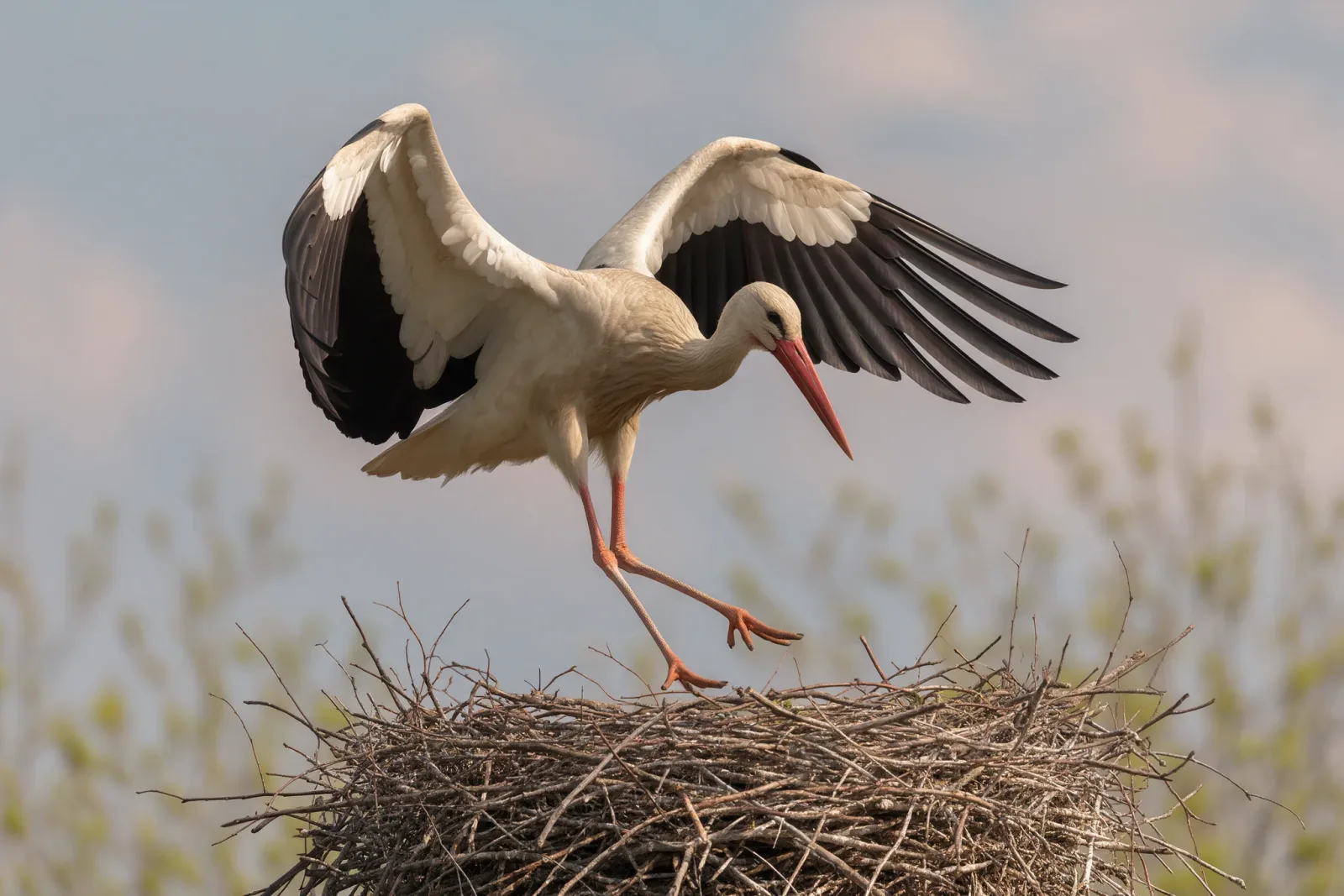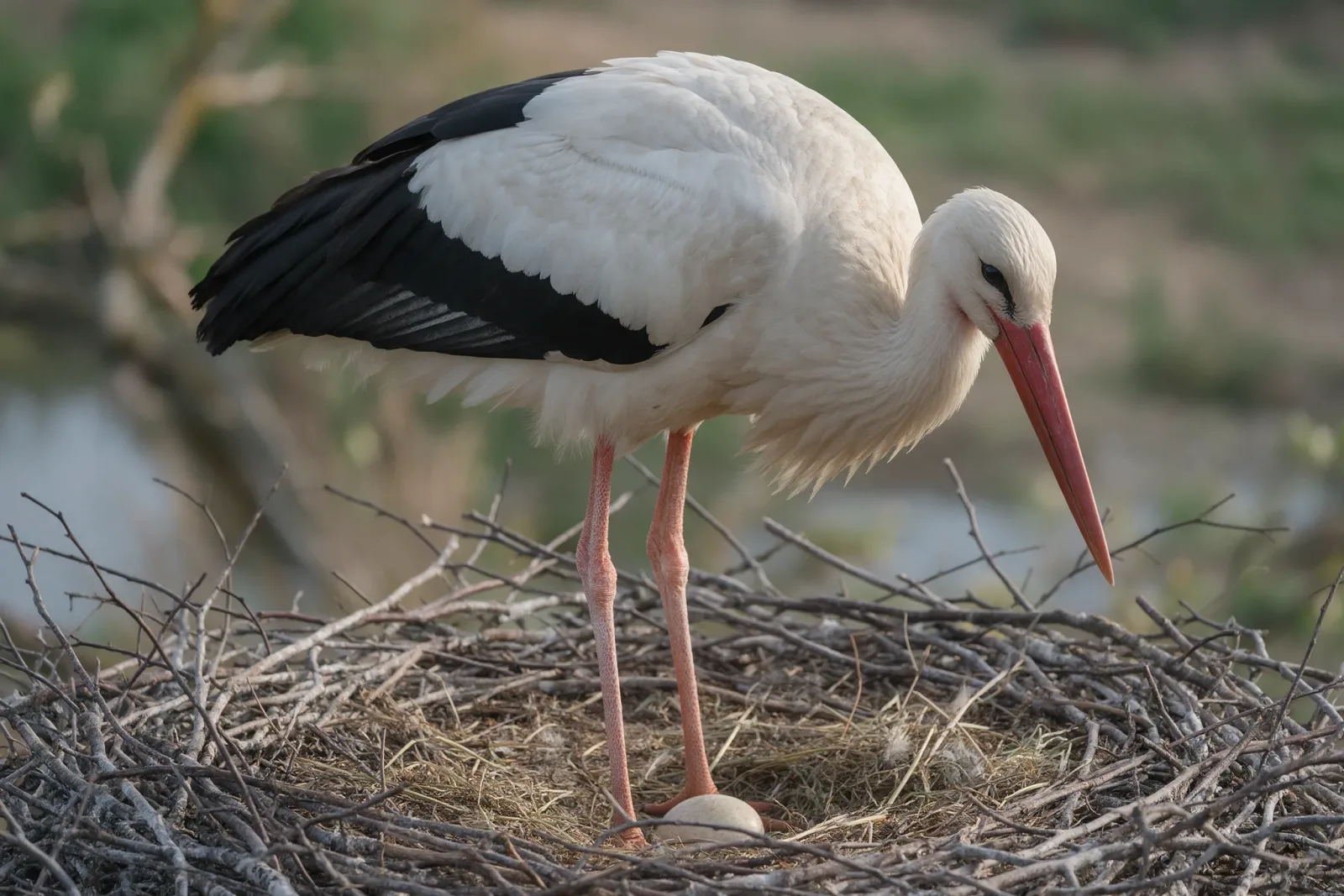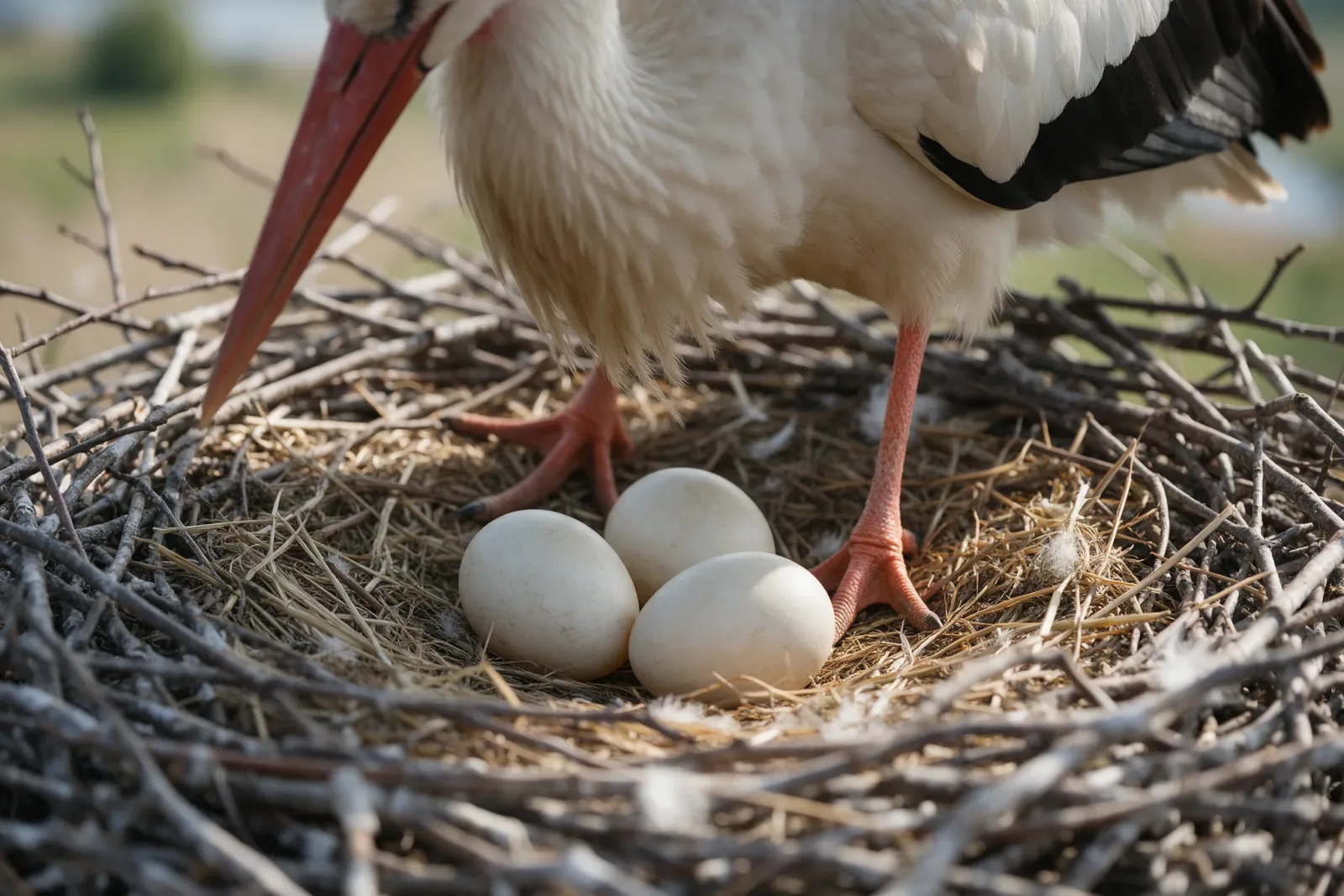
A white stork usually lays between three and five eggs, and that small number is where the whole story of a stork family begins. Ask how many eggs do storks lay, and the honest answer is that there is no single number. There is a range, and within that range the birds keep a careful, unspoken math.
Most clutches settle at four. Some hold three, some five. Rarely there are more, and rarely fewer. The number is not chance. It is balanced against what the parents can feed, and what the season is likely to provide.
Why not more
A stork raises a large, hungry brood on a thin supply. The parents must carry food back to the nest many times a day, and each chick needs a great deal before it is strong enough to fly. Too many eggs would mean chicks that go hungry. Too few would mean a season wasted.
So the clutch size is a kind of bet on the summer to come. In a good year, the parents can raise five. In a lean one, they may struggle with three. The birds cannot know the future, but the number they lay sits in the safe middle of what is possible.
The eggs themselves
The eggs are plain and pale, a chalky white, and slightly oval. They are laid over several days, one at a time, with a gap of a day or two between each. This means the eggs do not hatch together. The first chick emerges ahead of the last, and that head start lingers through the whole season.
It is a gentle, practical arrangement. The parents begin incubating almost at once, so the clutch is never left unguarded. The eggs are turned often, and the sitting is shared between both birds.
What the number means
For anyone who watches a nest, the clutch size is the first clue to the season ahead. Five eggs promise a busy summer. Three promise a smaller, quieter one. Neither is better. Both are the birds adjusting to the world they found when they flew home.
The number is also a reminder of how much must go right. Not every egg hatches, and not every chick fledges. A clutch of four is not four future storks. It is four chances, each one depending on the weather, the parents, and a little luck.
The quiet math
So the answer to the question is both simple and deep. White storks lay three to five eggs, most often four. Behind that number sits the whole economy of a nest, the slow weighing of food against mouths, and the hope of a summer that is warm and wet enough to carry a family through.
It is a small number with a large meaning, and it is written each spring in a shallow bowl of sticks at the top of a chimney.
Explore the gift