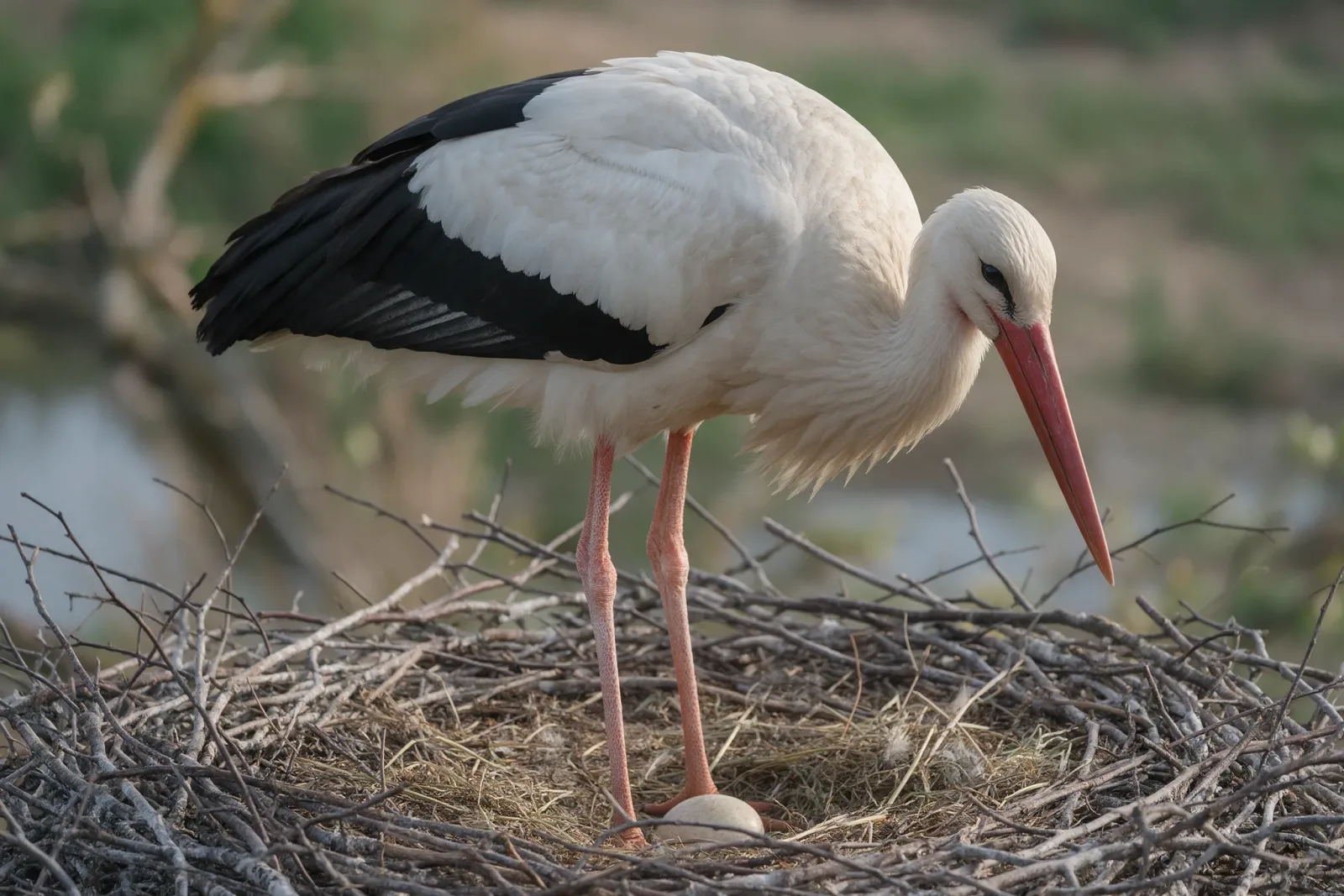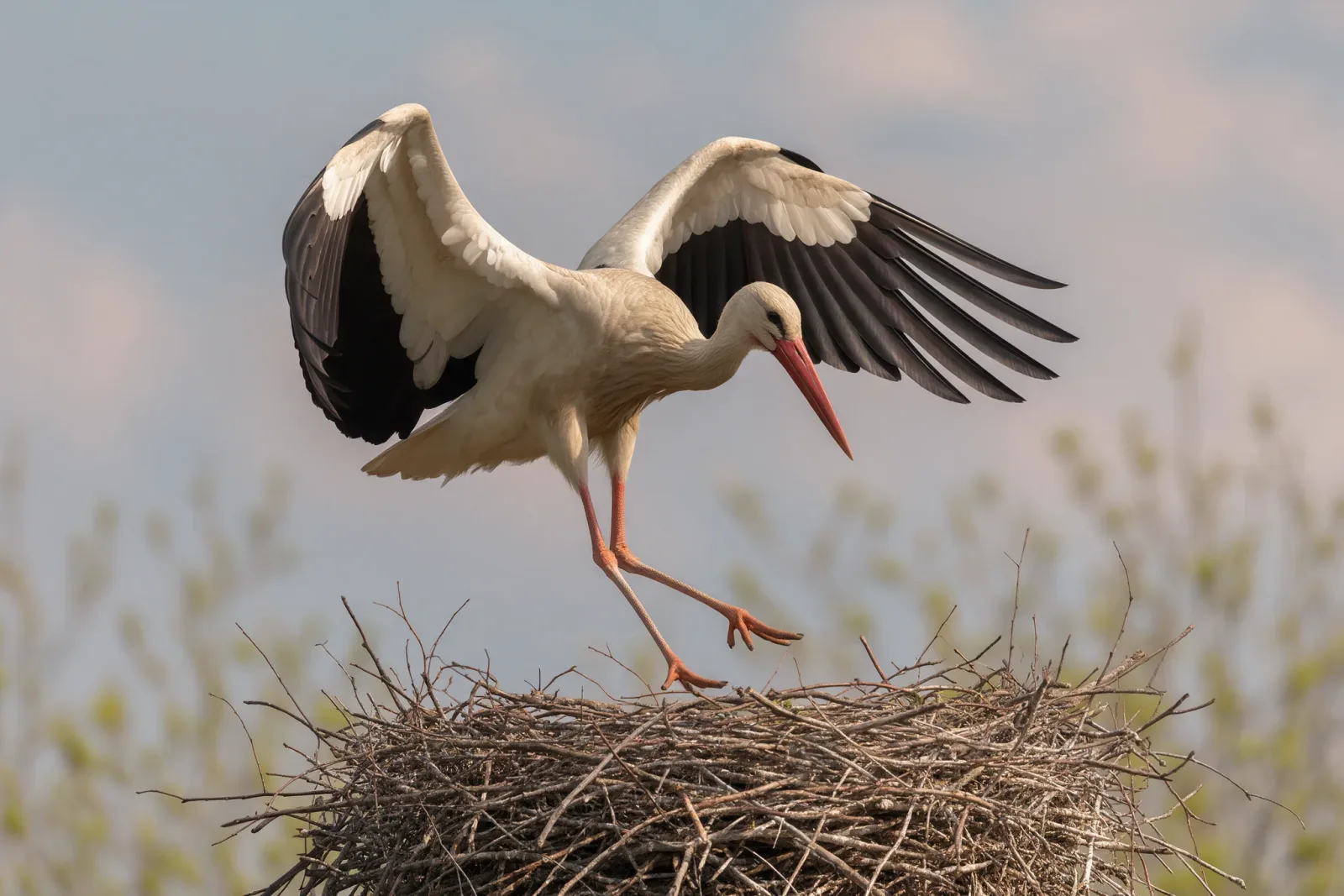
A white stork returns to the nest before the season has quite made up its mind. The male comes first, most years, touching down on the old platform of sticks while the ground below is still soft and cold. He stands there for a long while, perfectly still, as though weighing a year against a place he knows by heart.
The return is one of the great fixed points of spring. It happens a little earlier or a little later depending on the weather, but it happens every year, in the same handful of weeks, to the same rooftops and chimneys and trees. People who live beneath a stork nest watch for it the way others watch for the first swallow.
Arriving before spring
Migration is ruled by instinct and by the wind, so no two returns are exactly alike. A warm March brings the birds in early. A cold, grey April keeps them south a while longer. What never changes is the direction. A white stork flies back to the region where it hatched or bred before, and far more often than not to the very nest it left the previous autumn.
The distance is enormous, but the memory is precise. A bird that spent the winter in the warm savannas of Africa will climb the whole of a continent to land on one specific chimney in one specific village. It does this without a map and without a teacher, following a route written into its blood.
Reclaiming the old home
A nest does not disappear over winter. The platform stays, a rough crown of twigs that the wind has loosened and the rain has beaten flat. The returning stork walks over it slowly, nudging the rim with its bill, testing the places where the weave has come apart.
Then the mending begins. The stork picks up sticks and carries them back, one by one, settling each into the gaps. It may add grass and turf and old rags and whatever else it finds. The work looks haphazard, but it is not. Every stick has a place, and the nest grows a little stronger with each spring that passes.
The same nest, the same pair
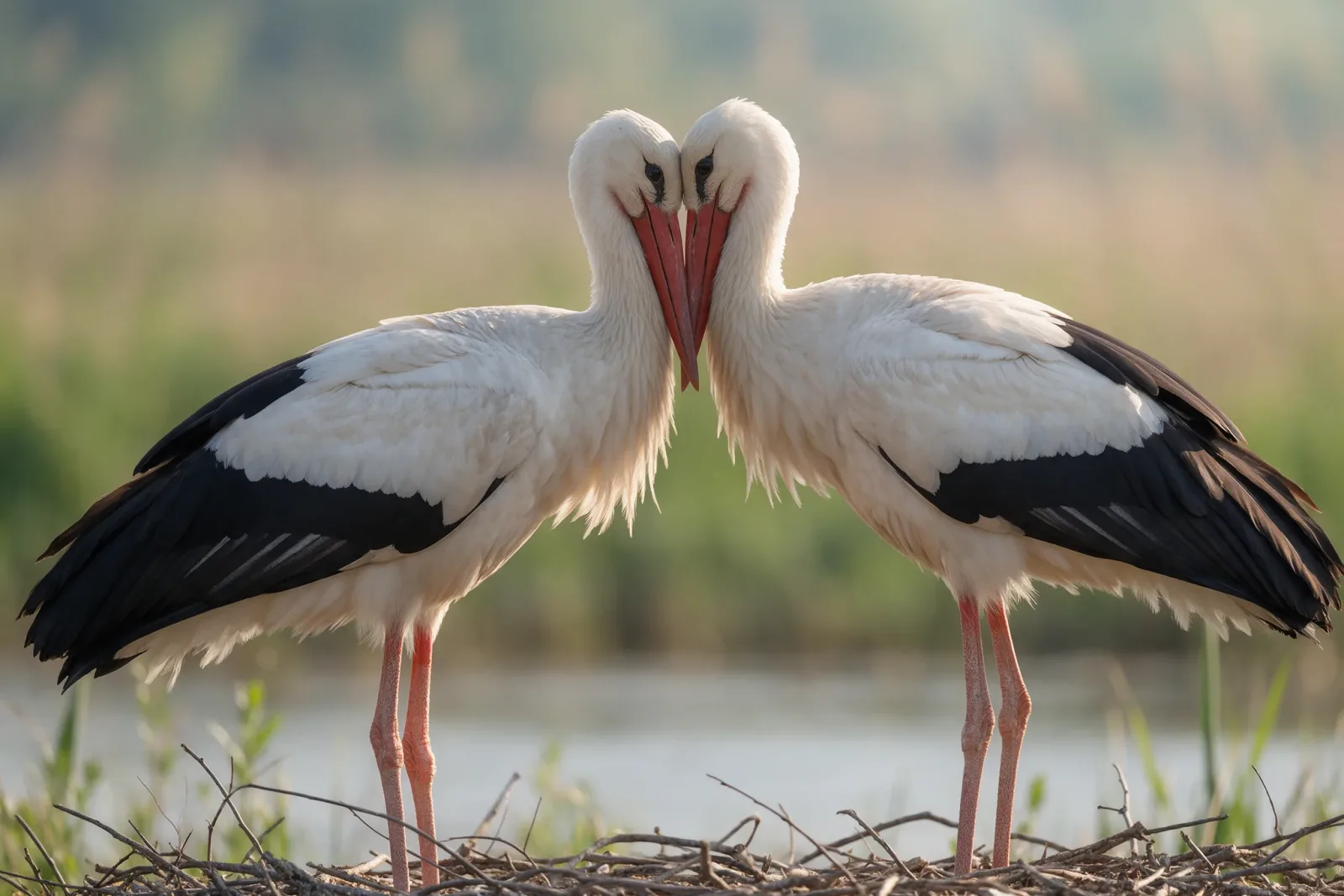
When the partner arrives, the greeting is sudden and loud. Both birds throw their heads far back and rattle their bills together in a long, rapid clatter. The sound rolls across the rooftops and echoes off the walls. It is a sound of recognition more than anything else, two birds that know each other meeting again after months apart.
White storks tend to keep the same partner across many seasons, and the same nest with it. This is a tendency, not a rule. A bird that loses its mate will accept a new one the following spring, and a pair will sometimes abandon a nest that has become unsafe. But the old pattern holds often enough that a single nest can carry the same pair for a decade or more.
The sticks they add each season are a kind of ledger. Each new layer is another spring survived, another long flight completed, another return safely made.
Why the return matters
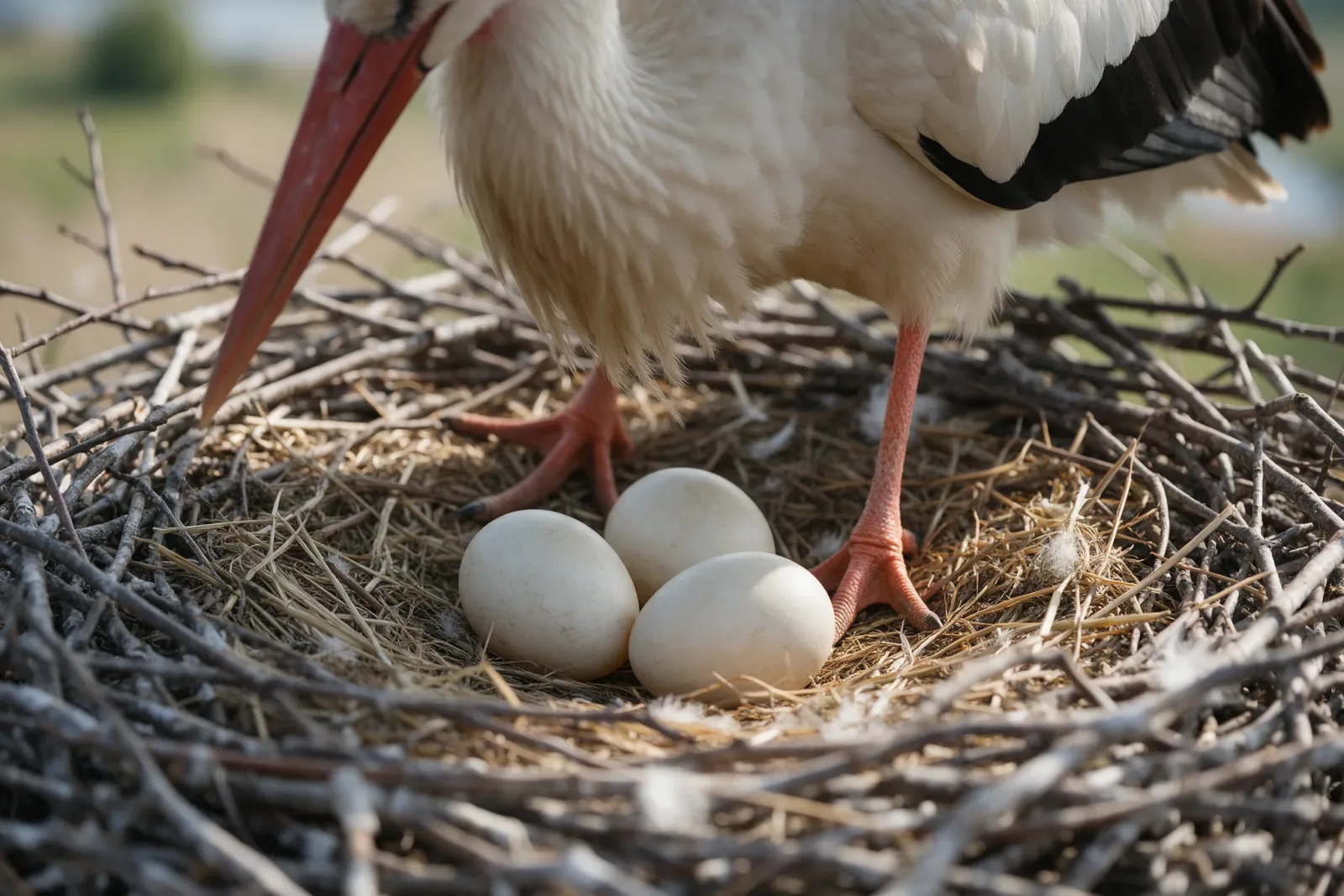
The return to the nest is the hinge on which the whole stork year turns. Everything follows from it. The eggs, the chicks, the awkward first flights, the great southern journey in late summer, all of it begins with a bird standing on an old platform and deciding that this place, again, is home.
Watching for it is a small ritual of its own. One morning the nest is empty, and the next it is not. The bird stands against a pale sky, and somewhere below, a window opens and a cup of tea is raised to the day.
Explore the gift