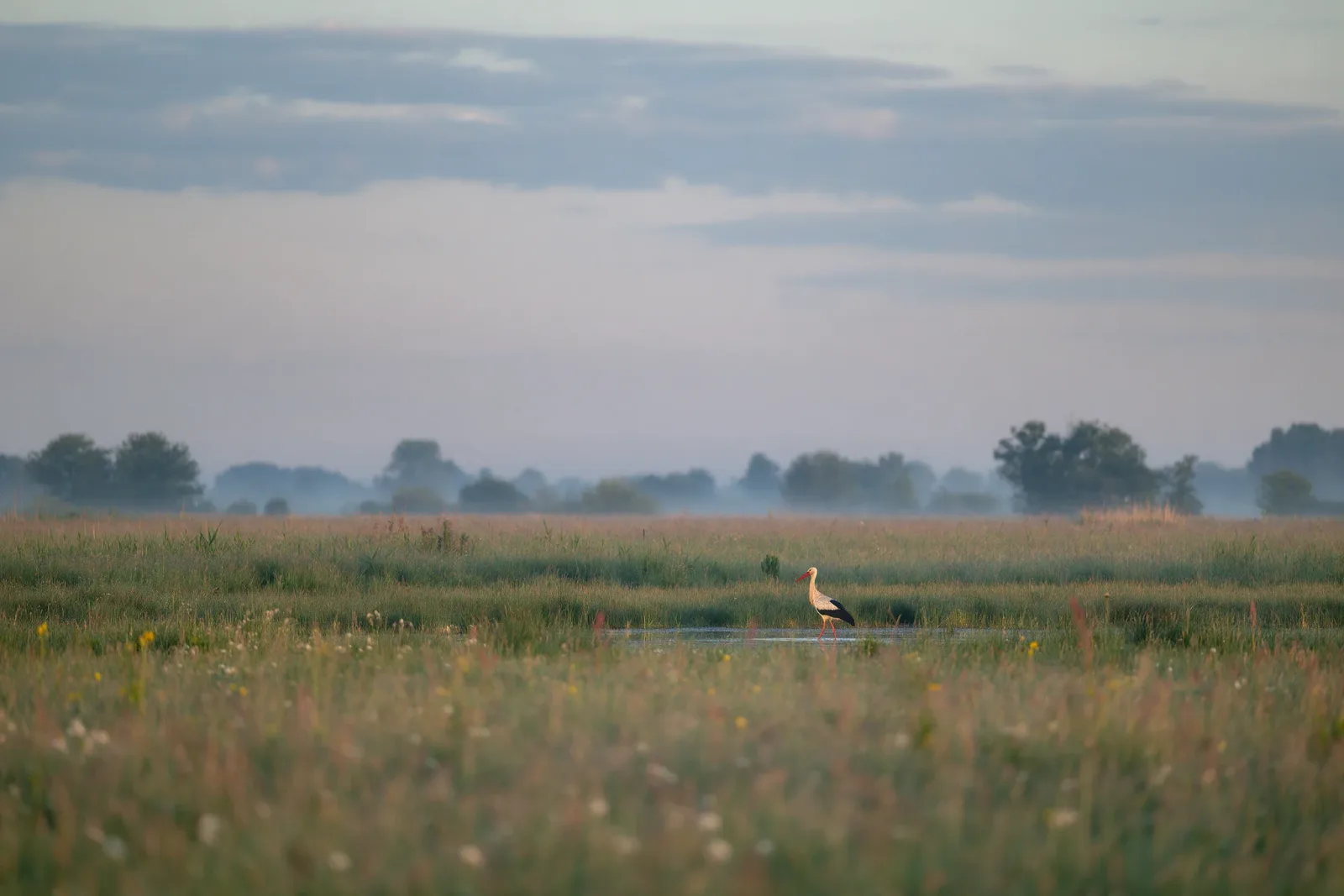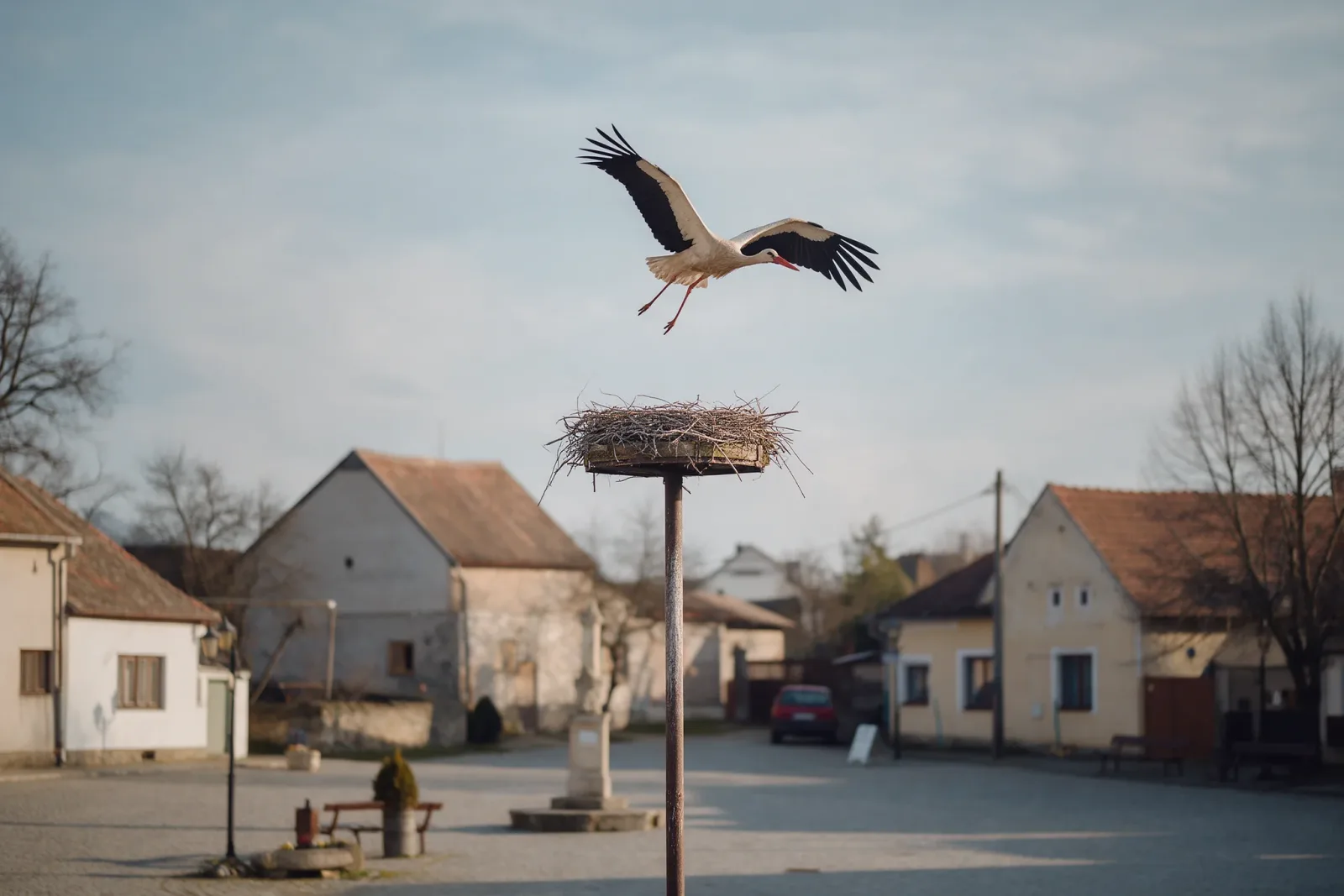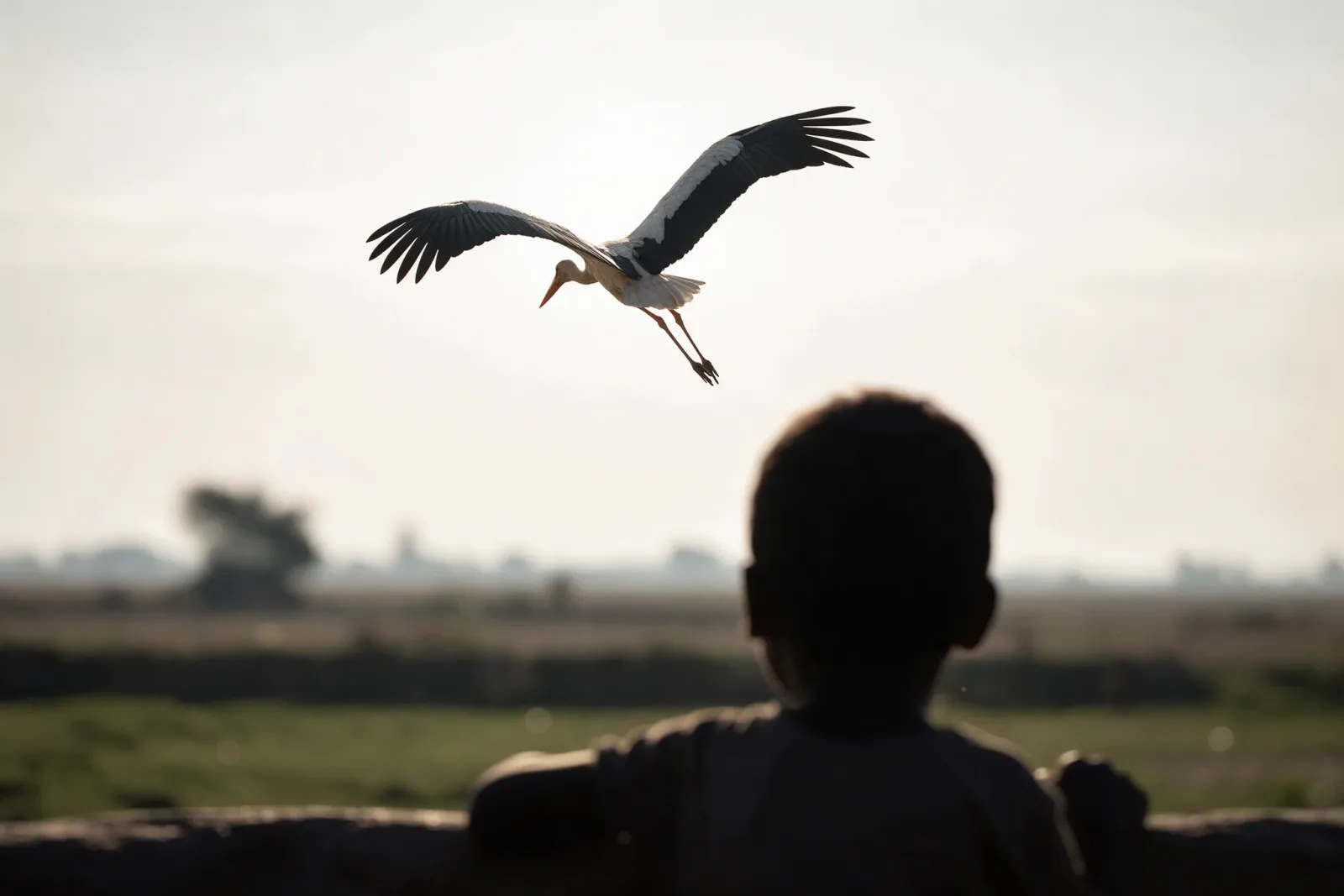
A world worth growing up in is the real subject of every conversation about conservation, and it is the one we are least likely to name. When we speak of wetlands and flyways, of wires and drained meadows, we are really speaking of the place a newborn will come to know: the air they will breathe, the water they will drink, the sky they will look up into. A newborn gift that carries a wild stork's name is, in the end, a way of tying a child's future to the same future the bird depends on.
Two lives on one horizon
The child in the nursery and the stork on the rooftop share something neither of them knows. Both are newcomers, arriving into a world already in motion, already carrying the weight of every choice made before them. The child cannot choose the climate. The stork cannot choose the flyway. Both inherit whatever we have managed to keep or squander.
That shared inheritance is the reason the two stories belong together. The bird is not a decoration for the child's arrival. It is a living measure of the same world, and its fate is a rough preview of our own.
Why a wild bird matters to a baby
A baby cannot name a stork, and will not remember the first one it sees. But a child grows, and the world it grows into is either full of wild things or emptied of them. The difference is not sentimental. It shapes the air, the water, the food, and the climate, and it shapes the kind of person the child becomes.
A child who grows up knowing there is a stork on the chimney, a heron in the reeds, a frog in the pond, grows up knowing that the world is not theirs alone. That is the beginning of care, and care is the beginning of everything else we hope for.
The long view is the only honest one
Conservation is, above all, an exercise in the long view. The marsh you protect today will not reach its full health for years. The chick that fledges this summer will not breed for several more. The child in the cot will not understand the gift it was given until it is old enough to ask.
To act on that long view is to accept that the reward will come later, perhaps to someone else. That is exactly the kind of love a newborn gift represents: a gift made not for what it can do today, but for what it will mean across a whole childhood, and beyond.
The gift and the bird
A newborn gift tied to a real, tracked white stork is a small bridge between the nursery and the wider world. It says, gently, that the child belongs to a living planet, and that the planet is worth watching, worth following, worth protecting.
That is the long view made tangible. The child will grow, and the stork will fly, and both will come to know the same world. Whether it is a world worth growing up in is not decided by the bird, or by the child. It is decided by us, now, and by every small choice we make on their behalf.
Explore the gift