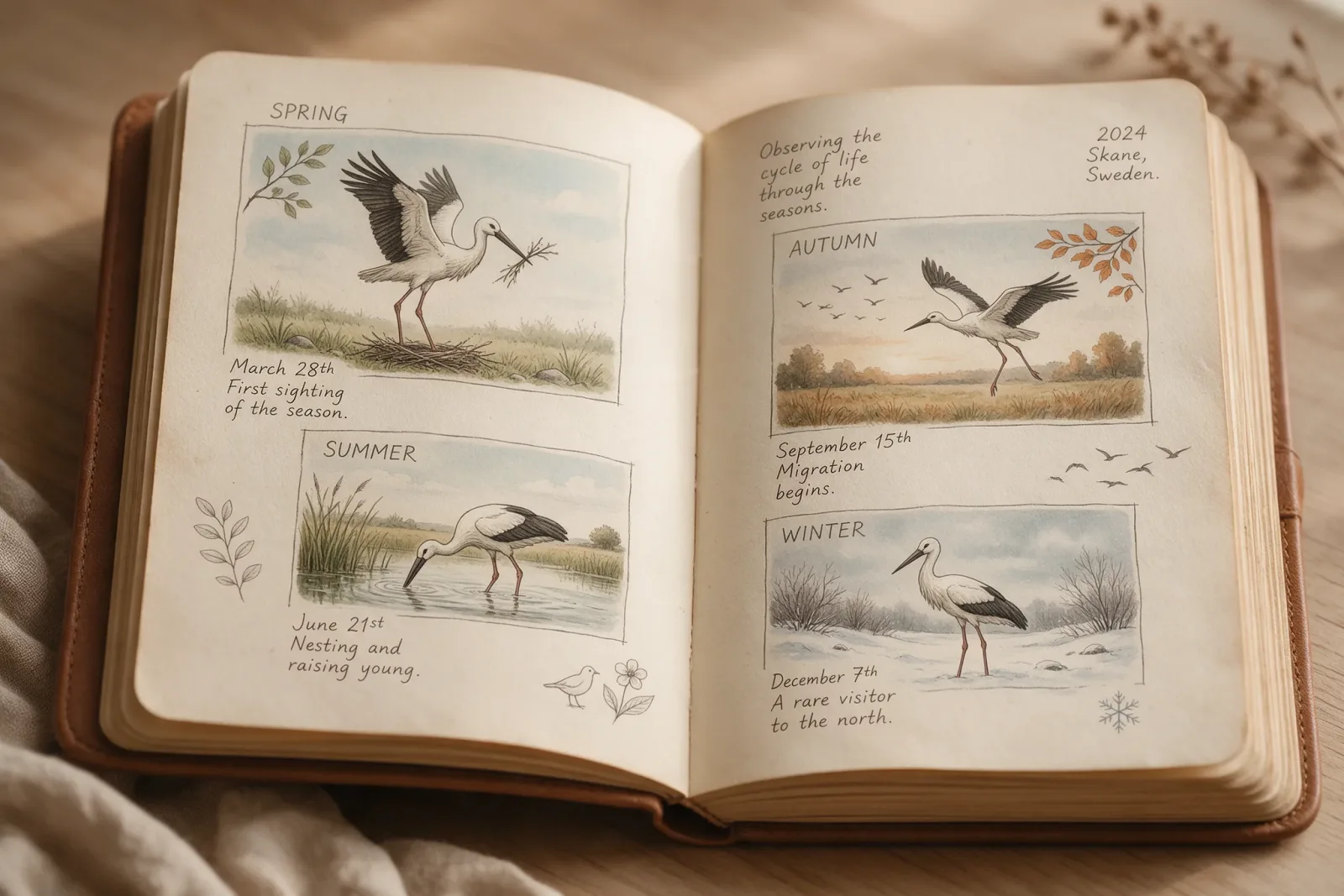
A year remembered by birds is a year kept in a different ledger, one whose pages are written not in dates but in arrivals and departures. Instead of January and June, there is the first stork and the last; instead of a holiday calendar, there is the slow turning of a single white bird through its seasons. For the people who keep such a year, time is not a line but a circle, and the stork is the hand that draws it.
The four chapters
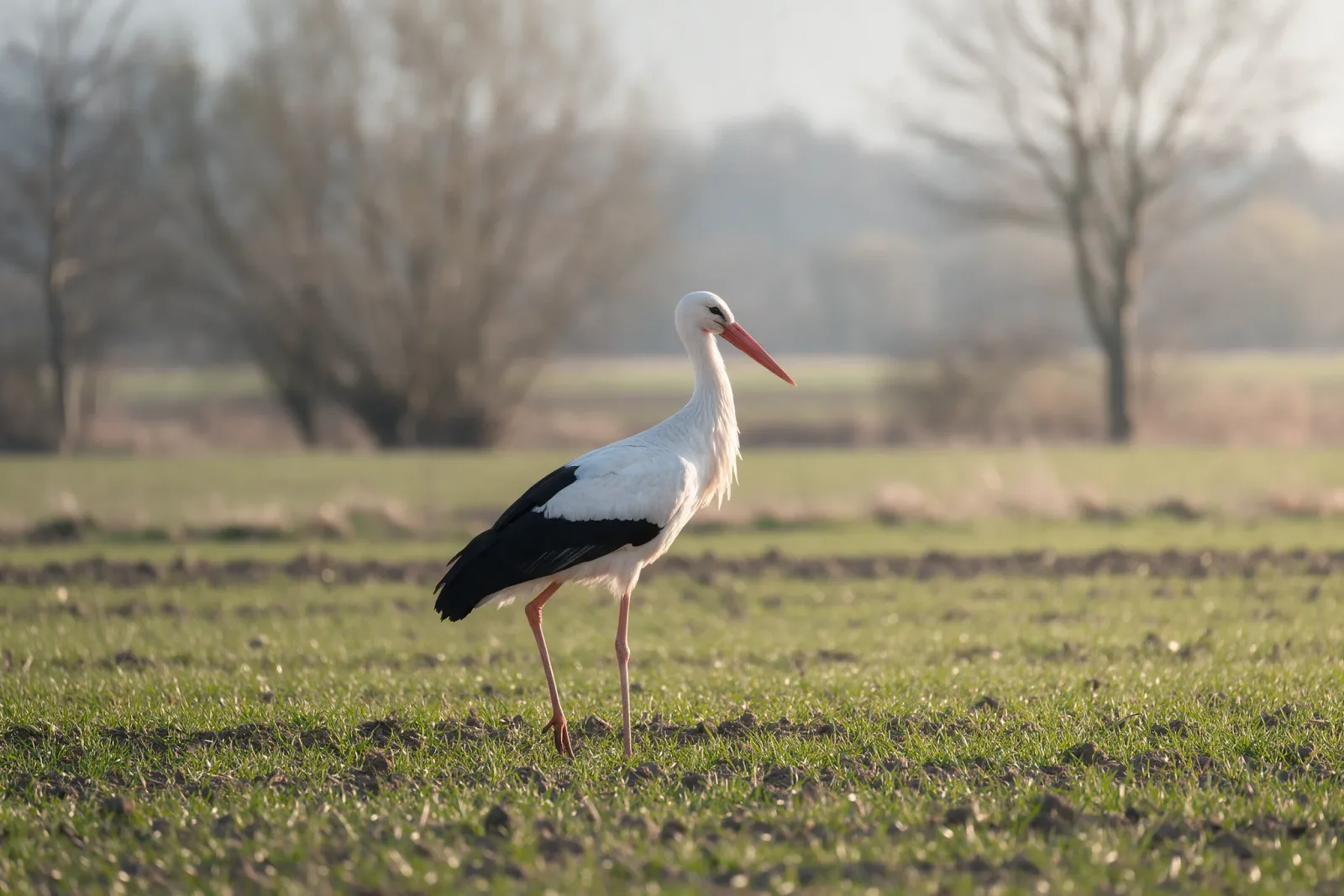
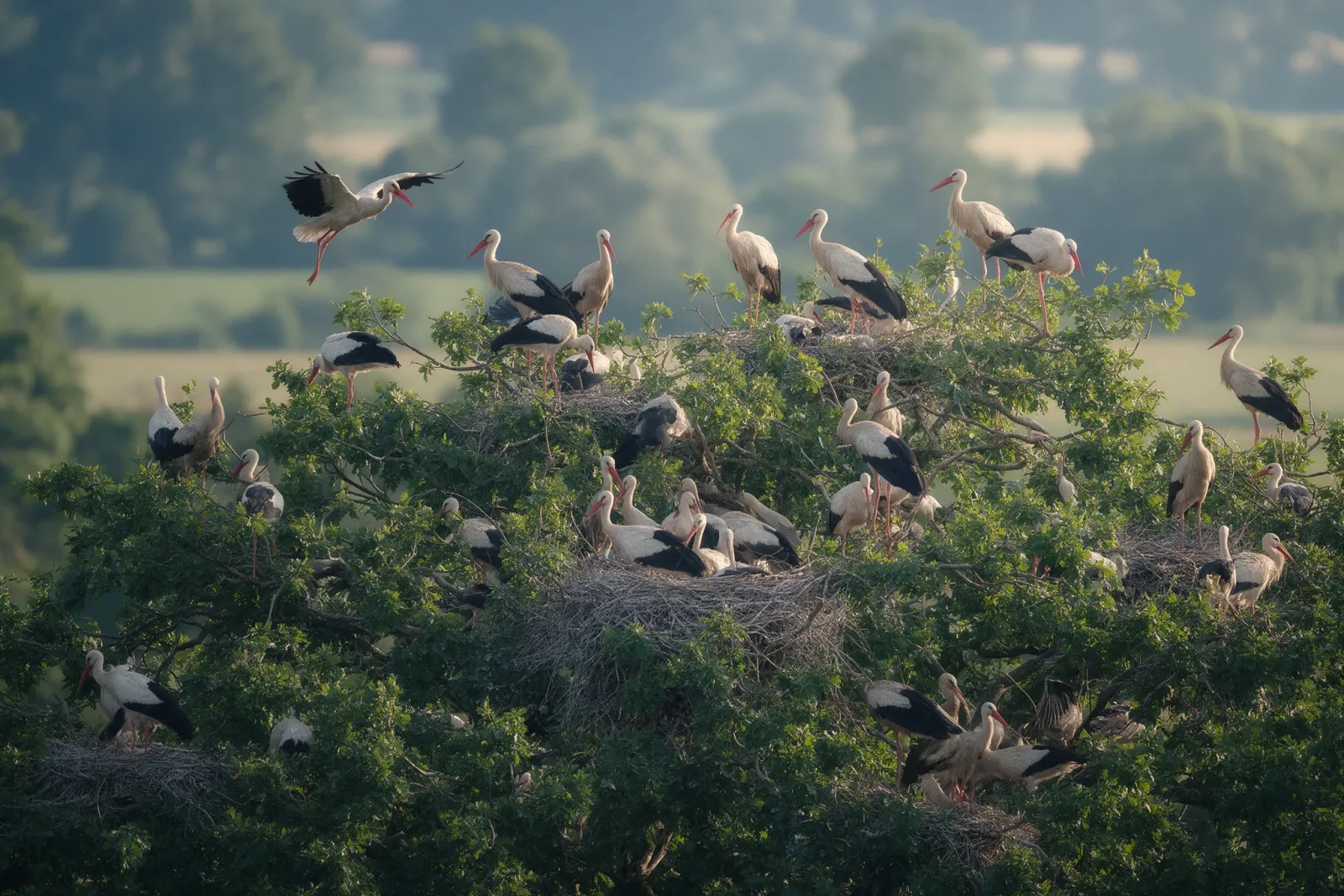
The stork's year has four clear chapters, and each one opens with the bird itself. Spring is the return, the first white shape over the greening fields. Summer is the colony, the long busy season of chicks and feeding. Autumn is the gathering and the leaving, the fields full of birds before the great departure. And winter is the waiting, the empty nests and the cold sky that holds no storks at all. To remember a year by these chapters is to feel time move in a way a calendar never quite captures.
The return as new year
For those who keep the bird's calendar, the return of the storks is the real new year. It is the moment when the world starts again, when the waiting ends and the season of life begins. There is a cleanness to this new year, a sense of beginning that belongs to the thawing fields and the first warm wind. No confetti, no countdown, only the quiet fact of a bird coming home, and the whole year turning over behind it.
The year in the nest
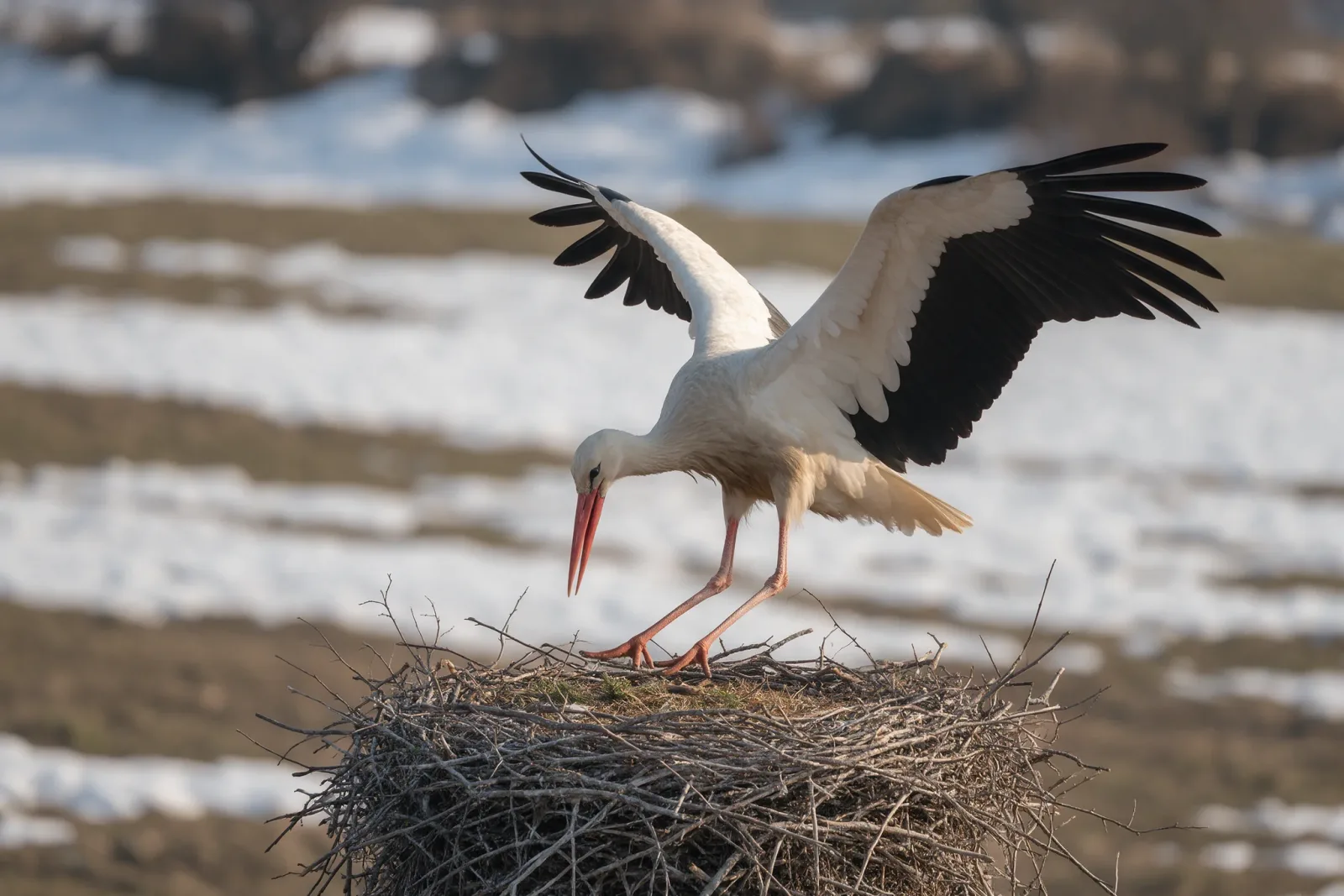
The middle of the stork's year is told in the nest, and it is a story anyone can follow. The eggs, the hatching, the growing chicks, the first uncertain flights; these are the milestones that carry the summer along. They mark time as surely as any calendar, and they carry more meaning than a page of dates. A person who has watched a nest from egg to first flight has lived a whole season, and knows exactly where in the year they stand.
The leaving and the waiting
Autumn and winter are the harder chapters, the ones that ask for patience. The leaving is sudden and the waiting is long, and the year seems to stretch out grey and still between the birds' departure and their return. But even these chapters have their shape and their purpose. They are the resting half of the circle, the season when the land sleeps and the storks live their southern lives out of sight, and the people at home keep faith with the empty nests.
Keeping the ledger
Keeping a year by birds is not hard. It needs no special skill, only the habit of looking up and the willingness to let the seasons speak. The stork writes the year for you, in white wings and empty nests and the slow return of the light. And at the end of it all, when the circle closes and the first bird comes home again, you find you have not lost a year at all. You have kept it, whole and warm, in the memory of a bird.
Explore the gift