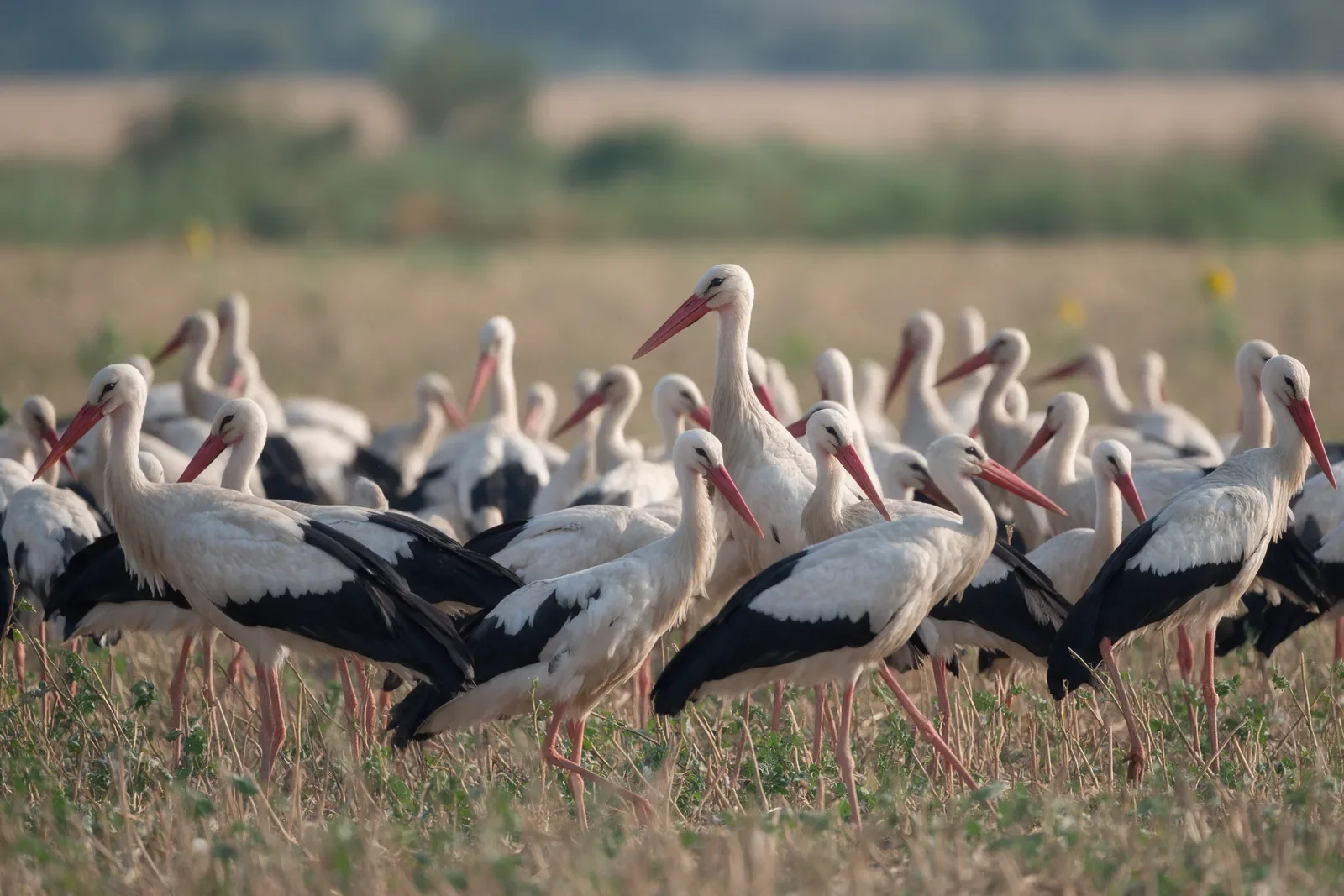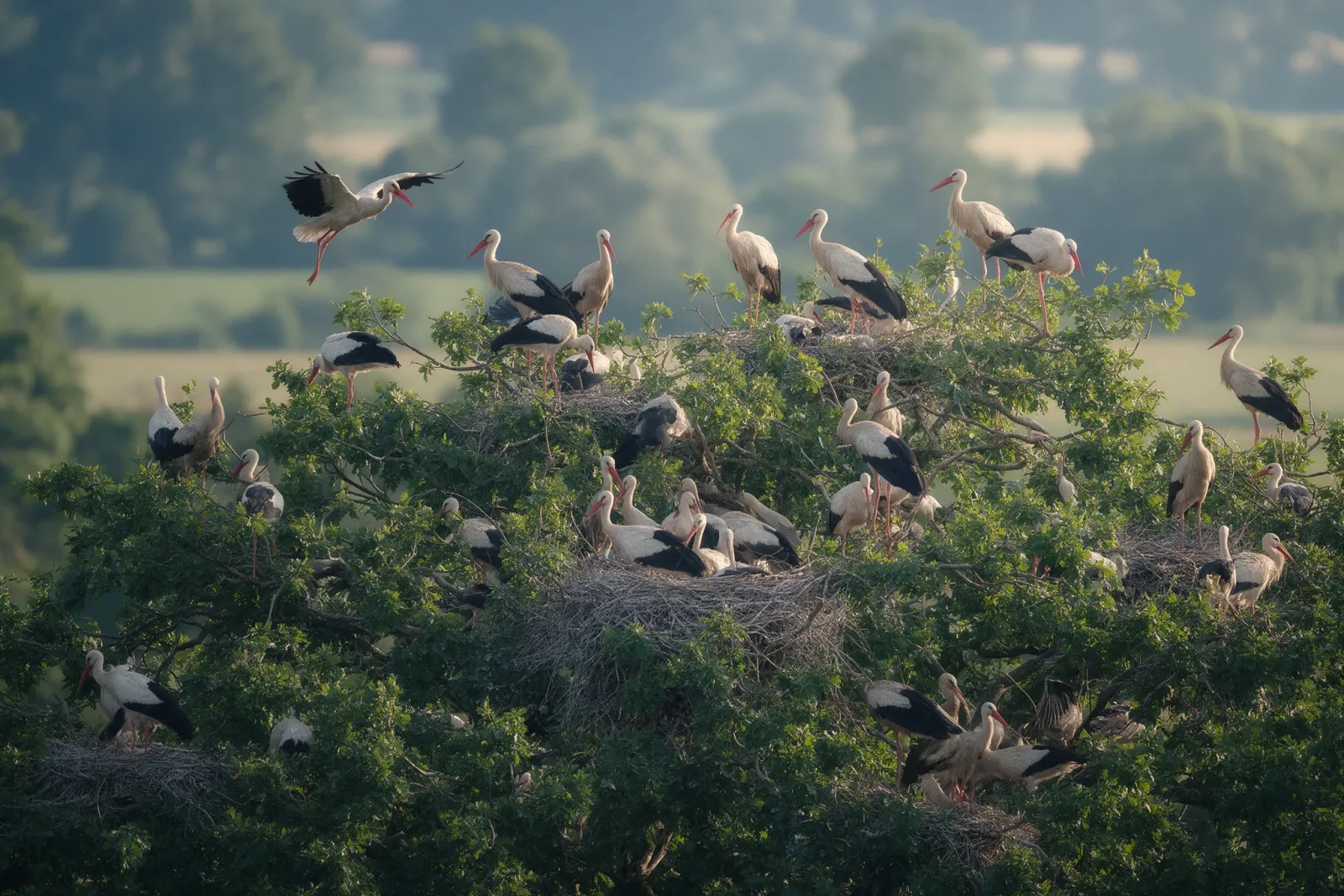
Summer in the colony is the loudest time of a stork's year, a season of constant motion that begins almost as soon as the nests are settled. Where storks gather in numbers, the colony becomes a small, restless town in the treetops and on the rooftops. Parents come and go all day, chicks call for food, and the air above is never empty for long. It is the season when the quiet return of spring turns into full, noisy life.
The rhythm of the nest
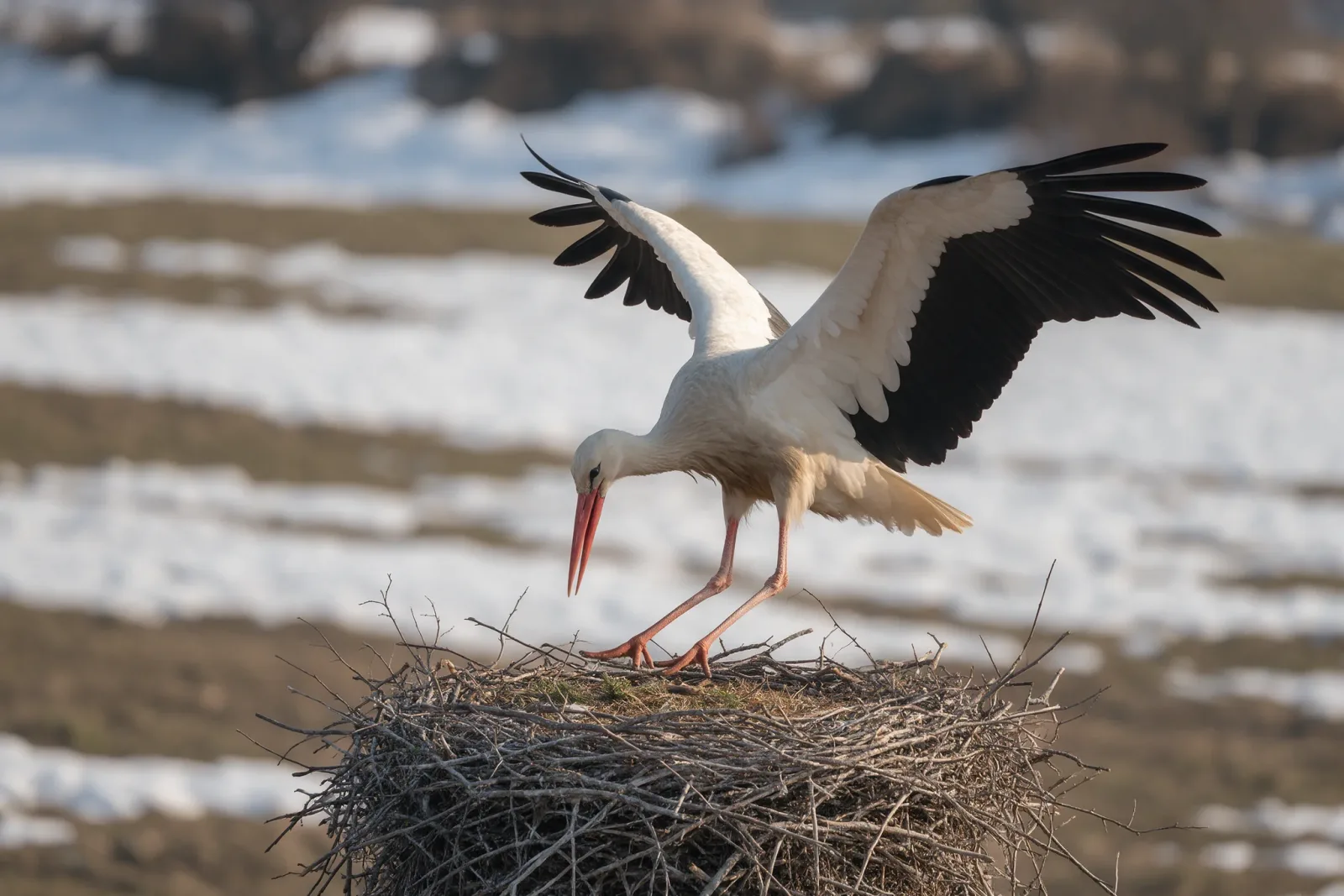
Each nest is its own household, and every household keeps the same schedule. The parents take turns, one staying with the eggs or the young while the other flies out to feed. In the first days there is little to see but patience, a white bird sitting low over the eggs through rain and sun. Then the chicks hatch, and the rhythm quickens. A stork raising young is a study in repetition: arrive, feed, guard, leave, return, and do it all again.
Feeding the hungry
Young storks are hungry from the moment they hatch, and the demand only grows as they do. Parents bring food back to the nest and set it down for the chicks, who scramble for every scrap. On hot days the parents also bring water, and you can watch them fly in with a cropful, the chicks lifting their heads toward it. The work is endless. Two adult birds spend their whole summer keeping a nestful of growing appetites satisfied.
Coming and going
The colony is never still. At any hour some birds are leaving and others are returning, their wide wings catching the warm air as they swing in toward the nests. The movement has a purpose but no rush, the calm of creatures going about a job they know. From a distance the colony looks like a living thing, breathing in and out, birds flowing away to the fields and back again in a slow, unbroken tide.
The weather of high summer
Summer is not always kind. There are hot, windless afternoons when the adults stand with wings half-open to shade the chicks, and there are sudden storms that flatten the grass and set the whole colony shifting. The birds ride it out. Their nests are built for weather, broad and deep, and a stork on a nest in the rain simply settles lower and waits. The colony bends, but it does not break.
The season that teaches
By the end of summer the chicks are nearly as large as their parents, and the nest has become crowded. This is the season when the young learn to stand, to stretch, and finally to trust their wings. Summer in the colony is not only about feeding; it is about getting ready. Everything the parents have done since spring has led toward the moment when the young step to the edge of the nest and meet the air for the first time.
Explore the gift