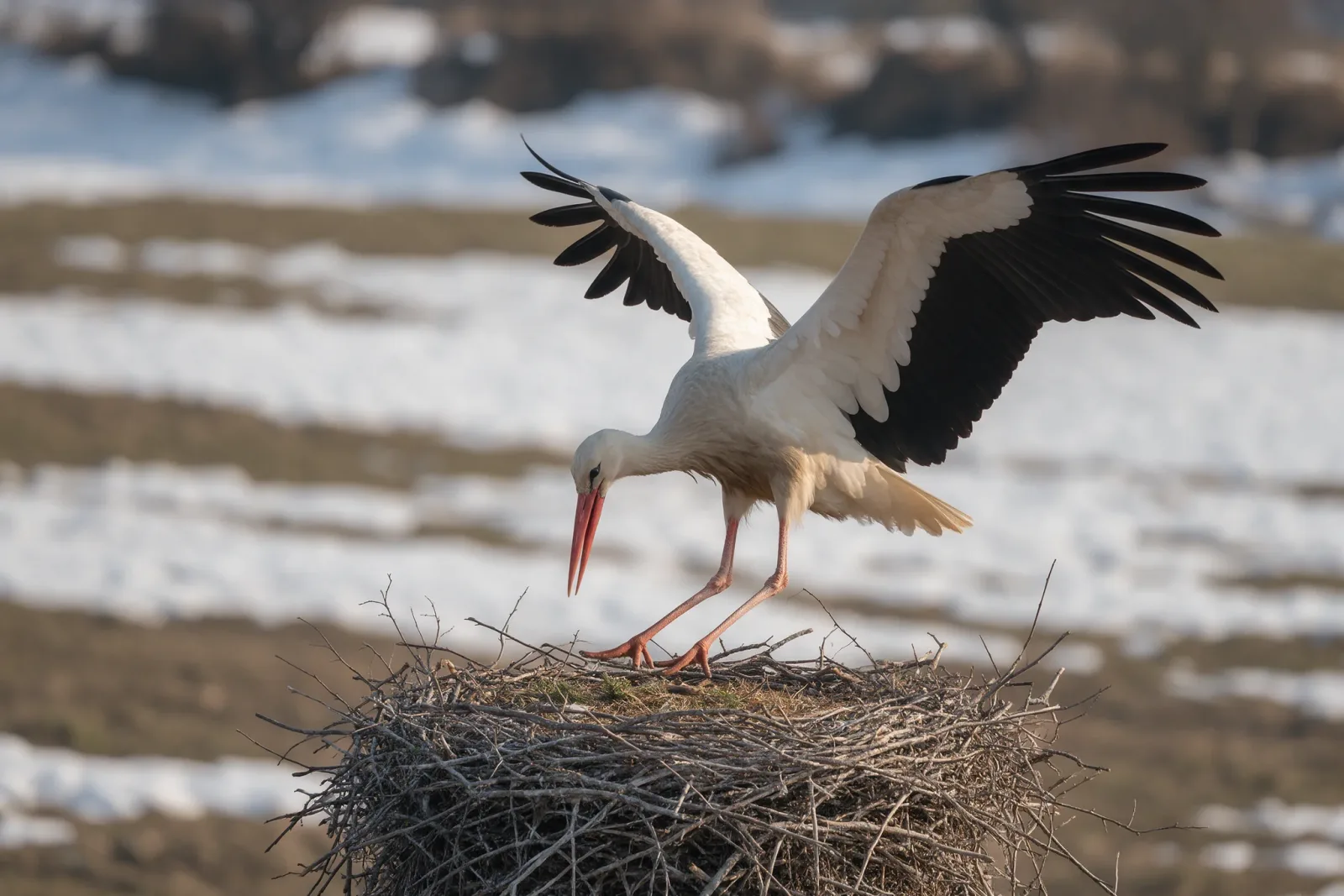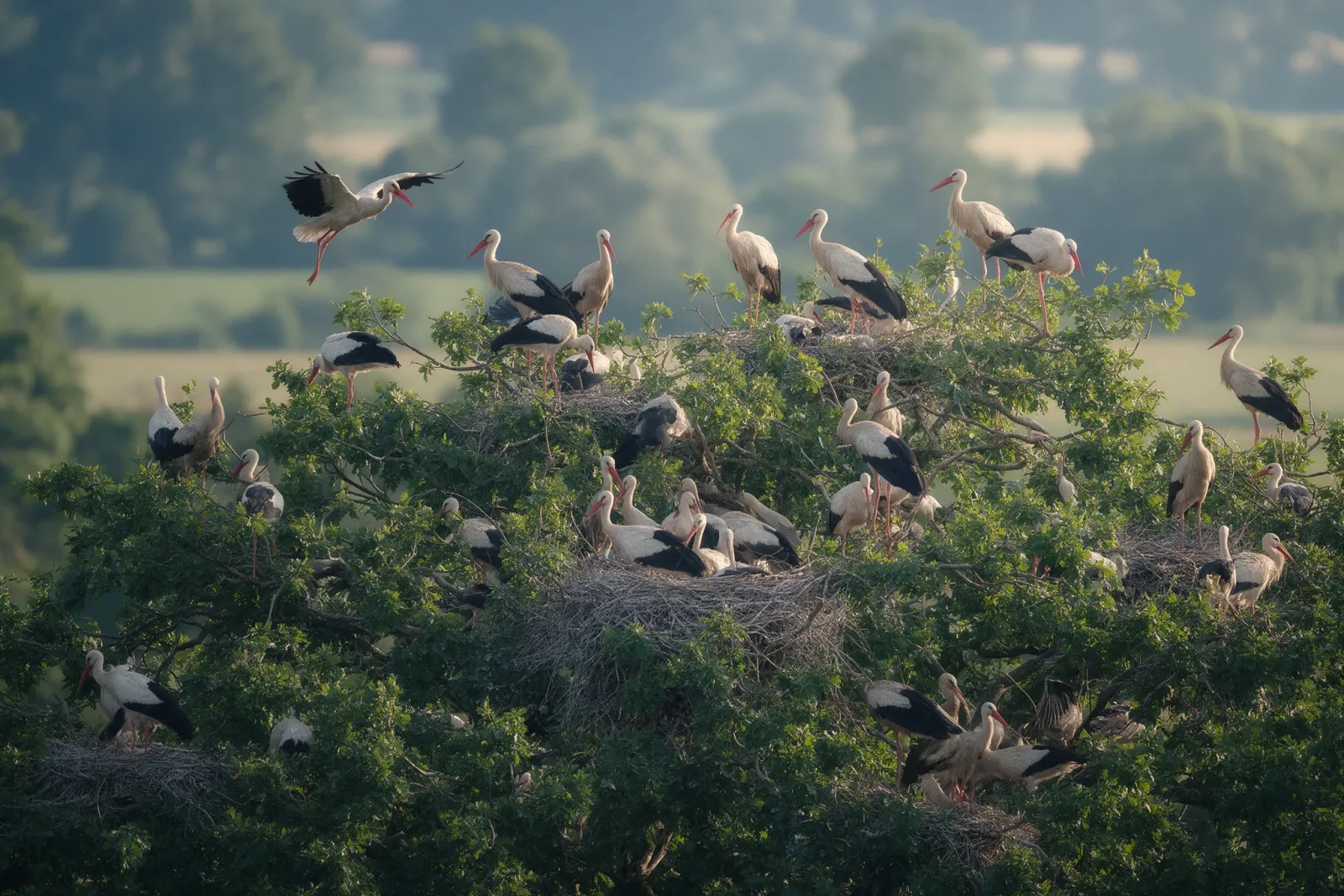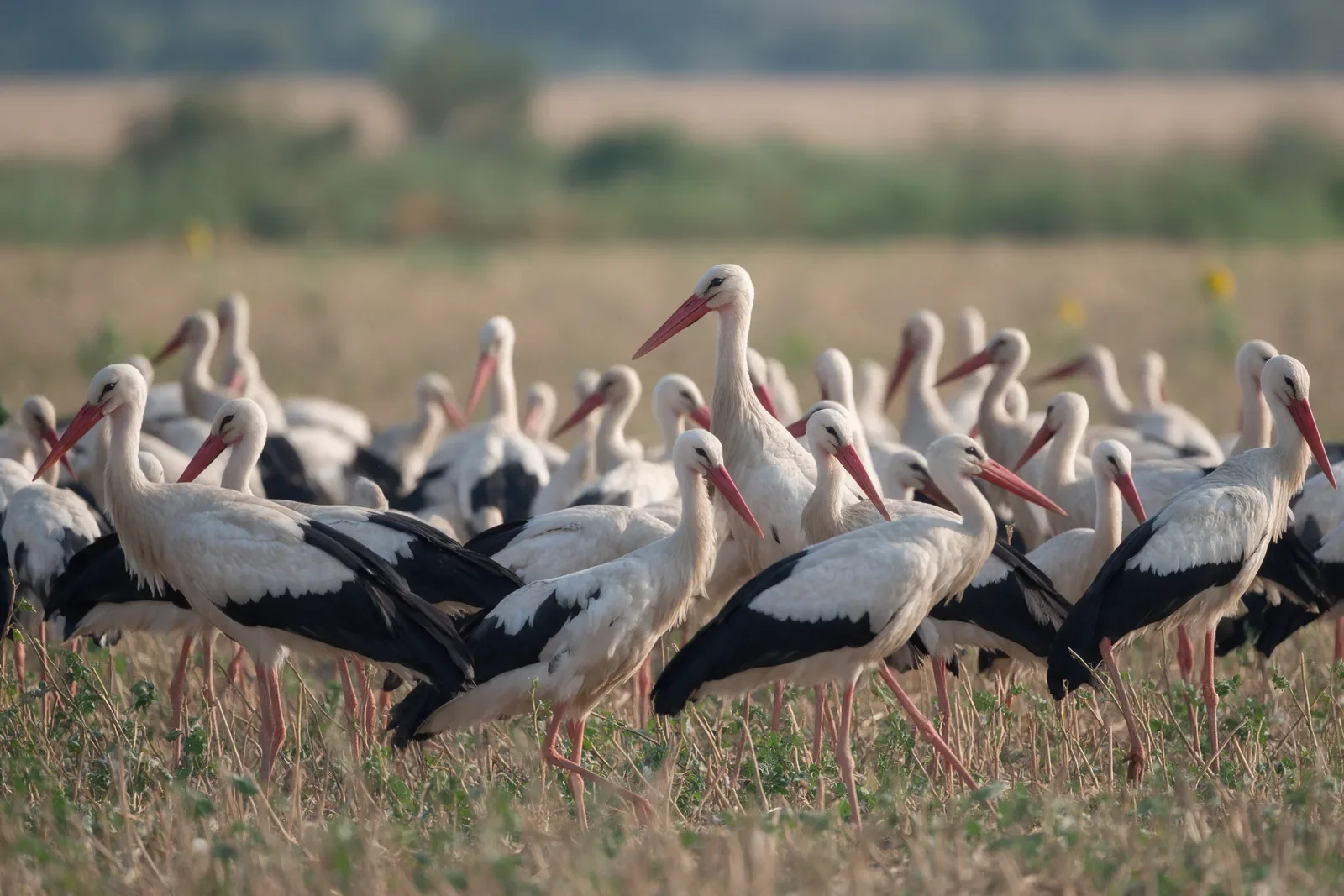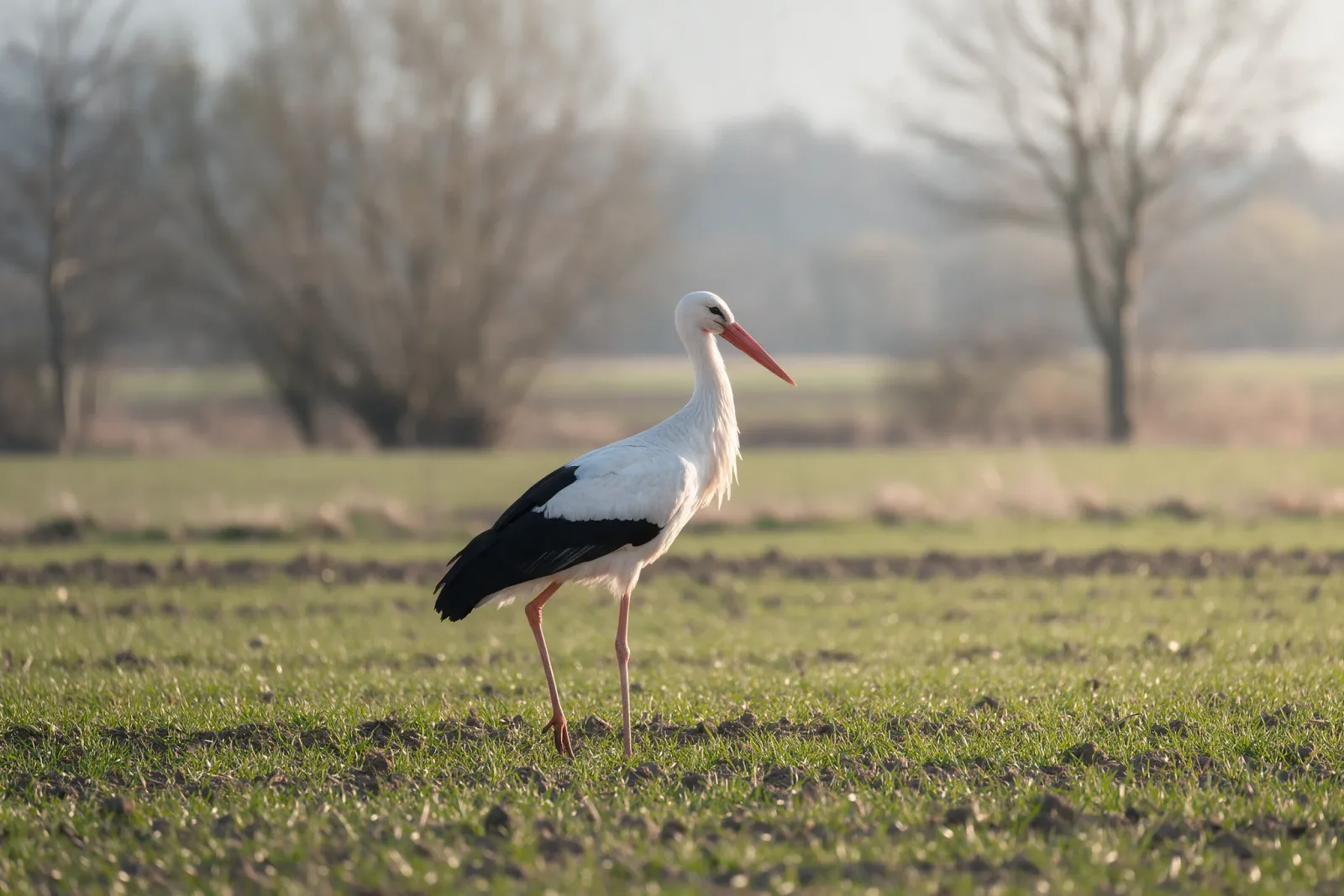
Spring means storks. It is a sentence people have carried for longer than any calendar, and it holds a truth that outlasts every change of the season. Somewhere in late winter the light shifts, the first warm wind lifts off the fields, and those of us who have spent the months walking with our collars up begin, without quite knowing why, to look at the sky more often. The birds are on their way, and some old part of us is already waiting for them.
The first sighting of the year
There is no trumpet for it. A stork arrives the way spring itself arrives, quietly, one bird at a time. Someone glances up from a garden path or out of a train window, and there it is, a wide-winged shape sliding across a greening field. The first sighting of the year never loses its power. It does not matter how many springs you have seen or how familiar the fields have become. The moment still lands like a small, private holiday, the kind you carry home and mention over dinner to whoever will listen.
What the bird is carrying
A white stork does not come home empty-handed, though its cargo is invisible. It brings the promise of warm days, of open windows, of a season turning over. The bird itself is only returning to a life that went on without it. It spent the winter far south, in the warm lands beyond the Sahara, and now it is coming back to the place where it hatched or nested before. That return is the oldest kind of news there is: that the world keeps its appointments, and that the cold never lasts forever.
The first warm light
Storks favour mornings like this one. They need rising air to travel well, the soft thermals that form over sun-warmed fields and bare, dark earth. On a still, bright morning a stork can be carried north a long way with barely a flap of its wings. To watch one is to watch spring making its own weather, lifting the bird on columns of warm air that the eye can never quite see. The bird does not fight the season. It rides it.
Why we never get used to it
Perhaps the joy of the first sighting is that it is never guaranteed. Some years the birds come early, some years late, and one or two seasons they linger or hurry according to weather no one fully commands. That uncertainty keeps the sky interesting. It gives the season a plot, a shape with a beginning we can only guess at. And when the first stork finally appears, it lands in us like a bell struck once, a small clear note that says the waiting is done and the turning has begun.
A marker for the year
Spring means storks, and so the bird becomes a way of marking time. You may not keep a diary, but you will remember the afternoon you saw the first one, the field it crossed, the exact colour of the light. These moments gather into a private almanac, a personal record of spring written not in words but in wings. One year it was March, another year April. The dates blur, but the birds do not.
Holding the moment
So watch for it this year. Watch the greening fields and the edges of villages and the tall chimneys where the old nests still wait. The bird you are looking for is on its way, somewhere over the southern horizon, coming north on the warm air. And when you finally see it, white against a new blue sky, pause for a moment. You have just been handed the first day of something.
Explore the gift