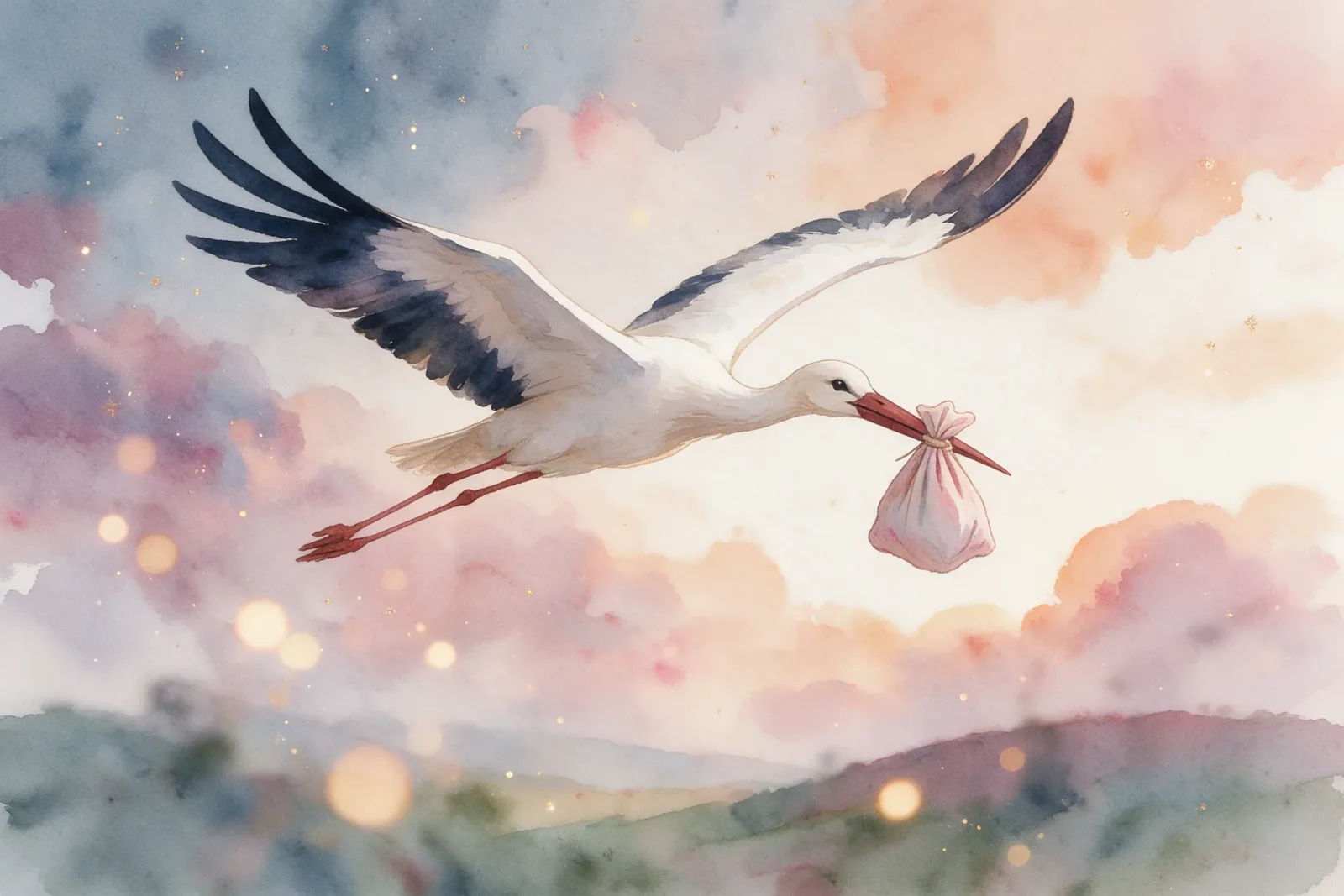
The picture of a baby carried by a stork's beak is one of the most travelled images in the world. Babies by beak appeared first as a folk story, then as a printed illustration, and finally as a birth announcement that needed no words. The myth travelled through picture books and cards, and each new medium carried it a little further.
From fireside to printed page
For most of its life the delivery story was spoken, told to children at the fireside and passed from mother to mother. It had no single image, because every family pictured the bundle in its own way.
Then printing arrived, and the story found a face. Illustrators drew the stork with a cloth bundle in its beak, a cap and a pair of legs peeking out, and the picture fixed the myth in place. Once a story has a picture, it travels much faster than the telling.
The postcard that went everywhere
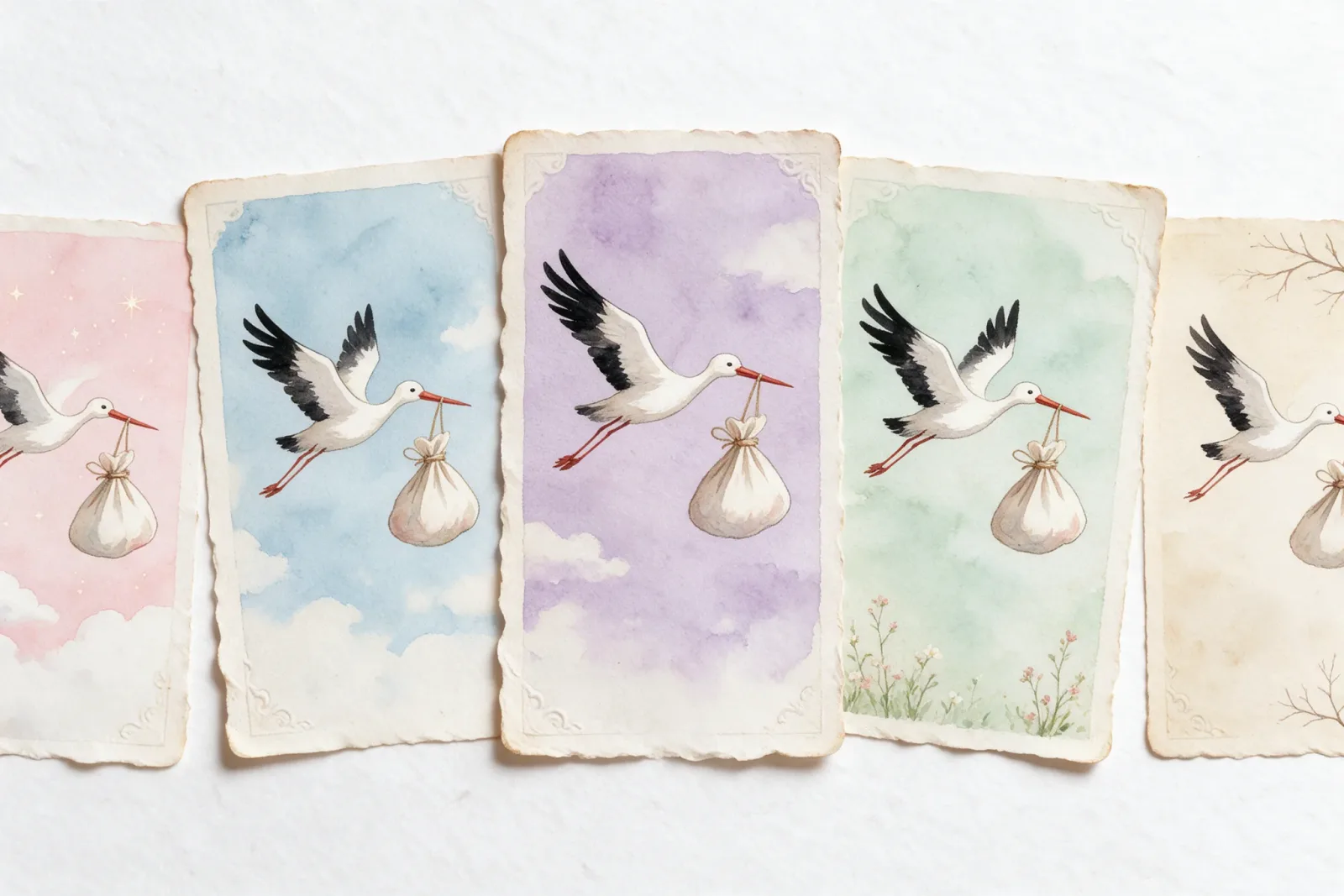
The stork reached its widest audience through the postcard. In the late nineteenth and early twentieth centuries, printed cards carried the bird to every town that had a postbox, and the birth announcement became a tiny work of art.
These cards shared a language. A white stork, a bundle, a smiling moon or a chimney in the background. The formula was so settled that the message survived without text. A stork on a card meant exactly one thing.
The nursery rhyme and the picture book
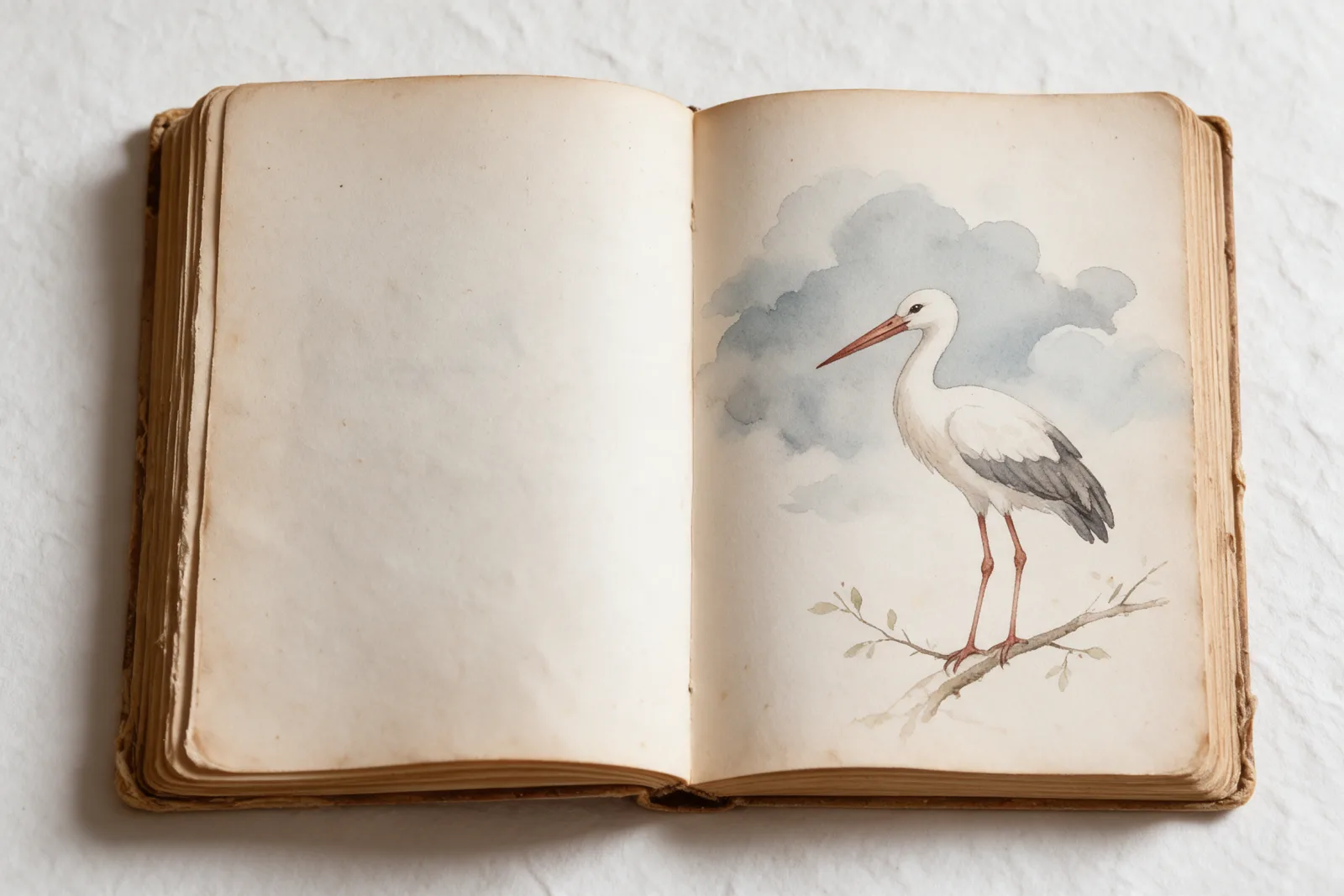
Children's books took the image next. The stork appeared in alphabet primers, lullaby collections, and the illustrated editions of Andersen, where it gained a personality to match its face.
By the time the myth reached the modern nursery, it had gathered everything it needed, a name, a face, a bundle, and a little moral. The picture book closed the loop that the fireside story had begun, and the stork was now as much a character as any bear or rabbit.
A gentle way to speak of birth
The myth travelled so well because it did useful work. It gave adults a soft way to talk about a hard subject, and children a picture they could hold without fear. The stork asked no questions and demanded no explanation.
Even as parents grew franker, the card kept the image. The stork had become a courtesy, a way of announcing a joy that was too big for plain words.
The image that outlived the belief
Nobody now expects a stork to tap at the window, yet the cards are still printed and the books still read. The image outlived the belief because it is gentle, and because a white bird with a bundle is a hard thing to improve.
Babies by beak are folklore that learned to travel. The stork that once explained a mystery now simply announces a happiness, and it does the job as well as it ever did.
Explore the gift