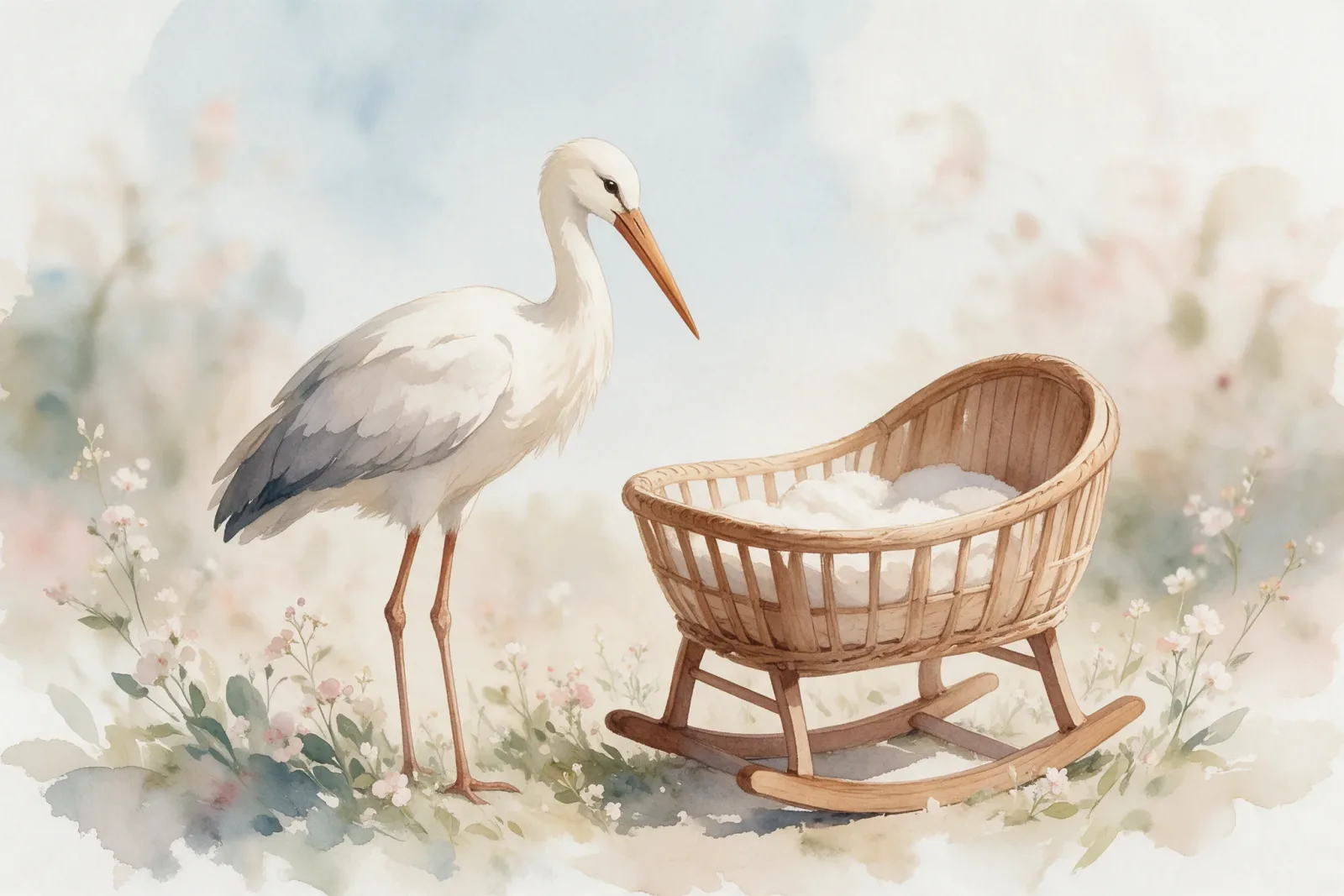
The question why do storks deliver babies has no single answer, because the story grew the way a river gathers streams. It started small, in a handful of villages, and slowly became one of the few myths a child can name before they can read. A white bird, a cloth bundle, a chimney in the evening. Somewhere in that simple picture, an old truth about where children come from was handed over to a bird.
A story older than the picture books
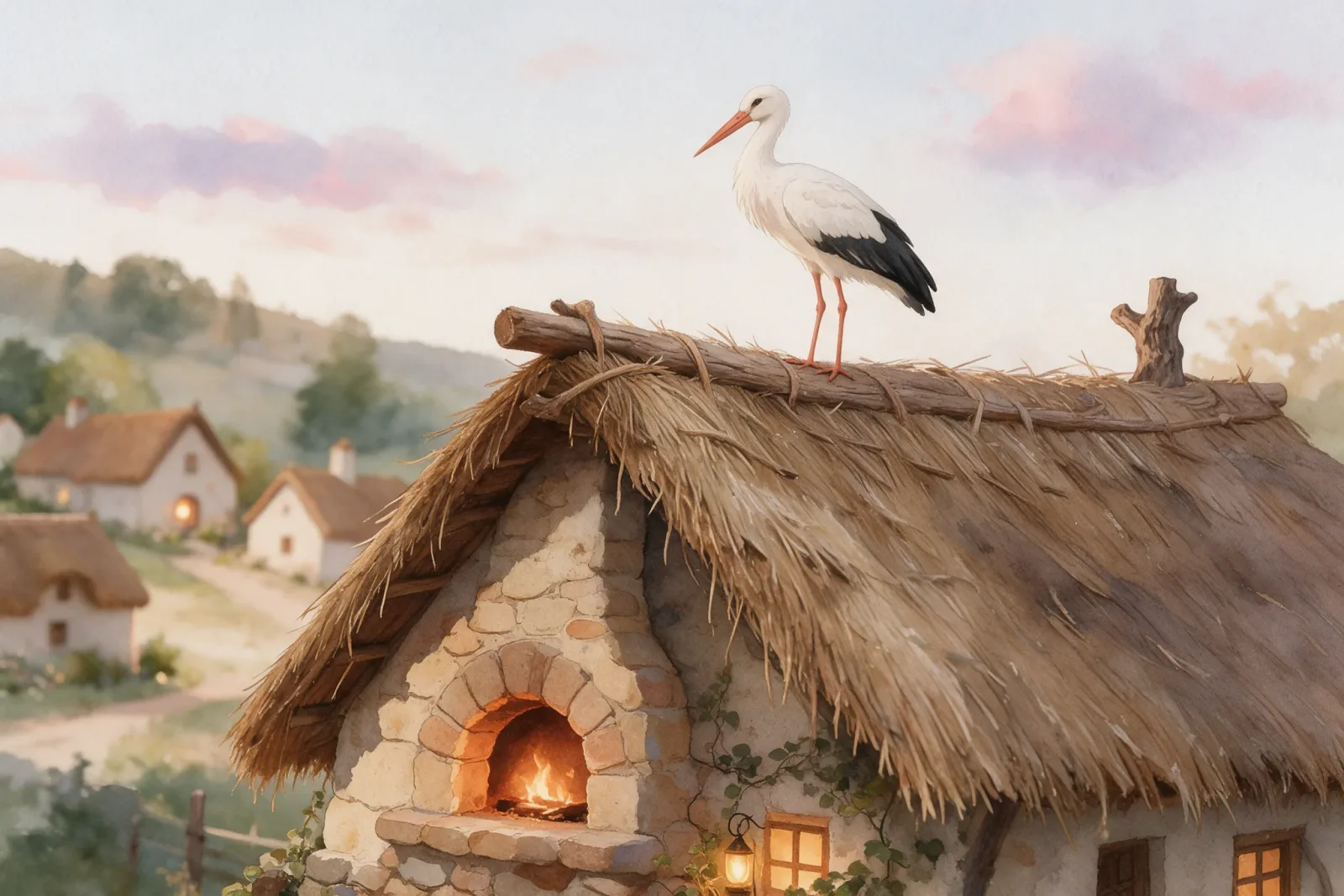
Long before storks appeared on greeting cards, they appeared on rooftops. The white stork nests on chimneys, towers, and farmhouses, always close to people, never quite tame. A bird that large, so calm and so white, must have seemed to villagers like a visitor from somewhere else. When a baby arrived, a stork was usually already there, clattering on the roof, coming and going all spring.
The leap from neighbour to messenger was a short one. If the stork returned in spring and children were born in spring, then perhaps the stork had carried them. People made the story to explain a mystery they had no words for, and the story was gentle enough to keep.
Where the myth may have begun
The tale is often traced to northern Europe, where storks are common and where talk of birth was once wrapped in euphemism. A child could be told that a stork brought a new baby and feel only wonder, not confusion. The bird did the explaining, and the adults were spared a conversation nobody yet knew how to have.
Other cultures told the same story with their own birds. Herons, cranes, and ibises all carried souls and newborns in the folk imagination. The stork simply became the one Europe remembered, because it lived so close to home.
The bundle and the beak
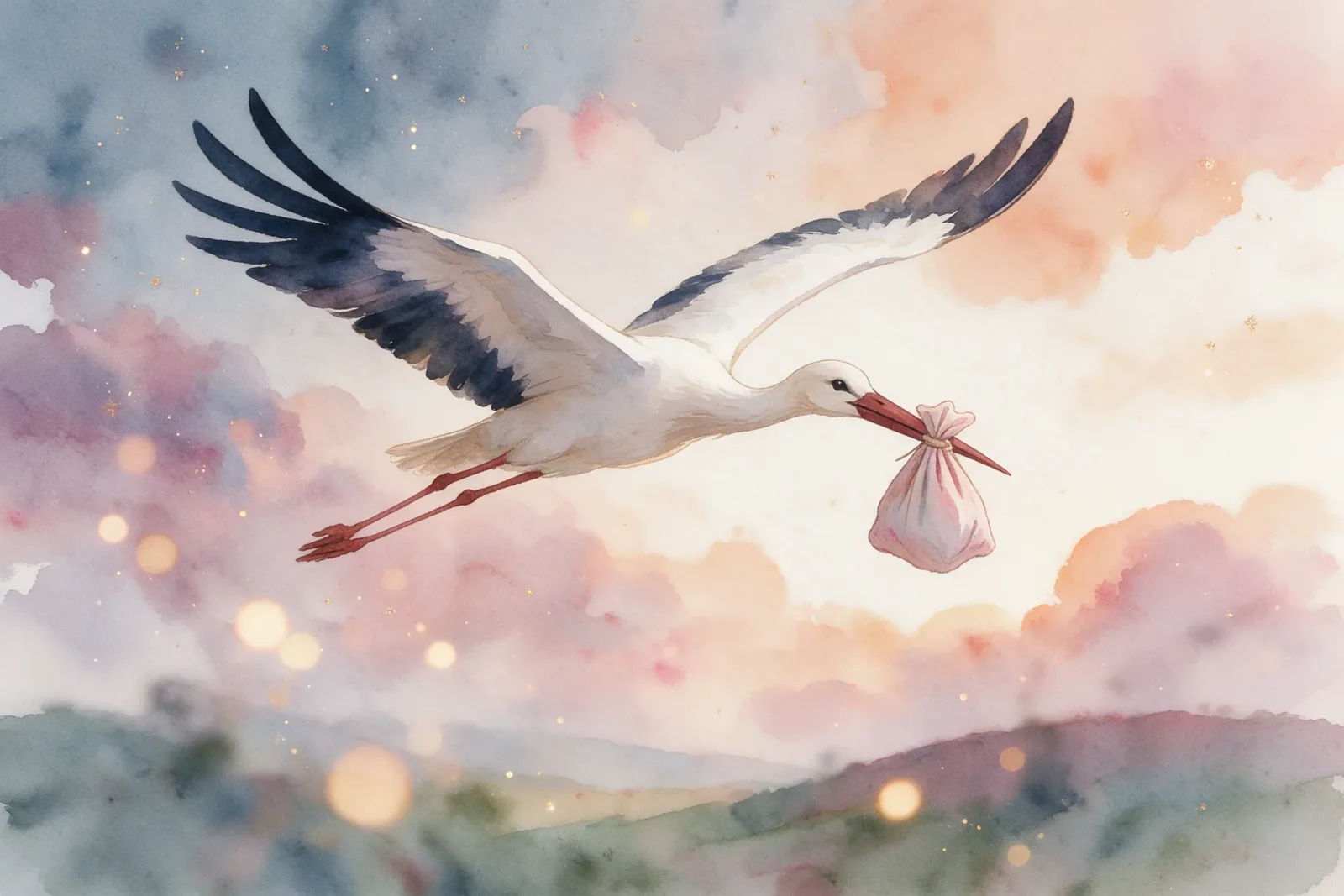
Every version of the legend agrees on the essentials. The stork carries the baby in a cloth bundle held in its beak, or in a sling across its back, and delivers it to a waiting family. Sometimes the baby is lowered down a chimney. Sometimes it is placed at the door. The details shift from village to village, but the bundle stays.
That bundle matters. It makes the child a gift rather than a burden, carried gently, wrapped warm, and set down with care. The myth is really a story about welcome, told through the one animal that arrives each spring without fail.
The gentle convenience of a bird
Why a stork and not some other creature? Partly it is the bird's own manner. A stork is patient, watchful, and faithful to one nest. It returns to the same roof year after year, which made it a natural symbol of home and family. It is also silent for most of the year, which lent it a kind of dignity.
A legend like this survives because it is useful. It gives parents a soft answer, gives children a picture to hold, and gives the stork a place in every nursery that might otherwise belong only to toys.
The story that outgrew its question
The myth has outlived the need that made it. Modern families know where babies come from, yet the stork remains, on cards and blankets and birth announcements, because the image still works. It says arrival, warmth, and hope without a single word.
So the answer to the question is really another question. We no longer believe a bird brings babies, but we still want something winged and faithful in the room when a child is born. The stork stays because it was never only an explanation. It was a way of saying that a new life is precious enough to be carried.
Explore the gift