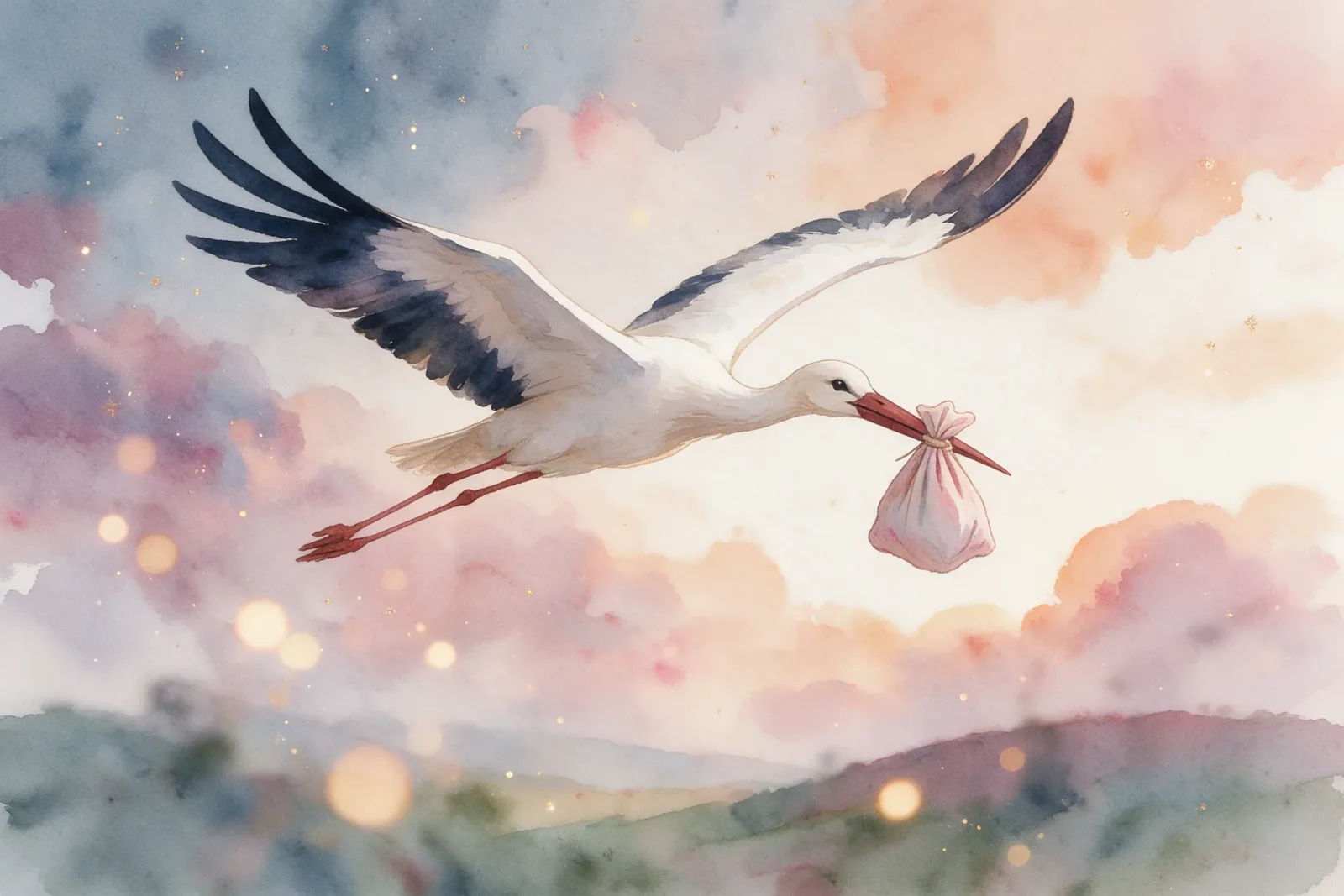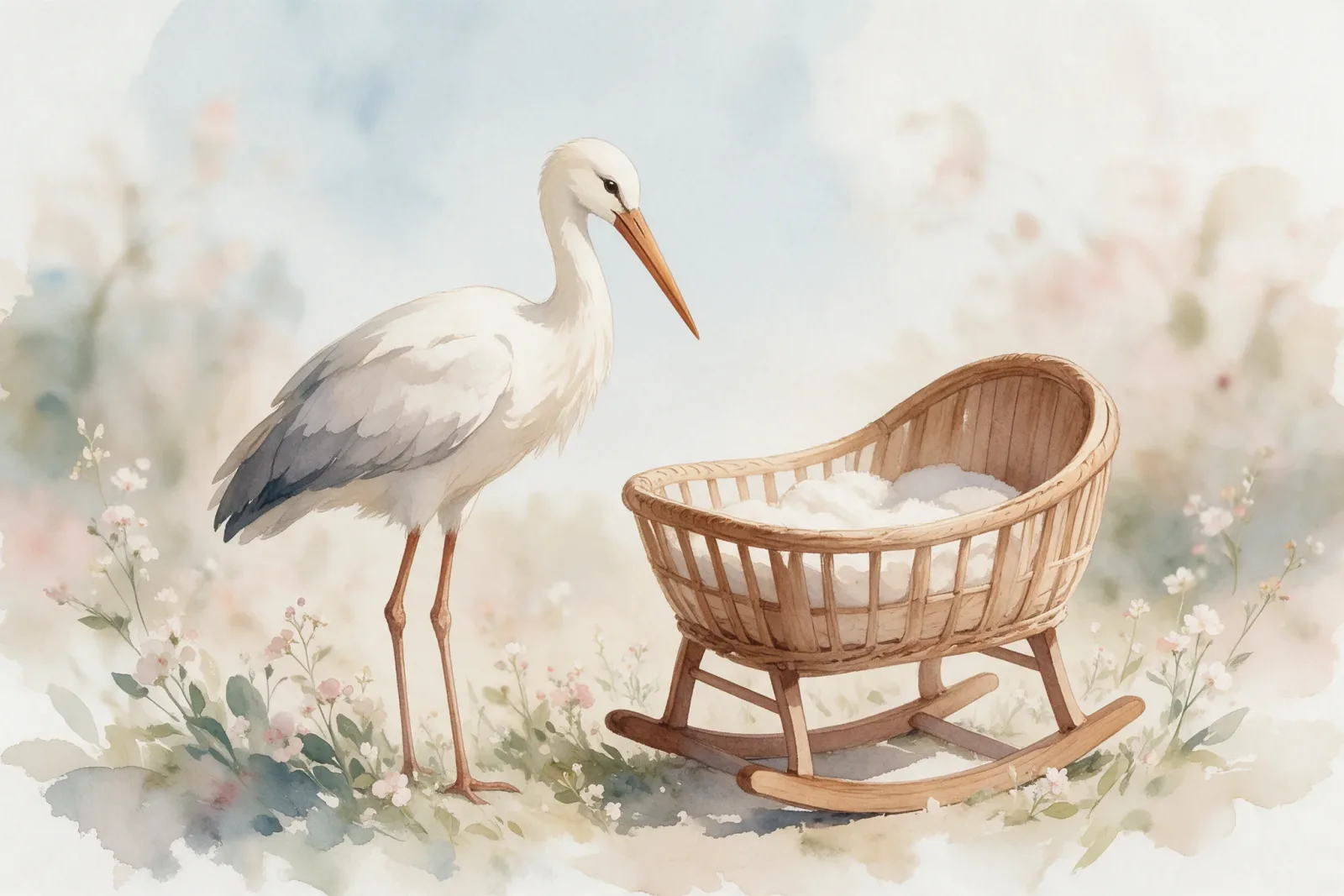
The stork and the newborn have belonged together for so long that it is easy to forget the pairing had to be invented. Somewhere, in some early village, a person first looked at a white bird on a chimney and connected it to the child asleep below. From that moment, the stork stopped being only a bird and became a symbol of new life across cultures.
A bird that lives beside us
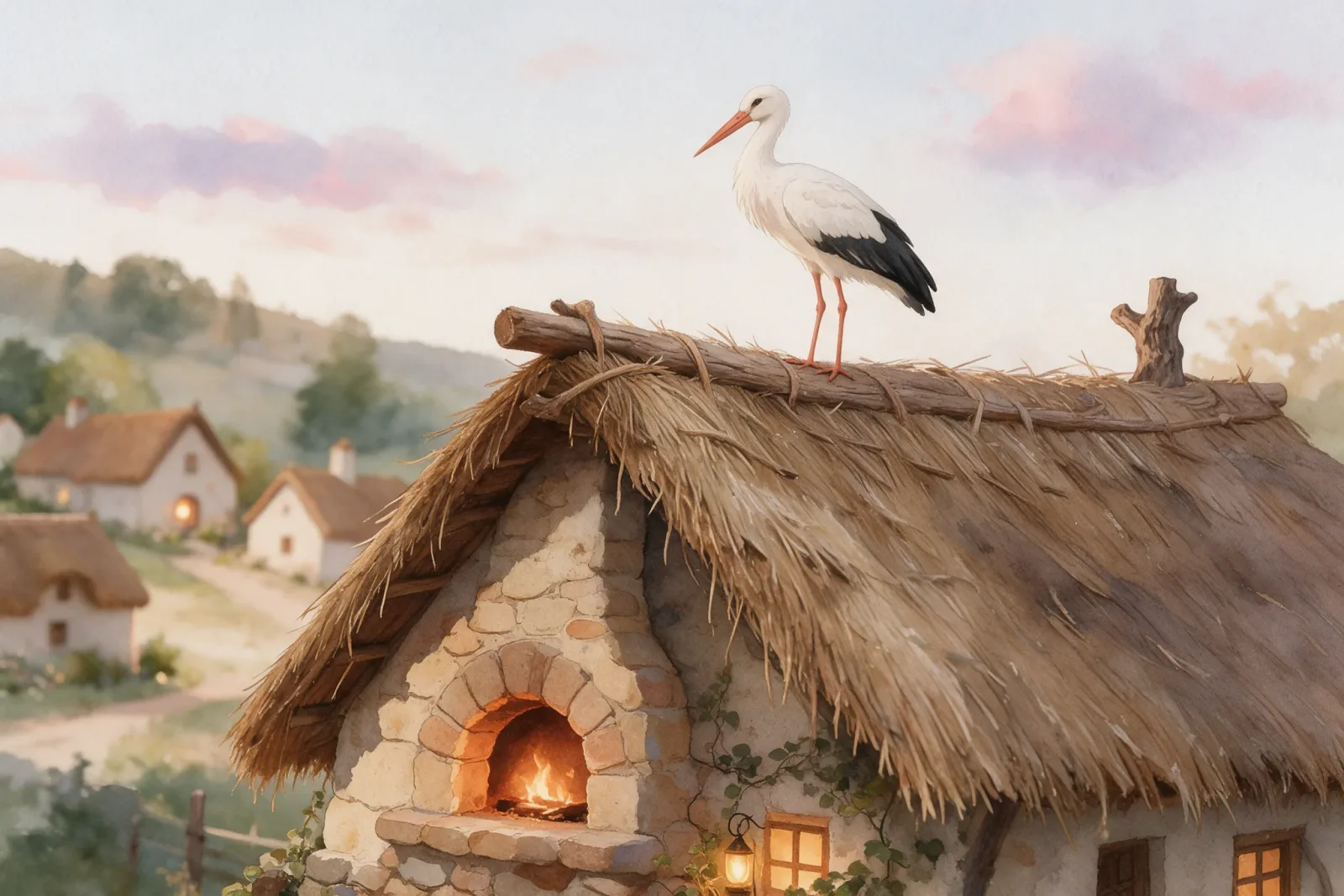
The first reason is simple proximity. White storks nest where people nest, on roofs and towers and church spires, in the middle of villages rather than at their edges. A bird this close becomes familiar, and familiar things gather meaning. When a woman in such a village gave birth, the stork on the roof was part of the household news.
The bird arrived with spring, nested through summer, and left with autumn, a rhythm that matched the year of a growing family. Over generations, that overlap turned into association, and association hardened into symbol.
The whiteness of beginnings
There is also the colour. The white stork is mostly white, with black flight feathers and a red bill and legs. To a folk imagination, whiteness meant purity, innocence, and newness, exactly the qualities people wanted to attach to a newborn. The red legs added a note of life and warmth.
A white bird against a blue spring sky was hard to look at without thinking of something clean and fresh beginning. The stork wore the colours of a christening before the church had chosen them.
The soul as a passenger
In several traditions the stork did not merely carry a body, it carried a soul. Souls of the unborn were imagined waiting in marshes, wells, and ponds, and the stork, a bird of wet places, was the one that fetched them. This is the deeper layer of the legend, the one that survives in language even after belief fades.
A stork wading in shallow water looked, to older eyes, like a fisherman of souls. When it flew toward a village, people said a child was coming. The bird had dipped into the unseen world and returned with something for the house.
From many birds to one
The stork was never alone in this work. In Egypt the ibis was sacred. In Greece the crane announced the spring. In China the heron carried a similar kind of luck. Each culture chose its own long-legged bird and gave it the same office, guarding the passage between the hidden and the born.
What the stork added was domesticity. Other birds stayed in the wild. The stork came to the chimney. That closeness made it the natural choice for the one story every household eventually tells, the story of how a new person arrived.
A symbol that still works
A symbol survives only while it still says something true. The stork still says arrival, family, and the return of warmth. It needs no explanation on a baby card or a birth announcement, because the meaning is carried in the image itself.
The stork and the newborn belong together not because anyone decided it, but because the bird kept showing up, spring after spring, at the exact place where new life was beginning. That is how a symbol is really made.
Explore the gift