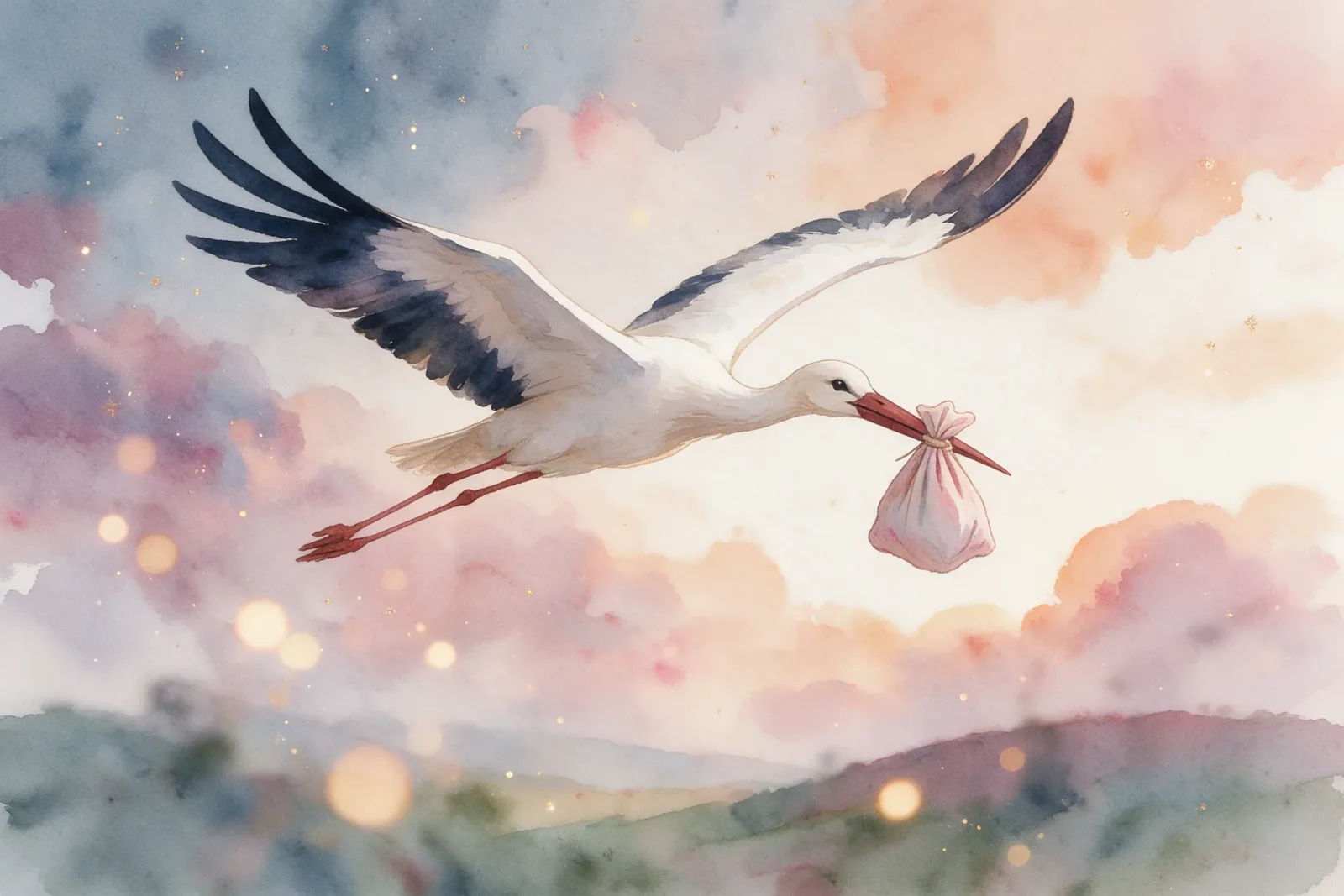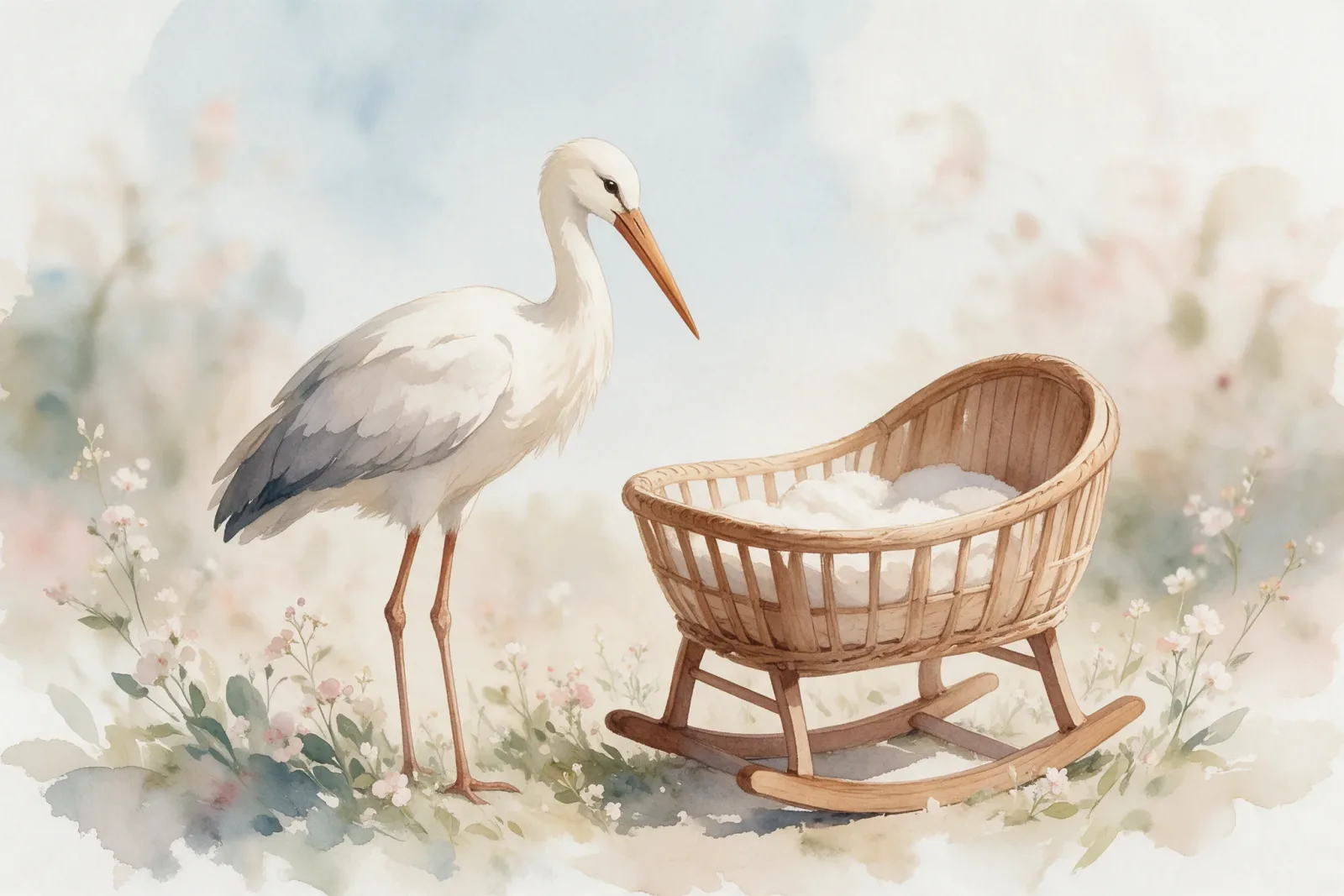
Hans Christian Andersen's storks did not invent the delivery legend, but they fixed it in place. Before his fairy tale, the stork was a folk belief carried from one village to another. After it, the bird belonged to every nursery, and the story of the baby brought by beak became a permanent piece of childhood.
The tale of "The Storks"
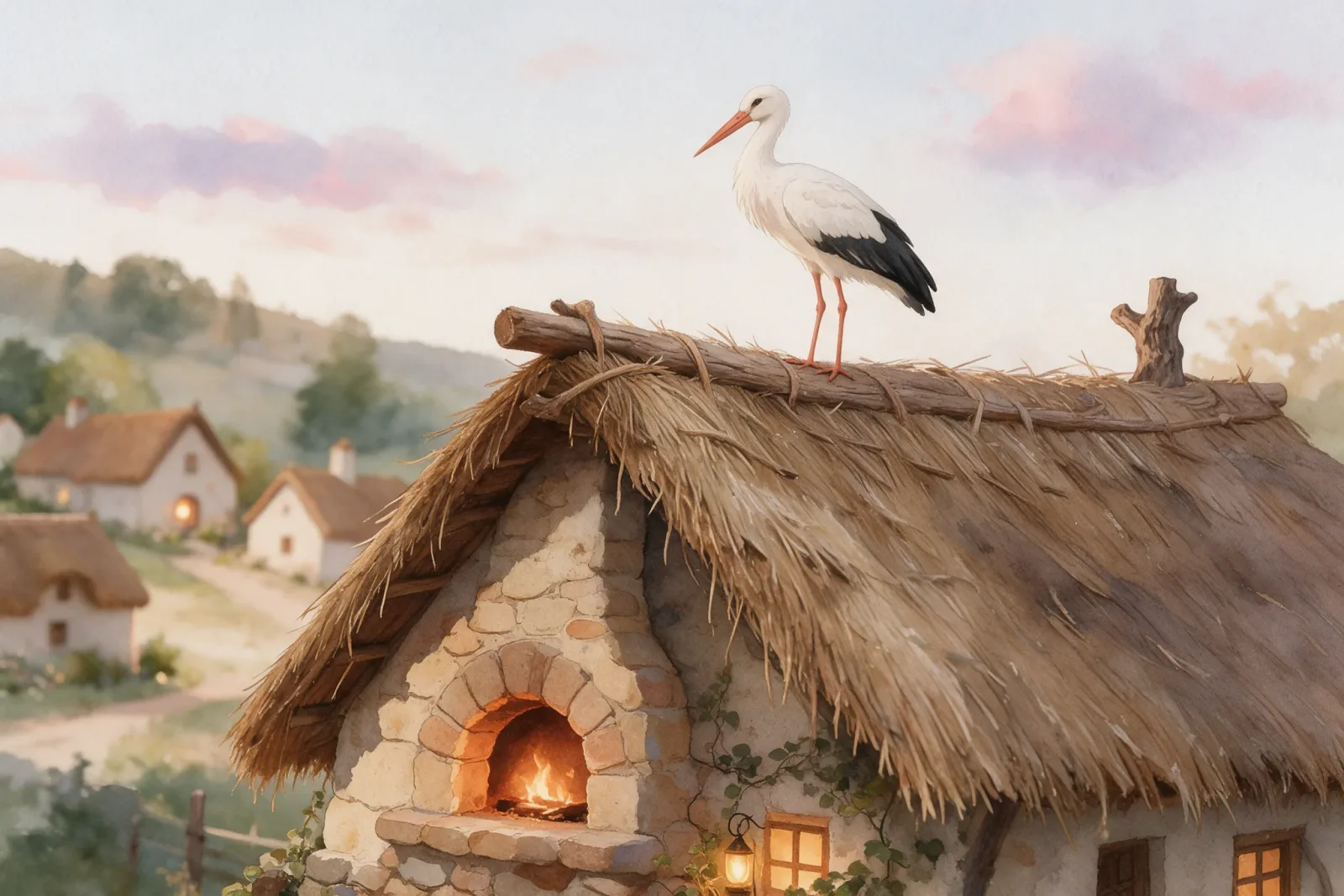
Andersen wrote a short tale called "The Storks", about a family of birds nesting on a rooftop while the children below tease them. The mother stork soothes her young, and the father stork devises a small, satisfying plan. One evening, when the children call out to the nest, he promises to reward the kind child and to pass over the cruel one.
The story is gentle, a little sharp at the edges, and full of the things Andersen did best. It gives the birds a family of their own, a nest, a sense of fairness, and a quiet revenge that never quite lands. It made the stork a character rather than a mere carrier.
The pond of the unborn souls
Andersen folded an older belief into the tale. He wrote of a pond where little children lie dreaming, waiting for the stork to bring them to a mother and father. The good child gets a wakeful little brother or sister, and the naughty child gets none, or gets a poor little head that has not slept.
Here the stork is not just a delivery bird. It is the ferryman between a dreamlike elsewhere and the waking world, and that image, the pond of waiting children, is the part readers remember longest. It gave the myth a geography.
The nursery caught it and kept it
What Andersen understood was that children respond to fairness, and to birds with families. His storks are not distant symbols. They are parents with squabbling chicks and a plan to be fair. That made the tale land in the nursery in a way a mere superstition never could.
Once the story was in print, the stork moved from the field and the chimney into books, songs, and the pictures above a baby's cot. The bird that had once explained a mystery now explained kindness, and both meanings travelled together.
Why the tale has lasted
Fairy tales survive when they hold a real feeling inside a simple shape. "The Storks" holds the feeling of a child learning that the world notices how you behave, and that kindness brings good things to the door. The stork is the agent of that lesson, which is exactly why it has stayed in the nursery.
Andersen did not invent the bird. He gave it a face and a family, and once a creature has a family, it can enter ours.
The stork, fixed in place
There are older stork stories, and stork stories from other lands, but Andersen's is the one the Western nursery kept. It is the reason the stork appears on so many birth announcements beside a name that has nothing to do with the tale.
The bird no longer needs to deliver anything to earn its place. The fairy tale did the delivering. It carried the stork from folklore into childhood, and there it has stayed, clattering softly on every imagined roof.
Explore the gift