Binoculars and a first bird go together in memory, and for many people that first bird is a white stork. There is something about the size of the bird, the pure white of it against a field, that makes it the perfect first sighting. A stork is slow enough to follow, bold enough to stay put, and strange enough to be worth the effort of a shaky pair of hands and a borrowed lens.
Why a stork makes a fine first bird
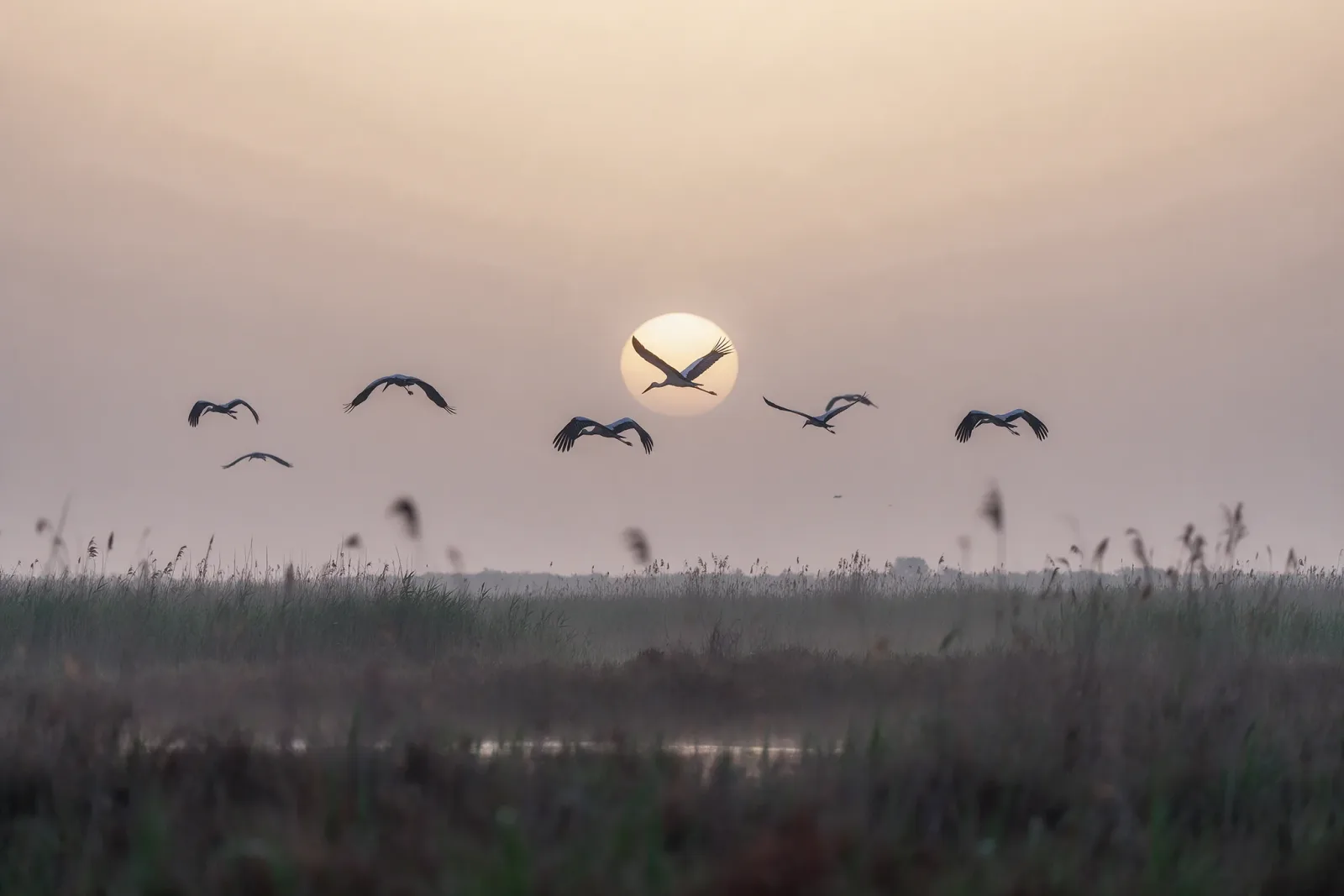
Small birds move fast and hide. A stork does neither. It stands in the open, walks without hurry, and rises into the sky in full view. For a beginner, this is a gift. You can find the bird with your own eyes, then lift the binoculars and find it again, because it has not flown while you were fiddling with the focus. The first bird should be one that forgives you your slowness, and the stork is exactly that.
Learn the binoculars before the bird
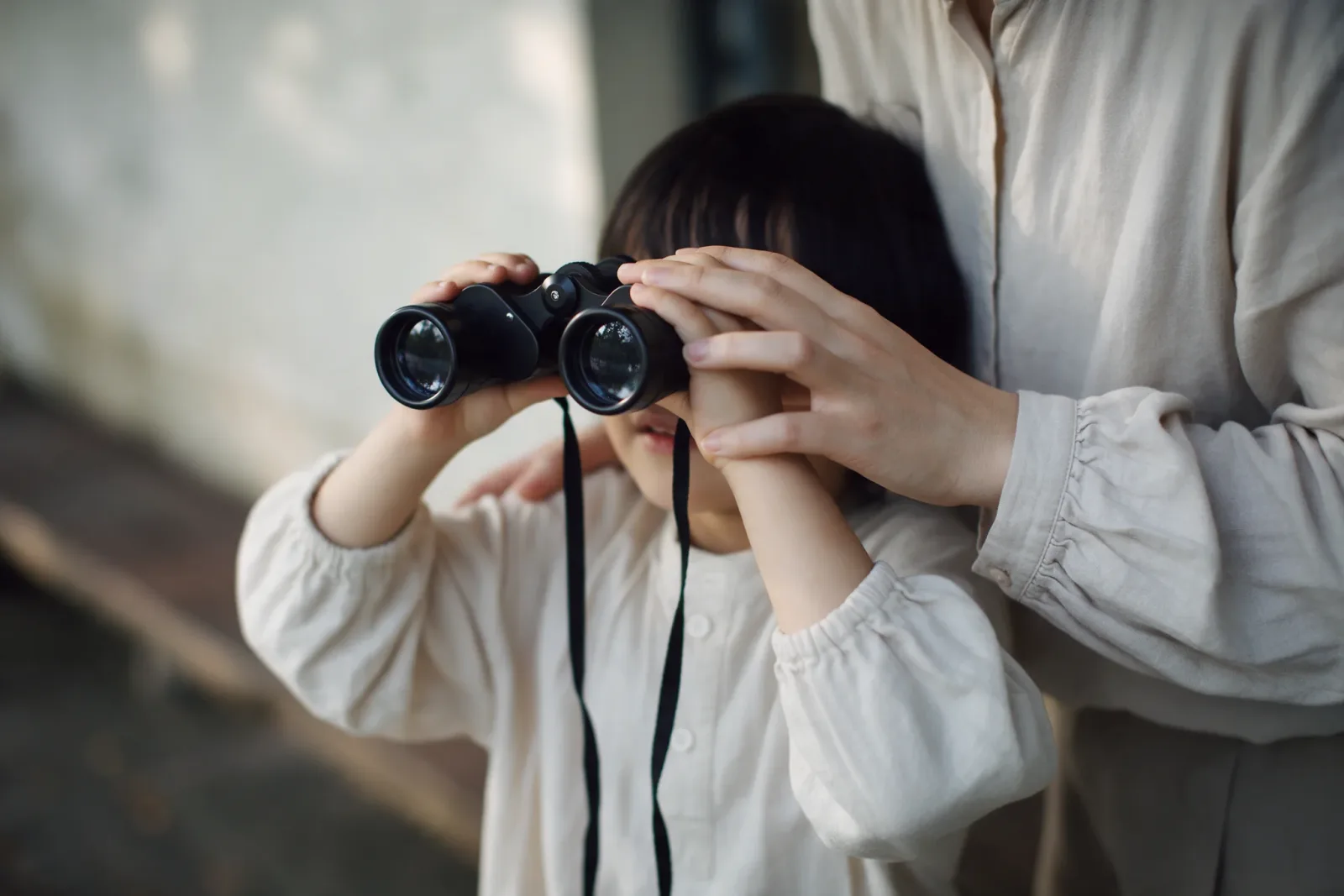
A common beginner's mistake is to learn the tool in the field, while the bird waits. Better to practise at home. Pick a chimney, a branch, a rooftop, and learn to bring the binoculars up to your eyes with the target already centred. Hold them steady with both hands, brace your elbows against your chest, and breathe. When the moment comes and a stork crosses your path, your hands will already know what to do.
Find it with your eyes first
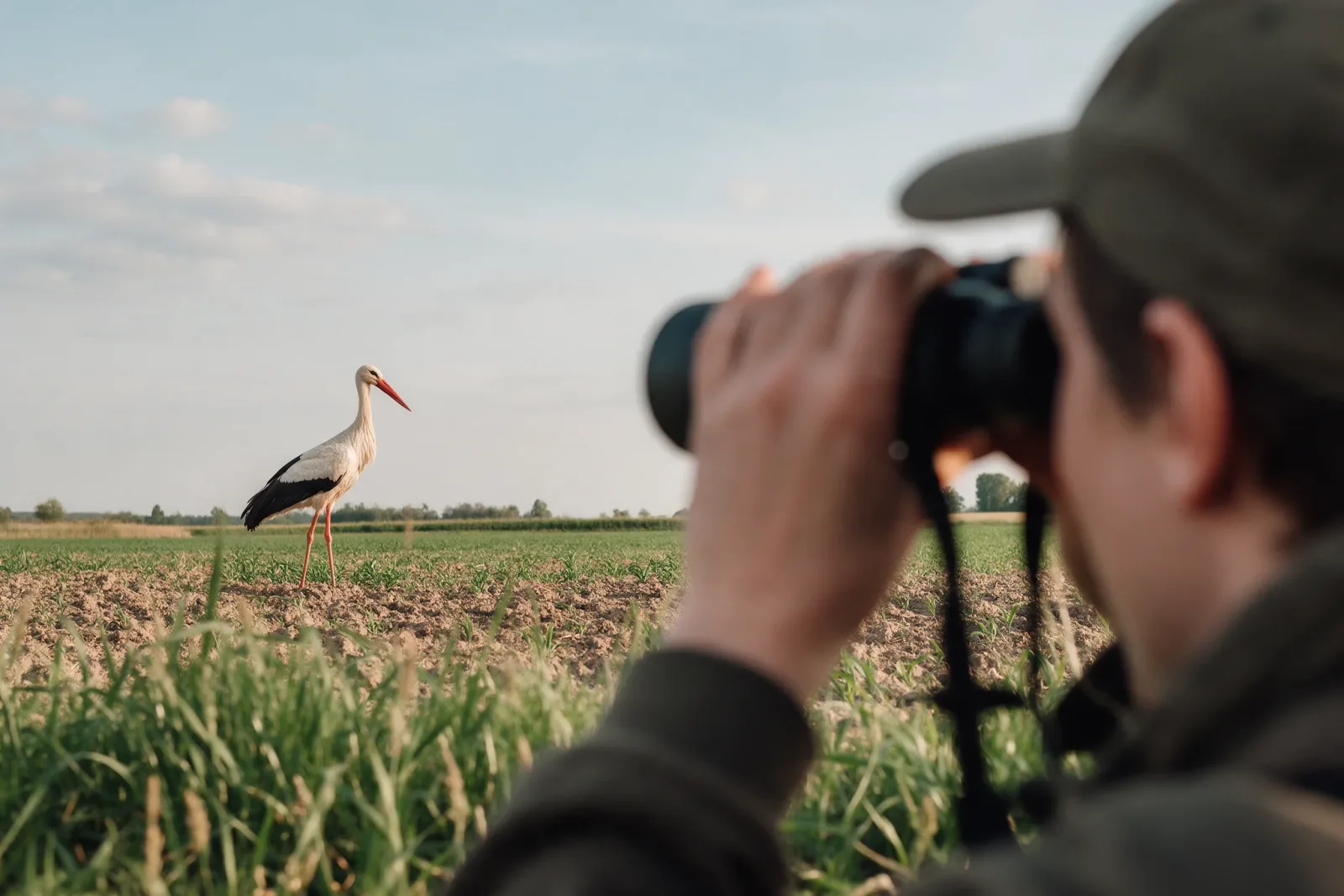
Never search for a bird through the binoculars. The narrow view will defeat you. Put the binoculars down, find the stork with your naked eyes, then raise the glasses without moving your gaze. The bird should land in the view already. If it does not, lower them and try again. This one habit, eyes first, then glass, separates a rewarding hour from a frustrating one.
Take the first sighting slowly
When the stork fills the lens, do not rush. Notice the red bill, the black edge of the wing, the fine pale feathers of the throat. Watch it walk, watch it preen, watch it stand. The temptation is to tick the bird and move on, but a first bird is not a checklist item. It is the moment you realise there is a whole world going on inside a bird you have walked past a hundred times.
Let the first bird open the rest
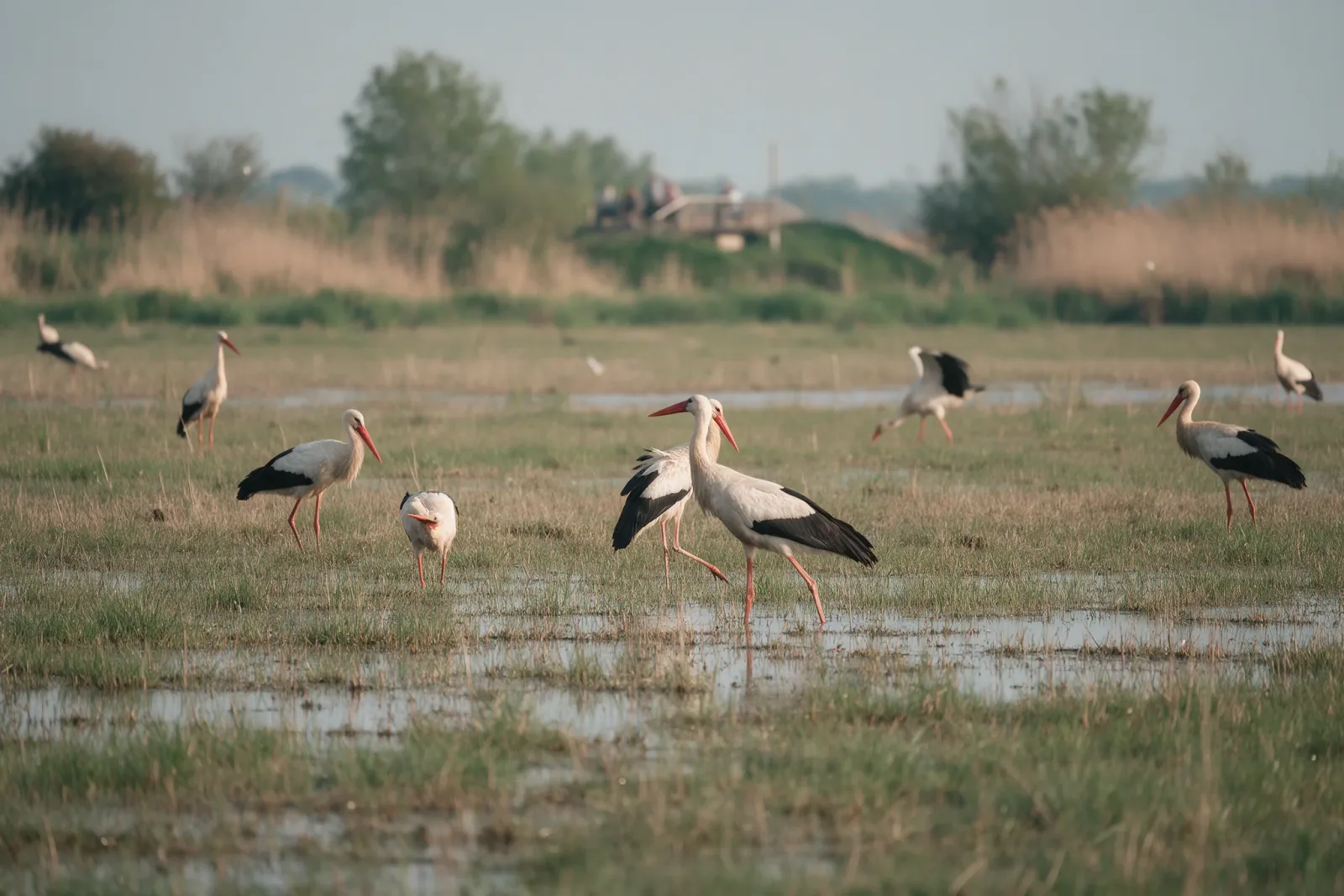
A stork is rarely the only bird in the field. Around it there will be others: a heron, a lapwing, a wagtail working the mud. The stork is the door. Once it has drawn you in, the rest of the marsh begins to speak. Keep the binoculars around your neck on every walk after this, and let that first white bird be the reason you keep looking.
Explore the gift