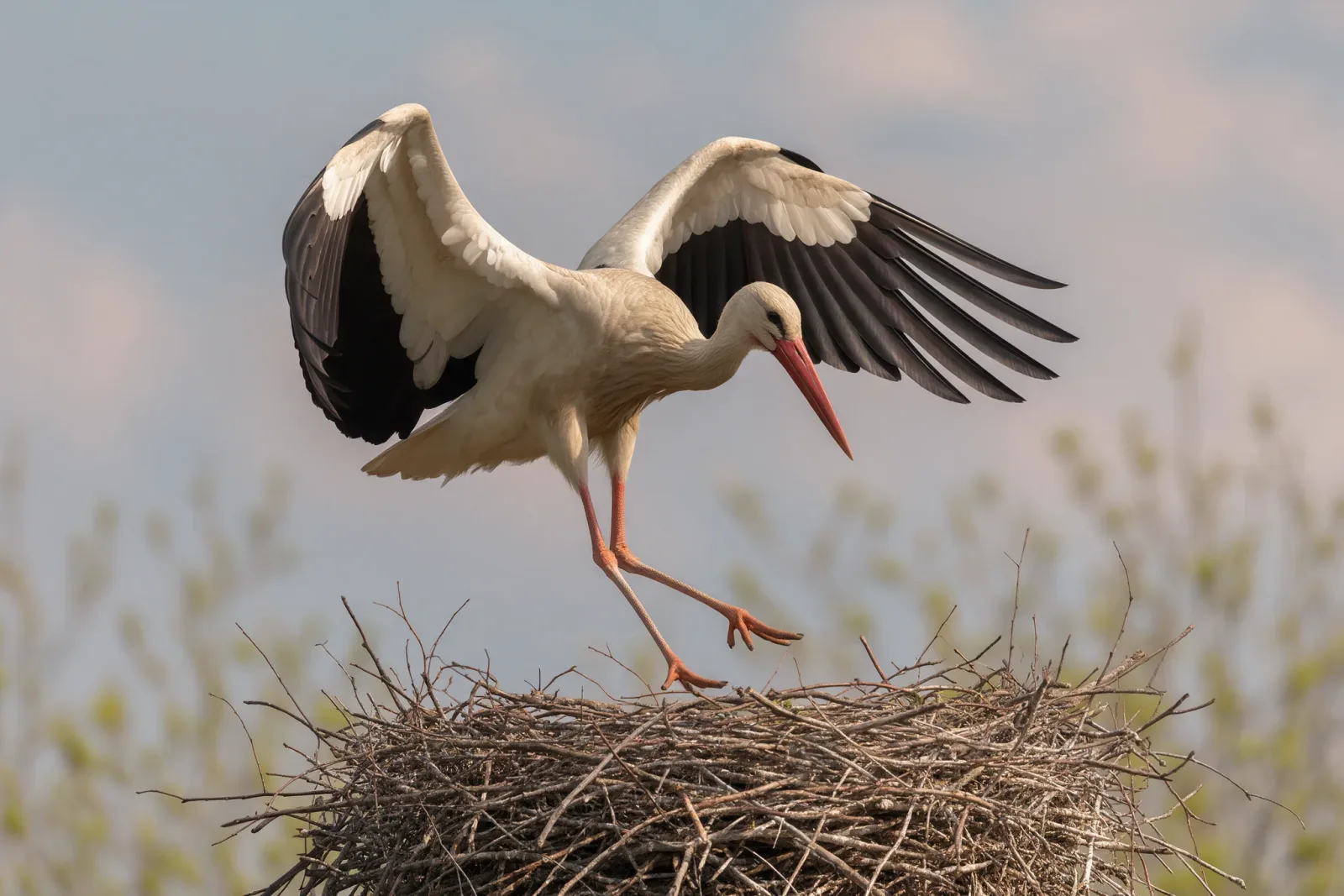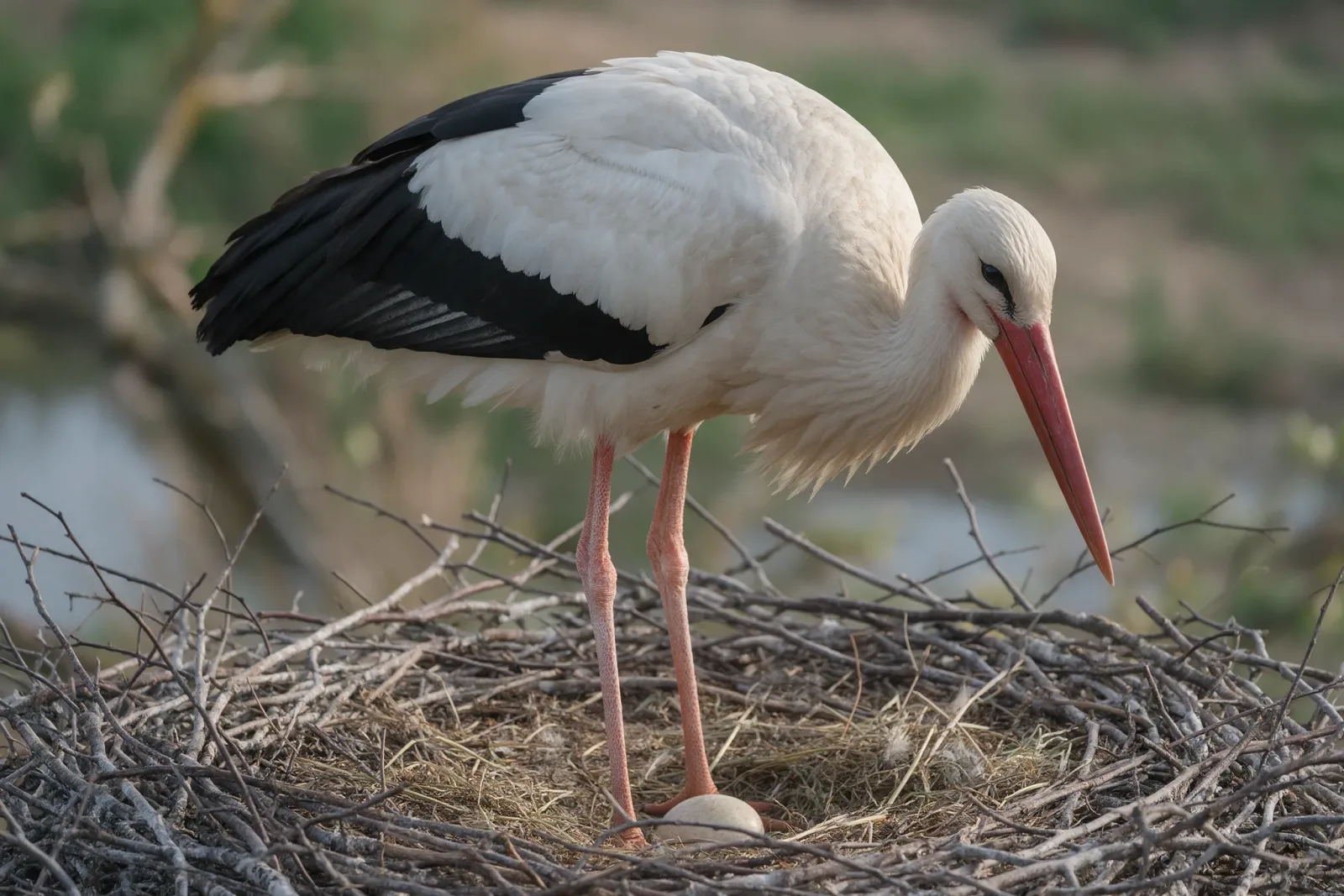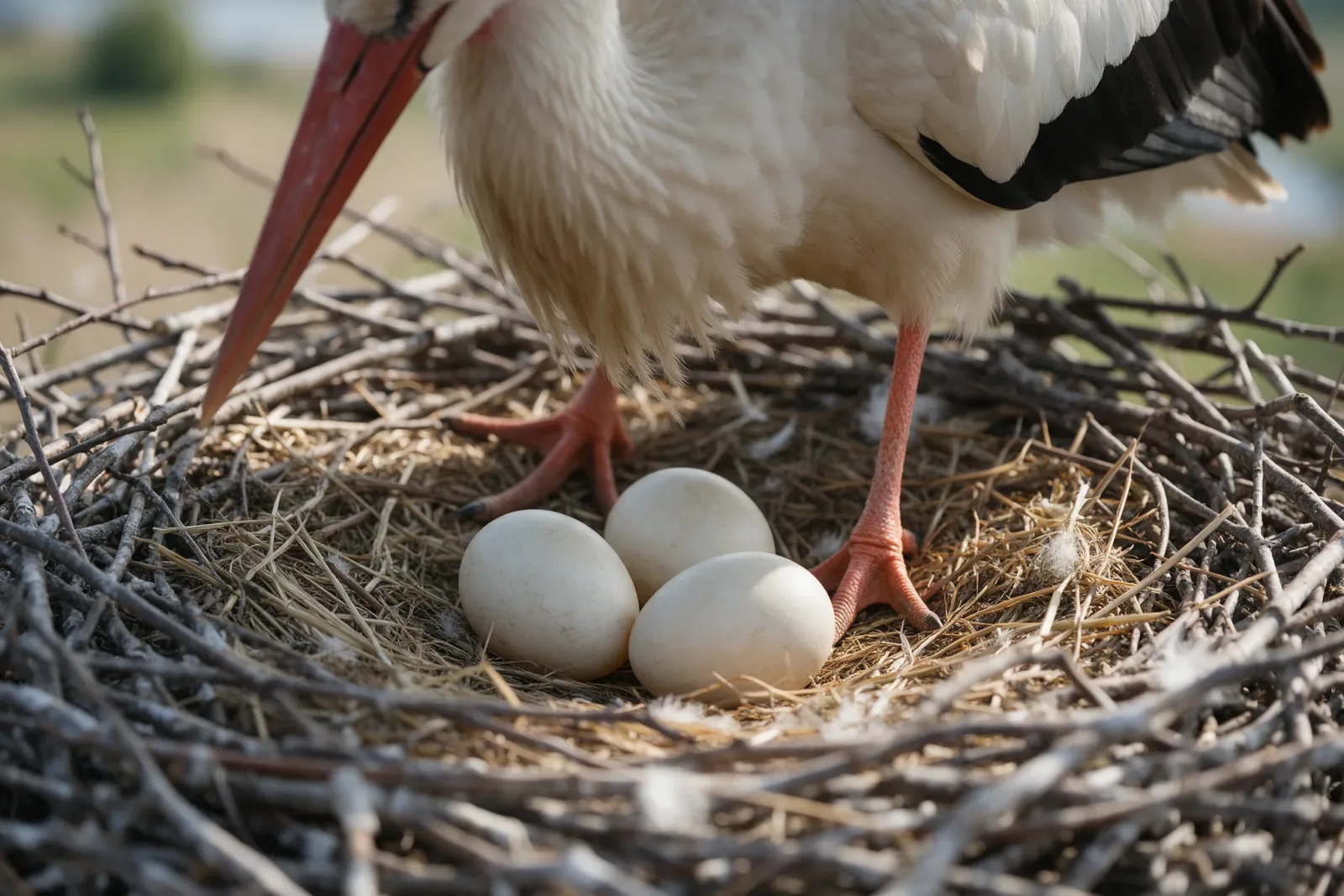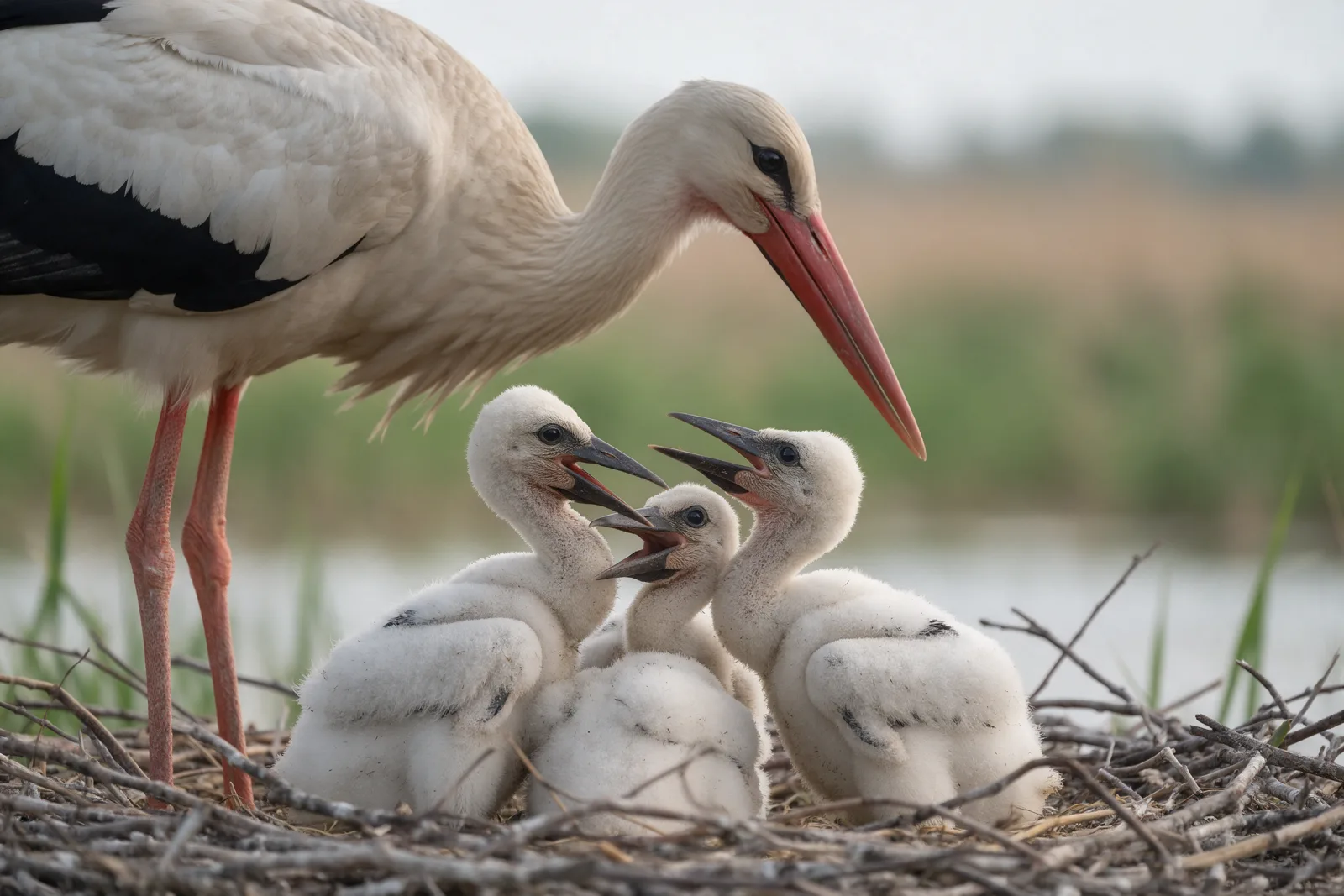
Life among brothers and sisters in a stork nest is crowded, noisy, and touched with real competition. A white stork clutch may hold up to five chicks, and they hatch a day or more apart, which means the nest is filled with siblings of different sizes and different strengths, all asking for the same food.
The oldest chick, hatched first, has a head start. It is bigger, stronger, and quicker to reach the food when a parent returns. The youngest trails behind, smaller and slower, and its first weeks are the hardest.
The order of hatching
Storks lay their eggs over several days, and they begin incubating almost at once. The result is a staggered hatch. The first chick may be several days old before the last one breaks out of its shell, and those few days matter enormously in the crowded world of the nest.
The oldest chick dominates the center of the bowl, where the food lands. It grows fastest, and its advantage widens as the season goes on. The youngest is pushed to the edge, and it must fight for every meal.
Sharing, and not sharing
In a good year there is food enough for all, and the chicks grow more or less together. In a lean year the competition tightens, and the youngest may not get enough. This is not cruelty. It is the plain economics of a nest, where the food is finite and the mouths are many.
A stork pair cannot feed every chick in a bad season, and so the strongest survive to carry the family's future. It is a hard truth, but it is how the species has endured for so long.
What the parents do
The parents feed the chicks that beg hardest and reach highest, and this naturally favours the strong. They do not sort the chicks or choose among them. They simply drop the food and let the nest decide, and the nest, in its way, is honest about the answer.
When the season is generous, the whole brood fledge together. When it is not, one or two may not make it. The parents cannot change this. They can only gather food and hope the summer holds.
The tenderness too
For all the competition, there is tenderness in the nest as well. The chicks sleep heaped together for warmth, preen each other's new feathers, and stand side by side on the rim as they grow. They are rivals, but they are also, in the end, family, sharing one small platform and one long apprenticeship in the sky.
And when the day comes to fledge, they leave one by one, and the nest falls quiet, and the summer's whole noisy drama is over.
Explore the gift