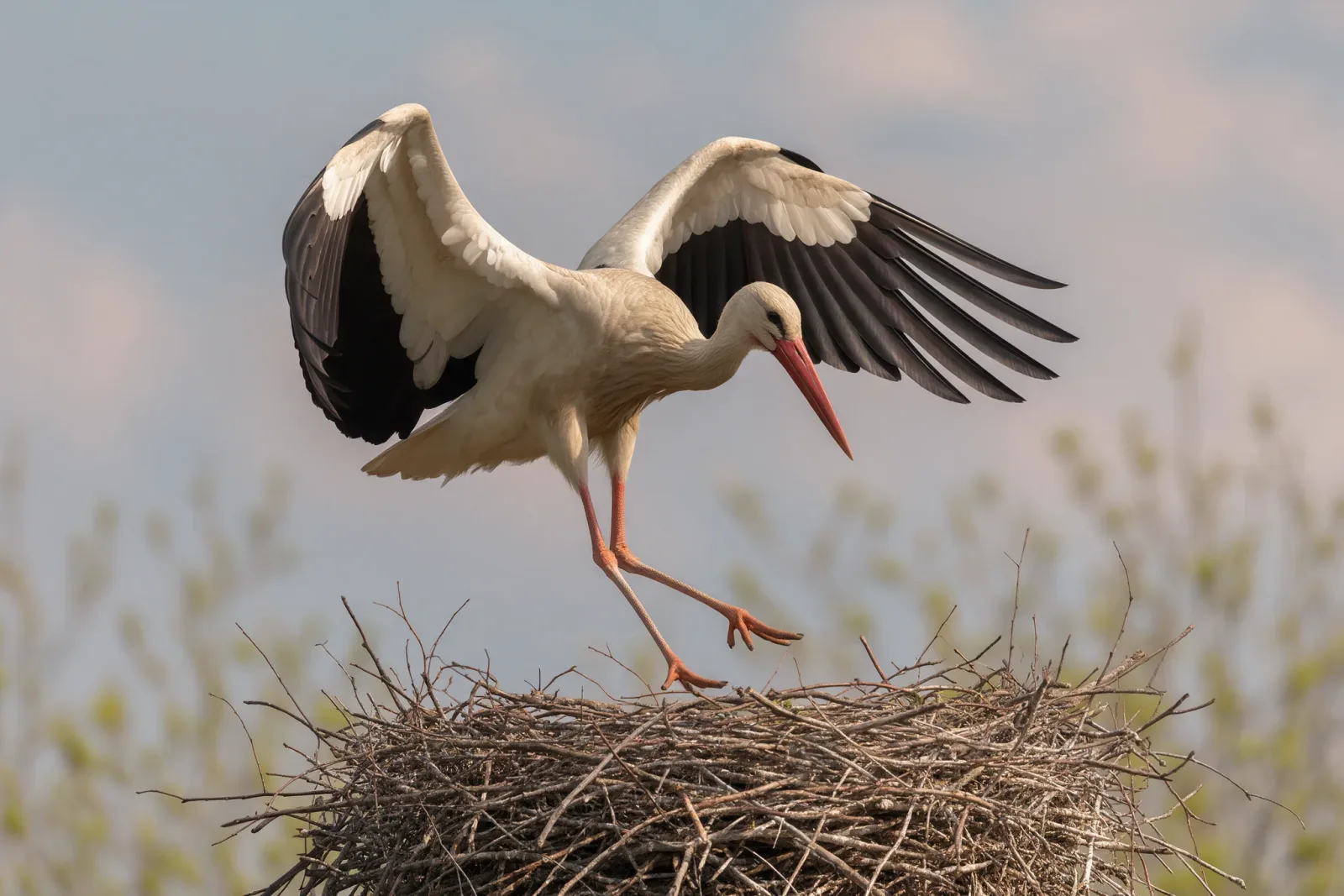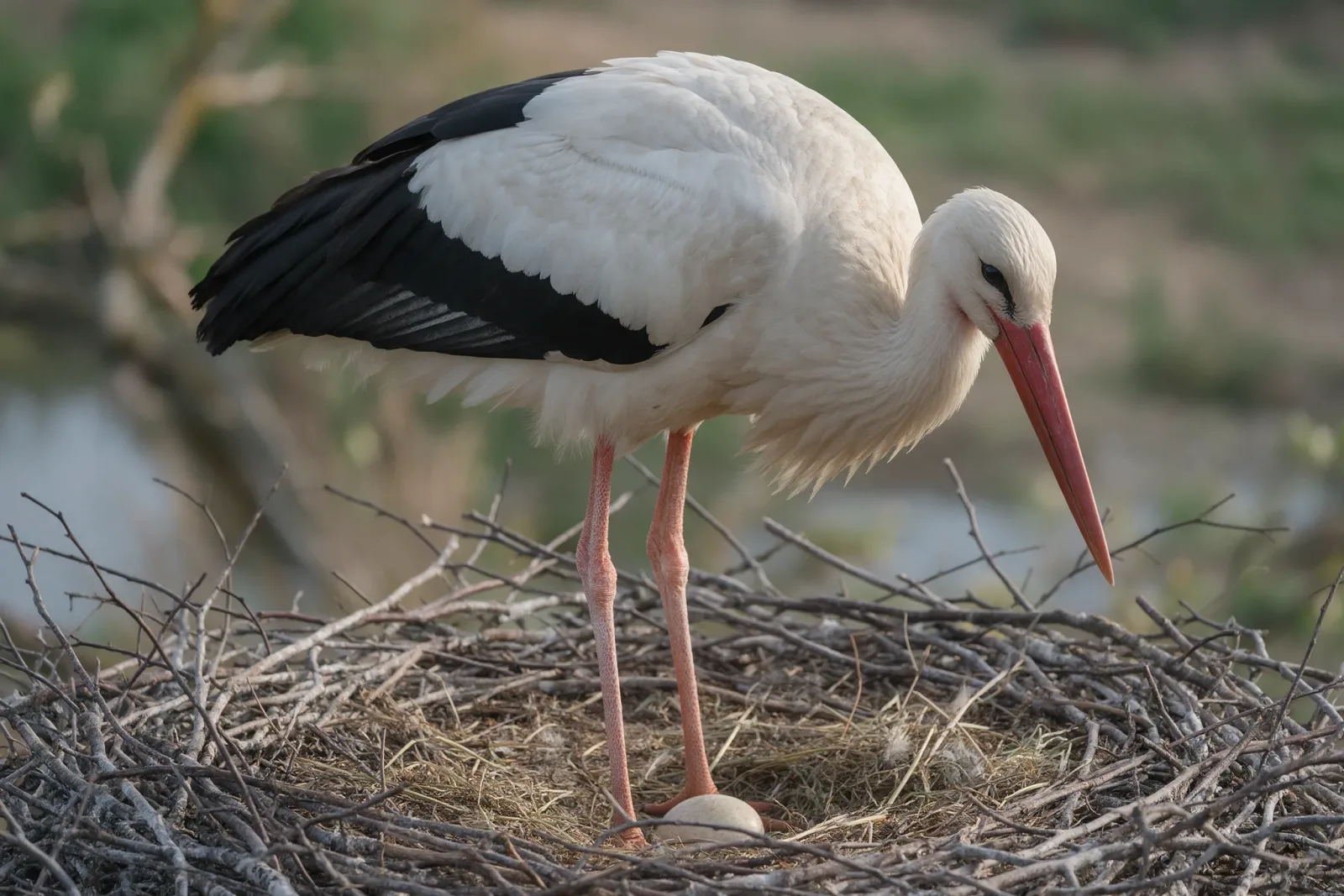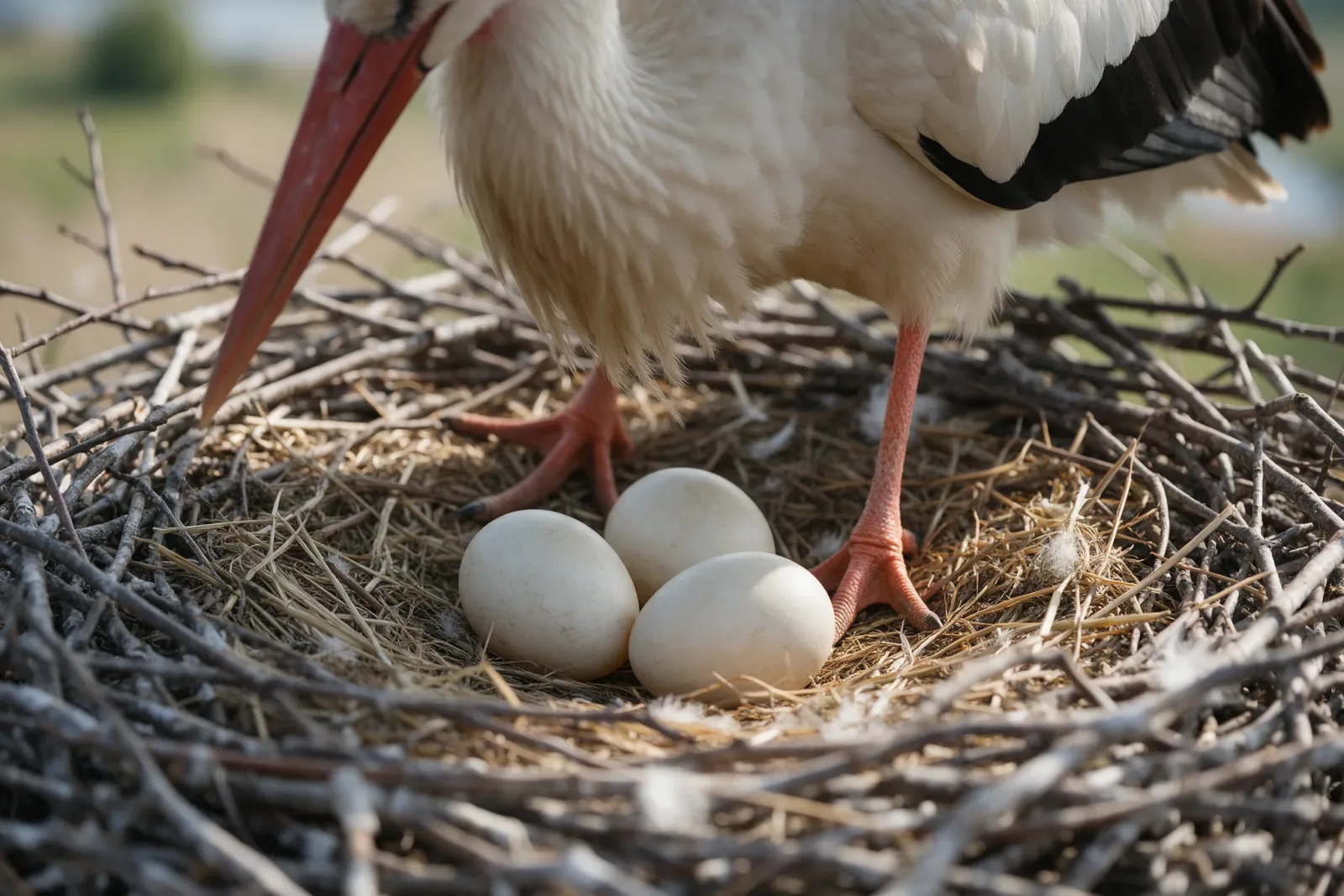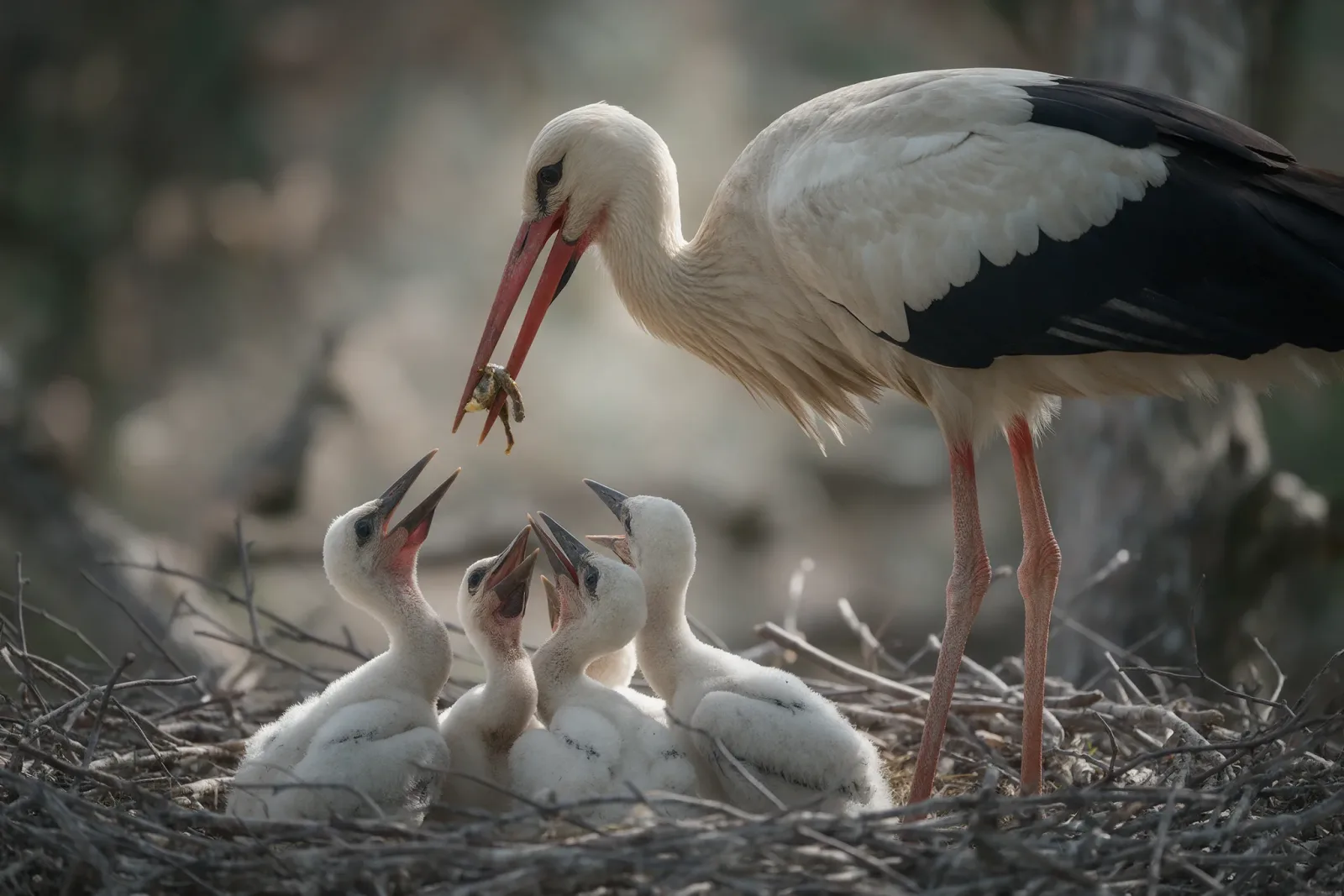
Feeding time at a stork nest is loud, constant, and slightly undignified, and it is the engine that drives the whole summer. A white stork parent returns to the nest with its crop full, and the chicks rise up as one, gaping bills raised, all of them certain that they are the hungriest bird alive.
What the parent carries home depends on the season and the ground. Storks are broad feeders, not picky ones. They take what the fields and wet meadows offer, and the menu changes with the weeks.
What storks eat
A white stork feeds on insects, worms, frogs, and small mammals, along with whatever else it can catch in open country. Grasshoppers and beetles in dry grass, earthworms after rain, frogs and small fish in the shallows of a marsh. It does not hunt by chase but by walk, strolling slowly and striking when something moves.
The food is gathered far from the nest, in meadows and floodplains and along the edges of water. A parent may fly many kilometres on a single round trip, then bring it all home in one load.
The return to the nest
When the parent lands, the chicks know. They rise and beg, jostling for position, bills open and heads tilted back. The adult leans down and empties its crop into the center of the nest, spilling out a wet heap of food that the chicks then divide among themselves.
The sound of it is a soft, urgent piping, the chicks' only voice. Storks never sing, so the nest rings instead with this small chorus of hunger and relief.
Feeding the whole brood
A stork pair feeds its young many times a day, and the work is unending. As the chicks grow, their appetites grow with them, and the parents spend more and more of the day shuttling food. By the time the chicks are near fledging, the parents are stretched thin, flying from dawn to dusk.
The load is shared, and so is the strain. Both parents feed, both parents rest, and the brood somehow gets enough to grow, feather by feather, into the sky.
The weather's role
Feeding time is where the weather makes itself felt. A wet spring means worms and frogs and a well-fed nest. A dry one means hard ground and lean hunting, and the smallest chicks may go without. The whole success of the season turns, in the end, on what the parents can carry home.
And so feeding time is more than a daily chore. It is the quiet test of a summer, repeated a hundred times a day, at a nest where the hungry never quite stop asking for more.
Explore the gift