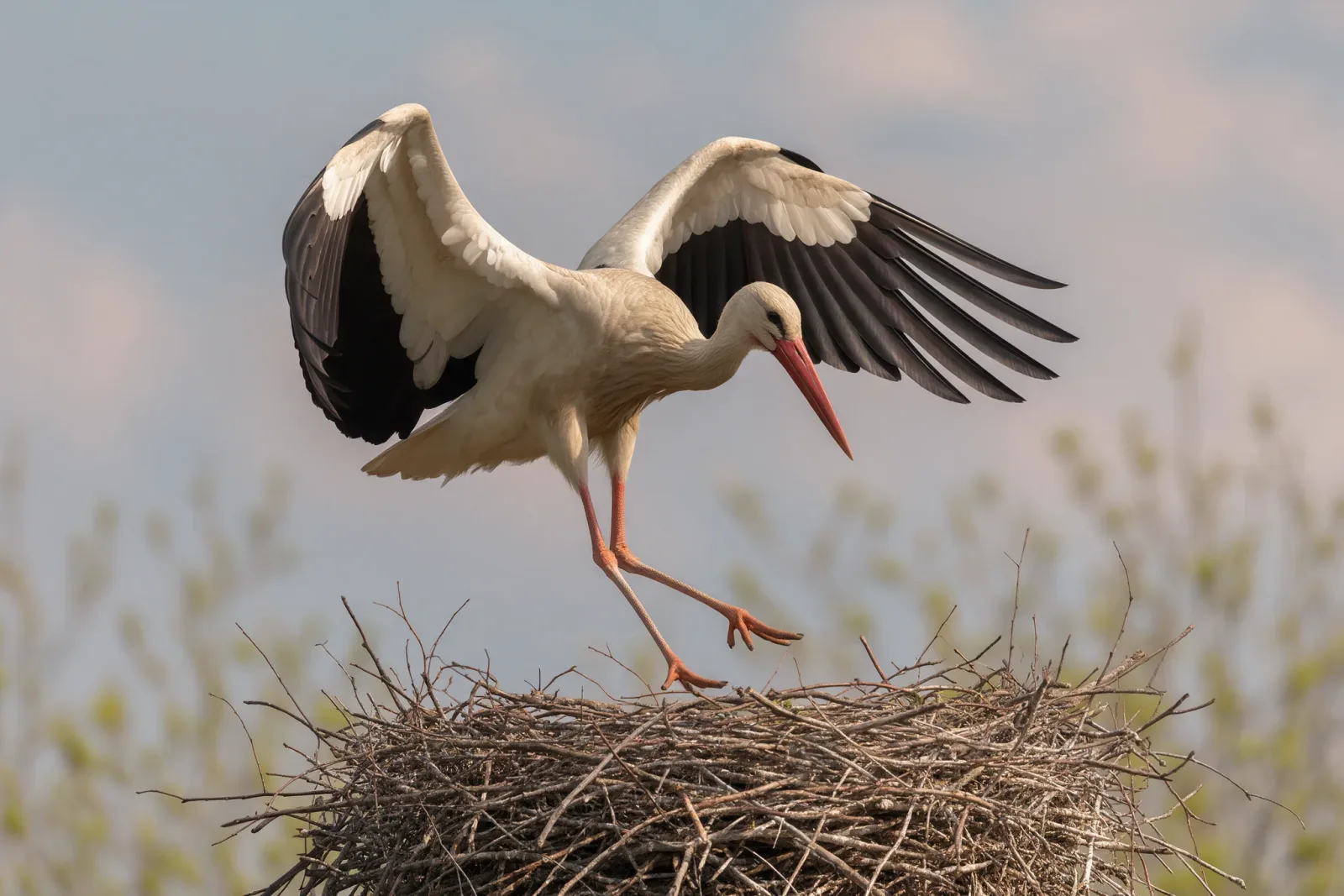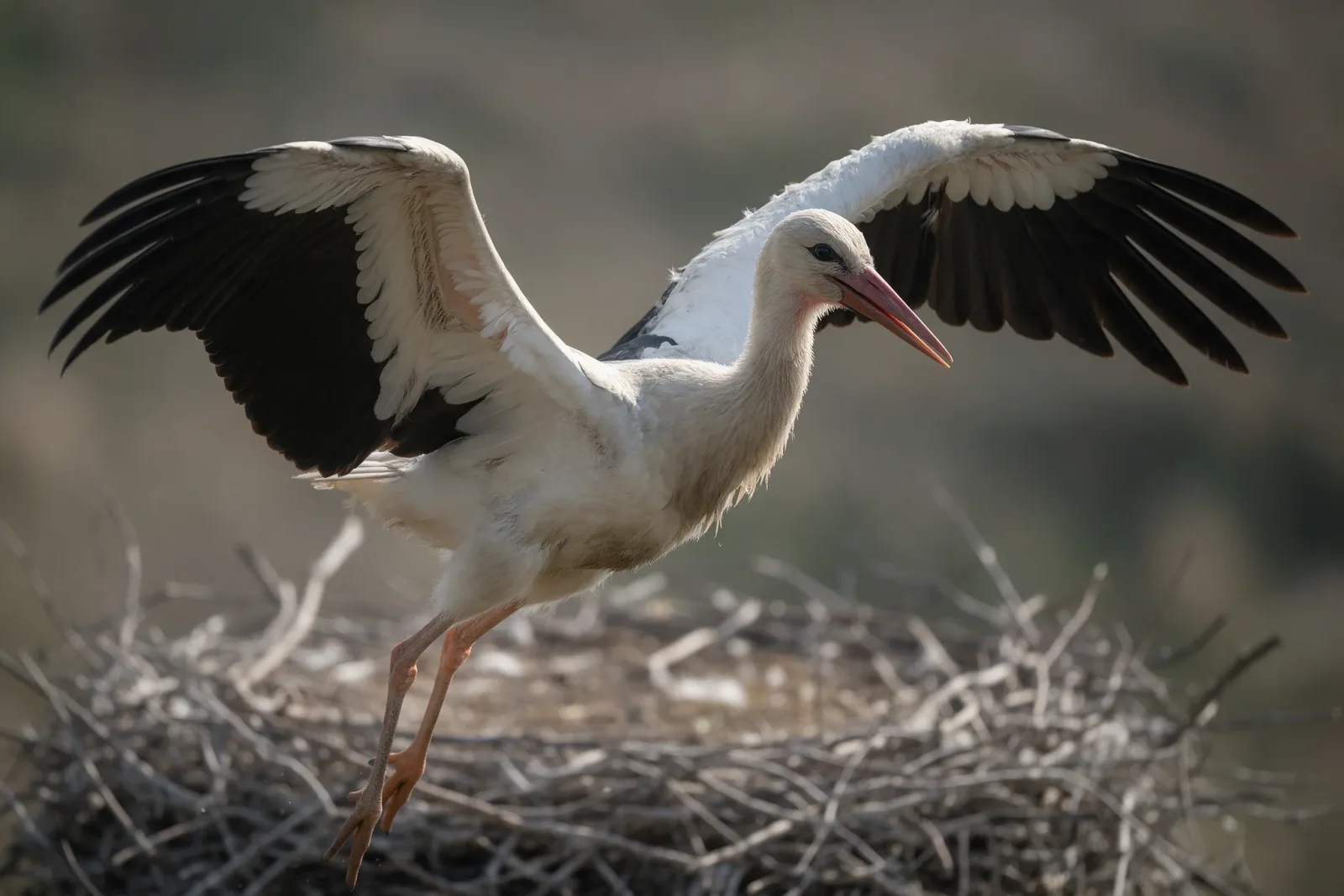
Fledging day is the single most important day of a young stork's life, and it arrives without ceremony. One morning a white stork chick stands at the edge of the nest, opens its wings, and steps into the air. It does not climb back in. The nest, its home for two months, is finished with.
The first flight is rarely graceful. The young bird drops a little, recovers, beats hard, and lurches out over the rooftops before swinging around in a wide, uncertain circle. Sometimes it lands on a nearby chimney to catch its breath. Sometimes it goes farther than it meant to.
Leaving the nest for good
The step off the rim is a threshold with no return. Once a stork fledges, it does not come back to the nest to sleep. It may linger nearby for days, perching on rooftops and walls, still begging food from its parents, but the nest itself is left behind.
The parents continue to feed the fledgling for a few weeks, flying to wherever the young bird has settled. The family holds together loosely, in a scatter of perches around the old nest, until the ties of summer begin to loosen.
Learning to land
Flight is only half the lesson. Landing is the other half, and it is the harder one. A young stork must learn to judge speed and distance, to set its long legs down on a narrow roof without stumbling, to fold its wings at exactly the right moment.
The first landings are clumsy. The bird comes in too fast or too slow, overshoots the perch, flaps wildly, and tries again. But storks learn quickly, and within days the landings grow sure.
The first days on the wing
The fledgling follows its parents now, watching how they find food, how they use the warm rising air to climb without flapping, how they circle and drift on the wind. It copies them, badly at first, then well. Each day it grows a little more capable, a little more independent.
These are the days when a chick truly becomes a stork. It has left the nest, and it has begun to learn the air, and nothing in its life will ever be quite the same again.
A full circle begun
Fledging day matters because it is the moment the cycle turns. The nest has done its work. It sheltered and fed and raised the young, and now it lets them go. Soon the fledgling will join the great autumn movement south, and the nest will sit empty through the winter, waiting for the spring that begins it all again.
On the day itself, though, there is only a young bird stepping off a high rim, and the wide sky opening to take it.
Explore the gift