In Slavic lore, the stork is not a stranger who visits. It is a member of the household, a protective bird whose nest on the roof is a blessing for everyone beneath it. The white stork held this place across much of Eastern Europe, where it was welcomed, fed, and treated as a guardian of the family.
The bird that guards the house
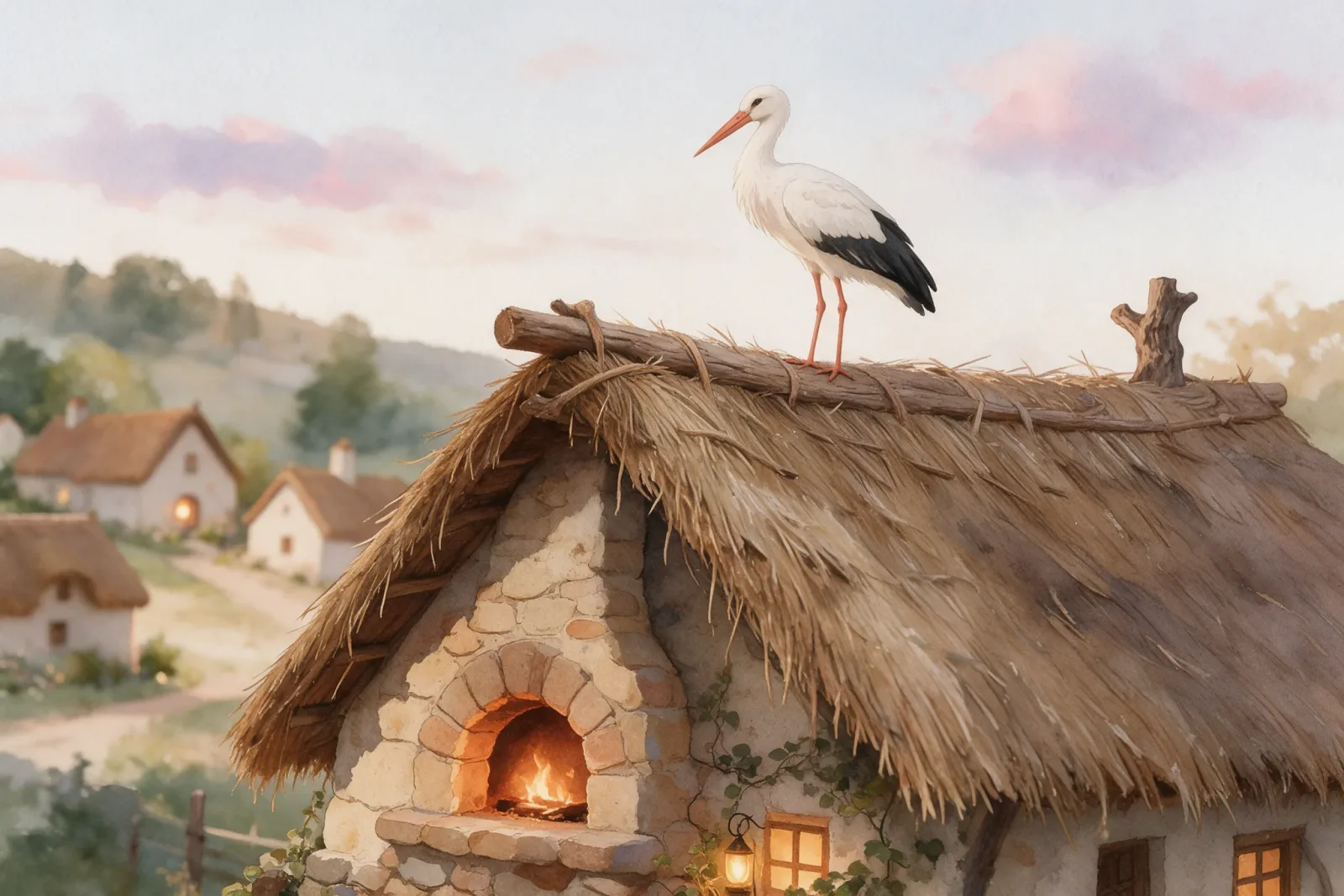
A house with a stork nest was understood to be a safe house. The bird stood watch against fire, lightning, and harm, and its presence meant the home was under a kind of quiet protection. To drive a stork away or destroy its nest was an act that invited misfortune.
The belief rested on the stork's loyalty. It returned each spring to the same nest, often the same mate, and this faithfulness read as a promise. A creature so devoted to its home was thought to pass that devotion on to the people below.
The fire of the stork
One of the strongest beliefs tied the stork to the safety of the roof itself. People said the stork would throw water on a burning house, or that a nest sheltered the thatch from lightning. In some regions the stork was said to carry fire away, and the household that harmed the bird would soon lose its own roof to flame.
This is the logic of the guardian made literal. The bird lived on the roof, so it must watch over the roof. The belief gave people a reason to leave the nest alone, and the stork repaid the courtesy simply by returning.
The arrival that meant spring
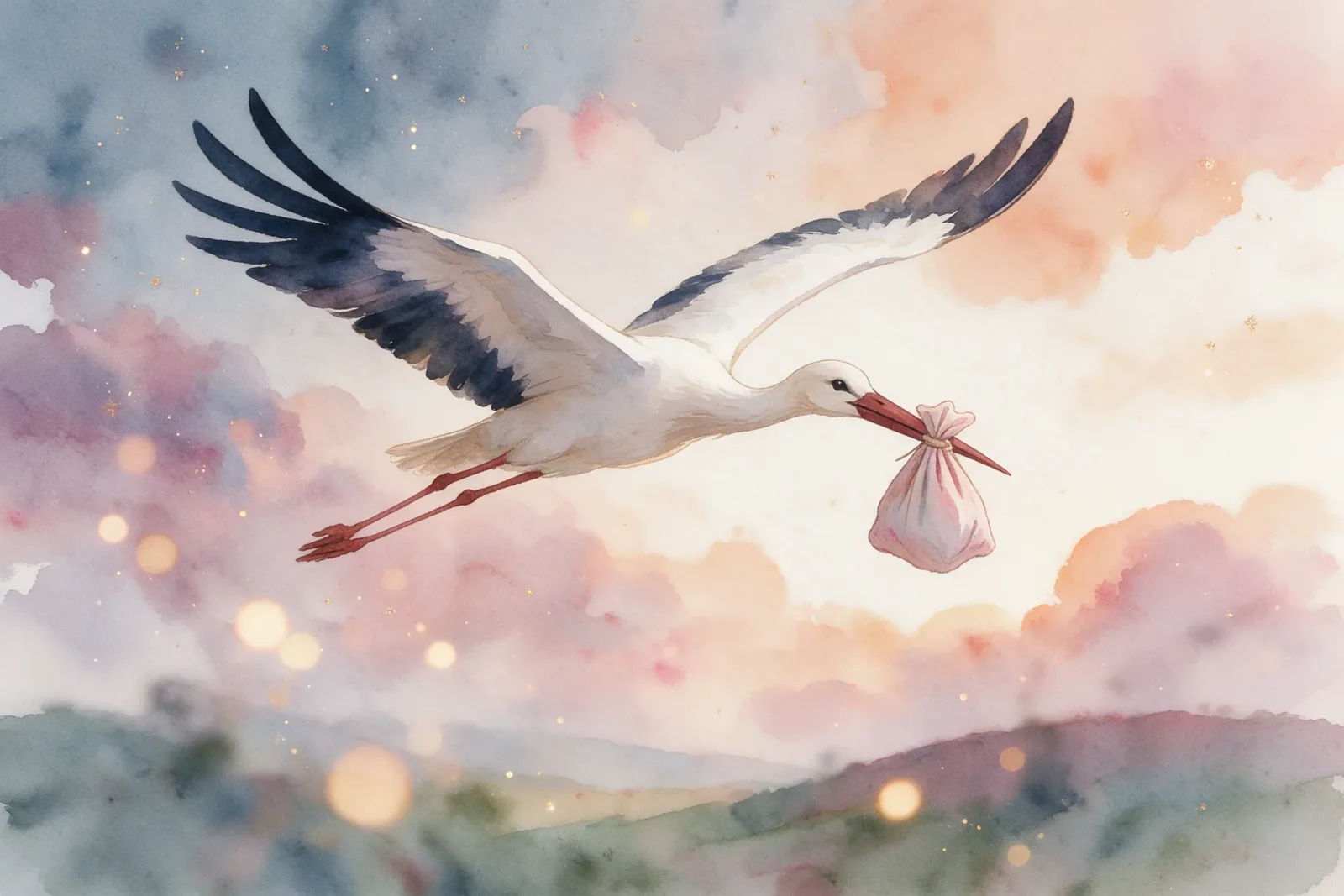
In the Slavic calendar the stork's return was an event. Its first sighting meant winter was over, and the sight of a stork flying meant good news was on its way. A person who saw a stork in flight for the first time that year was said to be quick, light, and lucky.
The bird was also a promise of fertility. A stork flying over a field meant the grain would grow. A stork near a young couple meant children. The connection between the bird and new life ran through everything, not just the nursery.
Feeding the guest of the house
Households put a wagon wheel high on a pole or roof so a stork would have a platform to nest on, a custom that still appears across the region. This was not charity but invitation. To bring a stork to your roof was to bring good fortune into the home.
People spoke of the bird as a guest, and sometimes as an ancestor returned, which was the deepest form of welcome a household could offer. The stork belonged to the family line, not just to the spring.
A guardian still remembered
The old beliefs have faded in the cities, but the feeling has not. A stork on a village roof in Poland, Belarus, or Ukraine still draws a smile, and the nest is still treated with respect.
The protective bird of the household remains what it always was, a reminder that a home is more than walls, and also whatever faithful thing chooses to live above them. The stork keeps the roof, and the story keeps the stork.
Explore the gift