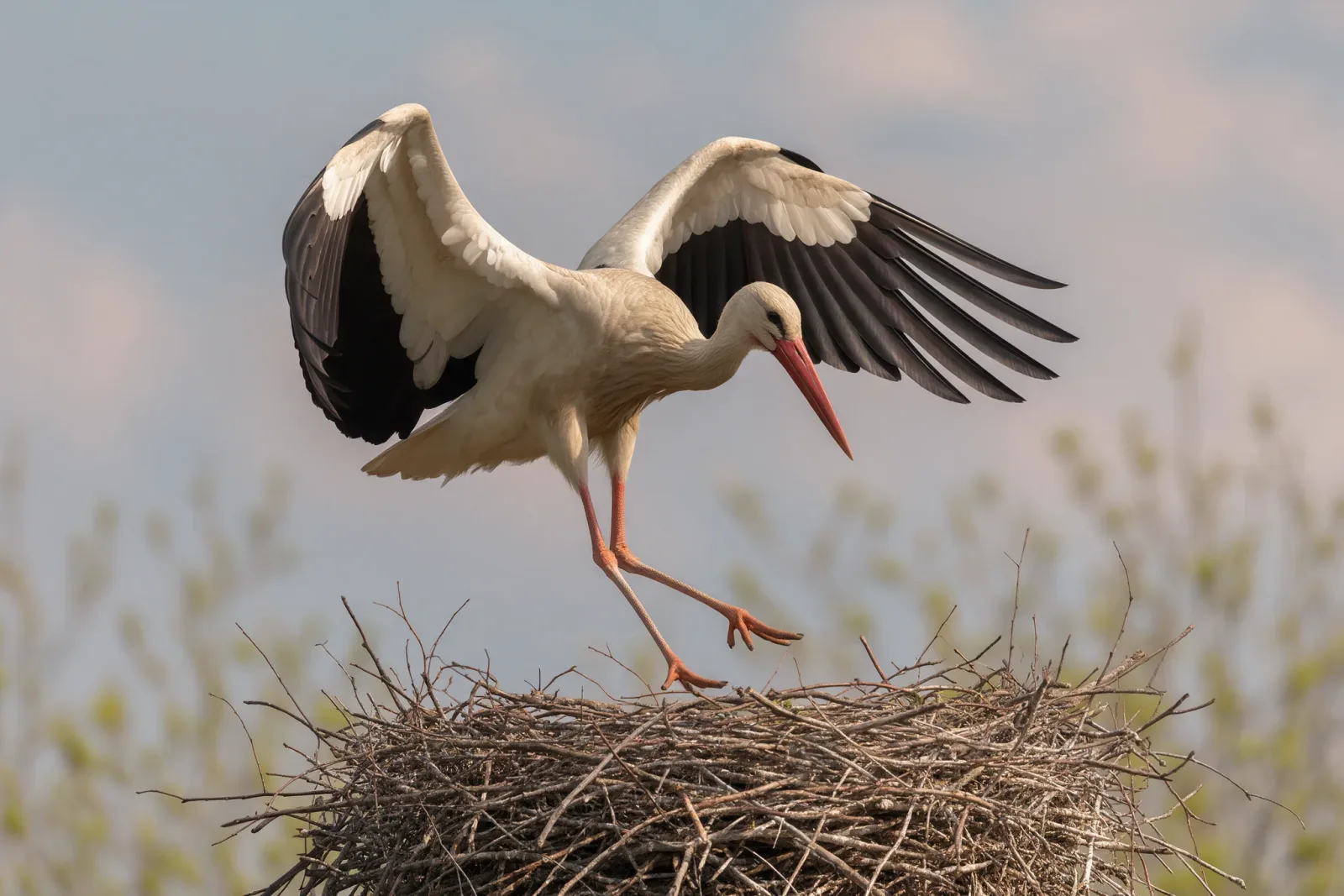
A white stork builds its nest the way a family builds a home, slowly, by hand, and with whatever the ground offers. There is no instruction and no rush. The nest rises stick by stick, and each spring it grows a little, until it becomes one of the largest structures any bird will ever make.
The work begins with a single stick, carried in the bill to a chosen place. A roof, a chimney, a tree, a purpose-built platform, all of them will do. What matters is that the spot is high, open, and near enough to wet fields where food can be found.
Gathering the sticks
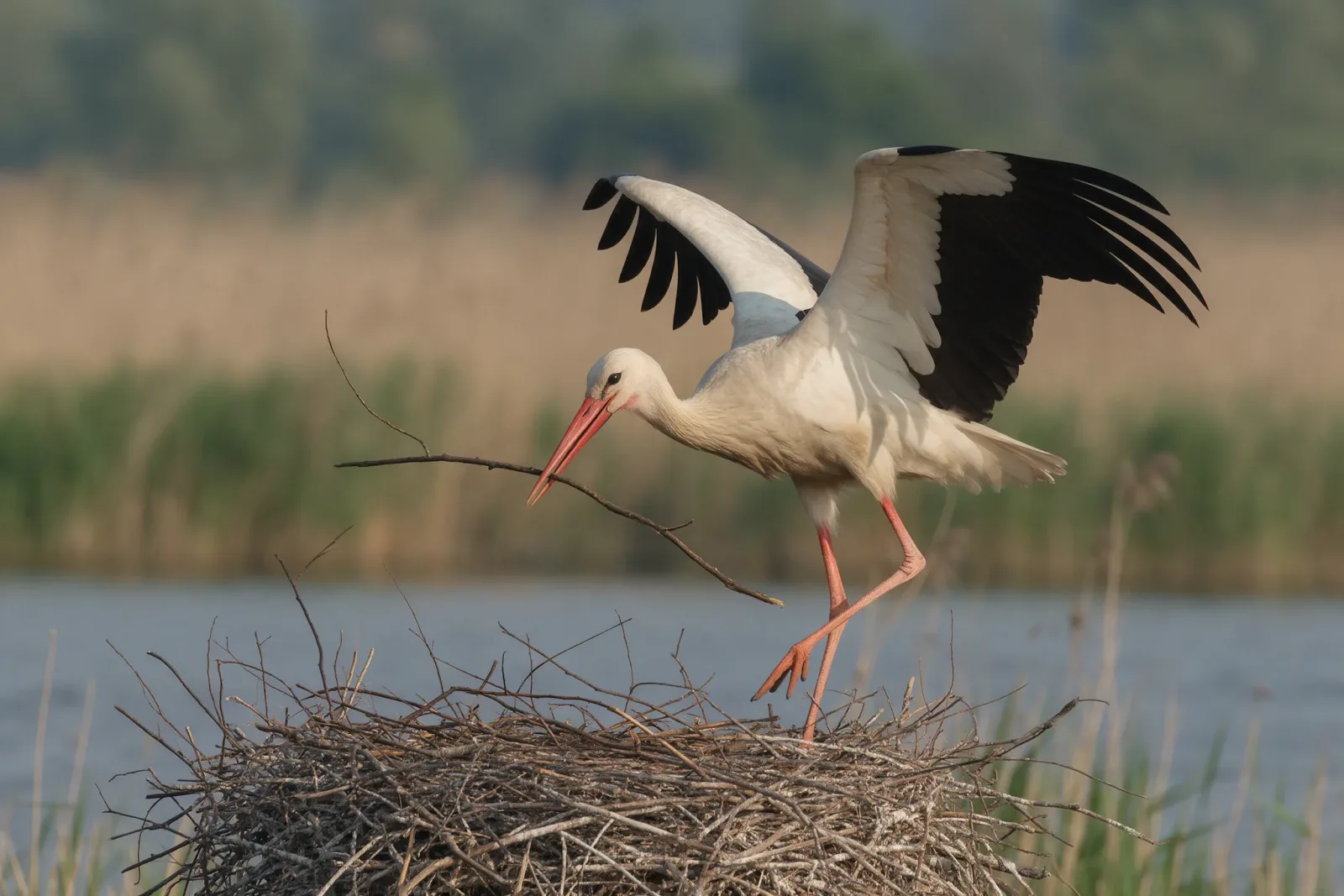
A stork picks up its building material from the ground, snapping dead twigs from trees or lifting fallen branches from the grass. The sticks are carried one at a time, held crosswise in the bill, and flown up to the nest site. It is slow work, and it asks for patience.
The bird lands, settles the stick into the weave, and pushes it down with the bill. Sometimes it pulls the stick out again and repositions it. There is a fussiness to the craft, a sense that the stork knows exactly what it wants.
Weaving and lining
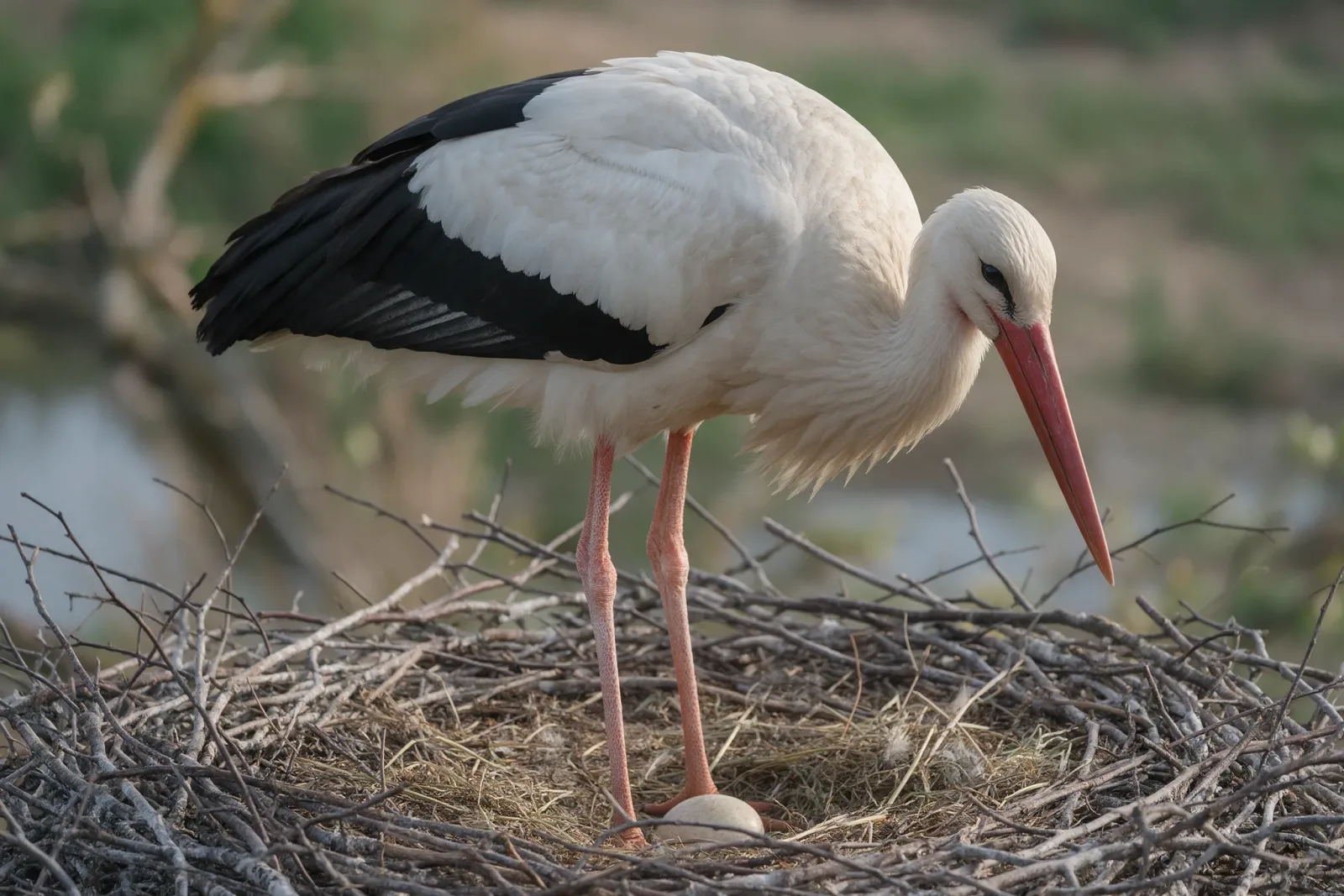
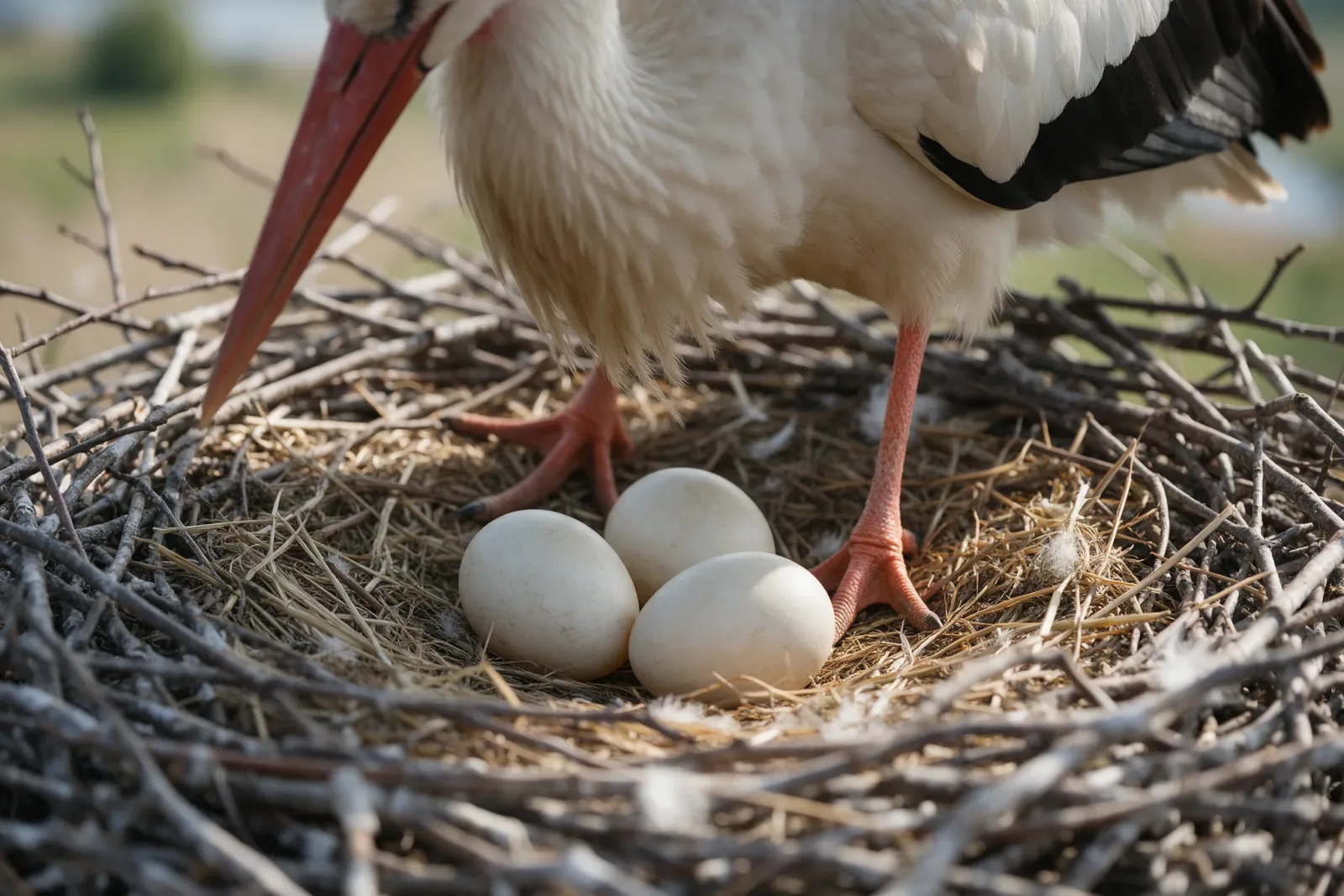
Sticks alone do not make a nest. Between the larger branches the stork works softer material, turf and grass and moss and leaves, packing the gaps so the bowl holds firm. The center is lined with still softer things, anything from dry grass to old rags and paper, to make a cup for the eggs.
The result is a deep, solid platform, wide enough for two large birds and their brood, with a shallow hollow at the top where the eggs will rest. It is strong enough to bear a family through wind and rain.
Building on the past
A stork rarely starts from nothing. Most nests are built on the bones of an older nest, and each season adds a fresh layer. The pair returns in spring and sets about repairing what the winter has loosened, adding sticks until the nest is sound again.
This is why some nests grow enormous. Year after year the layers accumulate, until the nest is taller than a person can reach and wide enough to hold a table. An old stork nest is a monument, but it is also a living thing, renewed every spring.
A shared craft
Both birds build, though the male often gathers while the female settles the sticks into place. It is a quiet collaboration, carried out in silence, since storks have no song. The only sounds are the clatter of bills and the rattle of sticks being worked into the weave.
When the nest is ready, the pair stands on it together, and the season's real work begins. The home is made.
Explore the gift