The white stork on your neighbour's roof is easy to underestimate. Seen from below, standing still on a chimney, it looks tidy and compact, a bird of modest size. Up close the truth is different. A white stork is a large bird by any measure, and its wingspan in particular is far greater than most people expect. Ask how big a white stork is and the numbers only begin to tell the story. The bird is built on length, and every one of its measurements is a surprise when you stop to think about it. A bird of this scale is rare among the ones most of us see every day, and its presence on a rooftop is a quiet reminder of how large a wild animal can be while still sharing our roofs and our streets.
Standing height
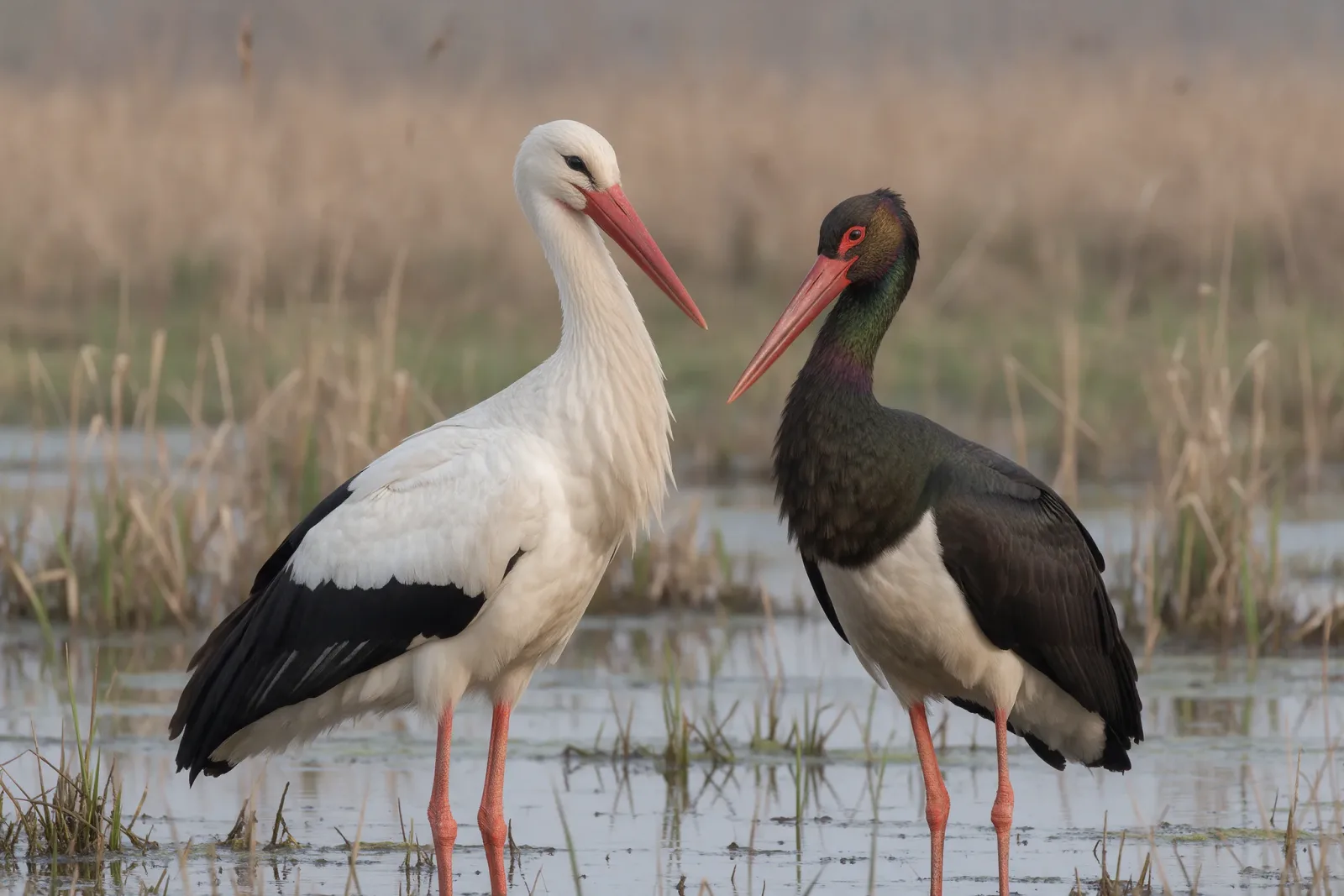
On the ground a white stork stands roughly a metre tall. Its long legs do much of that work, lifting its body well above the grass and shallow water where it feeds. The neck adds more height still, so a stork scanning a meadow looks down on a world that most birds never see from that angle. Its height lets it wade into deeper water than a smaller wader could manage, and it lets it see a long way across open country. A stork standing in a field is one of the tallest birds most of us will ever see at close range, a white figure that rises out of the grass like a mast.
The wingspan
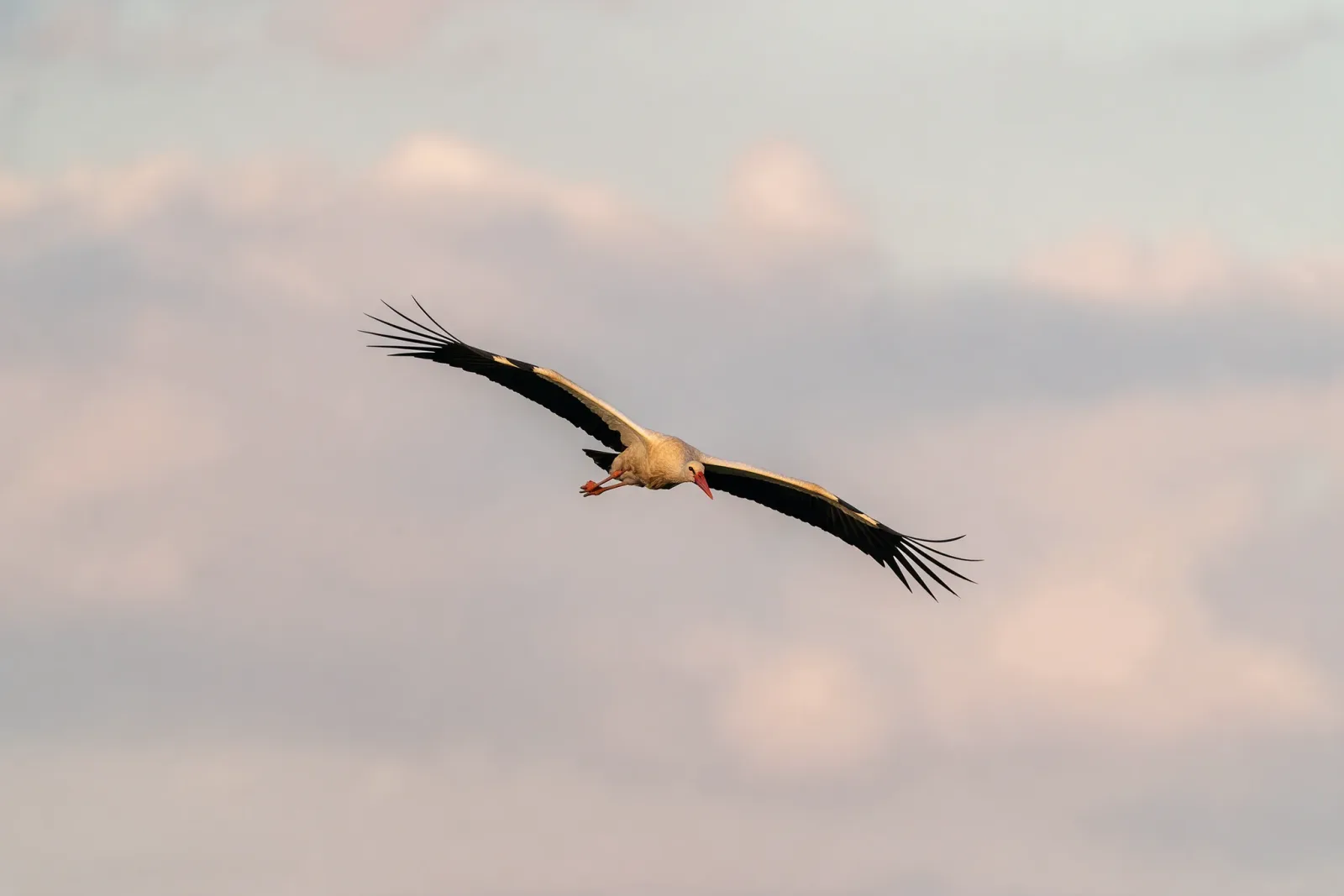
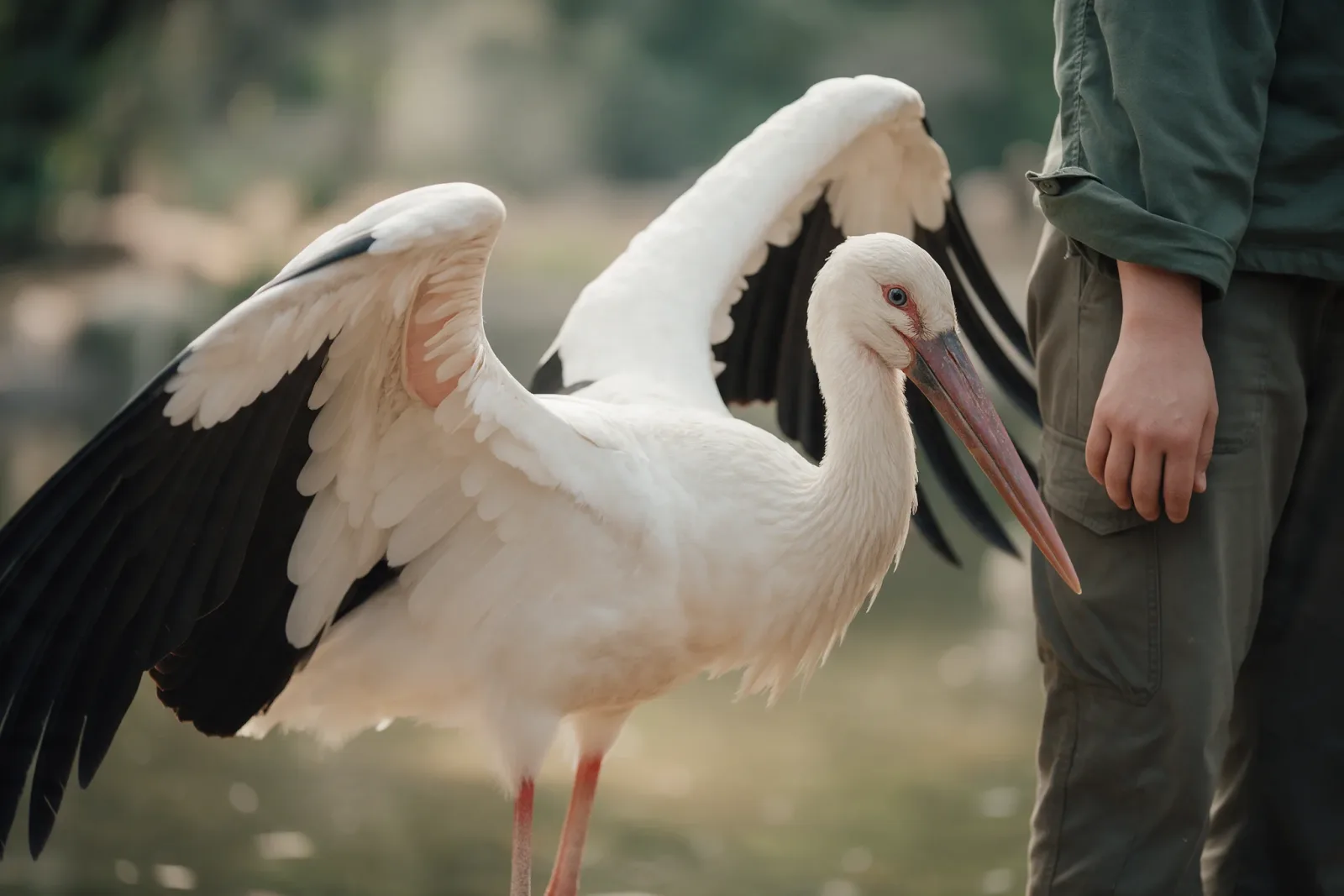
The real surprise is in the wings. A white stork's wings can stretch to around two metres from tip to tip. That is wider than a tall person is high, a span that seems impossible until you see the bird lift off and the wings unfold like a pair of long white panels trimmed in black. The wings are what carry the stork across Europe and into Africa each year, and they are the reason the bird can glide for long minutes without beating the air. A wingspan of that size is not a boast. It is the tool the bird uses to cross a continent.
A bird made of leg and wing
Storks belong to a family of birds built on length. Long legs, a long neck, a long straight bill, and long broad wings. Every part of the bird is drawn out, which makes the whole creature larger than the sum of its parts. A stork does not weigh much for its size, which is part of the secret. It is large in outline but light in substance, a combination that lets a bird of such grand dimensions climb thermals with ease and stay aloft for hours without tiring.
Judging size in the field
If you want to judge a stork's size for yourself, watch it beside something familiar. A stork beside a person, a stork on a rooftop beside a chimney, a stork landing on a nest. The moment it opens its wings, the scale becomes clear. That bird you saw as a small white shape against the sky is, in the air, a creature with a span wider than an open doorway, and it uses every centimetre of that span to ride the wind. The contrast between the small distant shape and the huge near one is one of the great surprises of birdwatching.
Why size matters
That great size is not for show. Every centimetre of a stork's height and span has a job. The long legs let it wade, the long bill lets it reach, the long wings let it soar, and the tall frame lets it see. A stork is large because its whole way of living asks it to be, a bird sized to the open country it crosses and the shallow water it feeds in. Its bigness is the measure of the distances it must travel and the waters it must stand in.
Next time a stork passes low overhead, do not just glance. Watch the wings stretch out and hold. What you are seeing is one of Europe's largest soaring birds, and it is doing exactly what it was built to do.
Explore the gift