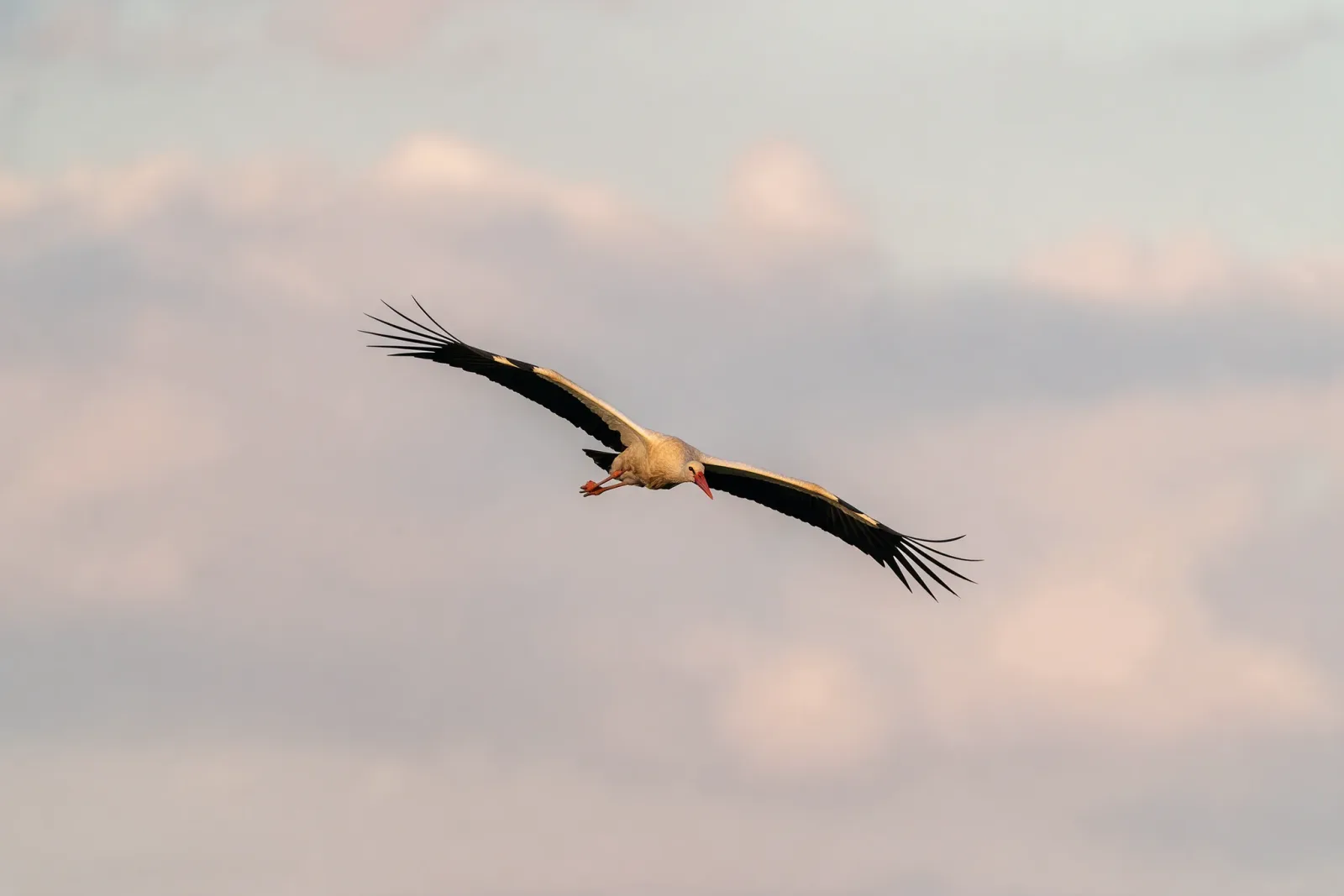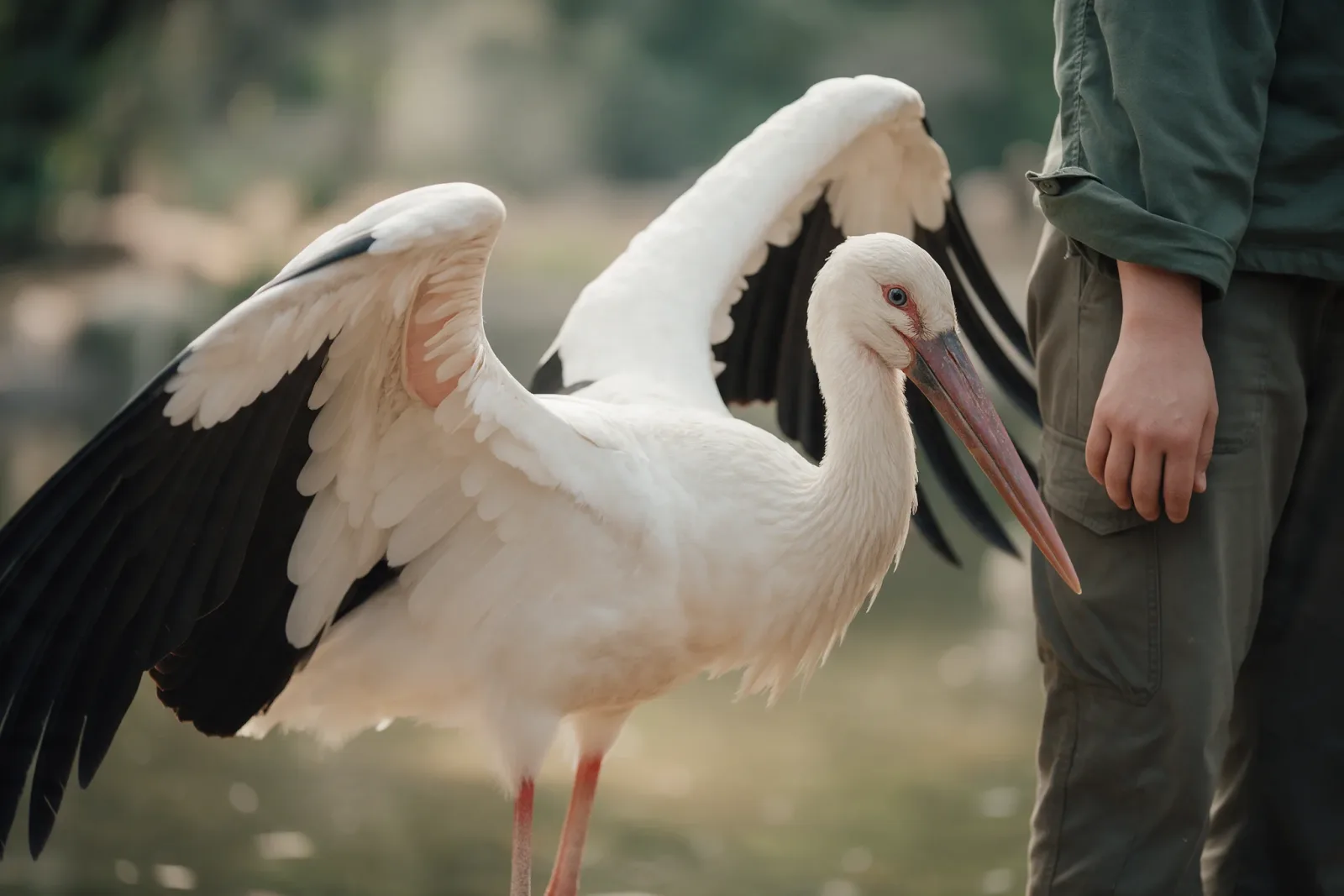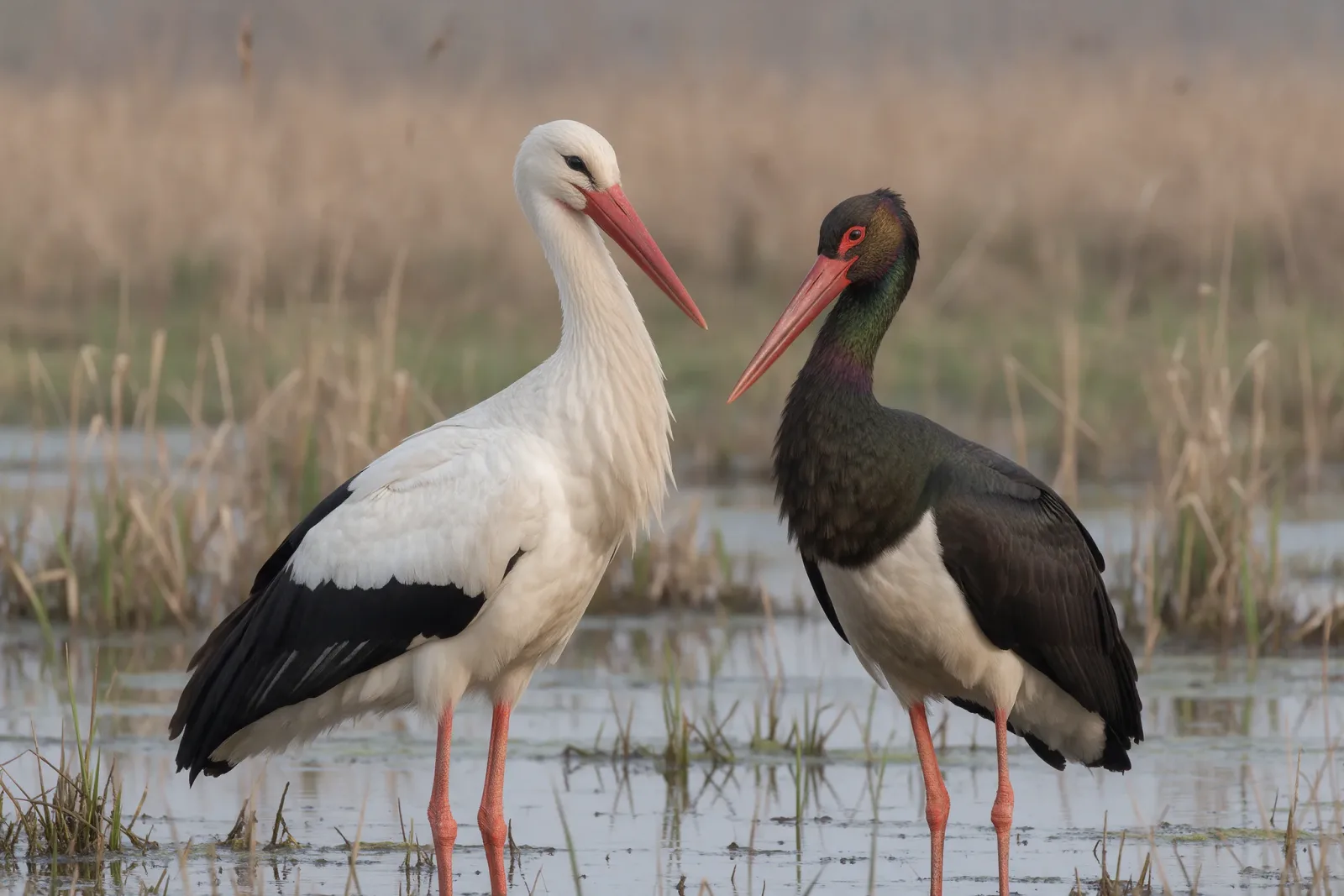
Most of us carry a single picture of a stork: a large white bird with long red legs, a long red bill, and black feathers at the rear edge of its wings. That bird is the white stork, Ciconia ciconia, the one that nests on rooftops and chimney pots across much of Europe, the one of folklore that is said to bring babies and good luck. Yet the types of storks in the world reach far beyond this single familiar figure. The white stork belongs to a whole family, the Ciconiidae, and its relatives are stranger and more varied than most people ever imagine. Learning them is a way of discovering how wide a single family of birds can be, and how many ways there are to be a stork.
The family Ciconiidae
Storks are long-legged, long-necked wading birds. Every member of the family shares a body built for shallow water and open ground: tall legs, a straight heavy bill, and broad wings made for soaring rather than flapping. The Ciconiidae sit in the company of cranes, herons, and ibises, birds that are easily confused with one another, but storks hold their own quiet corner of the avian order. The family is found across the warm parts of the world, from the marshes of Europe to the wetlands of Africa and the flooded fields of southern Asia, and each member carries the same patient way of moving through water and grass.
One detail sets storks apart from most birds. They do not sing. Many storks lack the voice organ that produces a song, so instead of a melody they speak with the clatter of their bills, a dry rapid rattle that can carry across a whole meadow. If you hear a loud cracking sound from a nest in spring, that is a stork talking.
The white stork
The white stork is the family's best-known member and the one most likely to appear on a roof near you. It stands close to a metre tall on those red legs, and its wings can stretch nearly two metres from tip to tip. Its body is mostly white, with black flight feathers that show clearly once the bird opens its wings. In summer it ranges across Europe and parts of western Asia, nesting close to people and their fields, and each autumn it turns south for the warmer ground of sub-Saharan Africa. It is this bird, so at home among us, that gives the whole family its gentle name and its place in our folklore.
The black stork
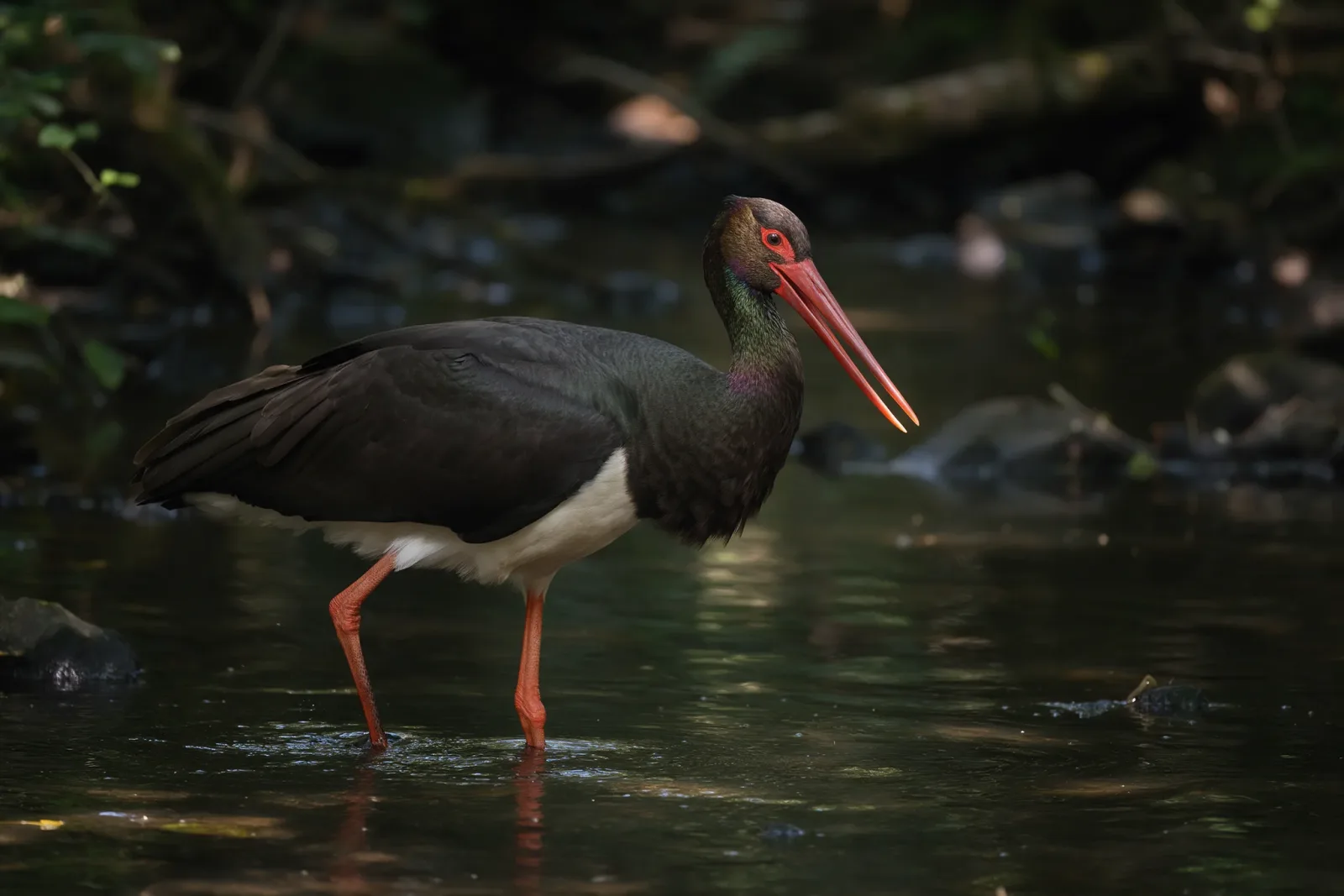
The black stork is a close relative of the white stork, yet it could hardly live a more different life. It is a touch smaller and slighter, with dark plumage that flashes green and purple in strong light, set off by a red bill and red legs. Where the white stork courts rooftops and village squares, the black stork keeps to forested wetlands, quiet rivers, and wooded valleys. It is shy and secretive, quick to slip away at the first sign of a person, and many birdwatchers spend years hoping for a single clear sight of one.
The wider family
Beyond the two European species the family spreads across the globe. The marabou stork of Africa is a huge, bald-headed scavenger that looks nothing like its graceful cousins, yet it is a true stork all the same. The woolly-necked stork of southern Asia wears a soft pale collar of feathers around its neck. The openbill storks of Asia and Africa carry a gap between the two halves of their bill, a strange tool that helps them pry snails from their shells. And the shoebill of the African swamps, whose exact place in the family is still debated, is often counted among the storks' oddest relatives. Each of these birds has found its own way to live the stork life, in its own corner of the warm world.
Every one of these birds is built on the same deep plan: a long bill for grabbing, long legs for wading, and a patient, deliberate way of moving through the world. The white stork may be the face of the family, but the family itself is older and far stranger than any single bird. The next time you see a white stork on a nest, remember it belongs to a clan spread across the whole warm world, each member quietly doing the same slow, careful work of a stork.
Explore the gift