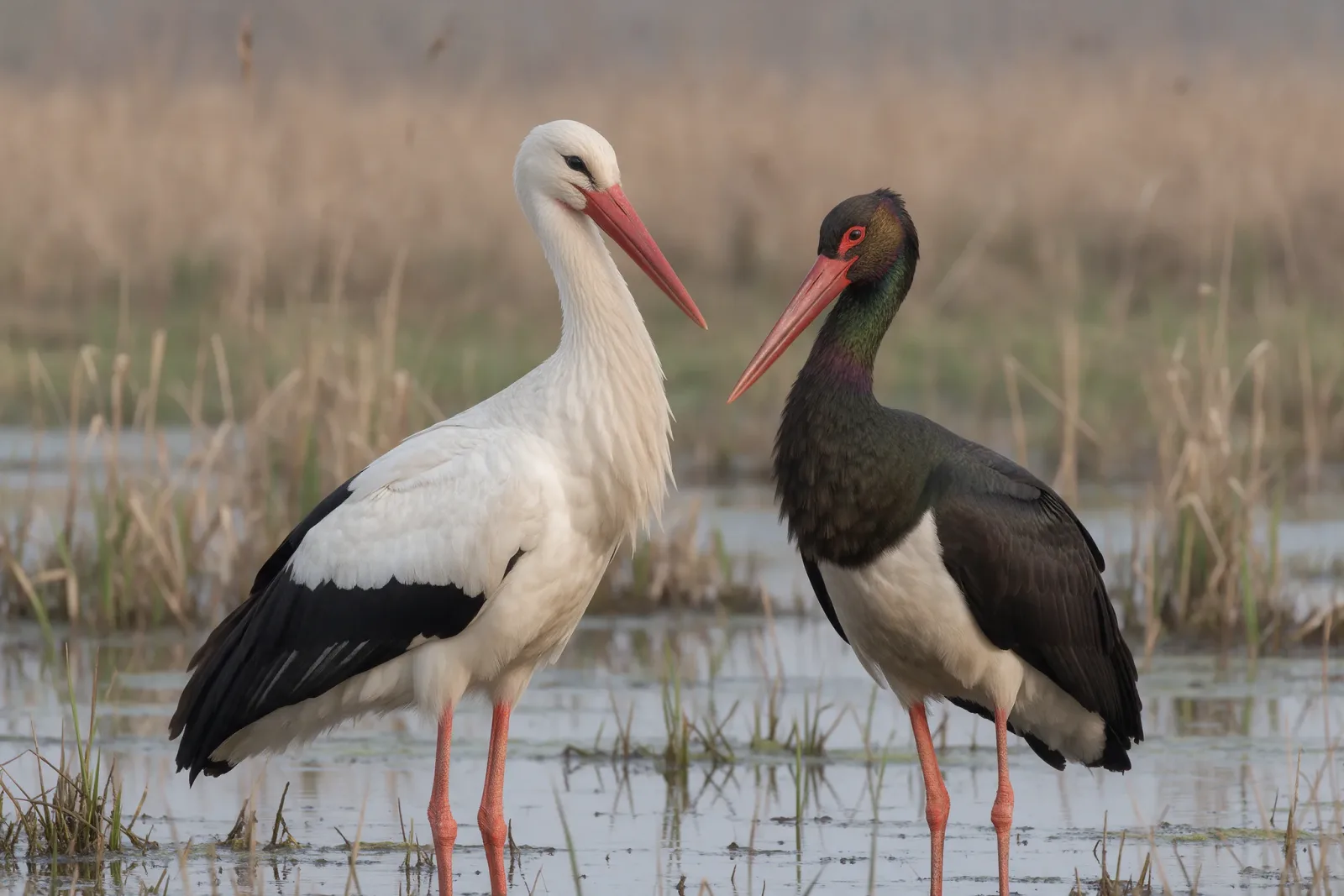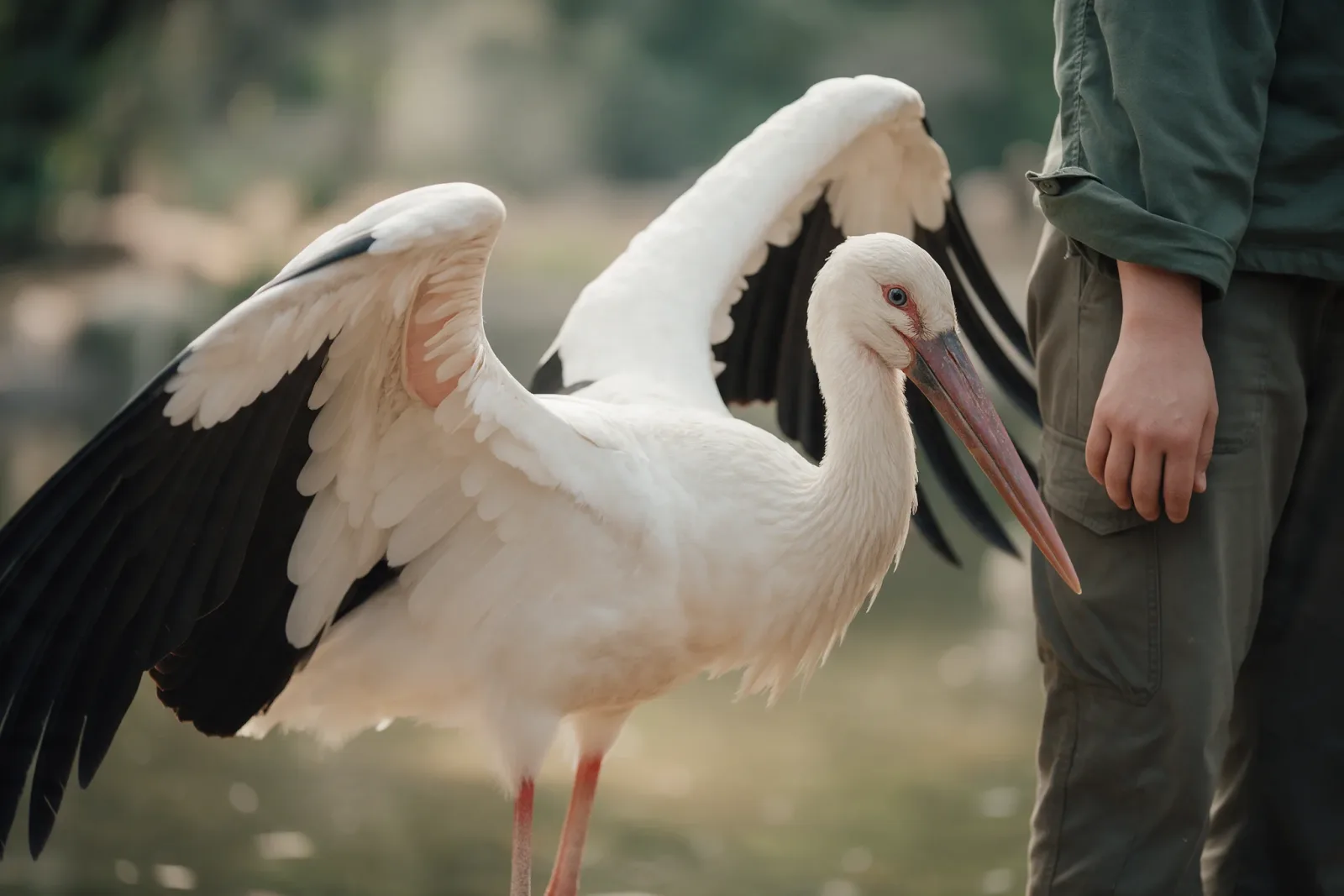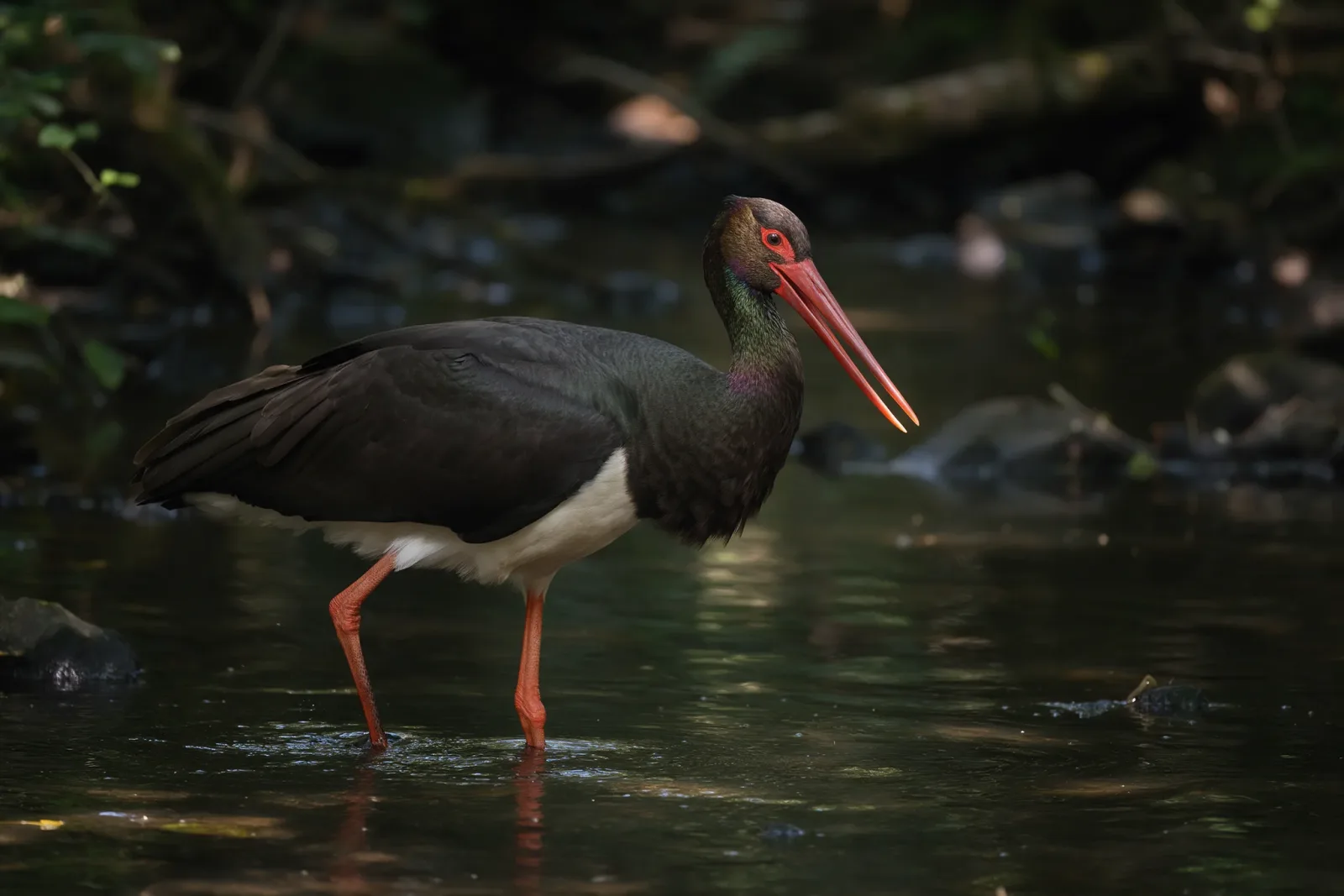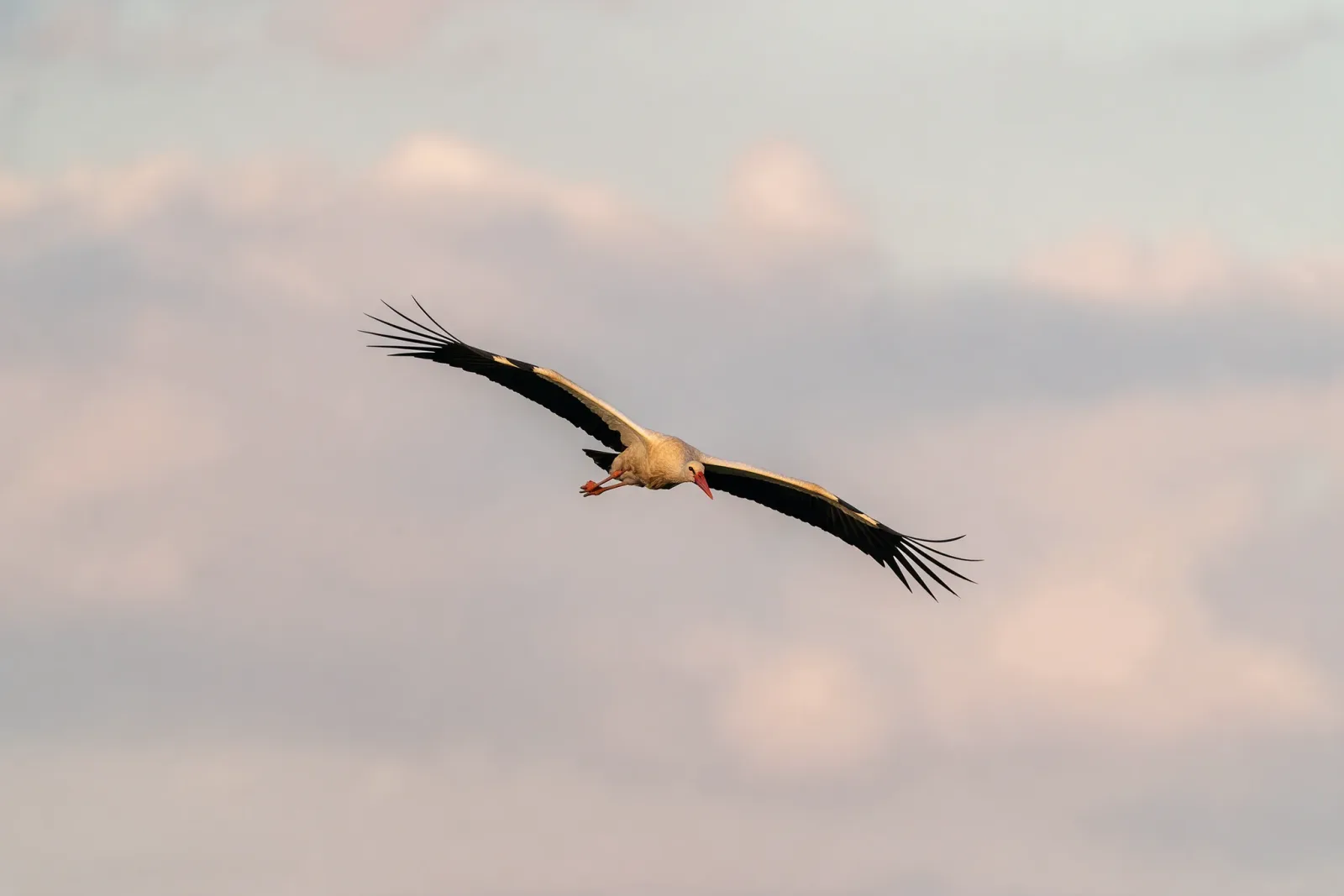
Ask how a stork flies and the honest answer begins with patience. A stork is not built for a quick dash. It is built to cover enormous distances on air it never has to beat with its wings. The trick is the thermal, a rising column of warm air that spirals up from ground the sun has heated. A stork finds one, holds its wings out straight, and lets the column carry it upward without a single flap. From below it looks as though the bird is climbing a staircase only it can see. Understanding this one idea unlocks the whole mystery of stork flight, and turns every passing bird into a small lesson in the physics of the sky. It explains why the bird seems to move without effort, and why a stork will wait on the ground for the day to warm before it trusts the air. Flight, for a stork, is a kind of conversation with the weather, and the bird listens carefully before it answers.
Built for soaring
Everything about a stork's shape points toward slow, efficient flight. Its wings are long and broad, far larger in relation to its body than the wings of a sparrow or a finch. Those wide wings give the bird lift, so it can hang on the air rather than fight it. A stork's body is also light for its size, helped by hollow bones and a streamlined frame, which means each held glide costs very little energy. Flapping is a last resort, a way to leave the ground or to settle onto it, not the engine of the journey. The stork has traded speed for the ability to stay aloft for hours at almost no cost.
Reading the warm air
Thermals do not rise everywhere. They form over fields, roads, and bare ground that the sun heats quickly, and they are strongest in the middle of a warm day. A migrating stork learns to find them, watching for the shimmer of heated air or the slow wheeling of other soaring birds nearby. Once it enters a thermal, it circles upward in a tight spiral, wings locked, gaining height that it will later spend as a long, easy glide toward the next column of warm air. The whole art of a stork's travel is the art of finding these invisible stairways in the sky, and the bird reads them the way a sailor reads a current.
The glide south
This pattern is how a stork crosses a continent. It climbs on a thermal, glides forward, and climbs again, a repeating rhythm that carries it many hundreds of kilometres in a single day. Over flat open country the route works beautifully. Over wide water it does not, because the sea gives no thermals, which is why storks funnel through narrow straits rather than flying straight across open ocean. The map of a migration is in many ways a map of where the warm air rises.
Why they wait for the right day
Because thermals need sun, storks are careful about when they travel. They leave in the warm hours of the day, when the air is rising, and they rest when the light fades and the columns of warm air fall still. A stork grounded on a cool, cloudy morning is not lazy. It is waiting for the sky to wake up, because flying without thermals means flapping, and flapping is the one thing a stork is built to avoid. A wise stork lets the day warm before it trusts the air to carry it.
The look of effortlessness
There is a reason a passing stork looks so calm. It is not working hard the way a flapping bird must. Its wingbeats are slow and rare, its wings held wide, and most of the time it is simply resting on the air, letting the rising warmth do the work. That look of ease is not an accident and it is not luck. It is the whole design of the bird made visible, a shape that was built, feather and bone, to ride the wind rather than fight it.
So when a stork passes overhead, barely moving its wings, you are watching a bird at its best work. It is not hurrying. It is letting the earth's own warmth lift it toward home.
Explore the gift