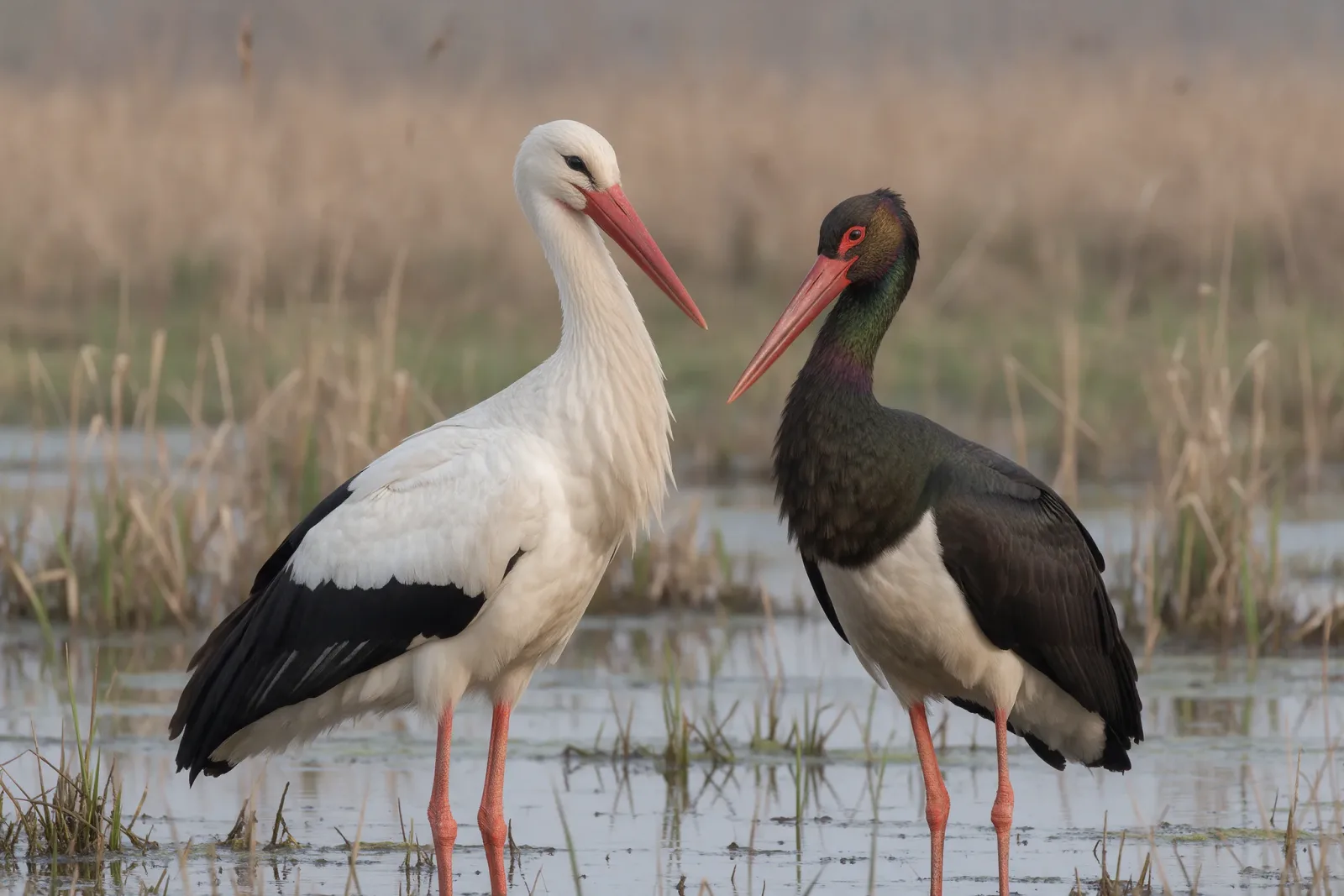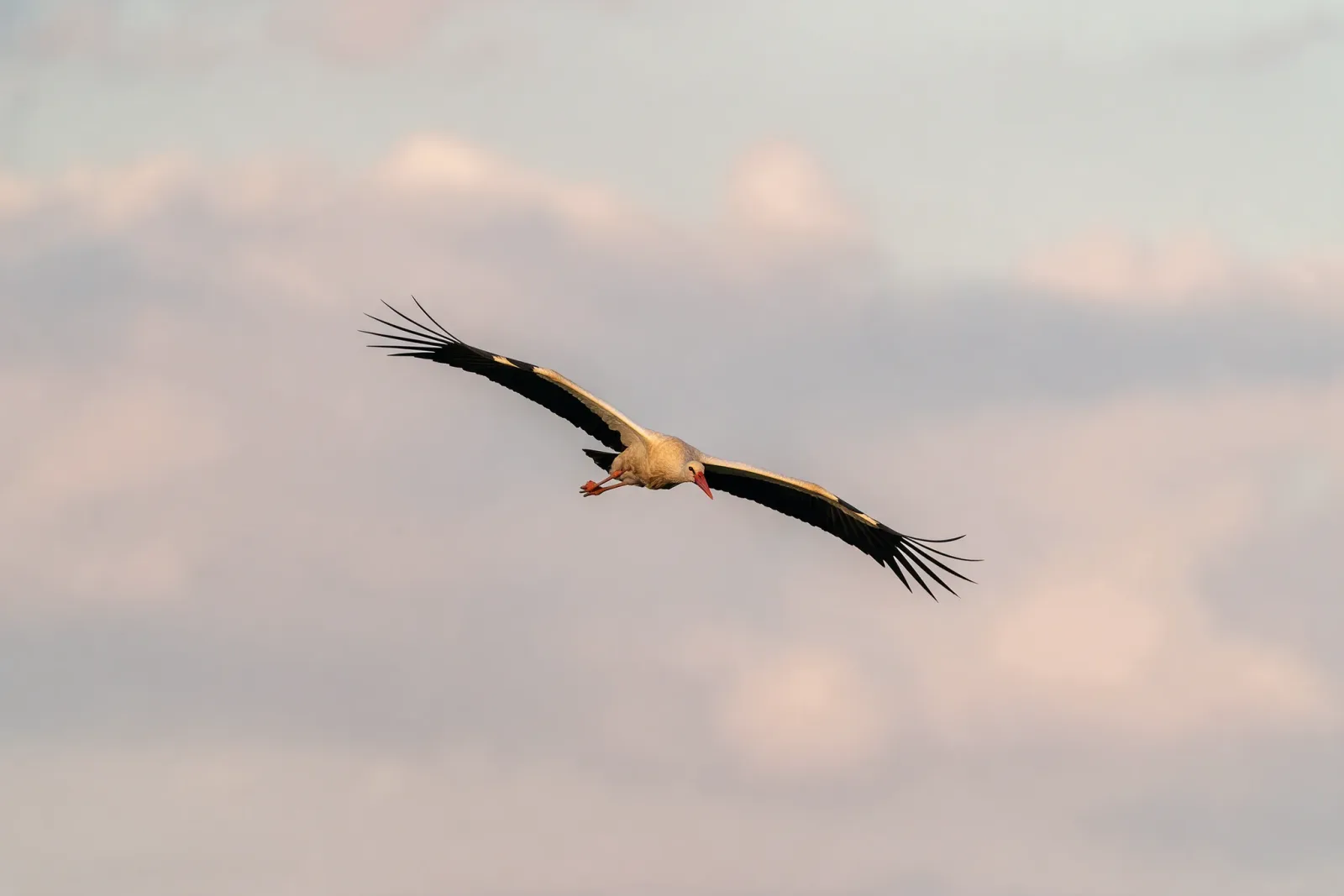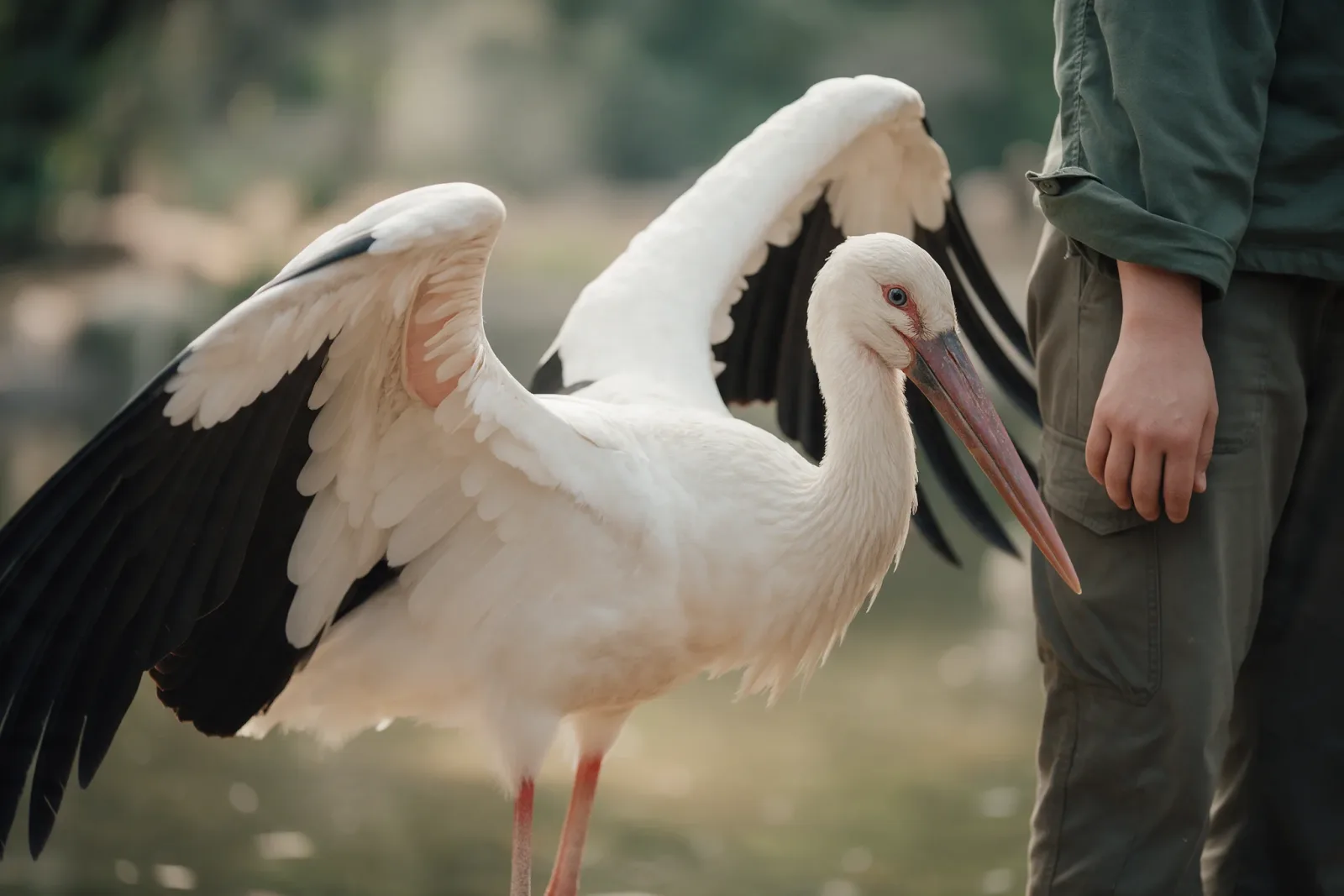
The white stork is the stork everyone knows, the bird of rooftops and chimney pots and old legend. The black stork is its hidden cousin, and it is almost the same bird turned toward the wild. Where the white stork lives openly among people, the black stork keeps to deep forest and quiet water, and it would much rather vanish than be seen. To meet one is a rare and private thing, a glimpse of a bird that has spent its whole life learning to stay out of sight. It is a bird of the deep woods and the shaded water, and everything about it, its colours, its habits, its very silence, has been shaped by the need to remain unseen. To understand the black stork is to understand how a wild animal keeps its distance from us.
A darker mirror
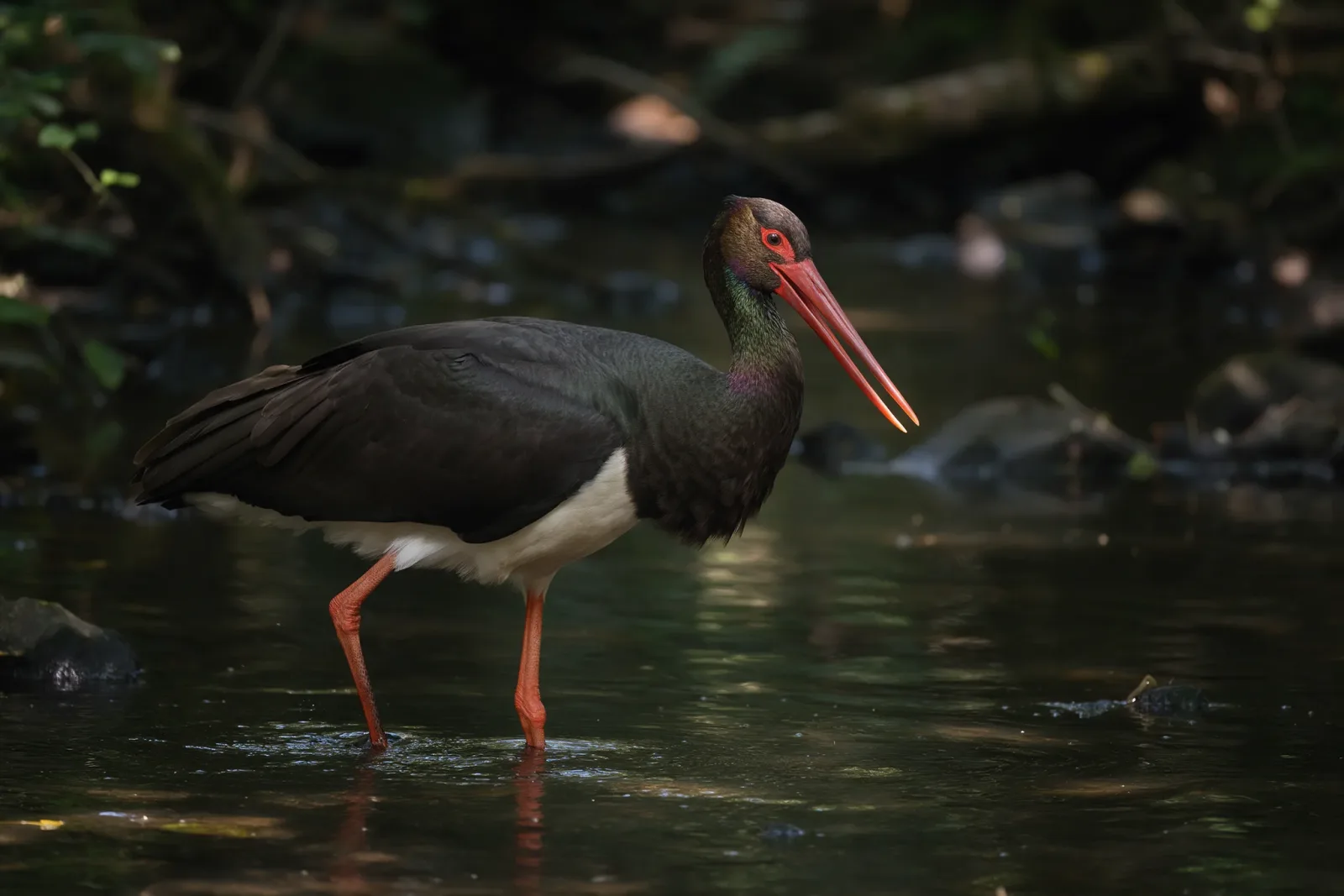
The black stork is a close relative of the white stork, and the two share the same long legs, long neck, and straight bill. The colours set them apart. The black stork's head, neck, and body are dark, though the plumage is not truly black. In strong light it shines with green and purple, an iridescence the eye catches only for a moment. The belly is white, the bill and legs are red, and the whole bird is a little slimmer and a little more wary than its white cousin. It is the same design, painted for shadow instead of sun.
A life in the forest
While the white stork nests on roofs and telegraph poles, the black stork nests in old trees, usually deep in woodland near a stream or a swamp. It needs a place where it will not be disturbed, and it is quick to abandon a nest if people come too close. This secrecy has kept it far less studied and far less seen. You might live near a black stork for years and never know it was there, tending its nest in the high branches and slipping away before dawn.
Solitary and silent
The black stork is a quieter bird than the white stork, in more ways than one. It does not gather in the same crowded nesting colonies, and it often feeds alone, standing motionless at the edge of a shaded pool. It shares the family's habit of bill-clattering rather than singing, but it is far more sparing with the sound. Silence is a way of staying hidden, and staying hidden is how the black stork survives in a world where being seen can cost a wild bird its life.
A slow and careful feeder
A black stork feeds with a patience that borders on stillness. It wades into a shaded stream and waits, watching the water, until a fish or a frog comes within reach of its red bill. Then it strikes, quick and sure, and returns to waiting. It does not chase and it does not rush. It lets the water settle and the fish forget, and it takes what comes. That kind of hunting takes time, and time is something a secretive bird has in plenty. It is a life measured in stillness rather than speed, and it is this patience, as much as its secrecy, that keeps the black stork out of sight.
The value of distance
The black stork is not a bird that rewards approach. It rewards patience and distance, the long view through the edge of a wood, the quiet wait at the end of the day. People who have seen one well often describe the moment as a gift, and there is truth in that. The black stork gives nothing away easily, and that is part of what makes a sighting worth so much.
Your best chance of seeing a black stork is at a distance, at the edge of a forested river, in the early light or late in the day. It may stand in the shallows for a long time, then rise on broad wings and disappear over the trees. The black stork asks nothing of us except distance and quiet. It is the white stork's reminder that some members of the family belong to the forest and the shadow, not to the village square, and that the wild parts of the world still keep their own company.
Explore the gift