A stork crossing the sky can look unhurried, even slow, and in a way it is. The stork's gift is not raw speed but endurance, the ability to keep moving for hour after hour on very little energy. Still, the question of how fast a stork can fly has a real answer, and it changes depending on whether the bird is migrating, chasing, or simply travelling from one field to the next. Speed for a stork is not one number. It is a thing the bird adjusts to the moment. The question is not really one question but several, and each answer says something different about the bird. Ask how fast it glides, and you learn about its patience. Ask how fast it can dart, and you learn about its hidden quickness. Together the answers add up to a single truth: a stork is exactly as fast as it needs to be, and no faster.
The cruising speed
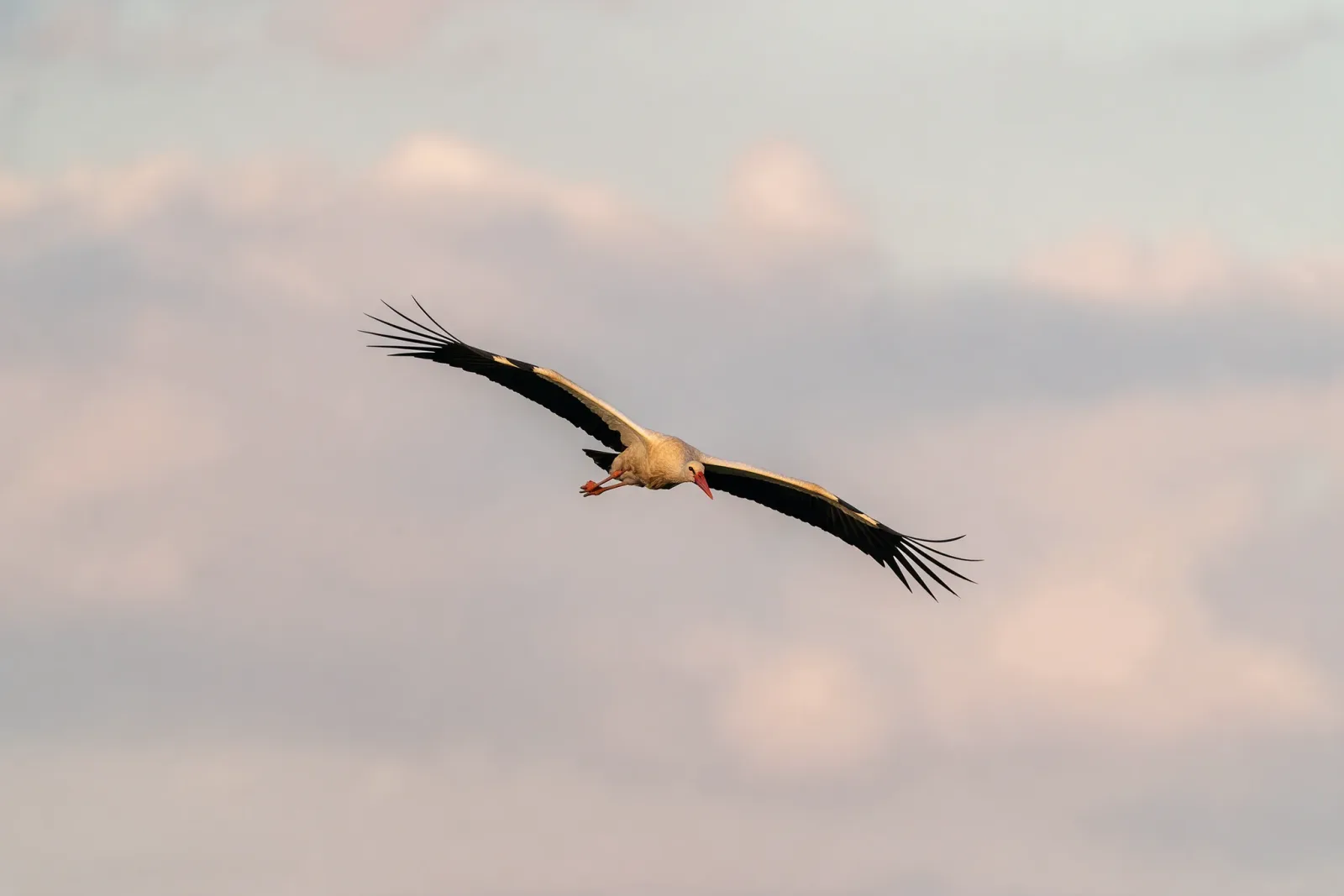
When a stork settles into a migration, gliding from one thermal to the next, it moves at a steady, moderate pace. It is not built for sprinting. The whole design of the bird is aimed at going a long way without tiring, so a migrating stork flies at a comfortable cruising speed, covering distance slowly and surely rather than in a rush. It is the pace of a bird that knows the journey is long, and that the way to cross a continent is to keep a steady, unhurried beat.
The help of a tailwind
A stork's speed over the ground depends heavily on the wind. With a tailwind, a flock can travel much faster over the ground, and storks are careful to wait for the right winds before they set off. A headwind slows them down and costs energy, so a wise stork does not fight the weather. Speed, for a migrating stork, is as much about reading the air as about flapping the wings. A bird that chooses the right day can travel as far on a tailwind as it would in twice the time against one.
The burst of a chase
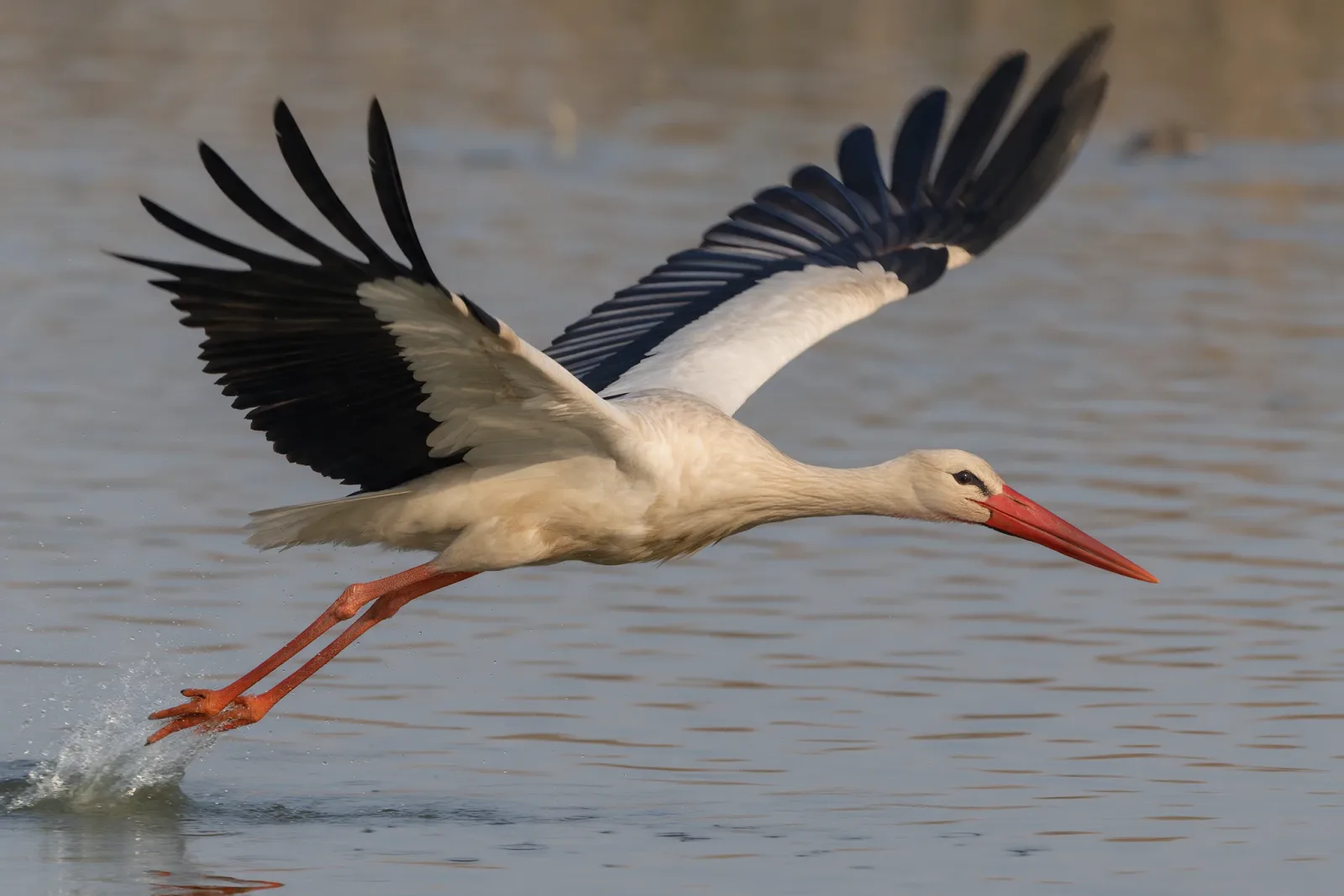
There are moments when a stork moves quickly. A stork chasing a frog across the shallows, or driving another bird away from a nest, can beat its wings hard and surge forward in a sudden burst. These short flights are not what the bird is built for, but a stork can manage them when it must, and the sudden quickness is surprising in a bird that spends most of its time gliding. The burst is a reserve the bird keeps for the moments that matter, a sprint borrowed from a body made for the long haul.
Flapping versus soaring
The difference is between two kinds of flight. Soaring is slow, free, and almost effortless. Flapping is fast and expensive. A stork spends most of its life in the first, and dips into the second only briefly. That is why the bird can look so calm aloft. It has chosen the slow way, and the slow way turns out to be the one that carries it across a continent. The fastest bird is not the one that flaps hardest but the one that never needs to.
The lesson of the long game
A stork is a lesson in the difference between speed and distance. A swifter bird might cross a field faster, but a stork crosses a continent, and it does so by refusing to hurry. Its pace is slow enough to sustain and steady enough to win, a reminder that the longest journeys are not won by those who rush. The stork's speed is a quiet argument for patience, and its success is written in every mile it covers without haste. Speed is for the short journey, and the stork has no short journey to make. Its patience is a kind of speed all its own, and it wins in the end.
So how fast can a stork fly? Fast enough when it needs to, but that is not the point. The stork is built for the long, steady middle pace, the speed that gets it south before winter and home again by spring, one thermal at a time.
Explore the gift