Reading a stork's behaviour is a language you learn by watching, and the first words are simple ones. A white stork is not a dramatic bird, but everything it does, its stance, its walk, its sudden clatter, carries a clear meaning if you know what to look for. Once you can read the bird, a quiet field becomes a conversation.
The standing stork
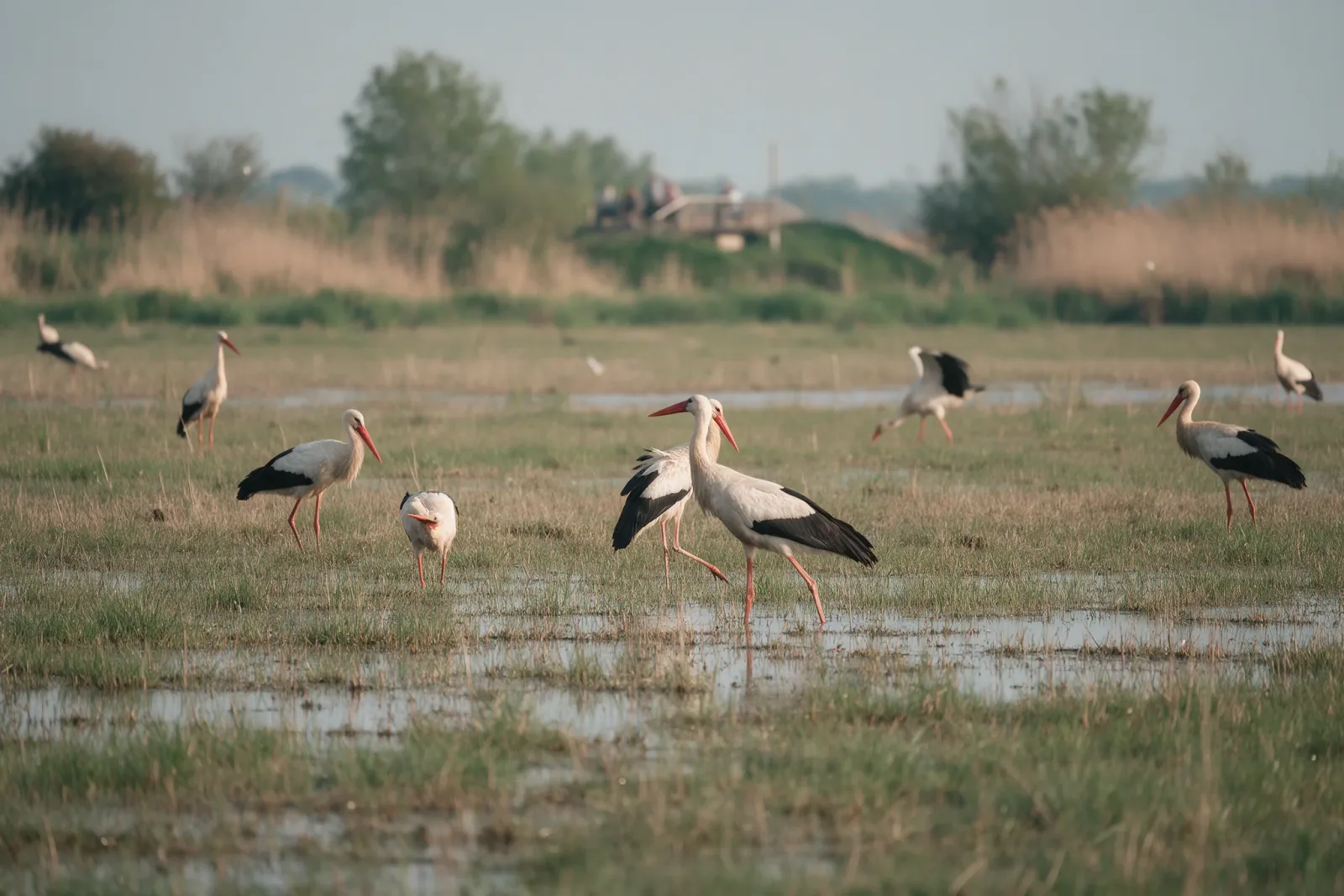
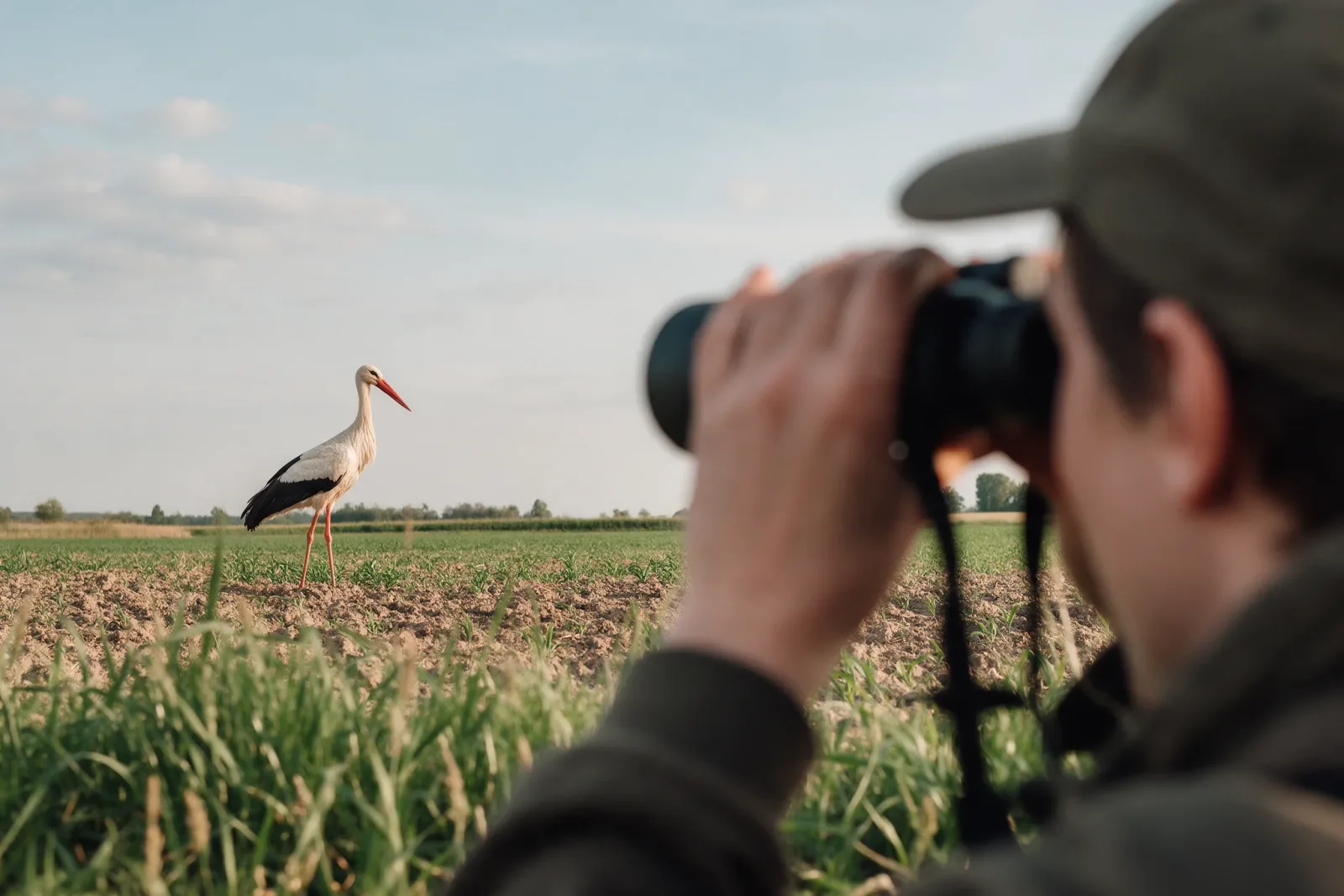
A stork that stands perfectly still on one leg is usually resting, and it is telling you that it feels safe. When it lifts its head and looks around, it is simply checking the field. But when it freezes with its head still and its body tense, it has seen something, perhaps you, perhaps a movement in the grass. The difference between a resting bird and an alert bird is the difference between a stork at ease and a stork about to move.
The feeding walk
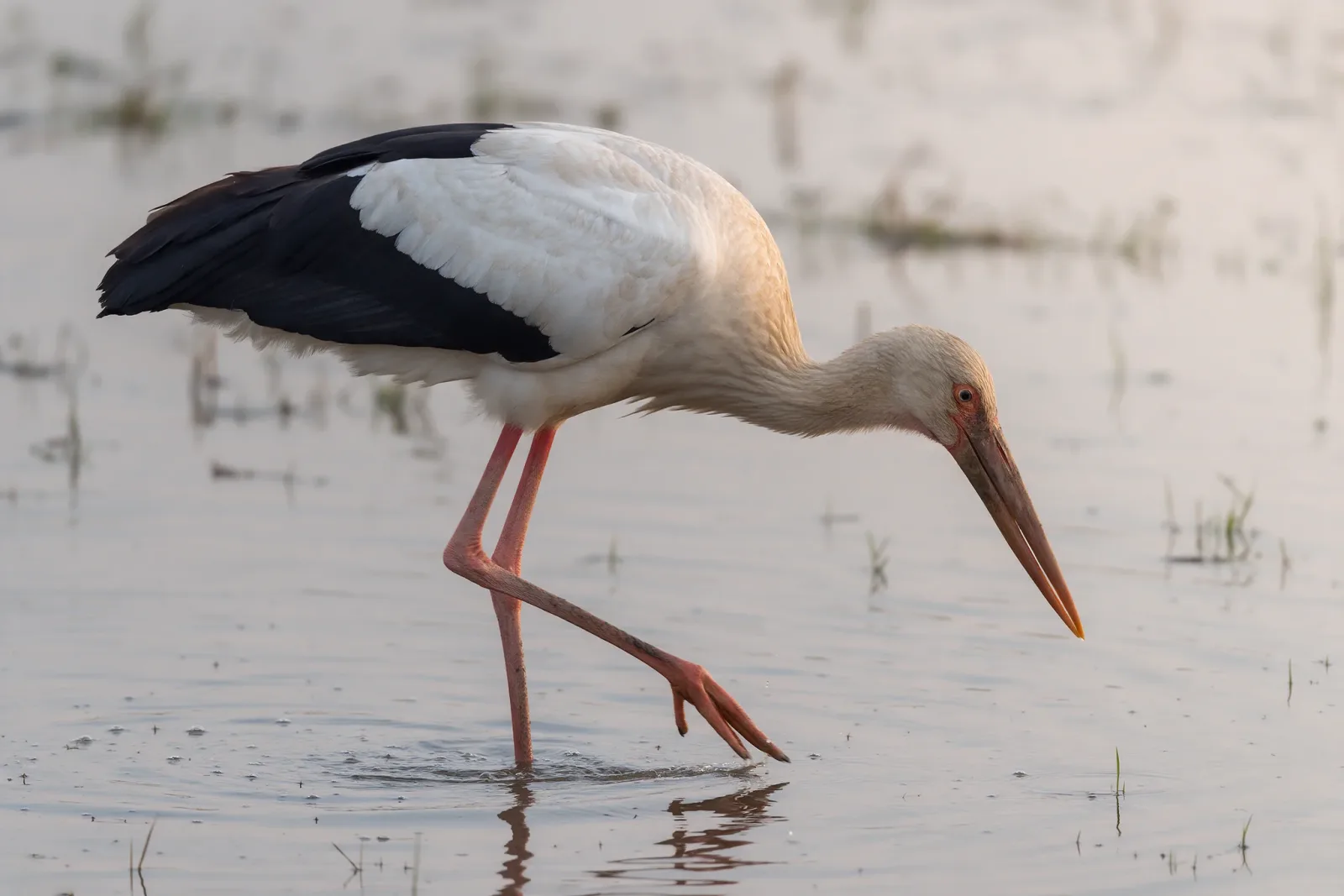
The hunting stork walks with its head down and its gaze fixed on the ground just ahead of its feet. Each step is slow, and between steps it stops and listens with its bill. When the neck draws back into an S and the body leans forward, the bird is about to strike. The stab is quick and hard to see, but the satisfied shake of the head after it, as the bird settles whatever it has caught, is easy to follow.
The clatter
Storks do not sing. Instead they throw their heads back and clatter their bills together, a sound like two dry sticks knocked rapidly against each other. It happens most often at the nest, when one bird returns and the pair greet each other, and it can be heard across a whole colony. The clatter is a greeting, a warning, and a declaration all at once. When you hear it, look toward the nest, because something important is happening there.
Reading the wings
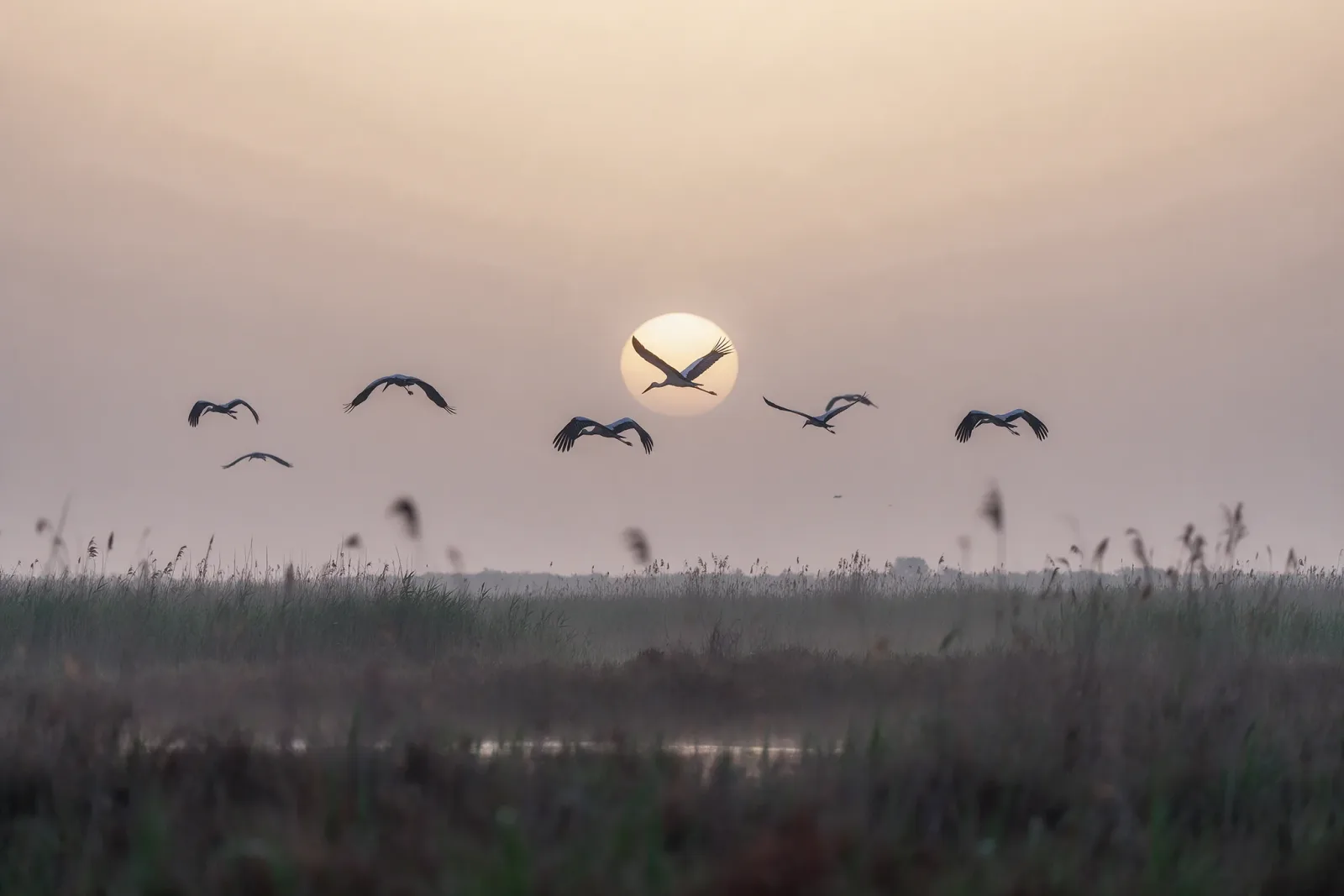
Before a stork flies, it gives warning. The neck shortens, the wings loosen, and often the bird makes a short run into the wind. A bird that is riding a thermal holds its wings wide and still, barely moving a feather, spiralling upward without a flap. A bird that is travelling, by contrast, flies with steady, deep wingbeats and a straight neck. The angle of the wings tells you whether the stork is going somewhere or simply going up.
The pair at the nest
At the nest the behaviour becomes a duet. One bird returns, the two clatter, they touch bills, and they settle together over the eggs or the chicks. The parent that stays often steps aside as the other arrives, a small, precise dance of shared duty. Watch a nesting pair for an hour and you will begin to read the whole season in their movements, the long wait, the quick feeding, the quiet patience of birds that have nowhere else they would rather be.
Explore the gift