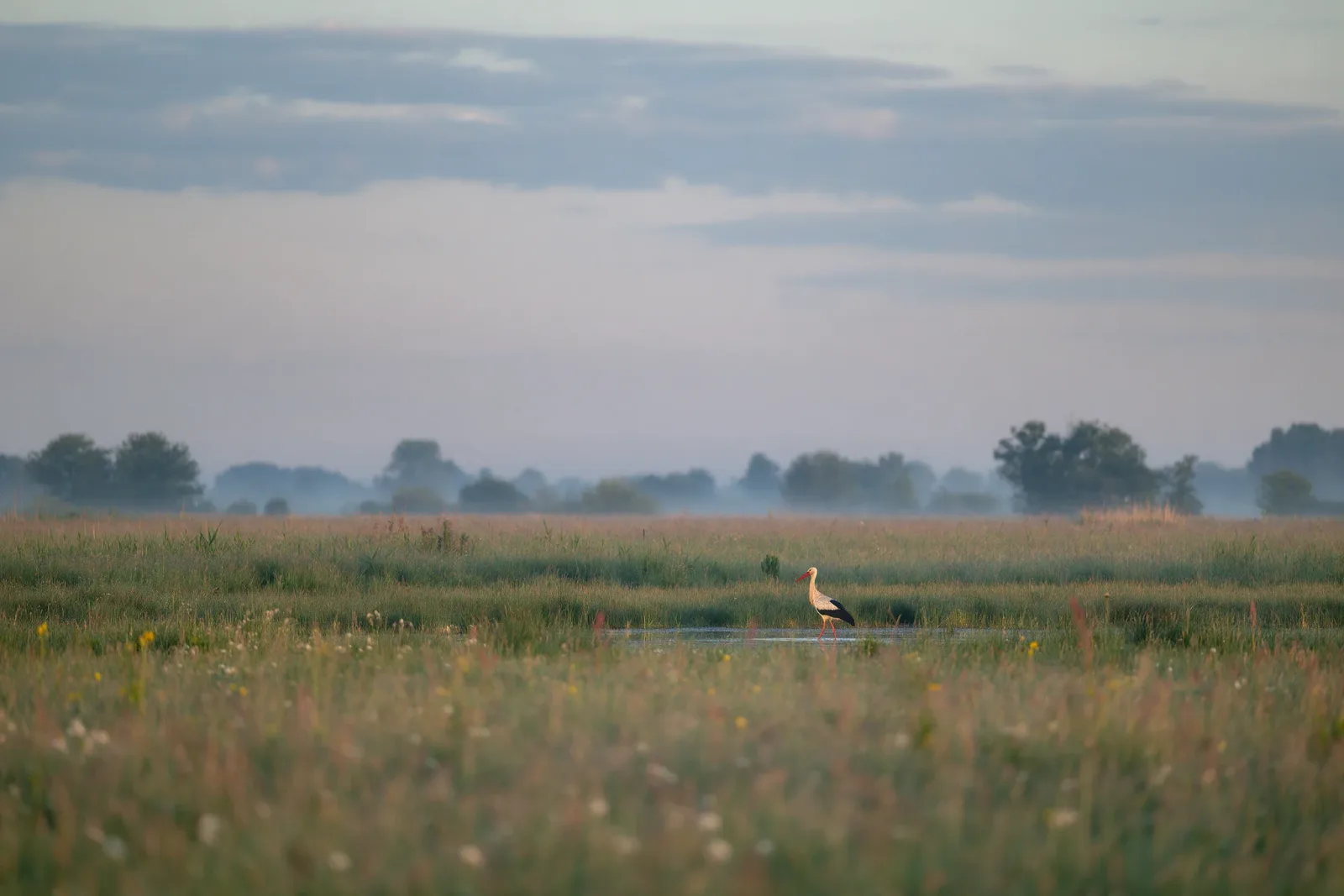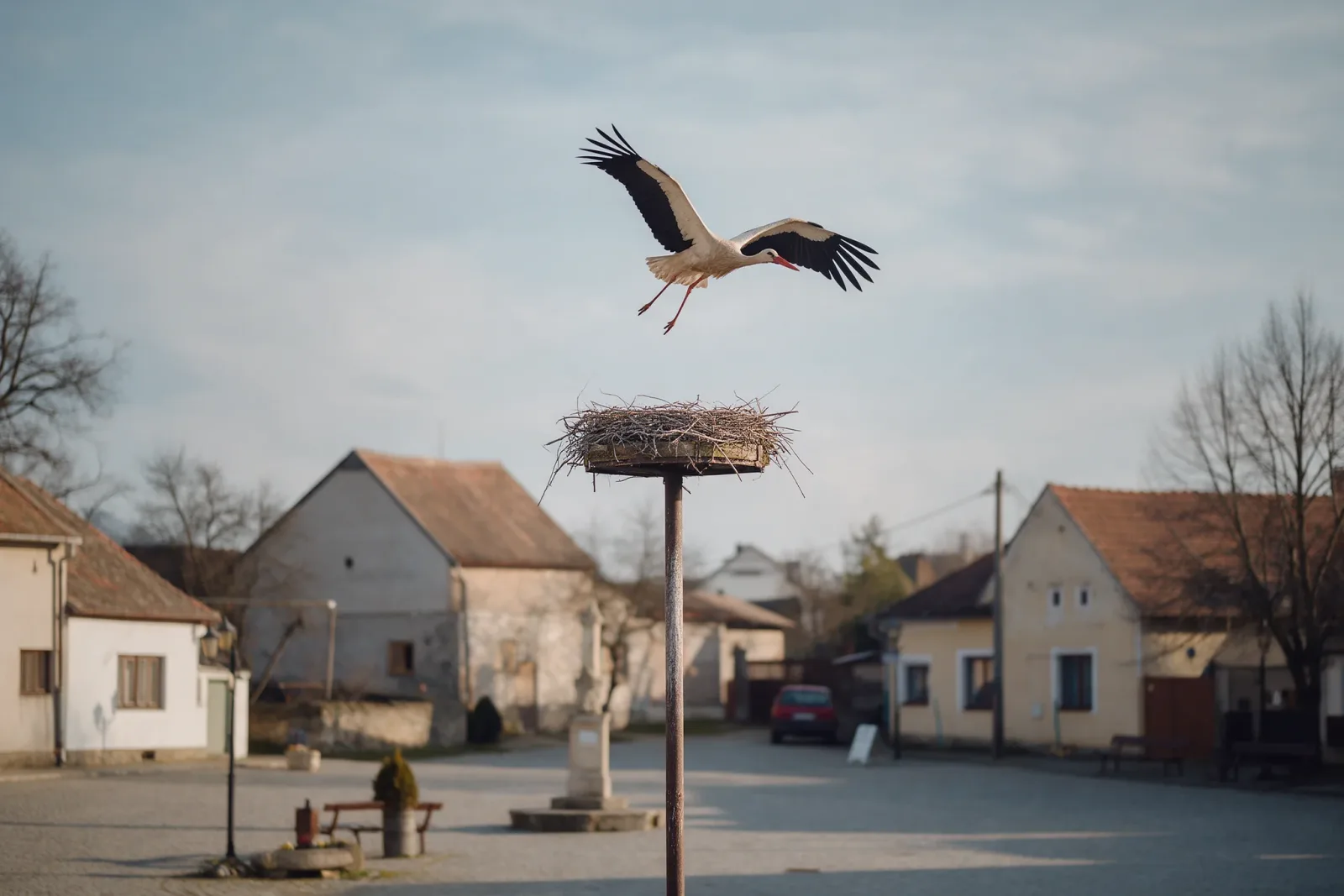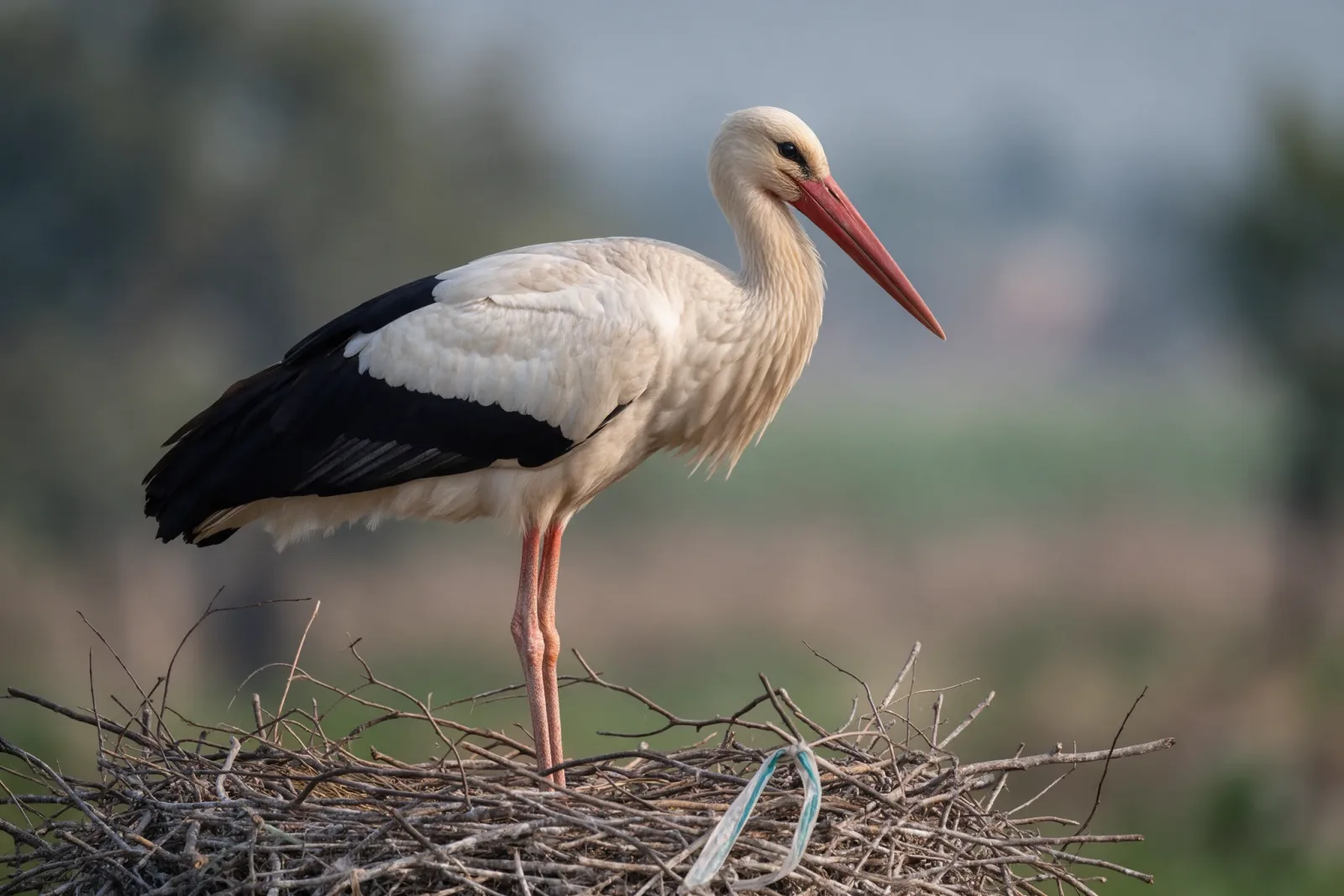
Plastic in the nest is one of those small, sad ironies that reveals how thoroughly our rubbish has entered the lives of wild animals. A white stork builds with what it finds, and what it finds is increasingly not just sticks and grass. Baling twine, fishing line, carrier bags, and strips of netting all turn up woven into the great structures on the roofs, carried there by birds that cannot tell the difference between a twig and a strand of plastic.
Why the stork cannot tell
A stork collects nest material by sight and feel, and a strip of baling twine looks, to a bird, rather like a strong piece of grass. It is flexible, it is light, and it holds its shape. The bird carries it home in good faith, and the plastic does what plastic does: it persists.
The result is a nest that is part natural, part artificial, and increasingly dangerous. The same materials that are everywhere in the modern landscape are now, literally, in the stork's bed.
The hidden dangers
Plastic in a nest is not a harmless oddity. Twine and line can loop around a chick's leg or wing, tightening as the bird grows until it cuts off circulation or binds the chick to the nest. A bird tangled in plastic cannot fledge, cannot feed, and eventually cannot survive.
Even the plastic that does not entangle is a problem. It does not rot, so it lingers in the nest season after season, accumulating. And as it breaks down, it sheds the tiny particles that find their way into water, soil, and the bodies of the creatures a stork eats.
Where the rubbish comes from
Almost none of the plastic in a stork's nest was put there on purpose. It arrives by accident, on the wind, in the fields, through the hands of people who never gave it a second thought. A length of twine dropped in a farmyard, a bag blown from a bin, a balloon released at a party: each one is small, and each one can end up on a rooftop, wrapped around a growing chick.
That is the frustrating part, and also the hopeful part. Because the plastic got there through ordinary carelessness, ordinary care can keep it out.
Stopping it at the source
The way to keep plastic out of nests is unglamorous but effective. Dispose of twine, netting, and line properly, so it cannot blow away. Cut loops before throwing them out, so a bird that finds them cannot be caught. Pick up the litter you see in fields and along riverbanks, before the wind does.
None of this requires heroics. It requires the slow, unspectacular habit of noticing, and of treating a stray length of twine as the hazard it can become. A stork's nest should be a home of sticks and grass, built for a new life. With a little care, it can stay that way.
Explore the gift