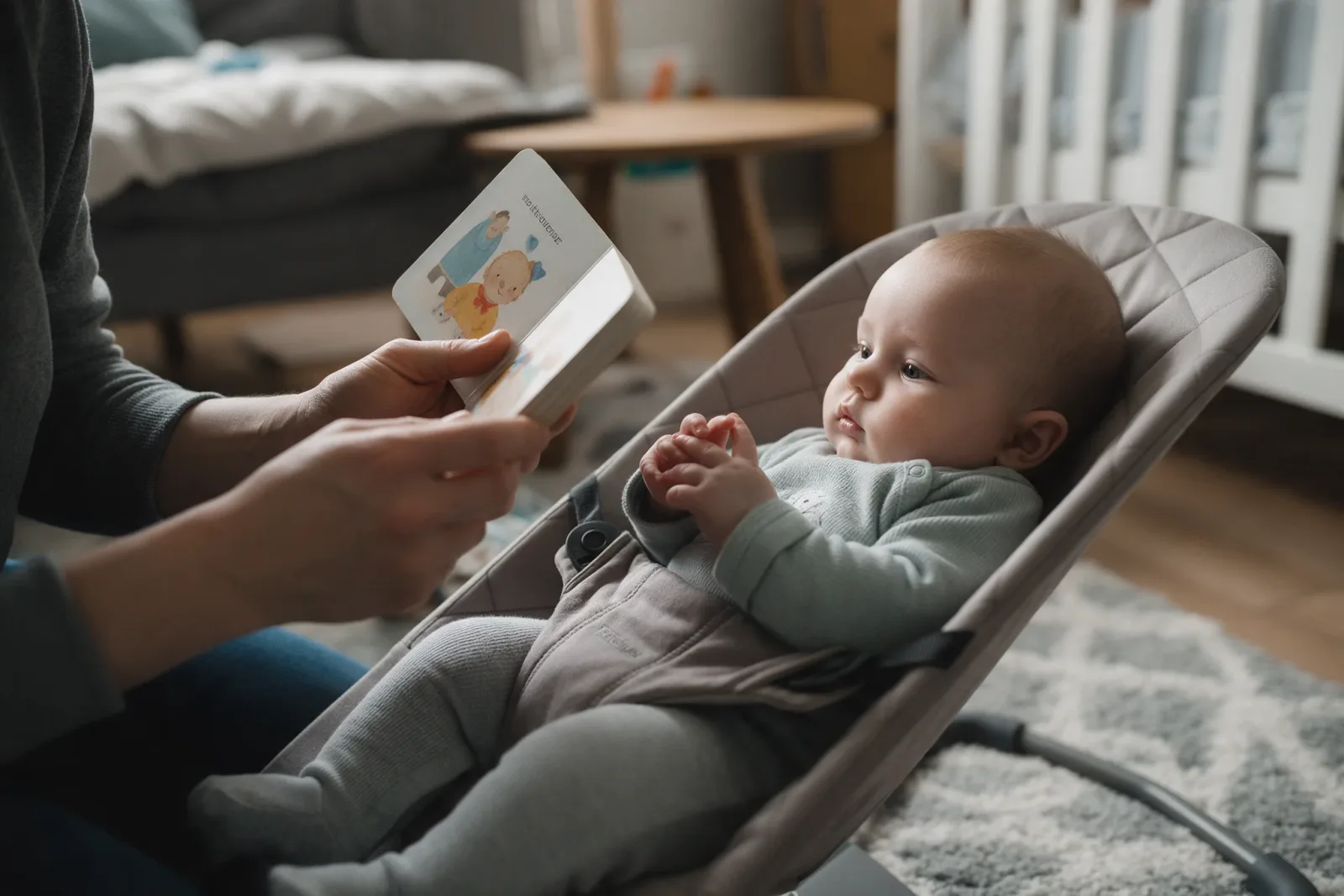
Reading to a newborn can feel like a strange thing to do. The baby cannot understand the words, cannot follow the plot, cannot turn the page. Yet the moment you settle into a chair with a small book and begin to speak, something real happens between you. Reading to a newborn is not about the story on the page. It is about the sound of your voice, steady and close, doing its first and most important work.
Long before a baby understands language, it understands rhythm. A newborn hears the rise and fall of a sentence, the pause at the end of a line, the way a voice softens when it reaches a quiet part. Those patterns are the first scaffolding a child builds for speech, and you are the one laying it down.
The voice before the words
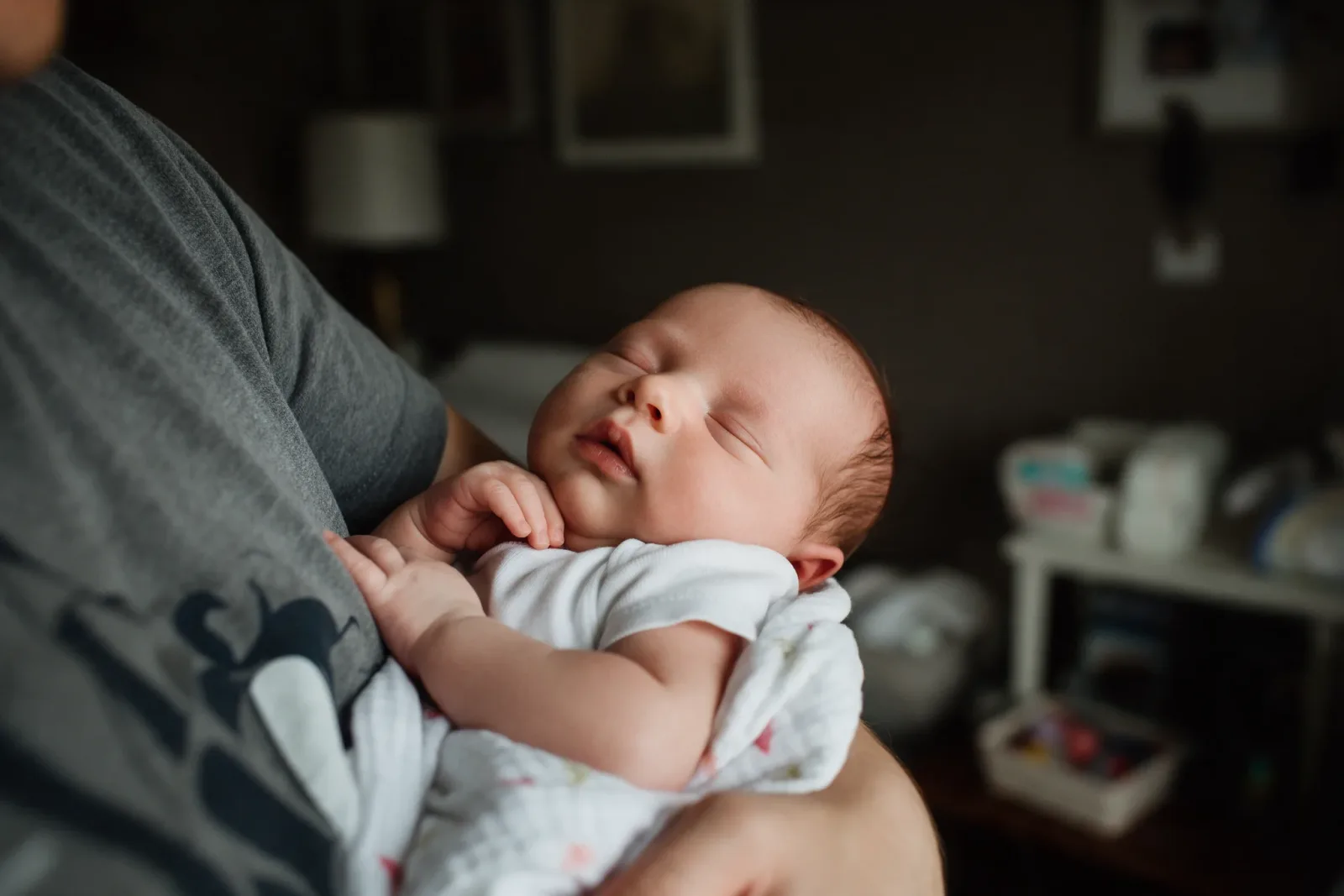
Your baby has been listening to you for months already, muffled through skin and water and the steady beat of your heart. Now the voice arrives clear and unfiltered. It is the most familiar sound in the child's world. When you read aloud, you are giving that voice a shape, a cadence, a place to rest.
You do not need a perfect book or a perfect accent. You do not need to get through a full page. You can read the same sentence twice, or stop to hum, or abandon the story entirely and talk about the rain on the window. None of that matters to the baby. What matters is that you keep talking, warm and unhurried.
Stories that become a habit
The book itself becomes a small landmark. The corner of a nursery where you read, the particular chair, the weight of the baby against your chest. Before long the act of reading turns into a habit, one of the first quiet rituals a family builds together. A child who is read to from the beginning grows up thinking of a story as a place where someone they love is nearby.
You may find that you look forward to it as much as the baby does. In a day full of feeding and changing and soothing, the reading is a moment when nothing is asked of you but to sit and speak. It is rest disguised as a chore, and it does you both good.
What birds have to do with it
A stork does not read, of course, but it has its own way of teaching with sound. A white stork never sings. Instead it throws its head back and clatters its bill, a rapid, rattling call that carries across a village. The chicks in the nest learn that sound early, just as your baby learns your voice, and they answer it, and the nest stays full of noise long before the birds can fly.
You and a stork are not so far apart. Both of you are teaching a small creature the sounds that mean home.
Read the things you love
Choose books you can read a hundred times without growing tired of them. Picture books with a gentle rhythm work well, but so does anything you happen to love, a poem, a passage from a novel, the back of a cereal box. The baby will not judge the source. The baby is listening to you, not to the literature.
There is a particular joy in reading the same book night after night and watching it slowly change meaning. The first time, the baby sleeps through it. The hundredth time, the baby reaches for the page. Sometime after that, a small voice will finish a line before you do. The book does not change. The listener does, and you are there for all of it.
Do not wait for the baby to be old enough to understand. That day will arrive on its own, and the child who was read to from the start will meet it already rich in the sound of books. Reading to a newborn is a seed planted in the dark, and like every seed it does its first growing out of sight.
The day will come when the child asks a question, points at a picture, supplies the last word of a favourite line. That day feels far off now, but it is being built tonight, in a chair, with a voice and a book and a small person who is learning to love the sound of you.
Explore the gift