The first nights home arrive wrapped in a quiet that feels brand new. The room is dim, the curtains barely open, and between one feed and the next you notice how slowly the hours move. Nobody tells you that exhaustion and joy can sit so close together, or that the two of you will keep such odd company in the dark.
You are learning a new clock now. It does not run on morning and evening. It runs on the space between feeds, on the soft click of a door, on the exact moment a baby's breathing settles into something slow and even. In the first nights home there is no real line between day and night. There is only you, the baby, and the small sounds a house makes when everyone else is asleep.
Let the nights be what they are
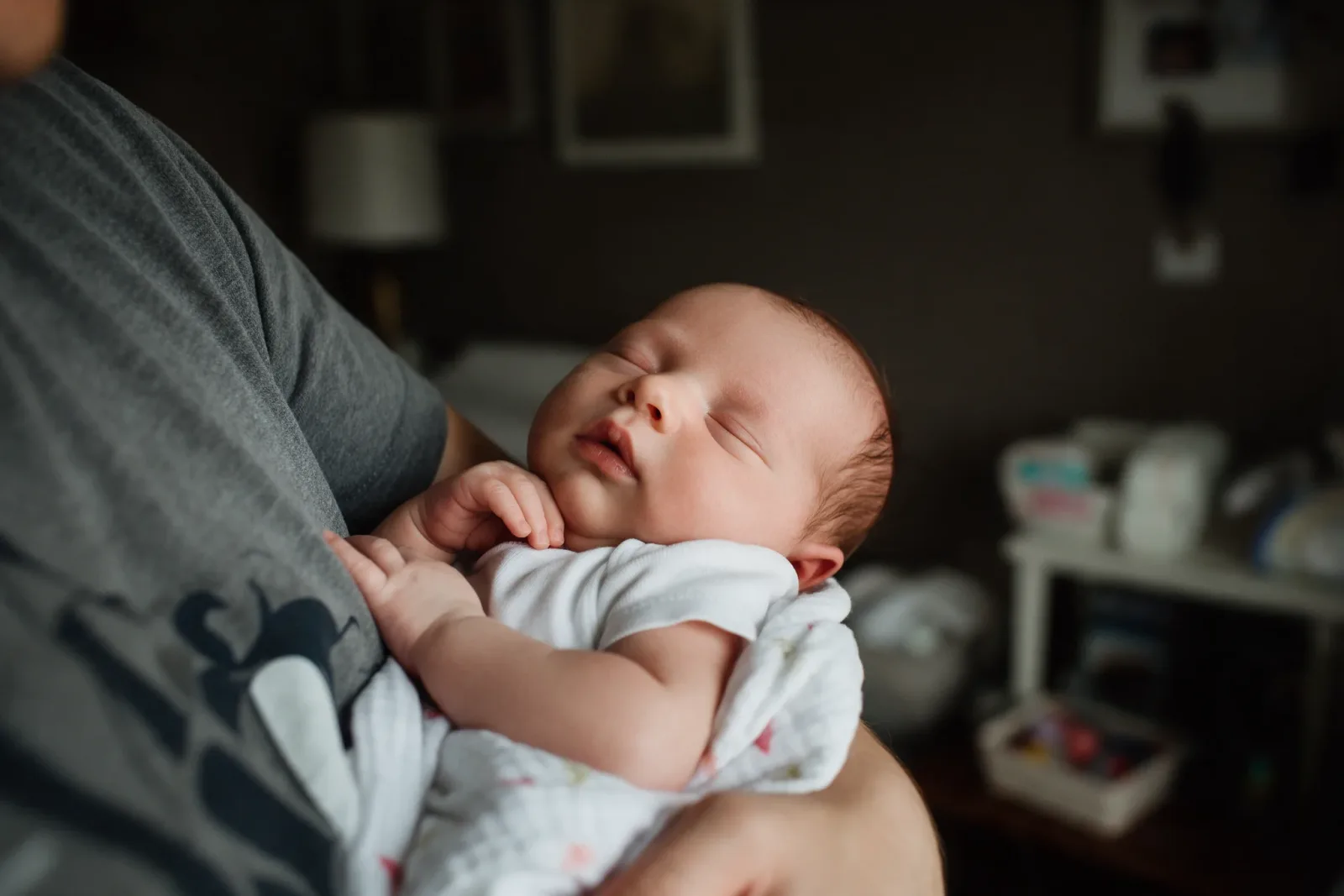
Nothing about these hours needs to be productive. The house can stay untidy. The dishes can wait. What matters now is the feeding, the holding, and the long quiet stretch of watching a tiny chest rise and fall. If you find yourself counting those breaths, you are in good company. Every new parent does it at some point, wide awake at three in the morning, doing the only job that matters.
Give yourself the same grace you would give a friend. There is no award for having a clean house by dawn. There is no exam on the new way you hold the baby, no score kept anywhere but in your own tired head. The only person who can see your efforts right now cannot yet see at all, and what the baby feels is not your efficiency but your warmth. Let that be enough.
The dark teaches you things
You learn to move through a dark room without waking anyone. You learn that a baby can hear the difference between a tired voice and a steady one. You learn that warmth travels from your chest to a small body faster than you expected. These are small lessons, and they arrive free of charge, and they will stay with you long after the baby sleeps through the night.
In the stillness you might also notice how much noise the world actually makes. A tap drips somewhere in the house. The floor settles. Outside, a car passes and its headlights sweep across the ceiling. All of it becomes part of the night's texture, and the baby sleeps through most of it, and slowly you learn to trust the quiet instead of bracing against it.
A bird sleeps while you wake
While you are awake, the wild world is doing its own quiet work. In a village far away a white stork stands on one leg on a rooftop nest, head tucked against its back. It fed in the shallows at first light and now it rests. The stork does not know you are awake, but it is out there, patient and still, the way all wild things are patient when the night is long.
There is comfort in that. Somewhere beyond your window a creature is doing exactly what your baby is doing, resting through the dark hours, trusting that morning will come. The stork has moved through this cycle of night and day thousands of times. It does not rush. It simply waits for the light.
Hold on to the ordinary
Years from now you will not remember the exact order of those first nights. You will remember the weight of the baby against your shoulder, the smell of clean clothes, the grey light at the window just before dawn. You will remember that you were tired and that you were happy, and that the two feelings fit together without contradiction.
Morning comes anyway
One day you will tell the story of these nights and find that the details have softened into something tender. The worry will have faded, the exhaustion will have blurred, and what remains will be the strange, private sweetness of being the only two people awake in the world. Keep that thought nearby on the hard nights. It is not a promise of easier days. It is a reminder that even the three a.m. feed is part of the thing you will one day miss.
The sun will come up whether or not you feel ready for it. When it does, open the curtains a little and let the baby see the pale sky. The first nights home do not last forever, even when they feel as though they might. One morning soon you will wake to find that you slept, and the baby slept, and the world carried on without your help.
Explore the gift