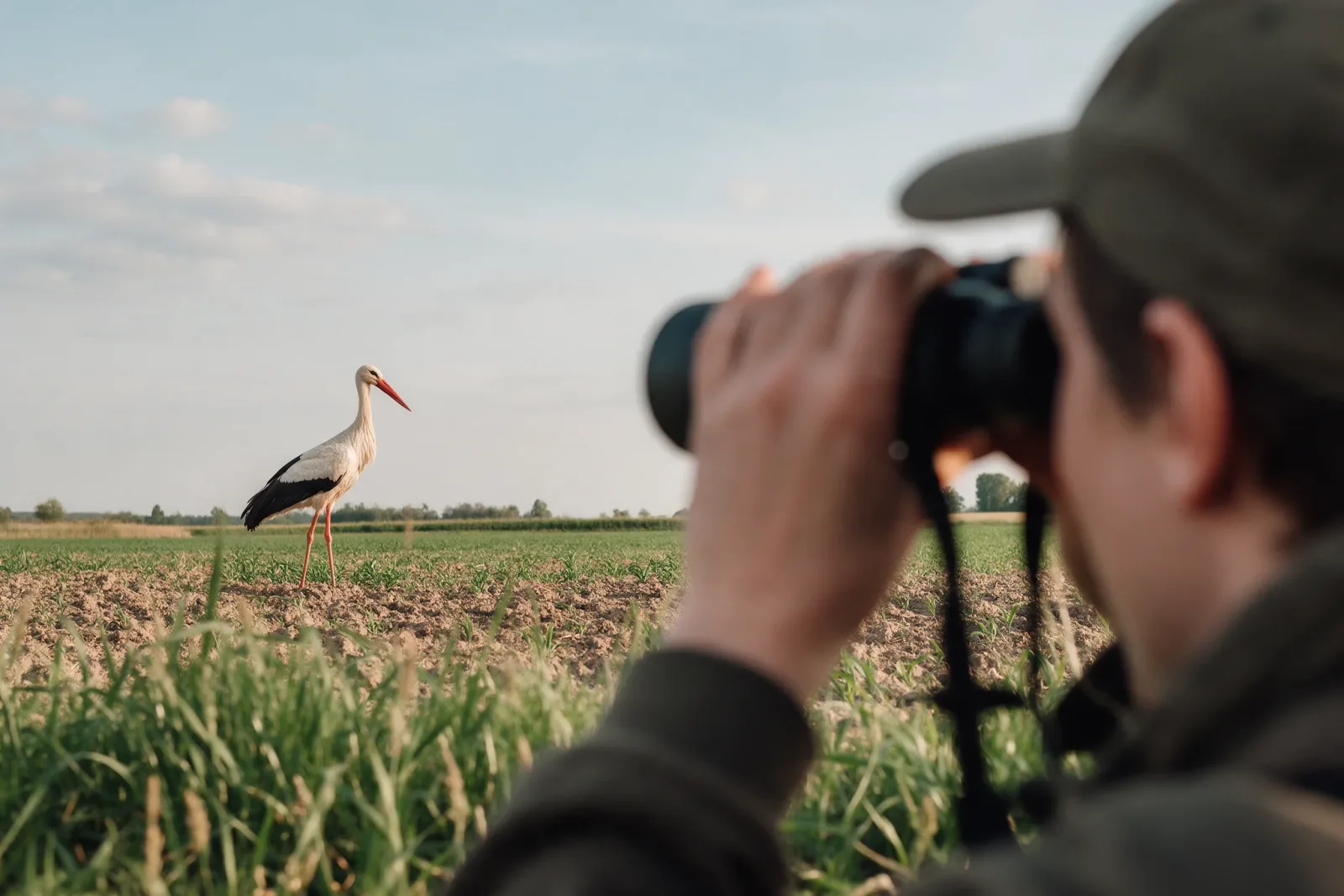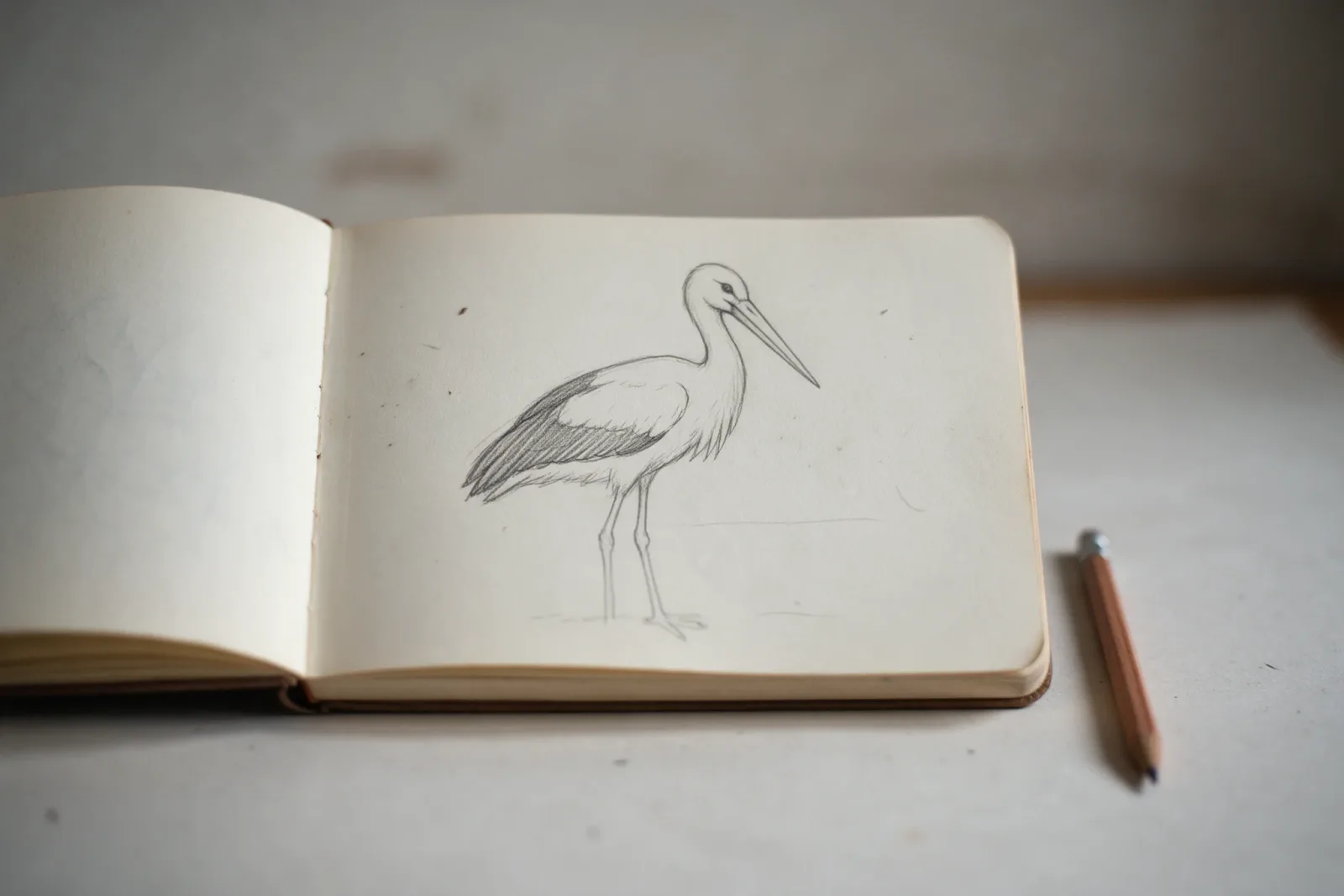
Sketching a stork is a way of watching that refuses to hurry. A photograph takes the bird in an instant, but a drawing asks you to sit with it, to notice where the neck bends and how the leg meets the body, until the bird has burned itself into your hand and your memory at once. You do not need to be a good artist to do this. You only need a pencil and the willingness to look for longer than you are used to.
Draw what the camera misses
A camera records what the bird looks like. A drawing records what you noticed. When you sketch a stork, you are forced to answer small questions: how long is the bill in relation to the head, where does the black begin on the wing, how does the neck curve when the bird stoops to feed. The answers come slowly, and they stay. This is why a rough drawing teaches more than a hundred quick glances.
Start with the long lines
Begin not with details but with the longest lines. The stork is built from a few simple shapes: a long neck, a long bill, long legs, a deep body. Set those down first, lightly, and let the bird's proportions appear before you add anything fine. Most beginners ruin a drawing by starting with the eye or the feather. Start with the whole bird, and the details will have somewhere to live.
Watch, then mark, then watch again
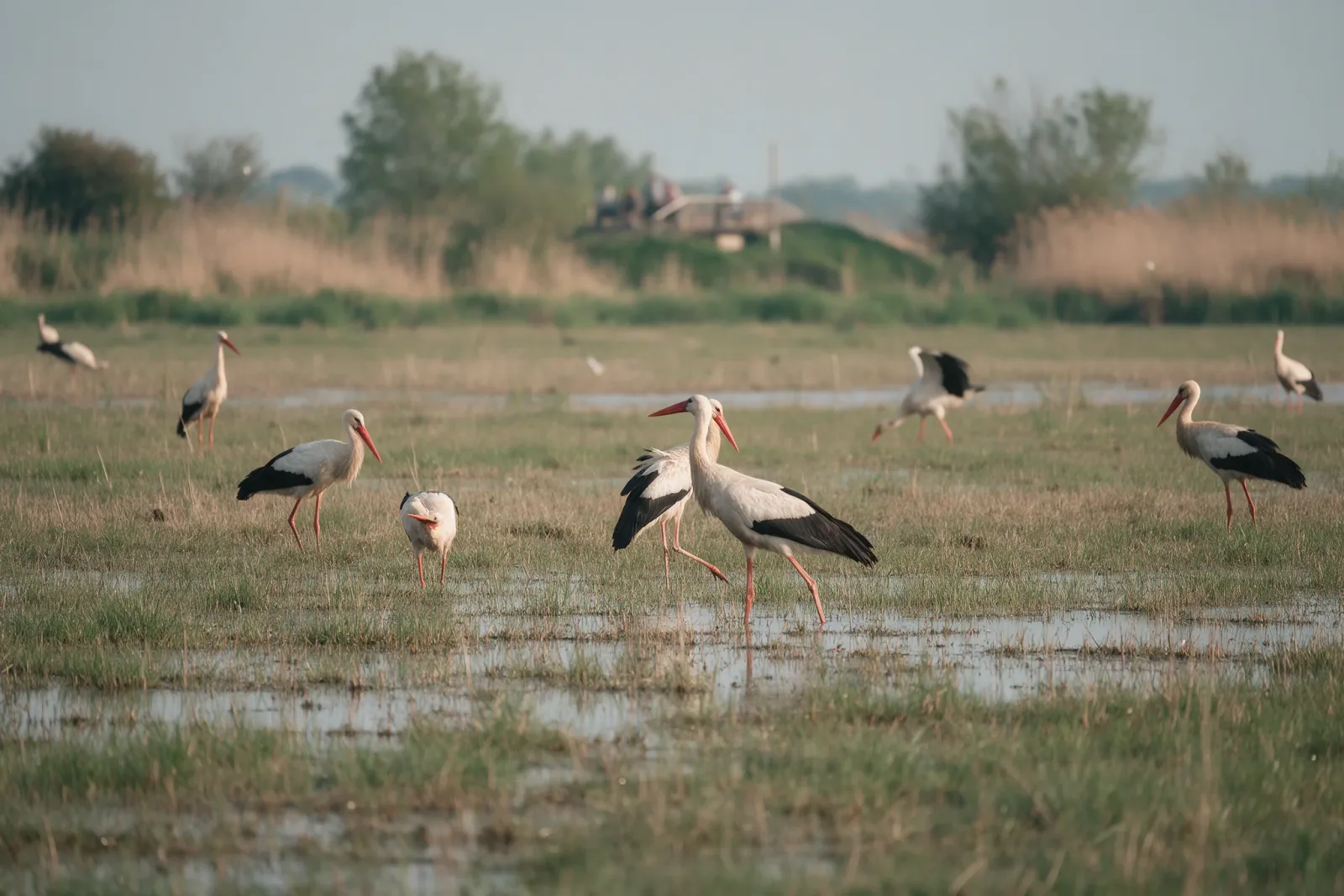
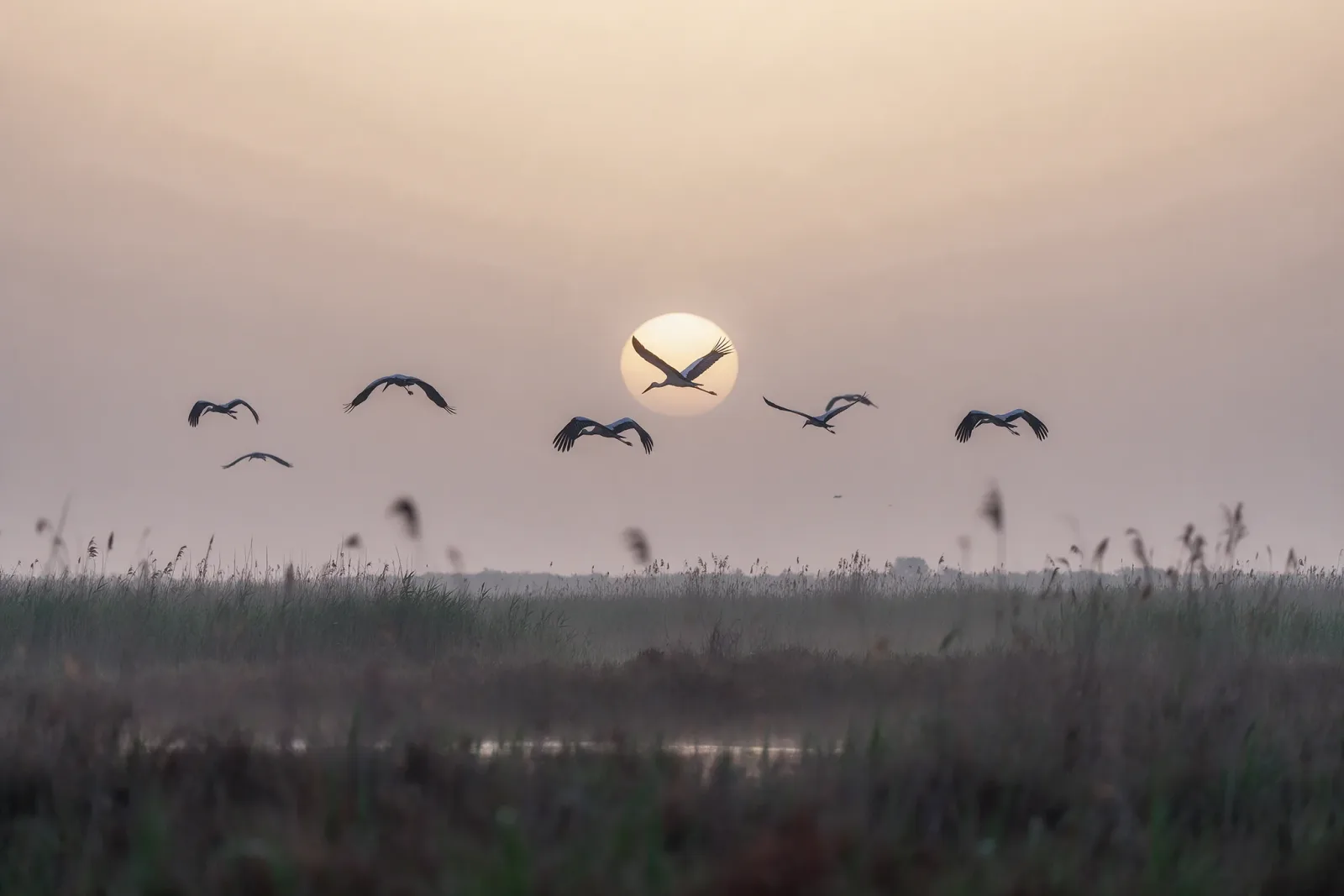
Sketching in the field is a rhythm: look at the bird, look at the paper, mark a line, look up again. Let the bird move. A stork will not hold still forever, and that is fine. You are not drawing one frozen stork but the sum of the moments you have spent with it. If it flies, draw the flight. If it feeds, draw the stoop. The page becomes a record of a morning, not a single instant.
Field sketches are meant to be imperfect
A field drawing will not look like the bird in a book, and it should not. Its lines will wobble, its proportions will drift, and somewhere in the wobble is the truth of what you actually saw. Keep the bad drawings. They are honest. Months later you will look at one and remember the cold, the light, the exact bend of a stork's neck, better than any photograph could give you.
Let the habit carry you
You may sketch one stork and never do it again, or you may find that the pencil becomes part of how you watch. Either way, the bird has been drawn into your attention, which is the only place a drawing ever truly lives.
Explore the gift