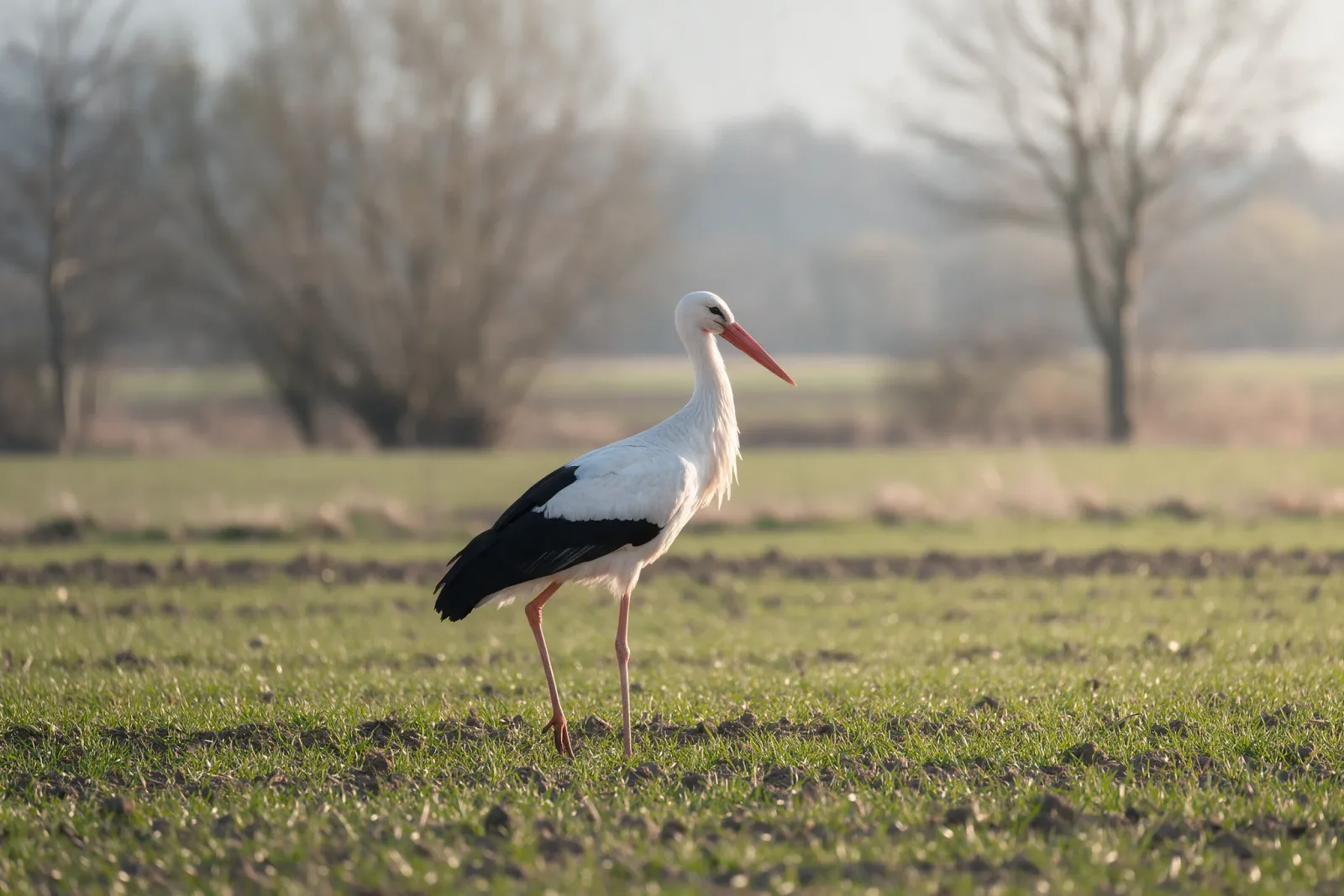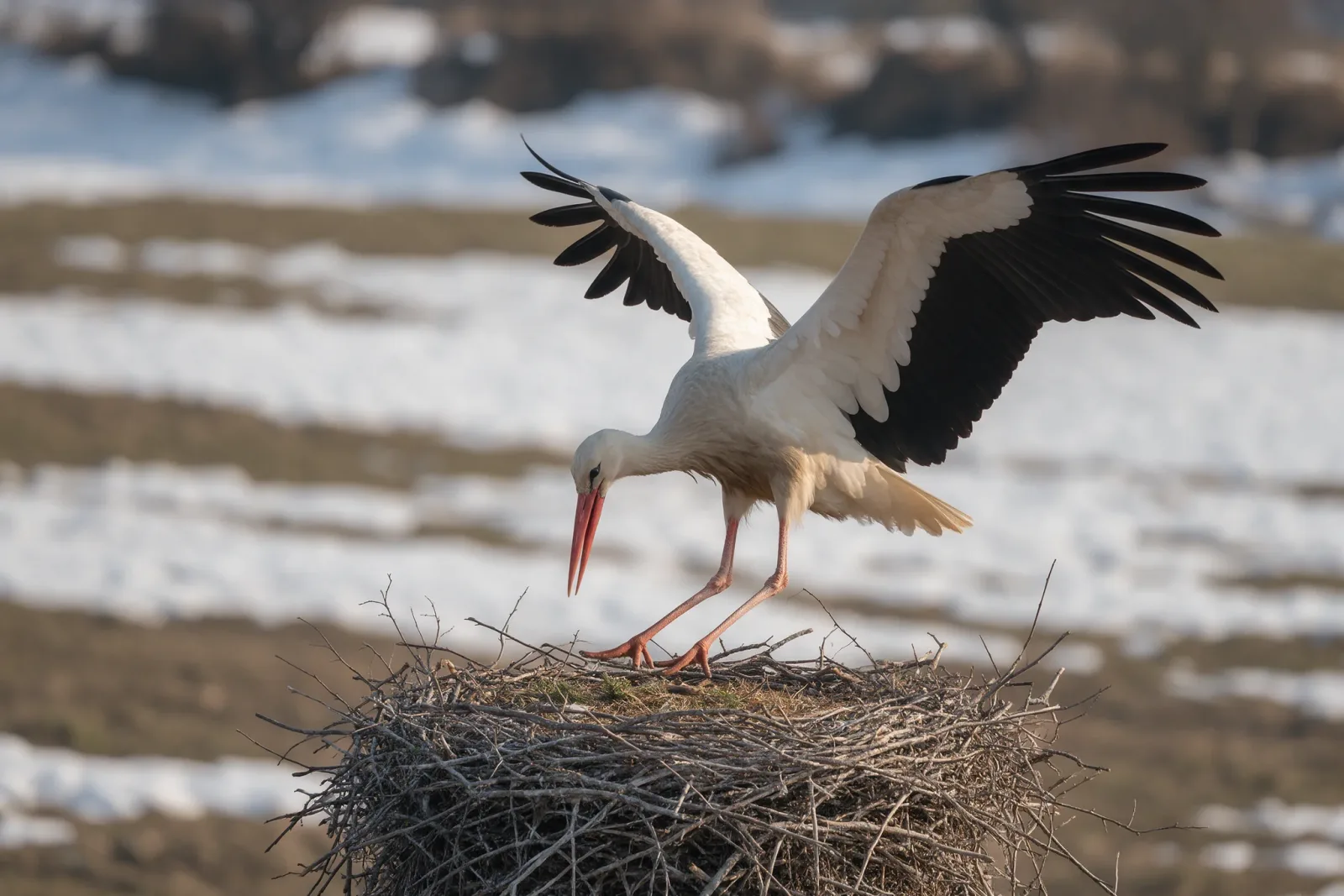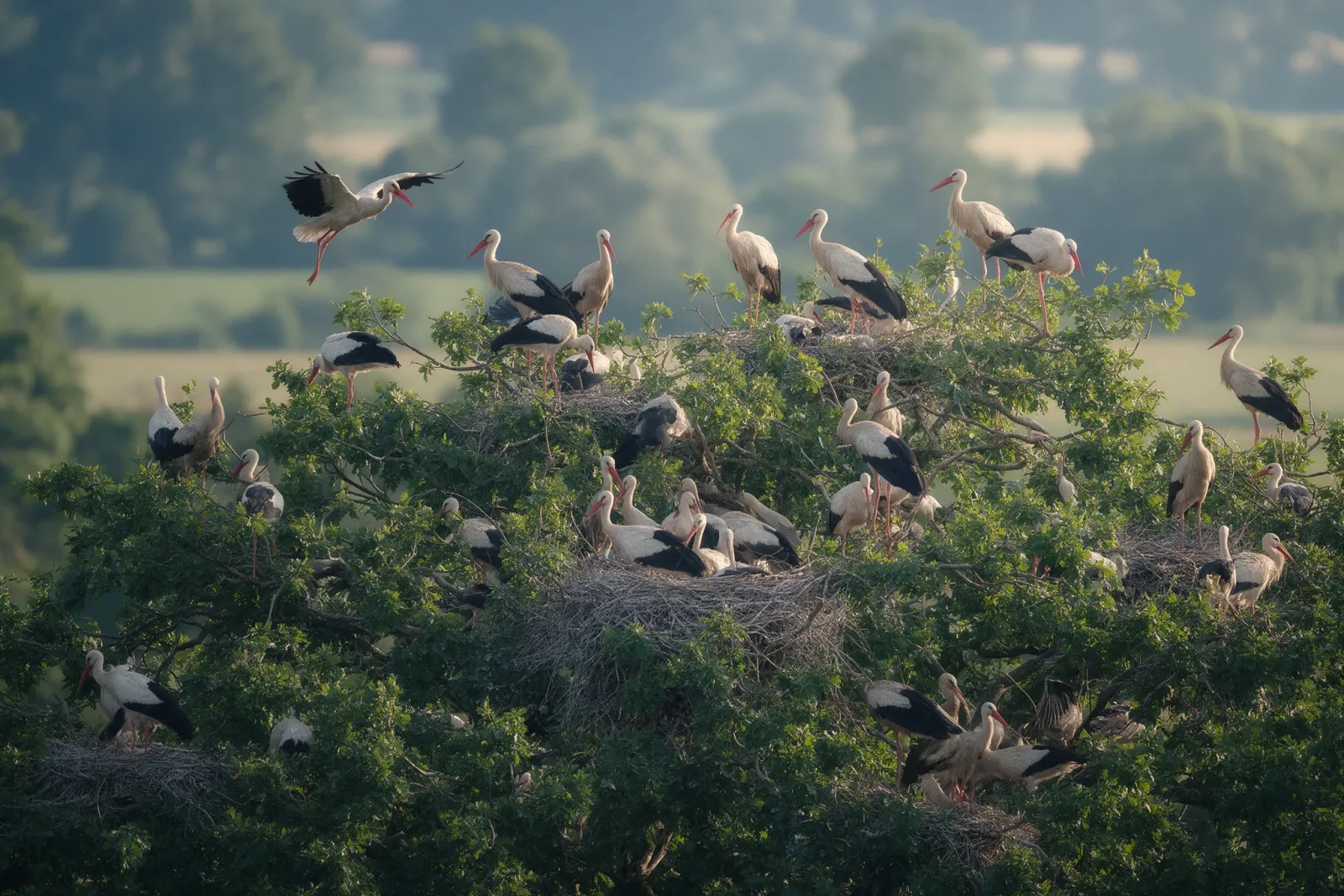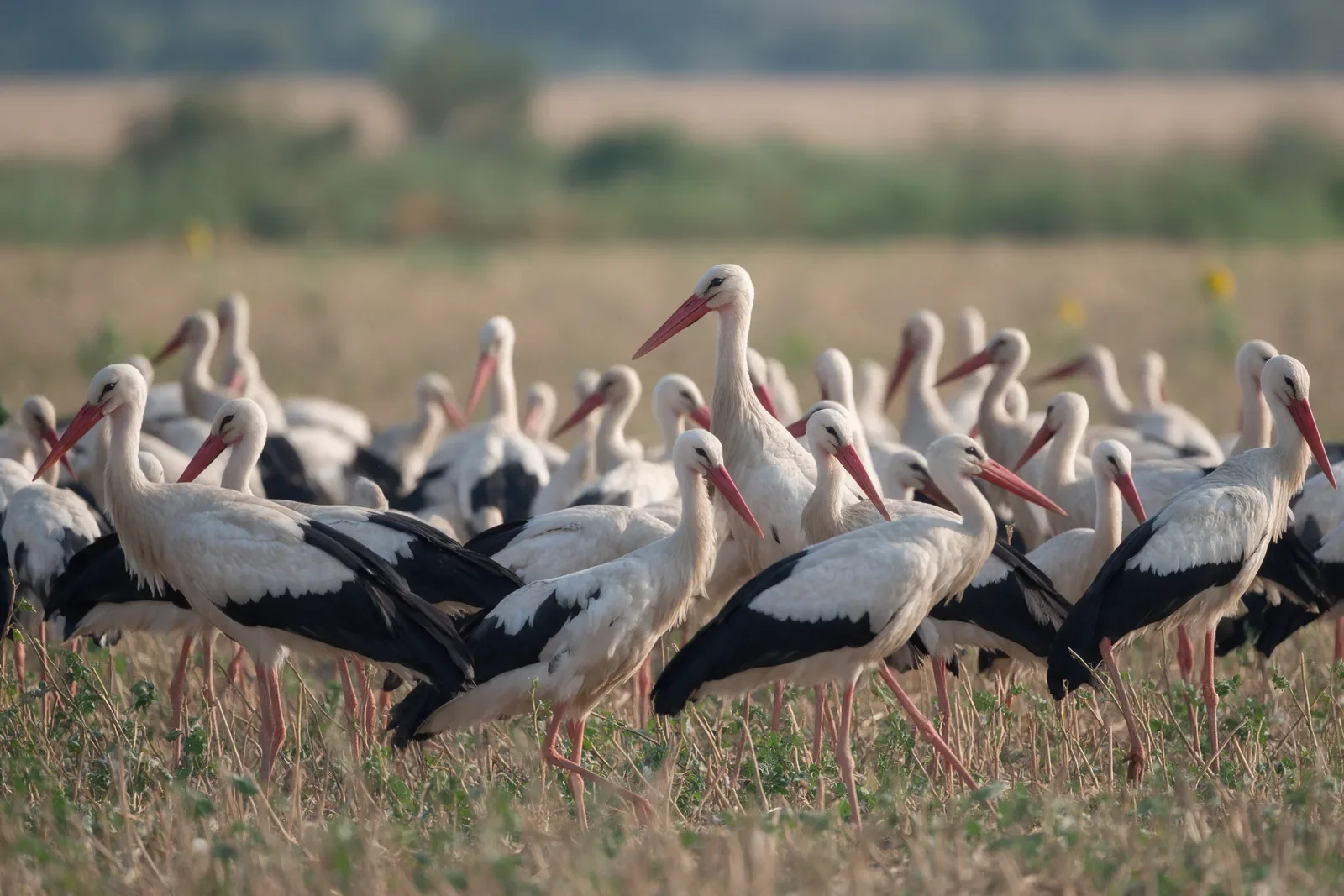
The gathering autumn begins quietly, almost without anyone noticing. One evening the storks that have spent the summer scattered across separate nests and separate fields begin to come together. A few birds in a meadow become a dozen, a dozen become fifty, and before long the fields hold more storks than the eye can easily count. It is the first sign that the year is turning, and that the great departure south is drawing near.
Why they gather
A stork does not migrate alone if it can help it. Travelling in numbers is safer and cheaper, and the autumn gatherings are how the birds arrange themselves for the long road ahead. In the fields they feed together, moving through the cut grass and the stubble in loose, easy lines. The gathering is not a meeting so much as a habit, an instinct that draws the birds into one another's company as the days shorten.
The fields at the end of summer
There is a particular look to the land at this time of year. The harvest has been taken in, and the fields stand bare and golden under a low, honey-coloured sun. This is perfect feeding country for a stork, and the birds know it. They walk the stubble for insects and small creatures stirred up by the cutting, filling themselves against the journey to come. The harvest and the gathering belong together, one season feeding the other.
A restless energy
As the flock grows, so does a certain restlessness. The birds stand quietly, then lift off all at once for no reason anyone can see, circle, and settle again. They seem to be testing the air, trying the wind, waiting for a signal that has not quite arrived. This is the mood of the gathering autumn: calm on the surface, and underneath it a slow current building toward motion.
Reading the sky
To watch a gathering flock is to learn how a departure is decided. The birds watch the weather in a way we can only guess at. A warm, bright day with a steady breeze is good travelling weather; a grey, windless spell is not. When the conditions are right, the whole flock will rise and be gone, sometimes within a single afternoon. The field that held a hundred storks at breakfast is empty by evening.
The last days before flight
The gathering autumn is brief. It lasts only until the air agrees to carry the birds south, and then it ends. For the people who watch the fields each year, these gatherings are a farewell of sorts, a chance to see the storks at their most numerous before the sky thins out for the winter. The birds do not know they are saying goodbye. They only know, in the old, wordless way, that the time has come to go, and that they will not go alone.
Explore the gift