Storks and the harvest have belonged together for as long as anyone can remember. When the grain is cut and the fields are laid bare, the storks come walking behind the machinery and the horses and the scythes, gathering up what the work has disturbed. It is one of the oldest friendships in the countryside, a quiet arrangement between a bird and a farmer's field that has carried on through centuries of change.
A field newly cut
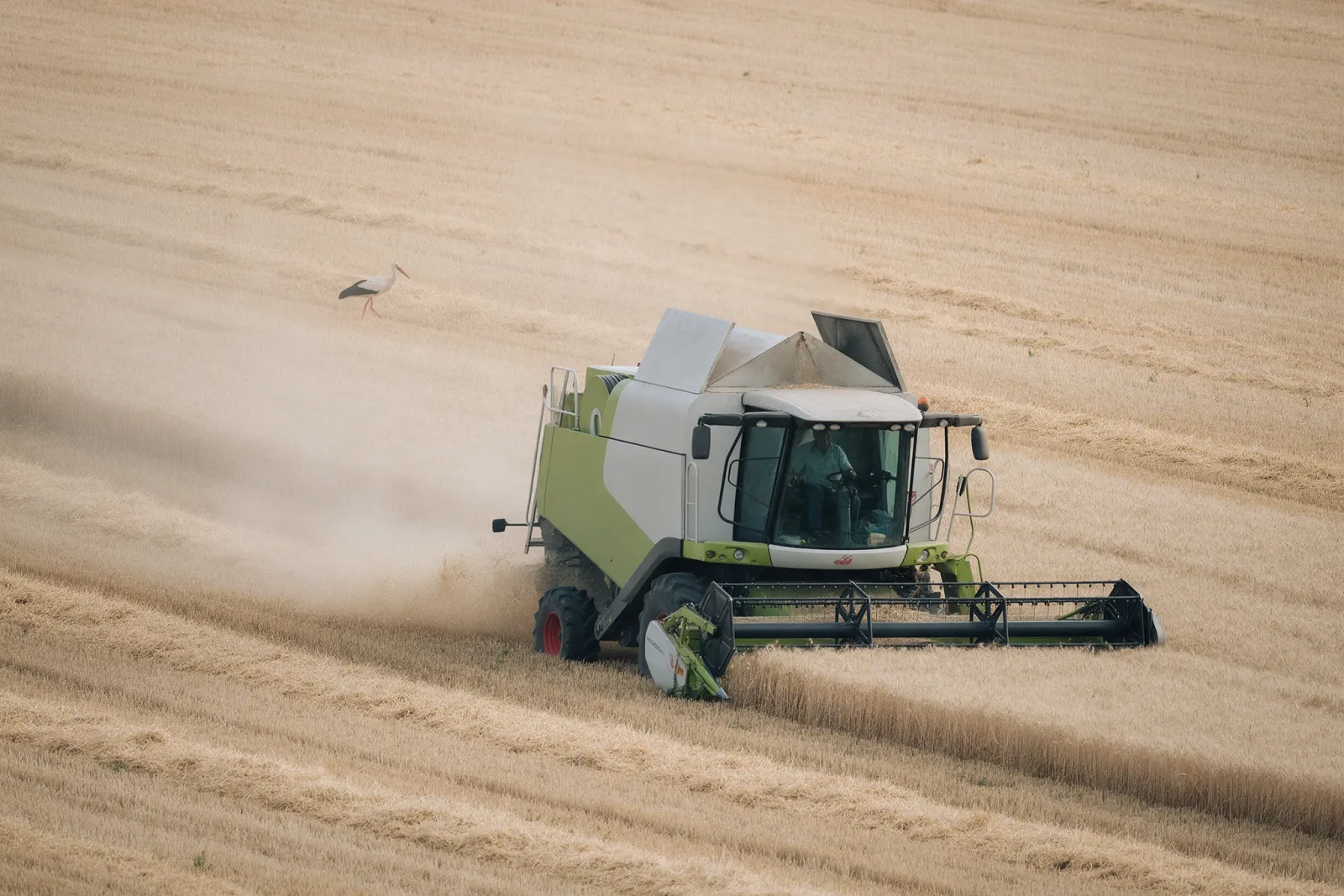
There is a moment, when a field is cut, when it becomes a banquet. The tall grain falls, and suddenly the ground is exposed, full of movement. Insects and small creatures that had been hidden in the crop are flushed into the open, and the storks, which have been watching from a distance, move in to feed. A freshly cut field, seen from above, is a stork's invitation, and the birds answer it quickly and in numbers.
Walking behind the plough
The friendship runs deeper than the harvest alone. Storks follow the plough too, drawn to the turning soil and everything it brings to the surface. The old image of a stork walking behind a farmer at work is not a romantic invention; it is a record of how the birds actually live. The farmer turns the earth, and the bird takes what the turning offers. Neither asks anything of the other. The arrangement simply works, and has worked for a very long time.
What the birds take
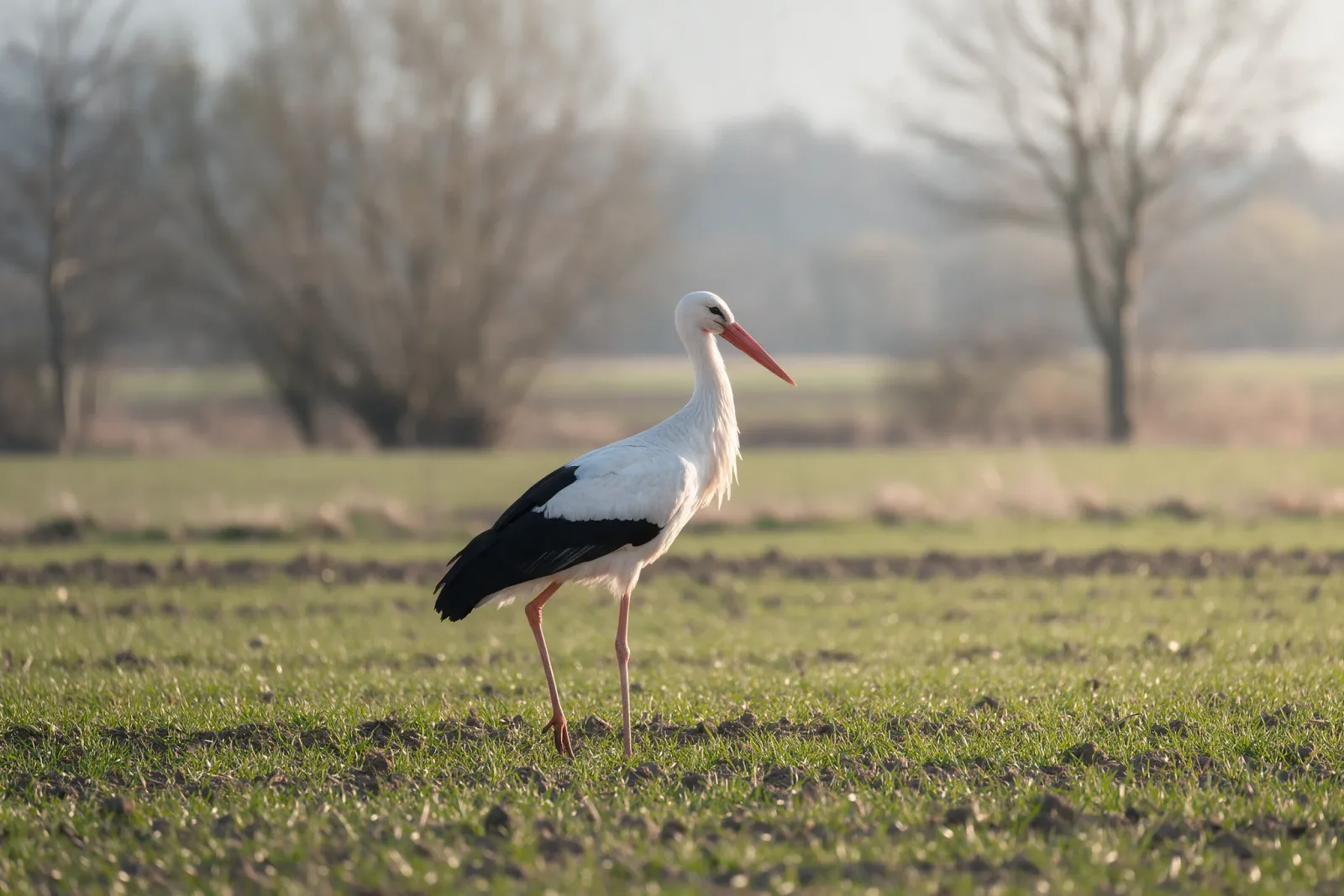
A stork walking a field takes what the field gives up freely, mostly insects, grubs, and small creatures of the soil. It does not trouble the crop itself, and so the farmer has little reason to mind its presence. In many places the stork is welcomed rather than tolerated, a familiar white figure that shares the working land without asking to be fed or kept. The harvest feeds the bird, and the bird, in its unhurried, methodical way, asks nothing more.
A changing countryside
The old friendship has had to bend with the times. Fields are worked differently now, and the machinery moves faster than a walking bird. Yet the storks have adapted, as they always have, learning to follow the new machines as their ancestors followed the old ones. The harvest is still a feast, and the birds still come. The relationship between storks and the working land has simply found new shapes, the same bond expressed in a modern form.
The season of plenty
Autumn is the season of this friendship. It is the time when the year gives up its abundance, and the storks gather in the cut fields to build the reserves that will carry them south. There is something deeply satisfying in watching it, the birds and the land in their old, wordless partnership, each giving and taking in turn. The harvest is not only a human season. It is a stork's season too, and the two have never been far apart.
Explore the gift