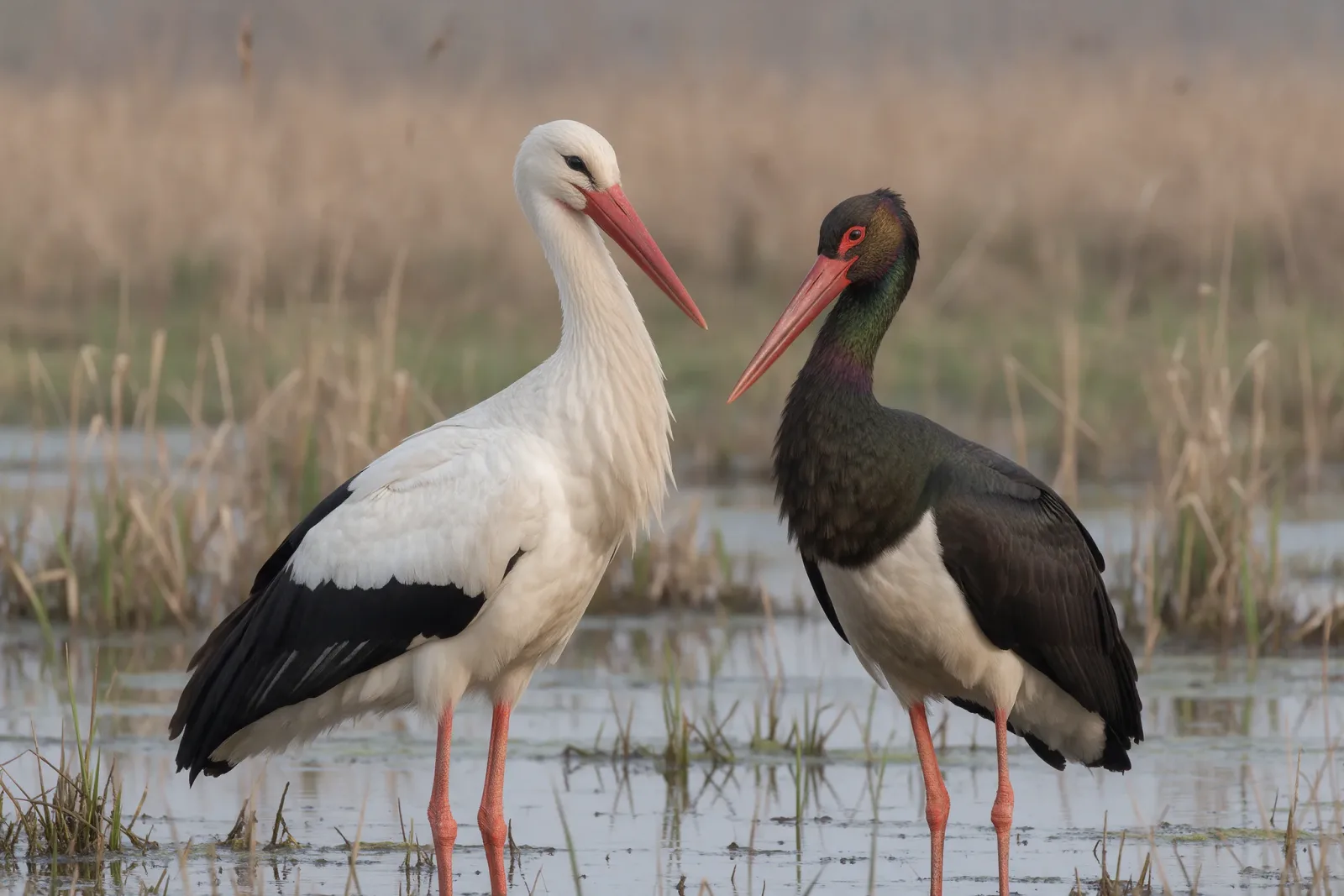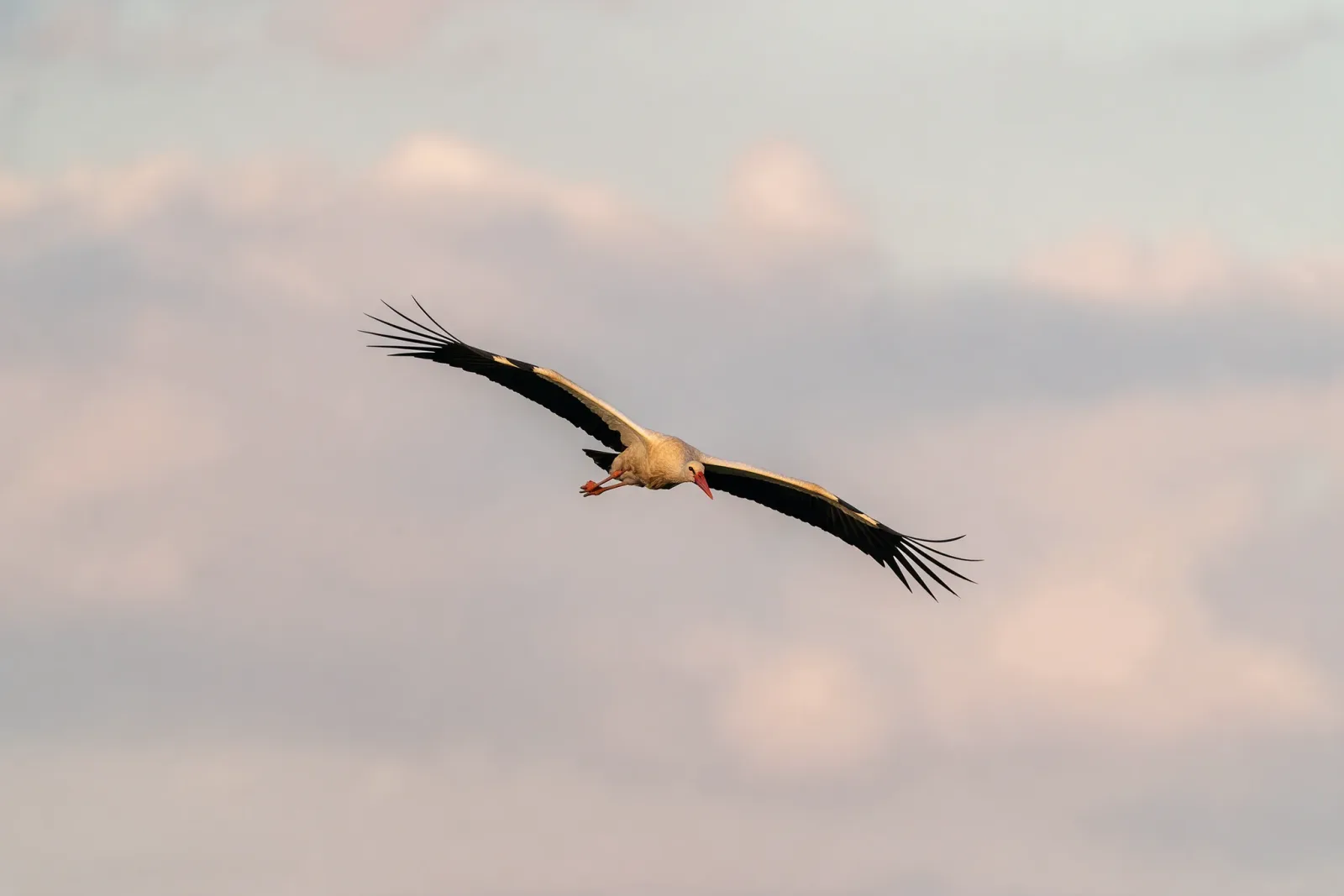
A white stork on a rooftop looks solitary, a single bird alone against the sky. But storks are social birds, far more gregarious than that picture suggests. They gather in nesting colonies, they travel in flocks that number in the hundreds or more, and they live much of their lives in the company of others. The lonely stork is mostly a trick of the moment, a bird between gatherings, and the truth of the species is a life lived among neighbours. The white stork is not a solitary wanderer but a sociable bird, one that has chosen to live near others of its kind and, for centuries, near us. That sociability runs through everything it does, from the nest on the roof to the great flocks that gather before the journey south. To know the stork is to know it in company.
Nesting in colonies
In many parts of its range the white stork nests in loose colonies, with several nests spread across the rooftops, trees, and poles of a single village. The birds do not share a nest, but they share a neighbourhood, and the sight of many nests on many rooftops is a sign of a place where storks have been welcome for a long time. Living near other storks means more eyes to watch for danger and more neighbours to share the sky with. A colony is a kind of village within a village, and the birds keep to it the way any neighbour keeps to a street.
The gathering before migration
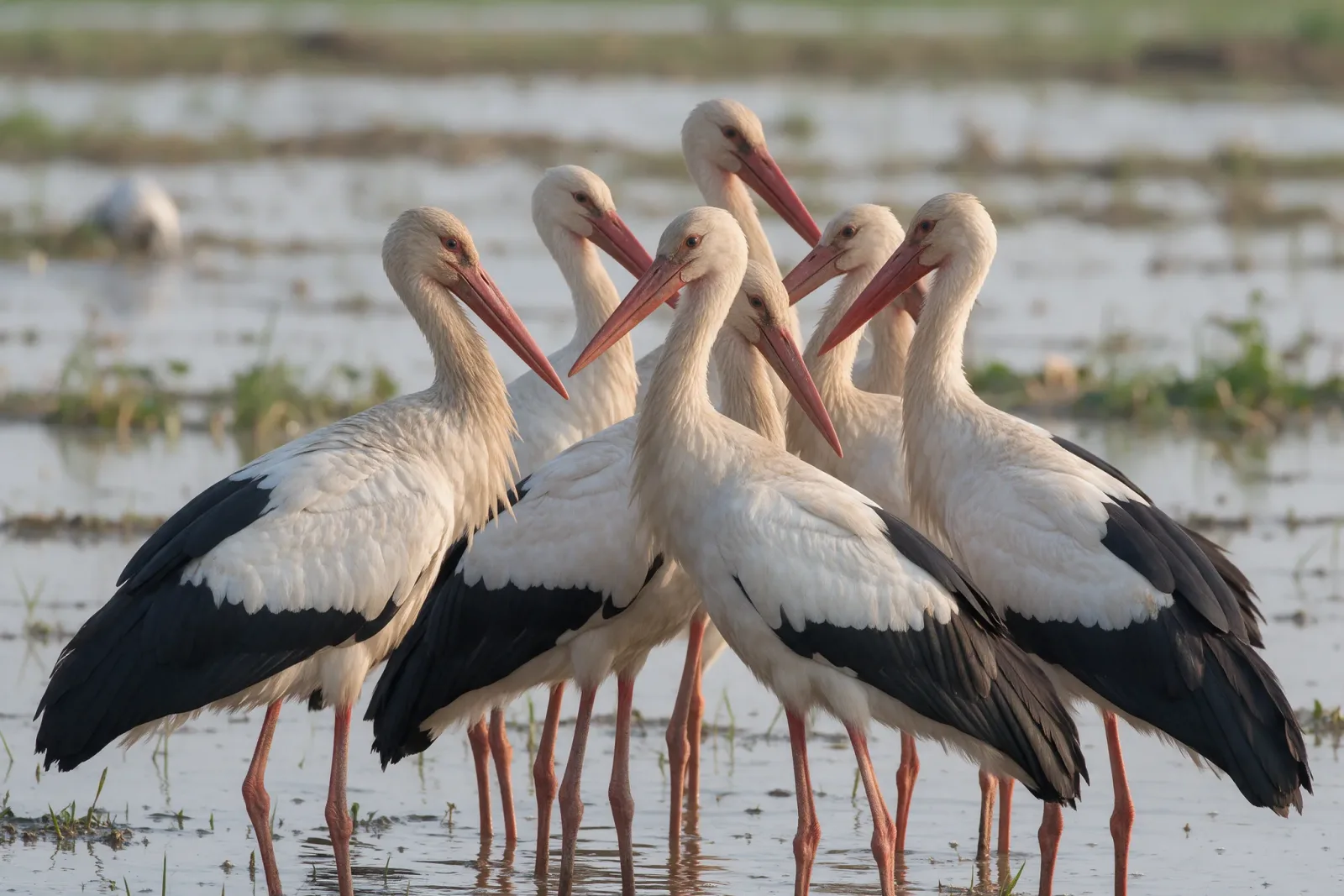
The social side of the stork shows most clearly in late summer. After the young have fledged, storks begin to gather in fields and on rooftops, and the numbers grow day by day until a single meadow may hold a hundred birds or more. These gatherings are a prelude to migration, a kind of assembly before the journey. Young birds join the older ones, and the whole group waits together for the right weather to leave. There is a shared restlessness in the air, a sense of many birds all waiting for the same signal.
The journey in company
When the time comes, storks migrate in flocks. Travelling together has real advantages. A flock can find thermals more quickly, because many eyes are watching the sky, and birds in a group can share the work of staying safe. A young stork on its first migration travels in the company of others, learning the route by following, the way a child learns a road by walking it with a family. The flock is both a convenience and a school, and the young birds depend on it in ways the older ones have long outgrown.
Company without crowding
For all their sociability, storks keep a certain dignity. They do not pack tightly together the way starlings do. They keep a little space between themselves, standing a few steps apart in a field or gliding a few wingbeats apart in the air. There is a quiet courtesy to it, the manners of a bird that likes company but needs room to spread its long wings. A flock of storks is not a mob. It is a gathering of individual birds, each with its own patch of sky.
The neighbourly bird
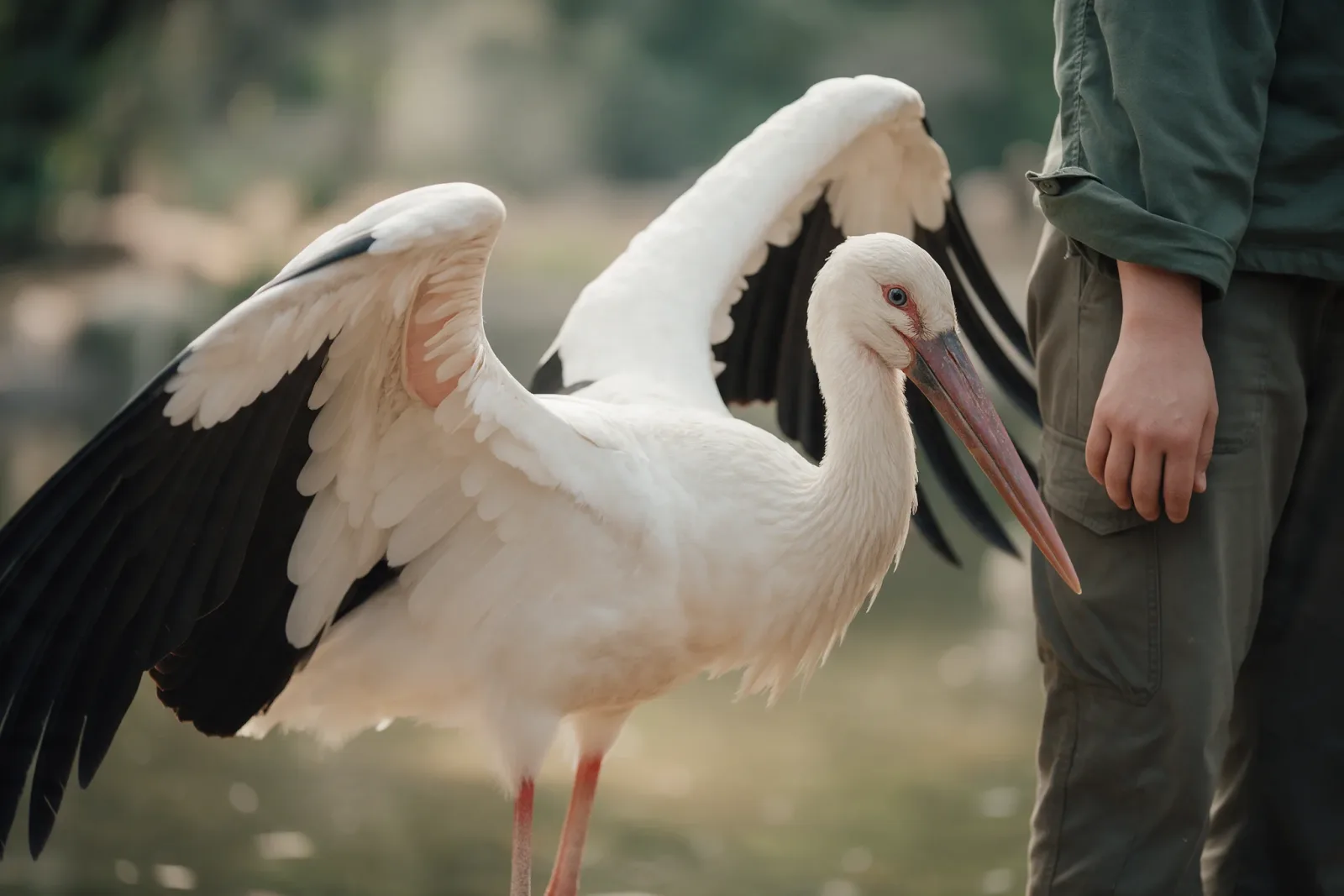
Of all the storks, the white stork is the one that has made neighbours of us. It nests on our roofs, feeds in our fields, and passes through our villages twice a year, and it does all of this in company, never quite alone. Its sociability extends to us as well, a quiet willingness to share a roof and a season. That openness is part of why the bird is so loved, and part of why it has lived alongside people for so long. A bird that likes company has found an easy place among a species that does too, and the friendship, if that is the word, has lasted for centuries.
So the next time you see a single stork on a roof, remember the flock it belongs to. Storks are social birds, and the one you see is only the visible edge of a much larger gathering, somewhere between the village and the horizon.
Explore the gift